For Jörg Hofmann, President of IG Metall, the key takeaway from the Mobility Summit is easy to summarize: “The high-level discussion has shown that we cannot afford any further delays. We must concentrate all our resources on the transition to electric powertrains. If Germany wants to become the leading market for electric mobility, we need to generate significantly more momentum. The market alone cannot regulate this.”
Olaf Scholz had invited participants to the Mobility Summit—officially titled “First High-Level Meeting of the Strategy Platform for the Transformation of the Automotive and Mobility Industry”—at the Federal Chancellery. At the meeting with the cumbersome name, the Chancellor brought together not only Economy Minister Robert Habeck, Transportation Minister Volker Wissing, and Finance Minister Christian Lindner, but also Jörg Hofmann, First Chairman of IG Metall, works council members, and executives from major automakers, as well as representatives from the supplier and semiconductor industries, academia, and various associations. This new format focuses on the central challenge of achieving climate neutrality while simultaneously preserving value creation and employment.
280,000 jobs depend directly on internal combustion engines
IG Metall knows how to tackle this challenge. It has long been pushing for a transformation of the industry and believes that politicians, as well as companies, have a responsibility to act. For the union, it is clear: this is the only way we can preserve jobs. Jörg Hofmann explains: “A good 280,000 workers are currently employed in the development, production, or maintenance of the internal combustion engine. But the internal combustion engine has no future in climate-neutral mobility.” For the president of IG Metall, the priority now is to replace the jobs that will be lost with new ones—for example, in the production of components for electric drivetrains or battery manufacturing. Misdirecting investments and skilled workers due to the incomprehensible requirements of a Euro 7 regulation for internal combustion engines, on the other hand, is not the way forward.
More charging stations, green electricity, and chips are needed
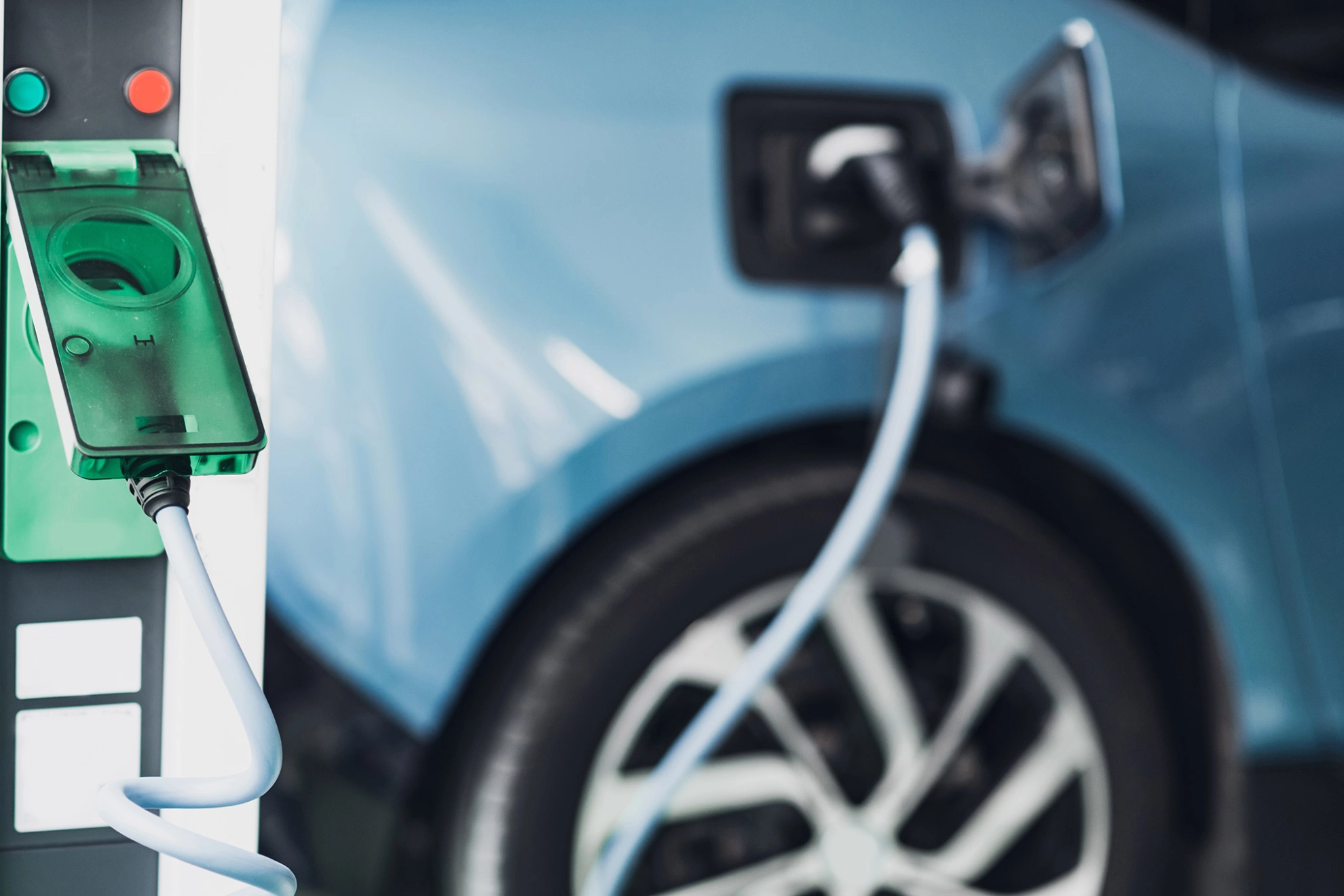
However, a successful transformation requires the right political framework. At the meeting with policymakers, Hofmann made it clear that they must significantly step up efforts to build out the charging infrastructure. The union leader emphasized that expanding power grids and renewable energy sources—such as wind turbines and solar panels—is also essential for this.
To be able to manufacture the products of the future, domestic companies need a reliable supply of raw materials and key components such as batteries and semiconductors. IG Metall therefore stresses the need for policymakers to give greater attention to the issue of raw material security and to promote the further expansion of German and European battery and chip production. Only in this way can the risk of supply chain disruptions—as the industry experienced with many supplier products during the COVID-19 pandemic and the war in Ukraine—be minimized in the future.
In addition, companies are called upon to continue driving digitalization forward and to develop new business models in this field. Here, too, policymakers will need to create the necessary framework conditions—for example, for collaboration in the area of software development.
Skills Development Is Essential
The obstacles have now been identified; the task is to clear them out of the way. Another mobility summit is scheduled to take place soon. It must focus on concrete proposals for overcoming the current hurdles. IG Metall and its President, Jörg Hofmann, will work to ensure that words are followed by action. The fact that the federal government is addressing this issue and recognizes the need for action in the transformation is a good sign; now it’s a matter of working together with IG Metall and the companies to successfully shape the transformation. Jörg Hofmann emphasizes: “Workers want to be part of tomorrow’s innovations and products, and to do so, they need the social tools: skills and social security.”