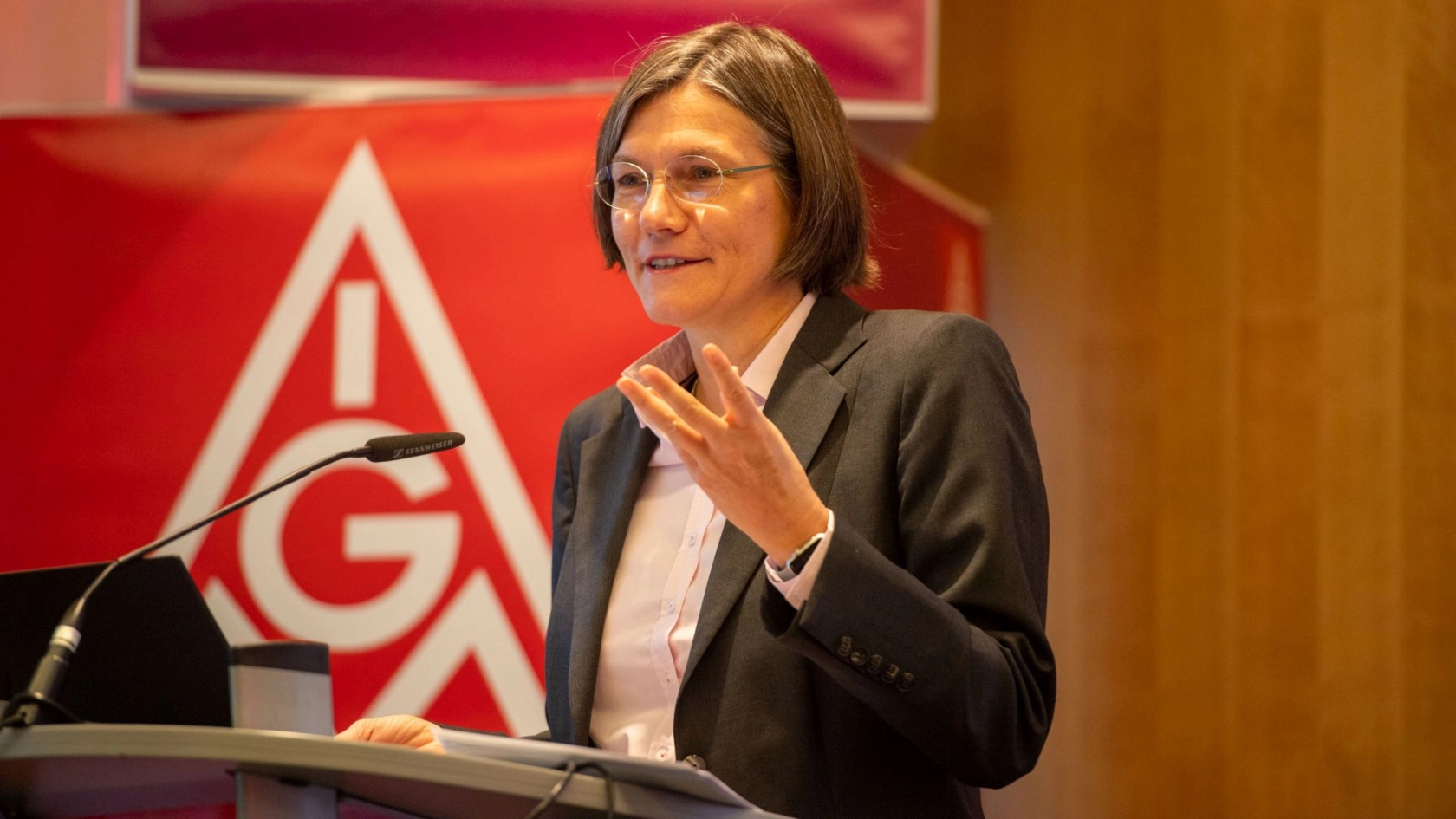
Only one in eleven board members in Germany is female. “If there are no quotas, the proportion of women will only increase in homeopathic doses,” says Christiane Benner, Second Chair of IG Metall. In supervisory boards where the statutory gender quota applies, however, the proportion of women is over 30 percent. We at IG Metall are therefore advocating for stricter legal regulations.
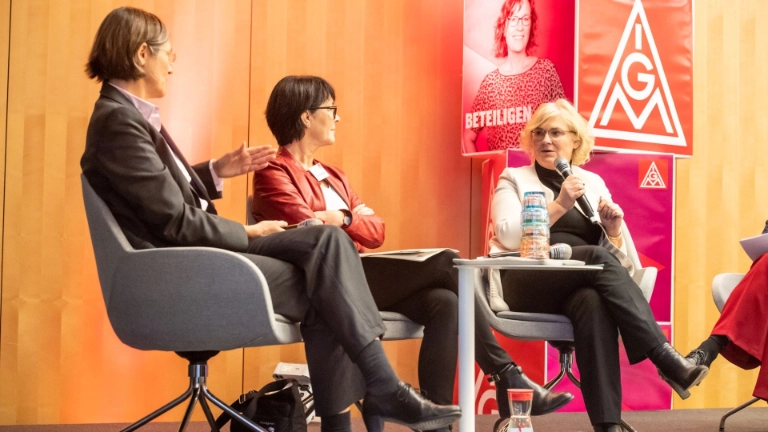
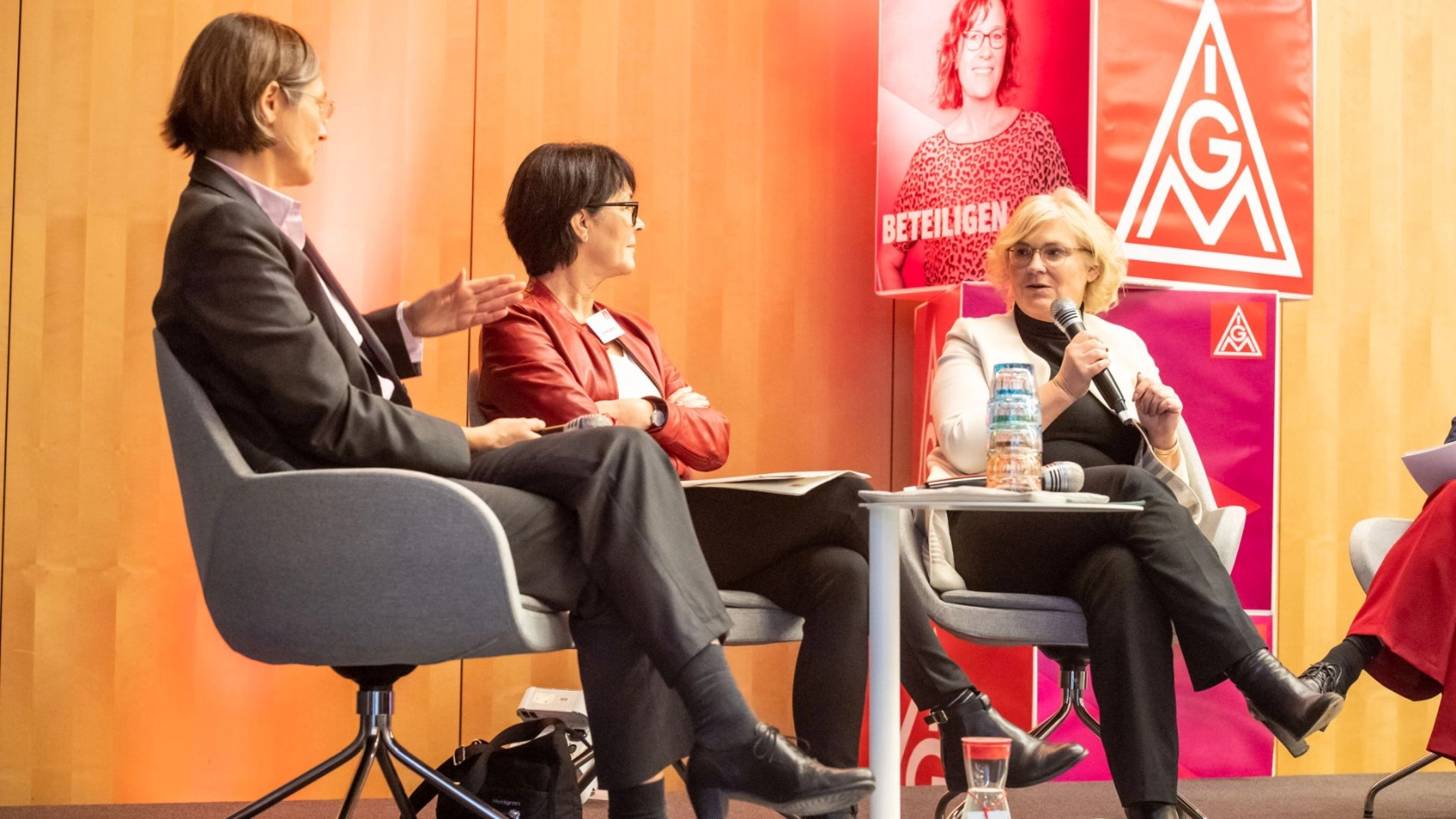
The goal: a fixed quota for executive boards and supervisory boards of additional companies as well. “There are enough qualified women,” emphasized Christiane Benner at an IG Metall conference with supervisory board members and works council members on the topic of gender quotas on February 12, at which a joint resolution was also adopted. In Berlin, the Second Chair of IG Metall discussed the issue with, among others, Federal Minister of Justice Christine Lambrecht (SPD) and Ulrike Jakob, Deputy Chair of the Volkswagen Baunatal Works Council.
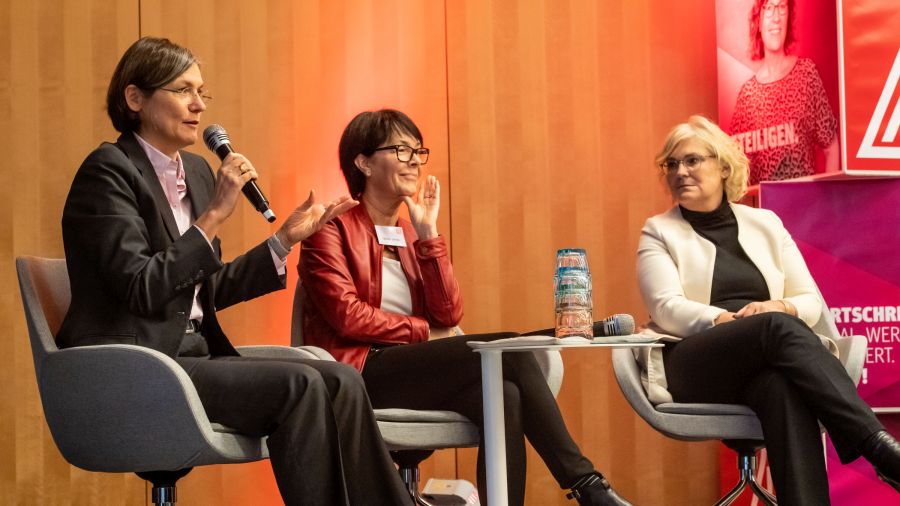
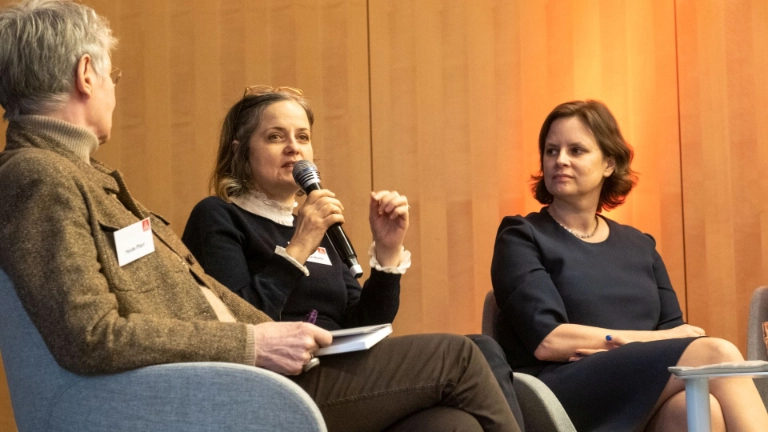
Christiane Benner, Second Chair of IG Metall; Ulrike Jakob, Deputy Chair of the Volkswagen Baunatal Works Council; and Federal Minister of Justice Christine Lambrecht (SPD) at the IG Metall conference on gender quotas on February 12 in Berlin. (Photo: Peter Bisping)
“Zero Target Quota” Must Go
Targets, as already mandated by the law “on the equal participation of women and men in leadership positions,” have not proven effective as a tool for promoting women. In 2019, more than one-third of all companies required to set targets actually set a “target” of appointing zero percent women to their executive boards. That is absurd.
We are advocating for a “zero target quota” to be ruled out in the future. A statutory minimum requirement must be established. Furthermore, the targets companies set for themselves must be at least higher than the status quo.
Targets are of little use if they are not seriously pursued. That is why we are also calling for sanctions against companies that fail to meet their targets.
The Quota Works
The statutory gender quota for supervisory boards in publicly traded and co-determined companies, which has been in place since 2015, is having a positive effect. “The quota works,” says Christiane Benner. “Over the past four years, the proportion of women on supervisory boards has risen by twelve percentage points to 34.9 percent, even in the male-dominated sector covered by IG Metall.”
It is necessary to extend these regulations to other companies. We therefore welcome the federal government’s consideration of including non-publicly traded companies. “The most sensible approach would be to lower the threshold for companies subject to co-determination to 1,000 employees,” states the vice chair of IG Metall. This would also significantly increase the number of companies required to comply with the gender quota.
Benner emphasizes: “The gender quota is a tool to encourage companies to consistently integrate the advancement of women at all levels into their planning. This boosts overall economic success and is a matter of fairness.”
About the resolution (PDF, 2 pages)
How IG Metall Advocates for Equal Opportunity
How collective bargaining agreements drive progress toward gender equality