Following the VW supervisory board meeting, one thing is clear: the fight continues. “We’ve thrown a wrench in the works for the executive board. But we’re still a long way from our goal,” says Christiane Benner, president of IG Metall. After reports of the VW Executive Board’s plan to close four plants had been circulating in the press for weeks, in early September the employee representatives, together with the state of Lower Saxony, were able to avert an escalation on the Supervisory Board and pave the way for a viable solution. “The agreement is a compromise in which the Executive Board and management had to back down significantly from their maximum demands on several points. The employee representatives succeeded in ensuring that they would not be presented with a fait accompli on the key issues of job cuts and the future of the plants. On the contrary: There are no pre-determined decisions here, and we will closely monitor whether the Executive Board led by Oliver Blume is doing its job,” emphasizes Daniela Cavallo, Chair of the Volkswagen AG Group Works Council. (You can find all the details on the agreement reached by the Supervisory Board here.)
But one thing is also clear: “Now it’s down to the nitty-gritty,” says Christiane Benner, adding: “The real battle over the future of locations, jobs, and investments has long been in full swing. That’s why: Join us for the Automotive Action Day on September 21, because solidarity is our strongest brand!”
Nationwide Protests at the VW Group
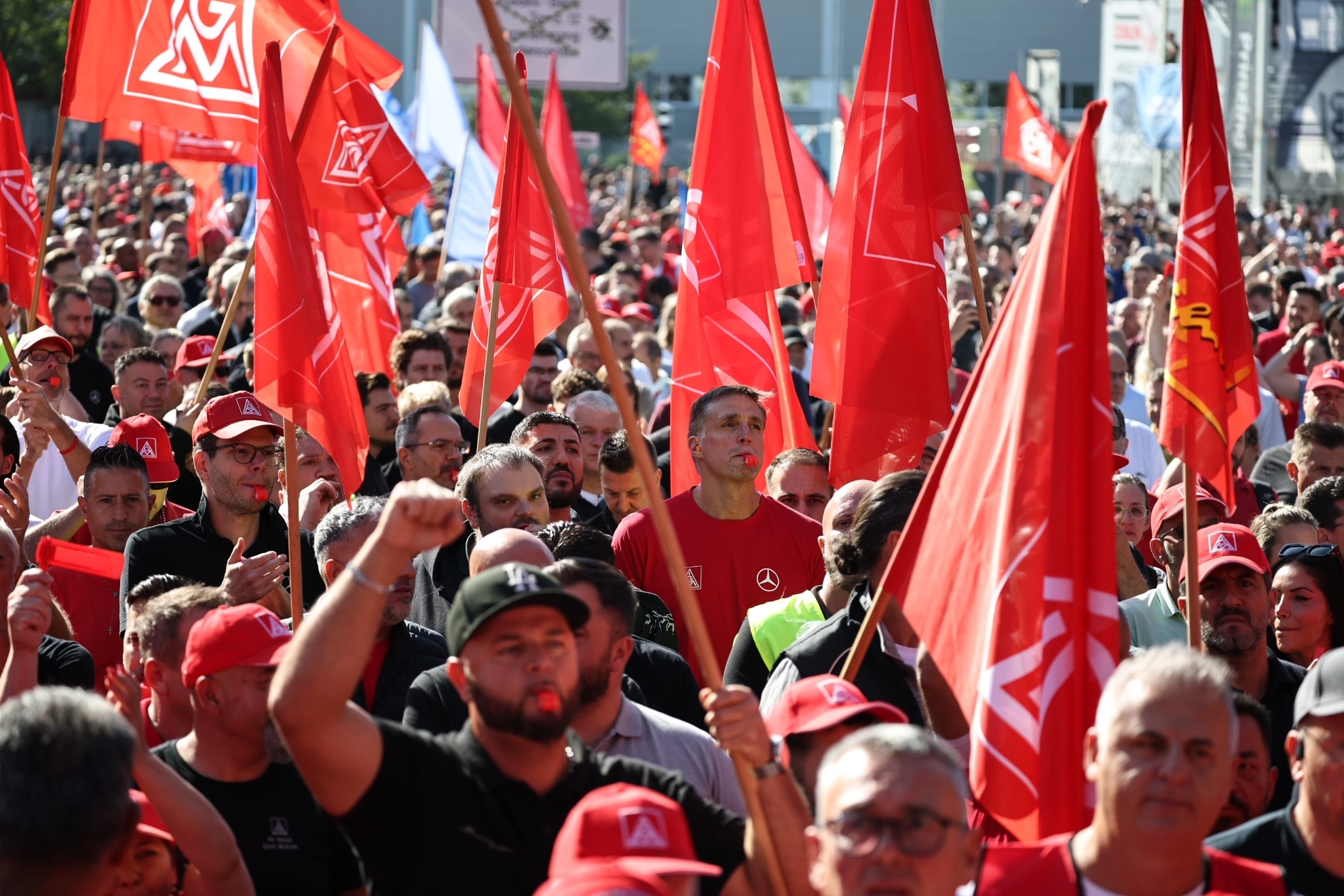
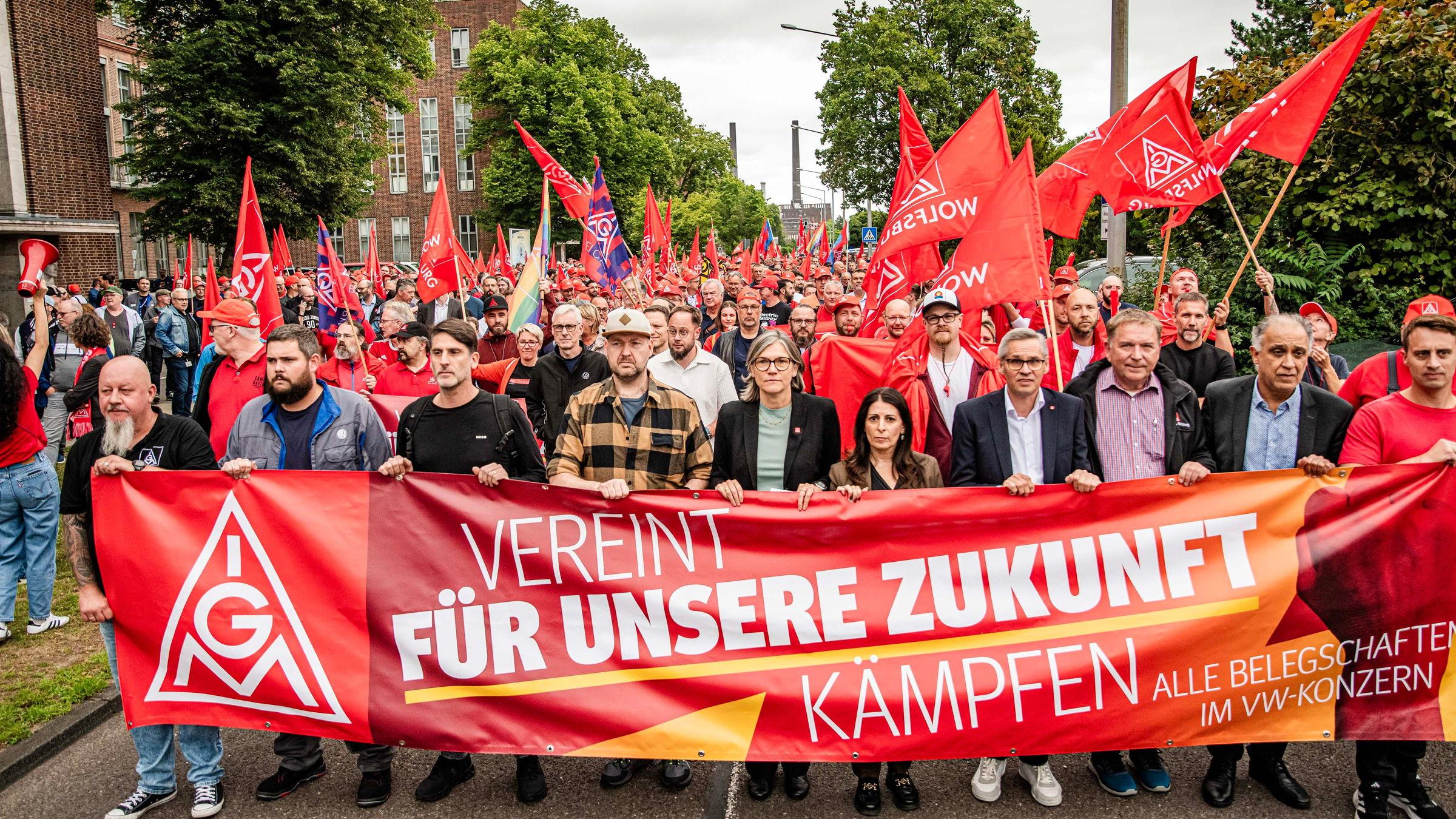
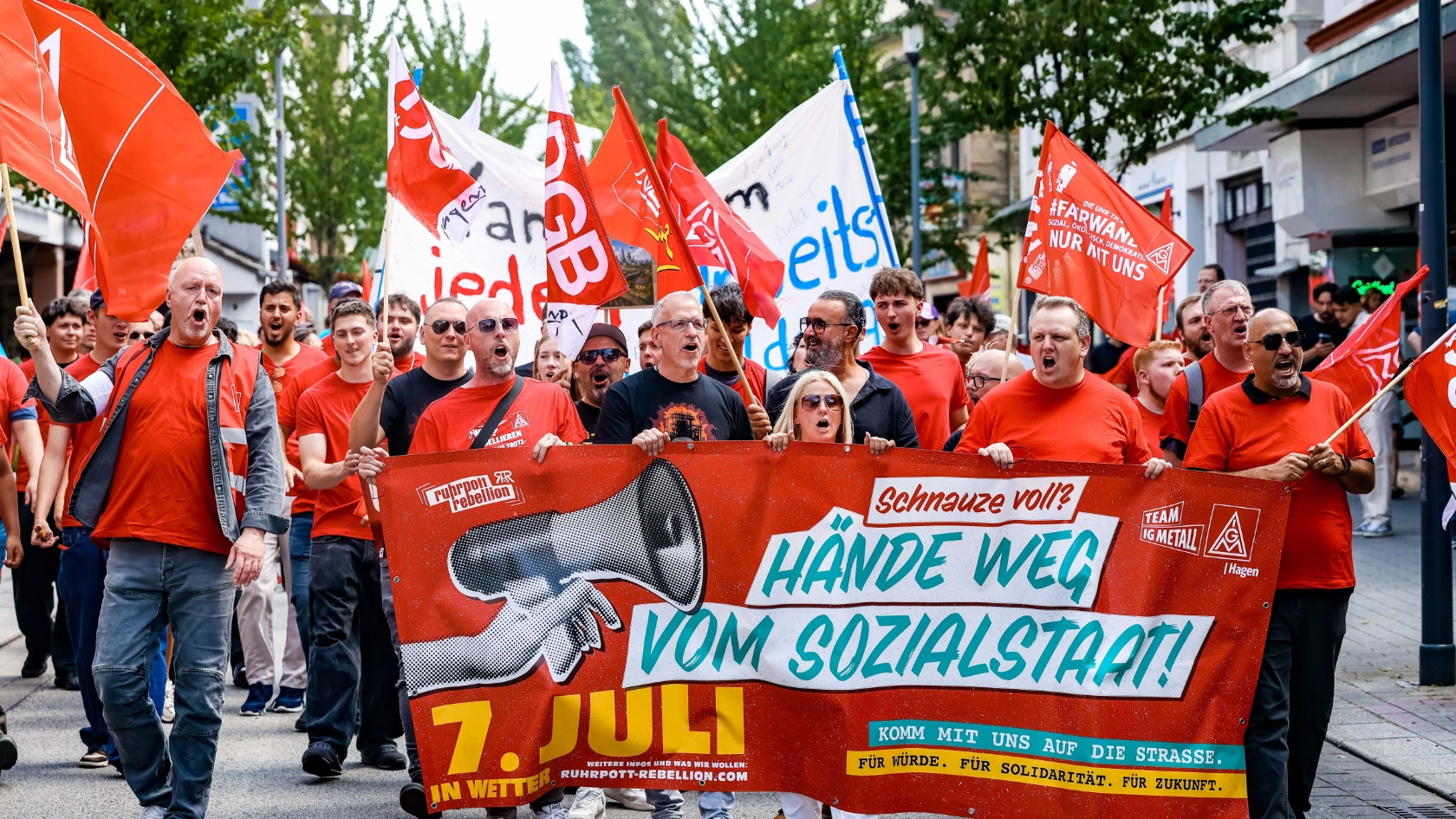
On July 9, IG Metall shop stewards and works council members already made a powerful statement against plant closures and massive job cuts at all Volkswagen Group locations throughout Germany. The actions at the core Volkswagen brand, as well as at Audi, Porsche, MAN, CARIAD, and other companies, took place under the slogan: “United for our future—all workforces in the VW Group are fighting together.” On September 21, employees will also send a clear message—across plants, suppliers, and manufacturers, along the entire supply chain.
“Tens of thousands of our colleagues are afraid for their future. For them, one negative headline after another has been appearing in the media for weeks,” explained Daniela Cavallo as early as July 9 in Wolfsburg, calling on the Group Executive Board to finally do its part to ensure that the public sees Volkswagen as a driving force for the mobility of the future—and not as the gravedigger of its own locations.
Day of Action at VW in Wolfsburg under the slogan: “All workforces in the VW Group are fighting united for our future”
There is a great deal of anger and uncertainty among the employees
“Across the country, our colleagues have sent a clear message: Not like this!” said Christiane Benner regarding the VW protests in early July. Benner emphasized: “Our colleagues have worked hard; they’ve made concessions. Instead of taking this effort as an example, the Executive Board is confronting employees with new cutback plans. The anger and uncertainty this causes are understandably high. We need new ideas and concepts for keeping the plants running at full capacity—sensible considerations from the company.”
“There are smarter solutions than plant closures,” says Thorsten Gröger. The regional director of IG Metall for Lower Saxony and Saxony-Anhalt explains: “We insist on the fulfillment of investment commitments, innovative products, the best models on the market, less bureaucracy in decision-making processes, and genuine synergies within the group. No unnecessary duplicate structures, but rather a smart use of our collective strength. Anything else is unacceptable to Gröger: “We will fight with all our might against any attack on co-determination, the workforces of the Volkswagen Group, and our plants.”
This view is shared in southern Germany as well: “Employees are not a cost factor that can be cut at will. They have worked to build the success of Volkswagen and Audi and have supported the company even in times of crisis,” says Jörg Schlagbauer, chairman of the Audi General Works Council, emphasizing: “Those who keep rolling out new cost-cutting programs must not overestimate the patience of the workforce.”
The patience of the VW Group’s employees has run out. In Emden, 4,000 metalworkers took to the streets a week before the protests on July 9—at the same time as Mercedes-Benz employees.
33,000 Mercedes-Benz employees gathered outside the factory gates
To send a clear message, over 33,000 Mercedes-Benz workers gathered in front of the factory gates at their various locations. “Hello, management: This is not how it works! While shareholders are reaping more than fair profits, are workers supposed to sacrifice their contractually guaranteed rights? Certainly not!” emphasized Christiane Benner, who had traveled to join the workers at the Düsseldorf site.
Mercedes-Benz plans to make deep cuts—at the expense of the employees. Company executives believe that employees should work five more hours a week without receiving a single cent more in pay. At the same time, they are postponing the payment of the “Trafo” bonus, scheduled for July, until April of next year—with the possibility of canceling the payment entirely.
“The company’s actions are causing massive uncertainty and demotivating many of our colleagues. Instead of creating prospects for the plants and jobs, they’re ramping up the pressure,” criticized Ergun Lümali, chairman of the General Works Council, outside Gate 7 at the Sindelfingen plant.
Workers Are Not Disposable Assets
Cost-cutting programs, job cuts, relocations, plant closures: Across Germany, decision-makers at automakers and suppliers are delivering bad news. They cut 50,000 jobs in the automotive industry last year—and things will continue this way if they have their way. But they’re forgetting one thing: The workers are not to blame for this crisis. The Mercedes-Benz General Works Council made this clear a week ago. In a press release, it emphasized: “The causes of the current challenges do not lie with the workers. Neither developments in China, geopolitical tensions, nor rising energy prices were caused by them.”
In Rastatt, in front of Gate 6, Barbara Resch, head of the IG Metall Baden-Württemberg district, sharply criticized the company’s actions: “Mercedes is currently demonstrating in no uncertain terms how not to do it. Because anyone who believes that the future of the industry can be secured through longer working hours, cuts to special payments, and pressure on workers is sorely mistaken! The 35-hour workweek is not a thing of the past, good collective bargaining agreements are not a competitive disadvantage, and employees are not mere resources to be disposed of at will. Mercedes employees have long made the initial investment by securing the future through collective bargaining—now management must deliver.”
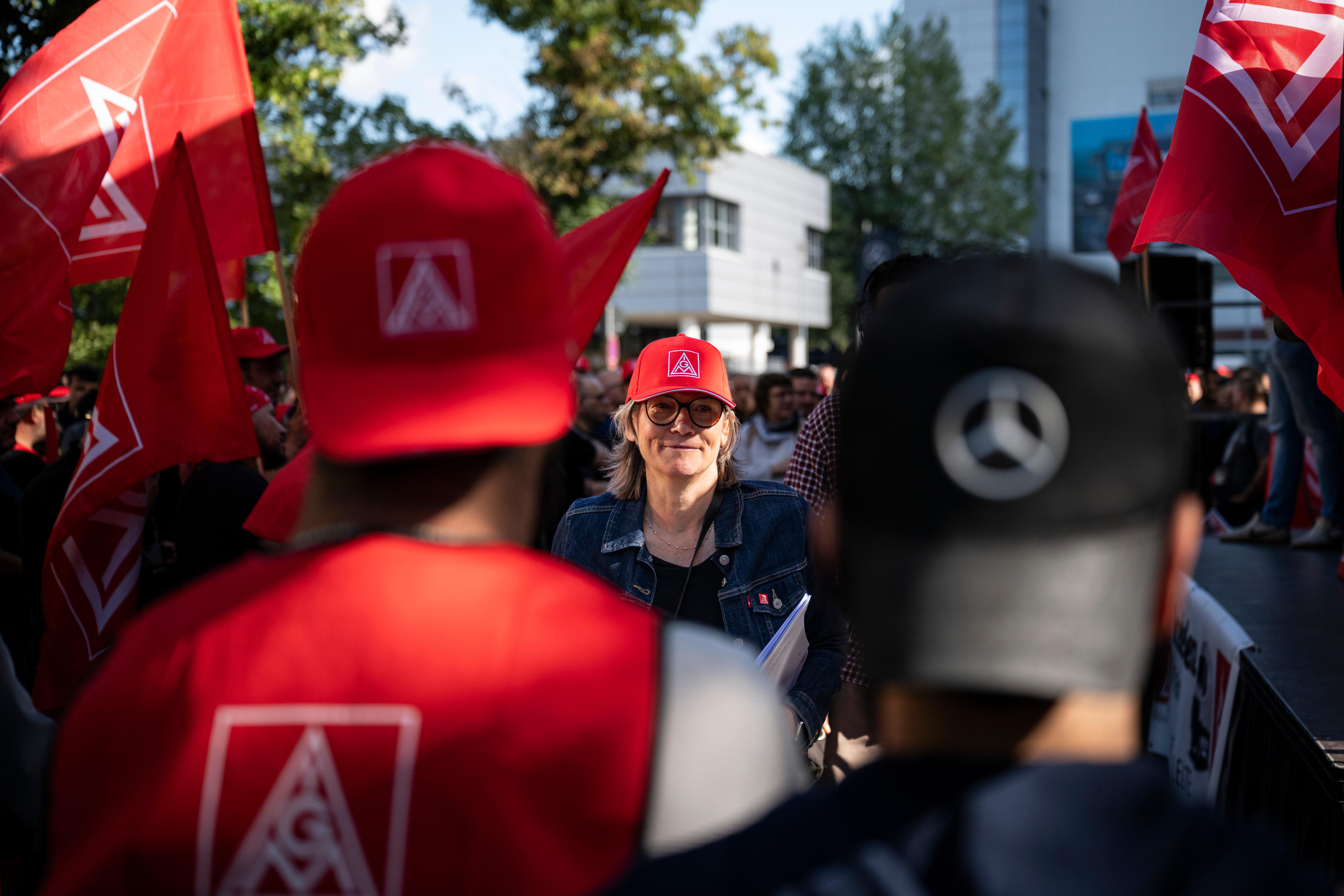
Christiane Benner, President of IG Metall, speaking in Düsseldorf at the Automotive Action Day
IG Metall will give corporate leaders a hot summer and fall
It’s time for decision-makers in the automotive industry to finally take responsibility and develop genuine strategies for the future, instead of leading long-established companies into irrelevance with cost-cutting programs. “If you want to ensure competitiveness, you have to invest in strong products, modern technologies, and German production sites. The future is shaped by innovation, smart strategy, and the involvement of employees. That is exactly what we are demanding from the executive board,” emphasizes Ergun Lümali, Chairman of the Mercedes-Benz General Works Council.
Workers in the automotive industry are tired of haphazard CEOs gambling away their future—together with IG Metall, they are fighting back against the drastic cuts. The Mercedes-Benz workers were the first to take action. Across Germany, they took to the streets: in Kuppenheim, Rastatt, Sindelfingen, Untertürkheim, Bremen, Berlin, Düsseldorf, Ludwigsfelde, and Germersheim. This is just the beginning. IG Metall and the workers at automakers and suppliers will give the auto industry’s executives a hot summer and fall as long as they continue to prioritize job cuts and offshoring instead of seeking real solutions to the problems.
Nationwide Day of Action on September 21
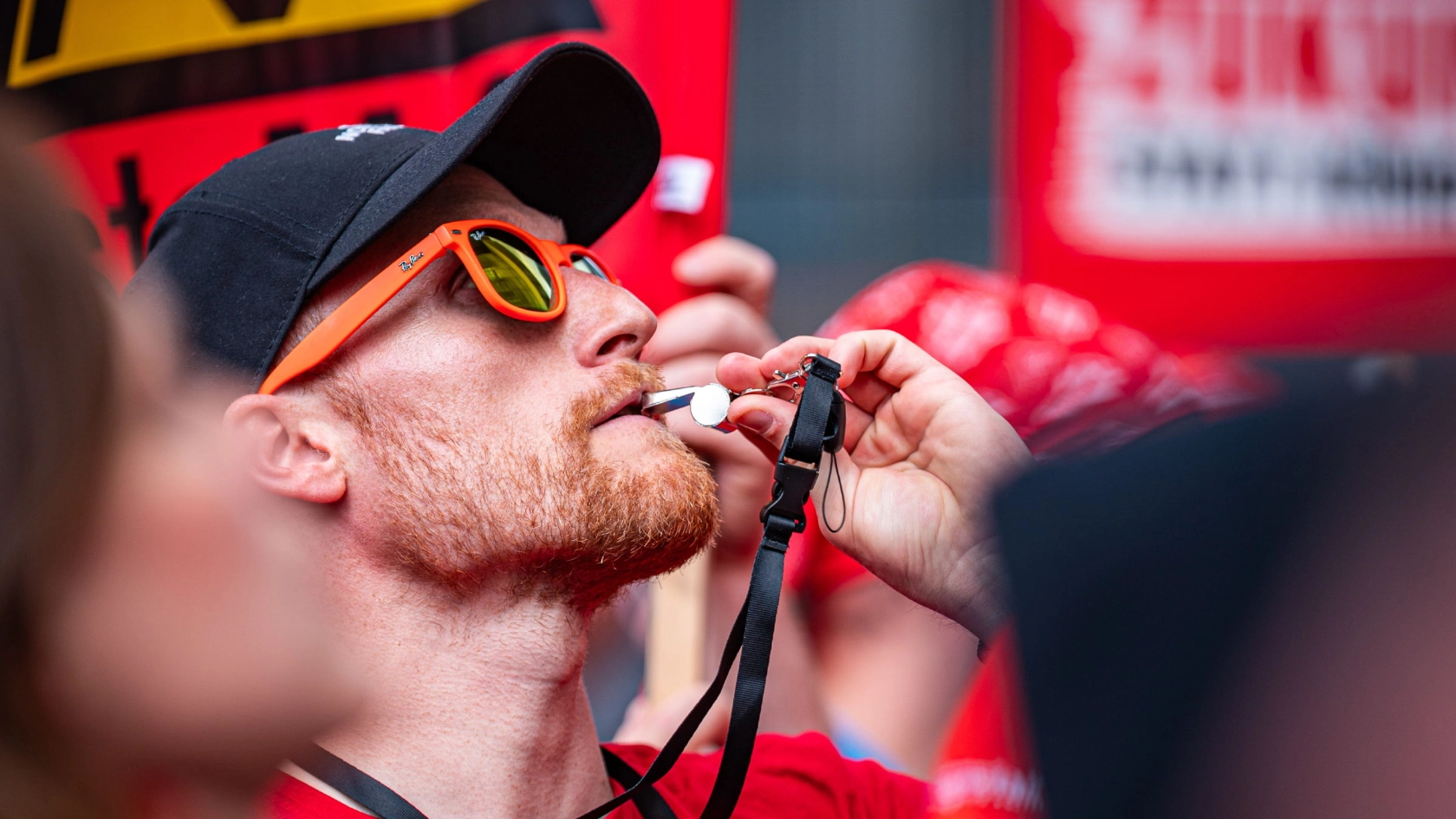
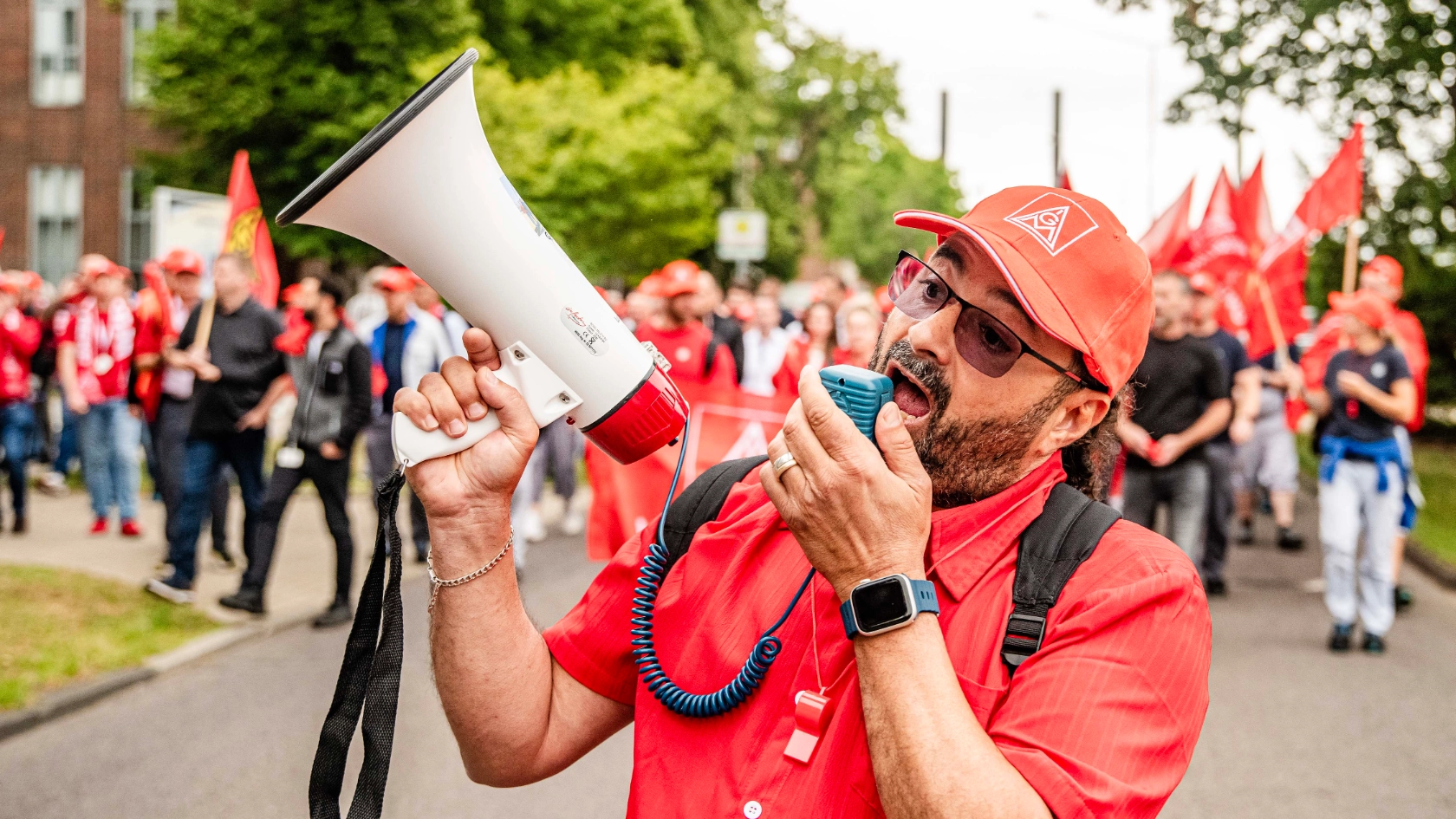
On September 21, IG Metall will organize all-day, nationwide actions and protests at German automotive sites. The union is therefore calling on all workers in the automotive and supplier industries to participate.
Christiane Benner, President of IG Metall, already emphasized in early July during the protests by Mercedes-Benz workers what is at stake for employees: “The key to a strong auto industry lies in investing in future-proof products, locations, and employees. We also demand a clear signal from policymakers: The industrial core of this country must not be hollowed out. We need an active industrial policy that safeguards the transformation—with investments, clear commitments to locations, and good jobs. Profit interests must not be prioritized over the long-term viability of entire locations.”