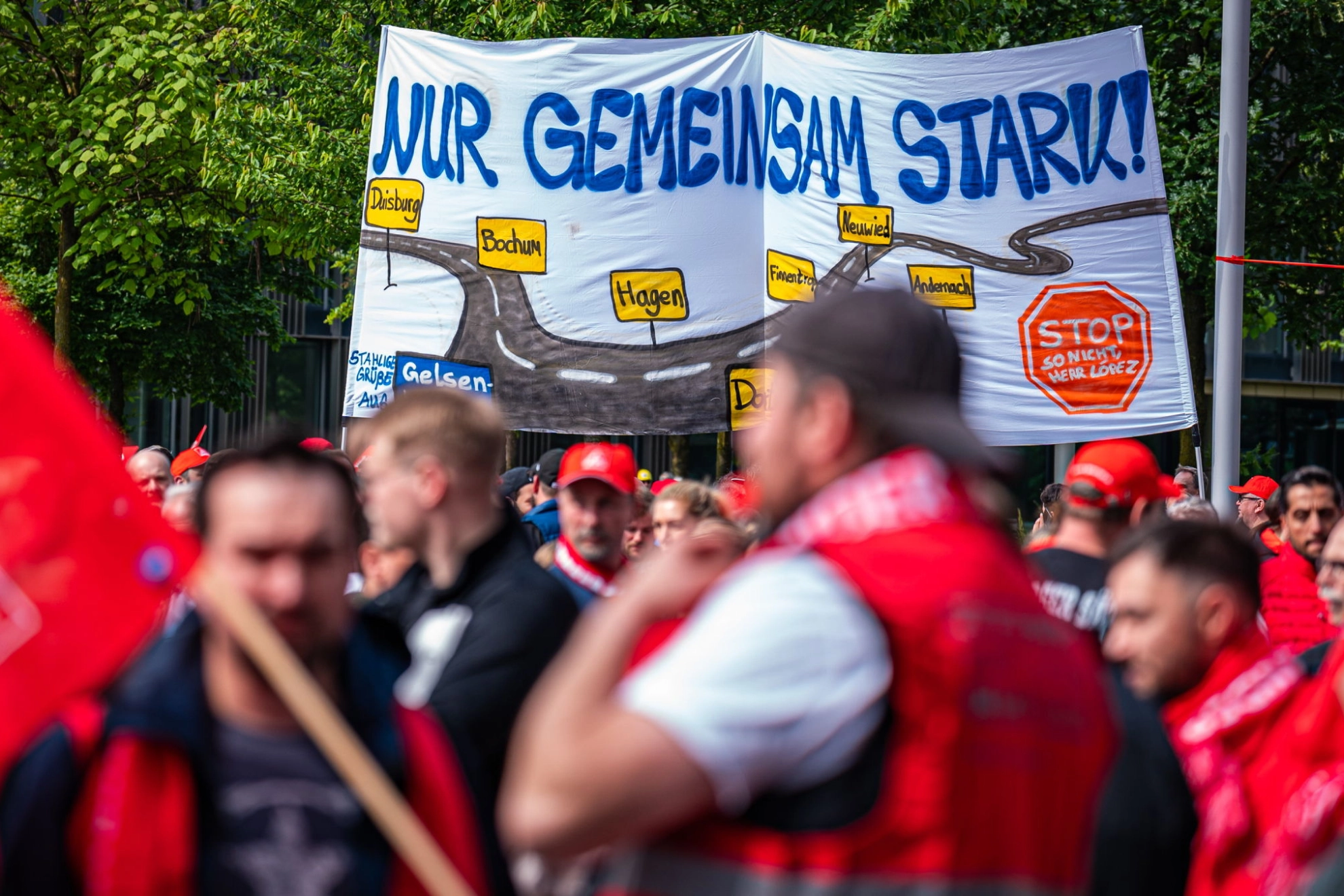
Miguel López’s track record is poor. Since he took office in June of last year, the company’s stock price has more than halved. Furthermore, López has acted irresponsibly and is responsible for the resignations of three members of the Executive Board in the steel division following a weeks-long campaign. The grade employees and shareholders of the group give him is therefore “unsatisfactory.” In the “steel” category in particular, the grade is a 6. For the past year, the executive has been CEO of Thyssenkrupp AG and is thus ultimately responsible for the subsidiary Thyssenkrupp Steel. His task is to enable the steel division’s transformation. A start had already been made: Employees, the works council, and IG Metall secured a grant of 2 billion euros from the federal and state governments to launch the necessary transition to climate-friendly production. But instead of continuing down this path, López is jeopardizing the future of the steel subsidiary.
What’s going on at Thyssenkrupp?
Instead of helping the steel division with its restructuring, López wants to cut jobs there. The outgoing head of the steel division, Bernhard Osburg, had already agreed to lower the so-called operating point from 11 million metric tons to 9.5 million metric tons per year, but that wasn’t enough for López. He is demanding an even deeper cut, which would lead to even more job losses, jeopardize entire sites, and amount to a massive purge. IG Metall and the employees refuse to let that happen.
López Wants to Shirk Responsibility
López does not want to take responsibility; he wants to pass it on. López has already sold 20 percent of the steel division to billionaire Daniel Kretinsky, with the prospect that Kretinsky will eventually take over half of the company. López wants to downsize the steel division and sell it off cheaply; in doing so, he is acting unscrupulously and jeopardizing the jobs of thousands of employees. Constructive cooperation with this manager is impossible, as demonstrated by the most recent Thyssenkrupp Steel supervisory board meeting, which was actually intended to finalize an agreement on financing the steel division. The result: Four supervisory board members resigned, and three members of the steel division’s executive board were replaced. Felix Banaszak, a member of the Bundestag from Duisburg, therefore asks on the online platform LinkedIn: “Does the Thyssenkrupp Group actually have an industrial strategy beyond sheer destructive fervor?” The politician demands: “The federal government and the state of North Rhine-Westphalia have done their part by committing to two billion euros in funding. Now the parent company must dispel all doubts and make it unmistakably clear that it stands behind the site’s transformation toward climate neutrality and will secure the necessary investments.”
López Pursues a Distraction Strategy
Jürgen Kerner, Second Chairman of IG Metall and Deputy Chairman of the Supervisory Board of Thyssenkrupp AG, sees the replacement of the three experienced steel executives—for which López is responsible—as a massive step backward. Kerner emphasizes: “These personnel decisions are a distraction from the actual problems that remain unresolved. This is damaging to the company.”
The vice chairman of IG Metall therefore demands: “What we urgently need now is calm, continuity, and an experienced management team that is fully focused on tackling the immense challenges. What we have instead is utter chaos: the experienced steel executive board forced out of the company in a reckless move, the steel supervisory board snubbed, and politicians on edge. The company’s value has been cut in half under Mr. Lopez. Tens of thousands of employees are deeply unsettled.”
IG Metall Wants to Bring Politicians On Board
The supervisory board members who resigned have also left a void. IG Metall President Christiane Benner is particularly concerned about the resignations of Sigmar Gabriel and Elke Eller from the supervisory board, who cited the inability to maintain a trusting working relationship with the thyssenkrupp AG executive board as their reason. Benner now wants to bring politicians on board: “We call on the federal government and the state government of North Rhine-Westphalia to claim the two supervisory board seats that are becoming vacant for the state and the federal government.” She says this is necessary to ensure a transparent and fair sharing of the burden between thyssenkrupp Steel Europe AG and its parent company, thyssenkrupp AG. The chairwoman of IG Metall emphasizes: “The upcoming restructuring, the planned spin-off, and the green transformation must not be carried out at the expense of the 27,000 employees in the steel sector.”
Employees Want to Stop López’s Chaotic Course
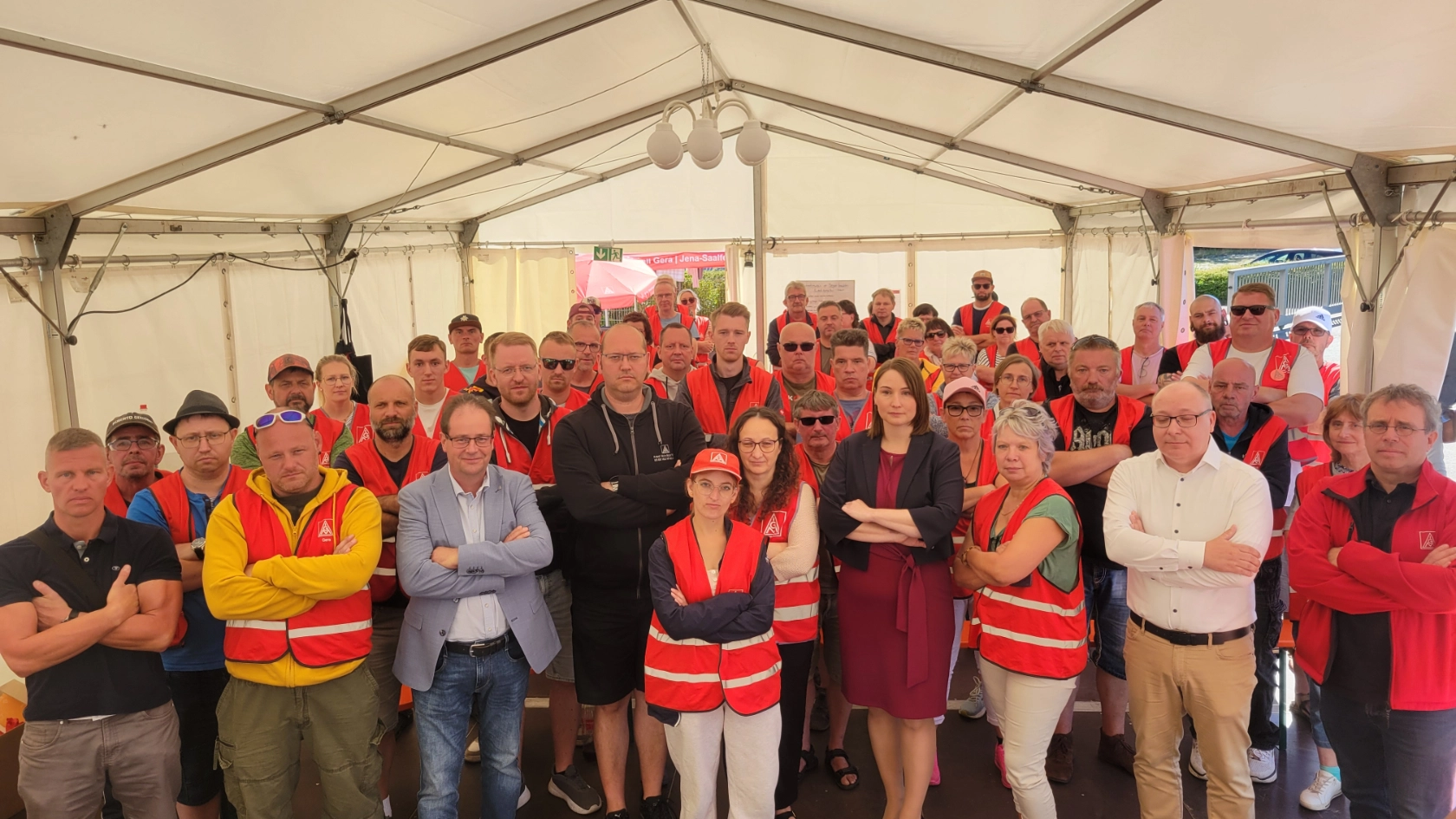
Calm, continuity, and experienced management—as called for by the Second Chair of IG Metall—are also what Thyssenkrupp Steel employees want. But they do not see these qualities in López. Ali Güzel, Chair of the Thyssenkrupp Steel Works Council, makes it clear: “The situation is more dire than ever. We’re facing the threat of the plant being cut in half. The irony is: Every single one of us could be affected by the consequences of López’s heavy-handed policies, but we can only stop him by working together.”
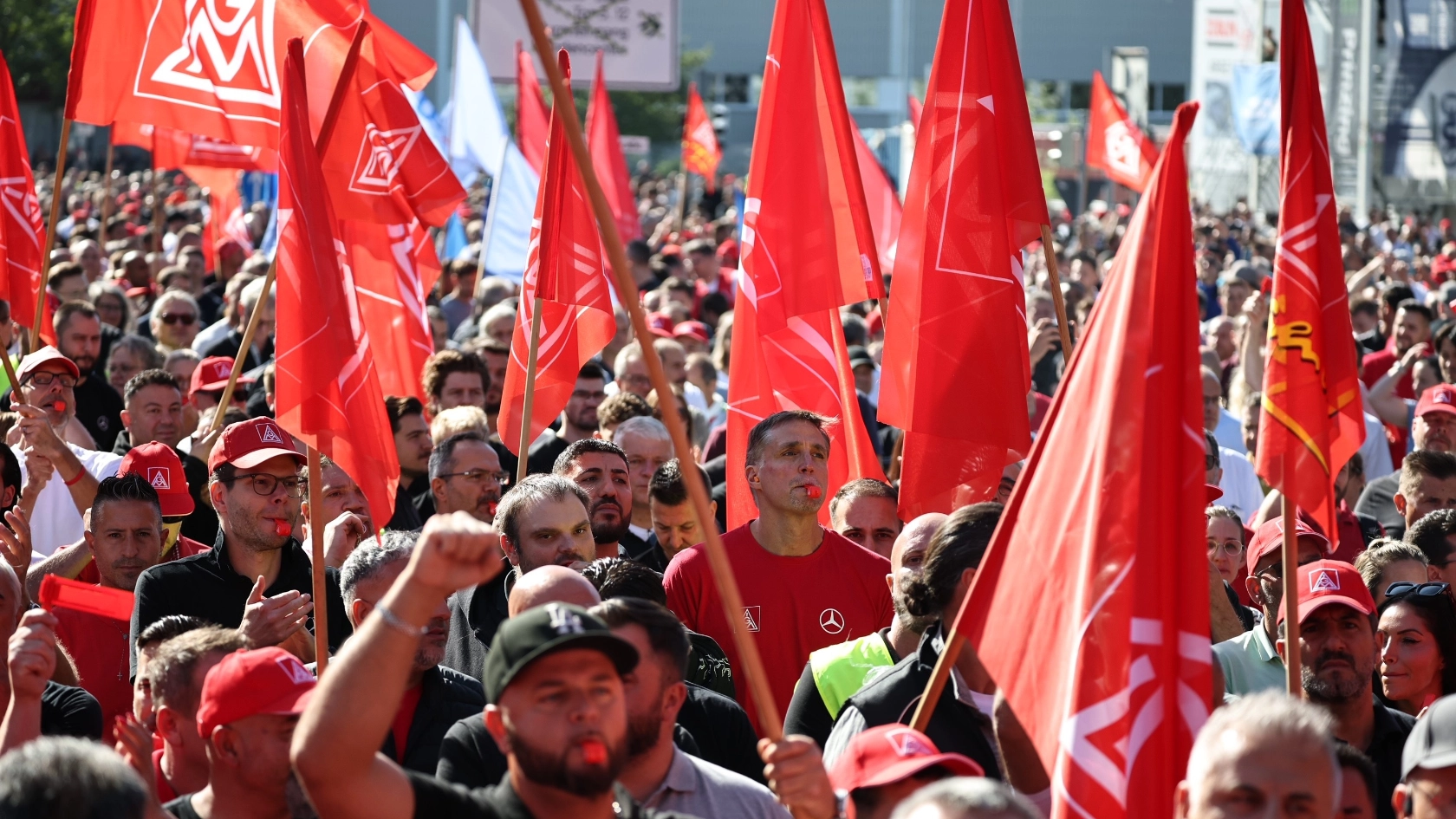
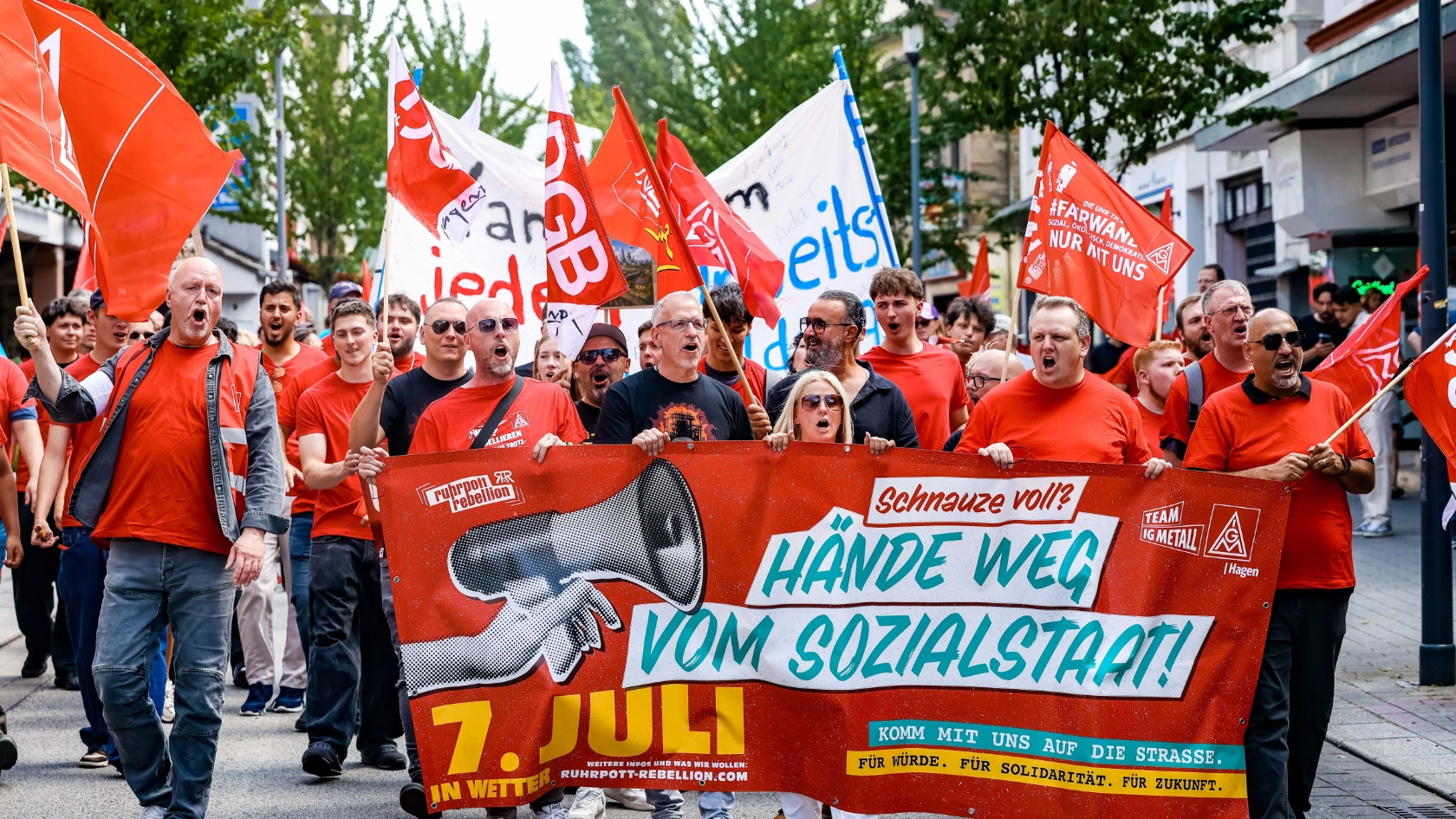
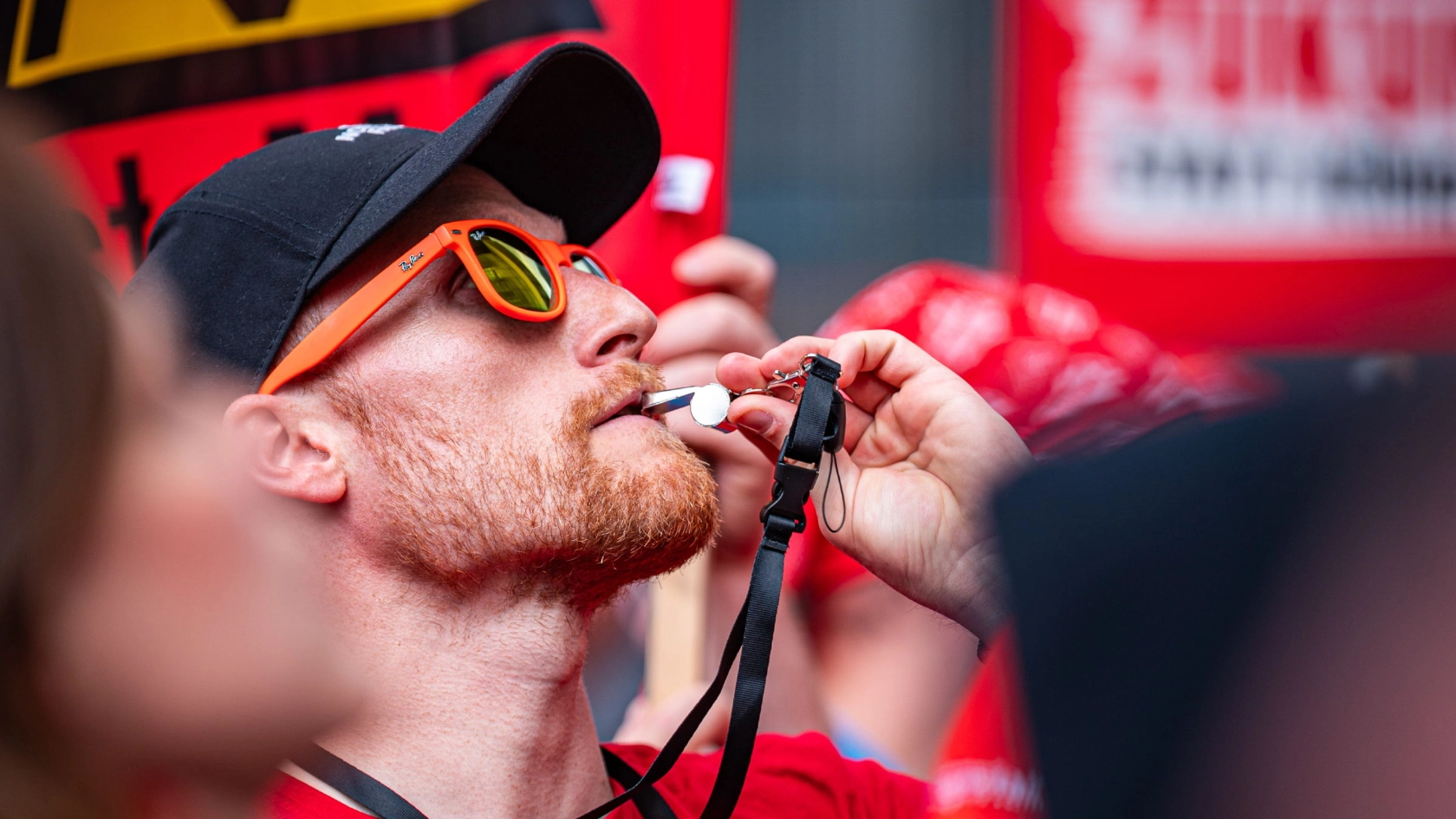
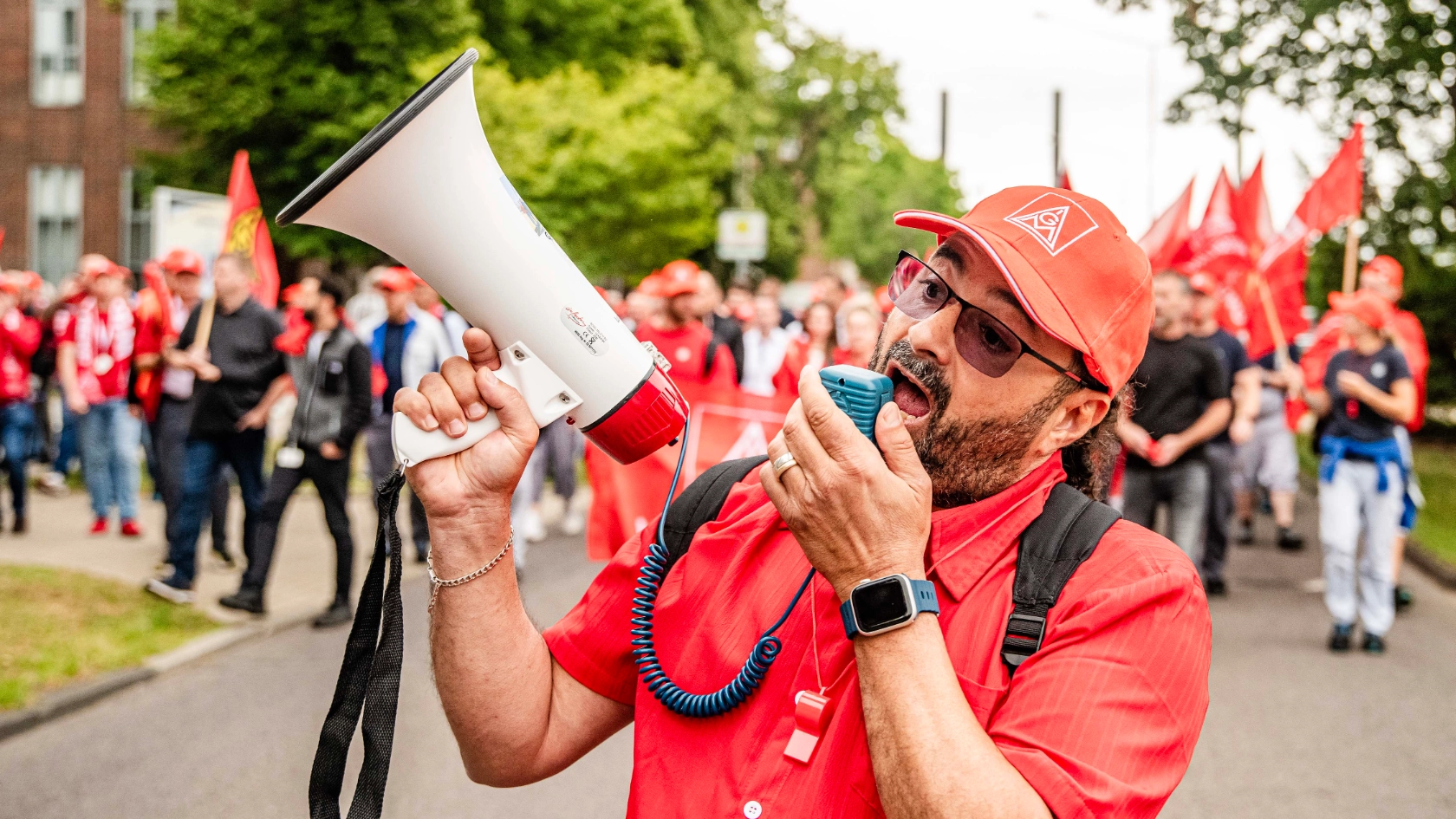
The employees want to fight back rather than wait until López eliminates their jobs as well. “López is not our CEO,” they say, and are demanding his resignation in a petition. Nearly 2,000 people have already signed it online. Among the more than 800 comments are statements such as “López has caused enough damage; it’s time for him to go,” “López doesn’t know anything about steel,” and: “This is about jobs. This is about the region—we won’t let López destroy it.”
Christiane Benner, President of IG Metall, calls on López to see reason: “Anyone who tries to roll back co-determination must expect fierce resistance from IG Metall. A company cannot be run against the will of its employees.” Benner calls on CEO Miguel López and Supervisory Board Chairman Siegfried Russwurm to resume dialogue with the employees and to develop solutions for the steel industry together with the works council, its representatives, and its committees.