Job Security Through Short-Time Work and Reduced Working Hours at Bosch
At Bosch, the General Works Council, together with IG Metall, has secured measures to mitigate the effects of the COVID-19 crisis through short-time work and reduced working hours. Employees are protected from layoffs.
In the areas of development, research, sales, and administration, the General Works Council and the company have agreed to reduce working hours by 8.57 to 10 percent, based on IG Metall’s collective bargaining agreement on job security (TV Besch). Income will decrease accordingly, although employees with a collectively bargained weekly work schedule of no more than 35 hours will receive partial wage compensation in the form of an increase in their Christmas bonus. The company-wide agreement affects approximately 35,000 employees at nine locations in the Stuttgart region.
In manufacturing, Bosch will rely on short-time work through the end of the year, with the company supplementing employees’ short-time work benefits to 80.5 to 95.5 percent of their normal net pay.
Bosch employees across Germany have been mounting pressure to secure their jobs. In mid-July, for example, around 3,000 Bosch employees formed a “chain of solidarity” around the main plant in Stuttgart-Feuerbach—while maintaining social distancing. “We will not accept layoffs for operational reasons,” declares Frank Sell, chairman of the Bosch works council in Feuerbach and chairman of the general works council for the Mobility division. He sees a temporary reduction in working hours as an alternative to staff cuts: “A four-day workweek, for example, allows employees to better balance their personal and professional lives. At the same time, personnel costs are reduced. For us, one thing is clear: We will not accept layoffs for operational reasons. The burden of transformation must not fall solely on the shoulders of the employees.”
After tough negotiations, the General Works Council finally reached an agreement.
But the fight to save the approximately 130,000 jobs at Bosch in Germany continues. Today, Bosch employees in Bühl, Baden, staged a protest march against the relocation of parts of the development and production operations to Serbia.
Jobs and Locations Secured at ZF
At the automotive supplier ZF, the jobs of the approximately 50,000 employees nationwide are largely secure despite the coronavirus pandemic. Layoffs for operational reasons and site closures are ruled out until the end of 2022. IG Metall, together with the works councils, negotiated this in a collective bargaining agreement with company management.
In the event of a shortage of orders, working hours will be reduced through short-time work and collectively bargained short-time work arrangements. Employees’ lost wages will be cushioned: ZF will provide top-up payments to short-time work benefits nationwide—and this year, these payments will be even higher to pass on the increased government short-time work benefits. For collective-agreement-based short-time work, ZF will compensate for 20 percent of the lost wages. In addition, there are improved regulations for partial retirement with severance payments, which make it easier for employees to retire earlier.
Apprentices and dual-track students will be hired by the company on permanent contracts, provided they are willing to be assigned to another location on a temporary basis. The number of apprenticeship positions will remain at the 2019 level.
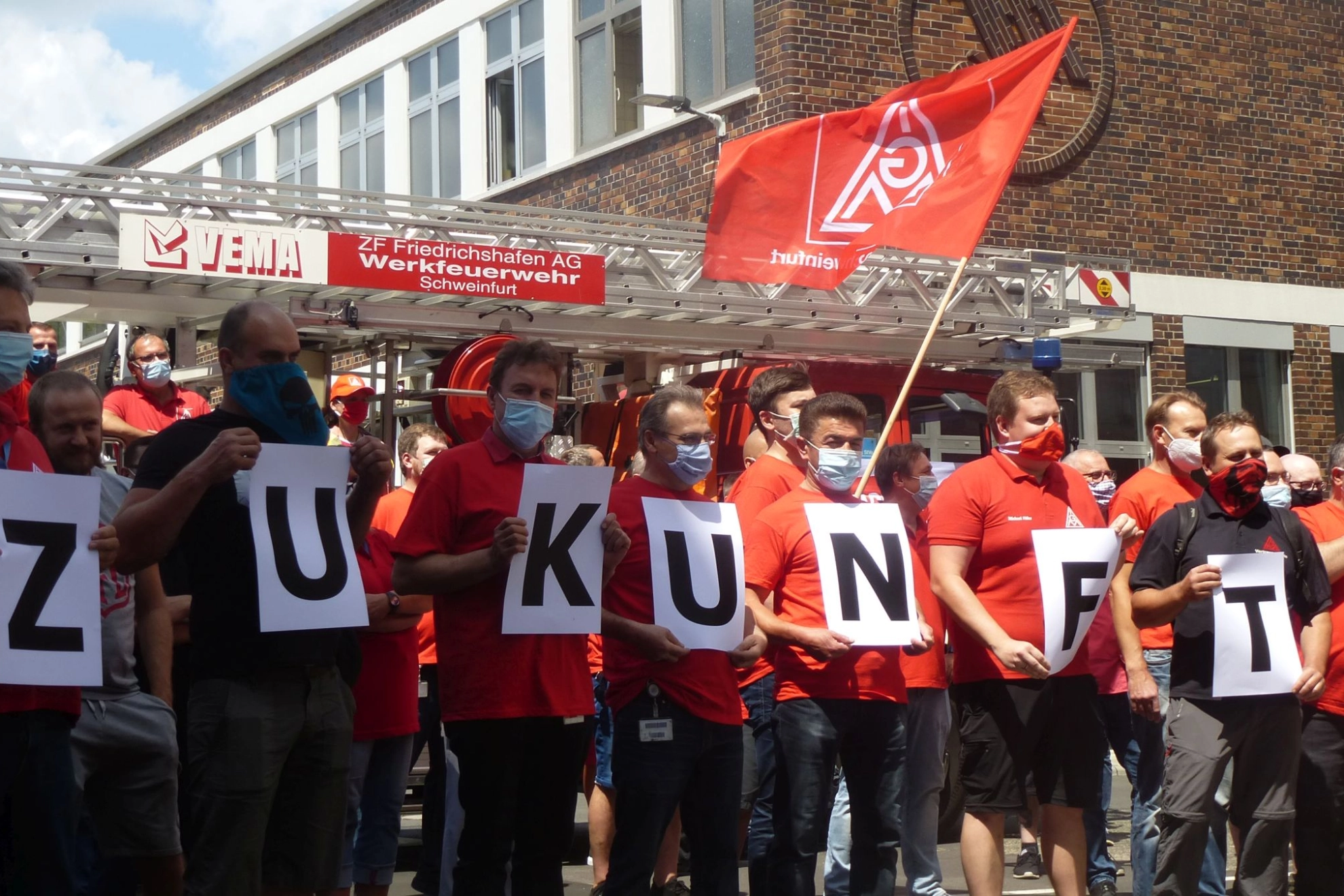
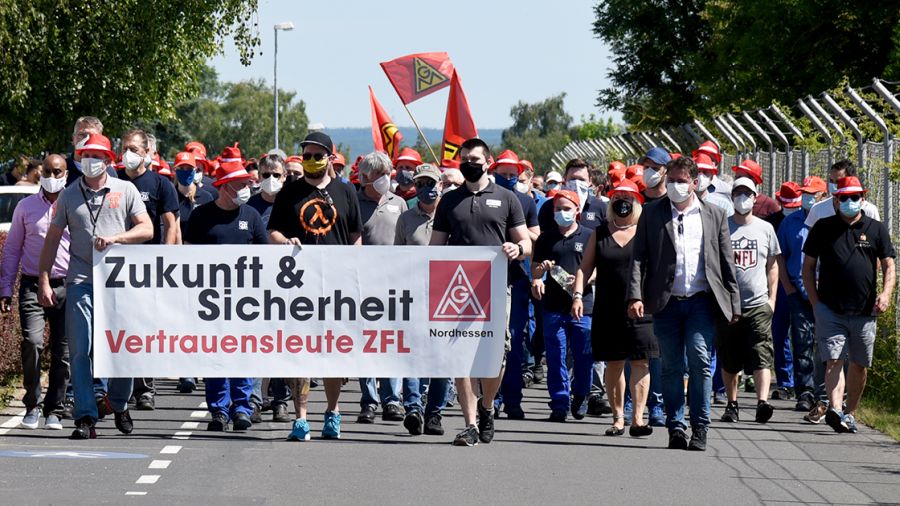
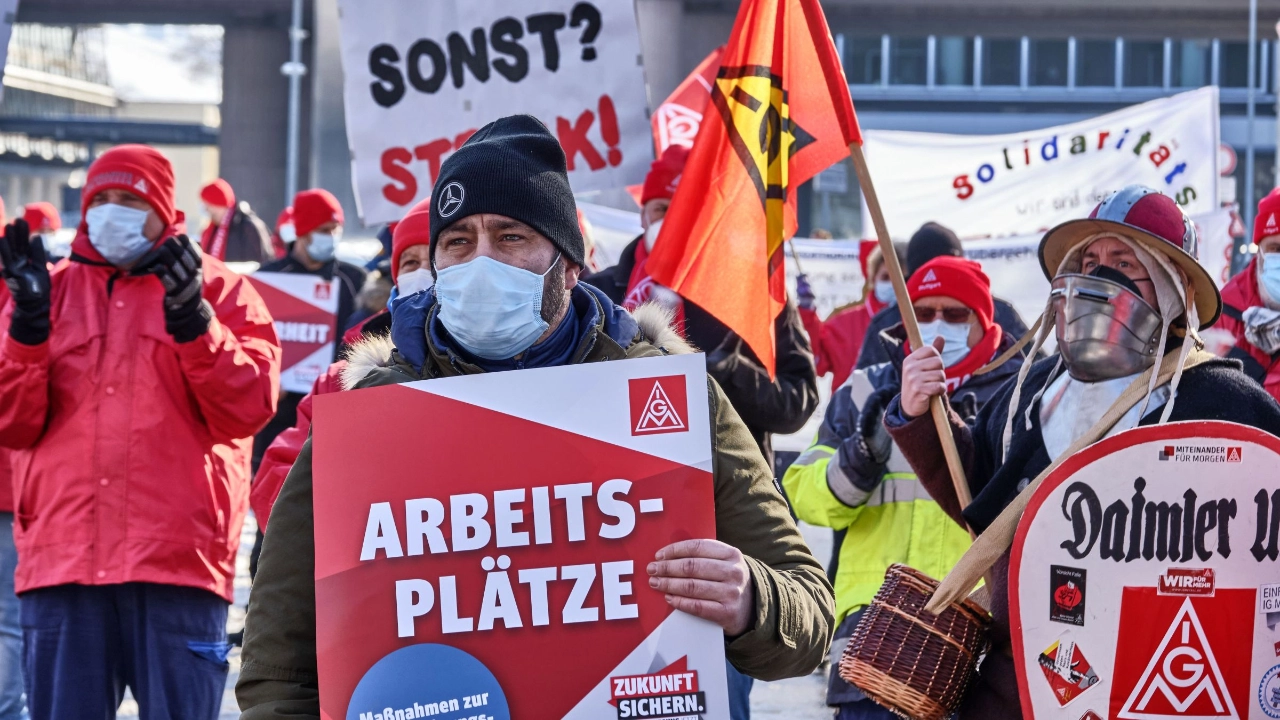
Across Germany, ZF employees took to the streets to demonstrate for their future, as seen here in Kassel-Calden. (Photo: IG Metall)
Employees Help Shape the Future
The collective bargaining agreement also secures prospects for the future: At each location, the works council and management develop “roadmaps” for the transformation, outlining specific future products as well as the necessary investments and training to secure jobs going forward.
In the event of conflicts, a joint steering committee comprising representatives from the works council and management at the corporate level will make the final decision. This committee also discusses key location decisions and corporate-wide restructuring projects to secure future products for existing sites.
Jobs at ZF are thus largely secured—both now and in the future. In return, employees will forgo a portion of their collectively bargained bonus, the so-called “additional amount” (ZUB or T-ZUG B), amounting to just under 400 euros per year, in 2020. Next year, the collectively bargained bonus will then be paid in full again.
Originally, ZF management had announced at the end of May that it intended to cut 12,000 to 15,000 jobs worldwide, half of them in Germany. However, employees at all ZF locations mounted a campaign to save their jobs, organizing demonstrations, human chains, and petition drives.








To load this video, you must enable YouTube cookies and thereby agree to the YouTube privacy policy.