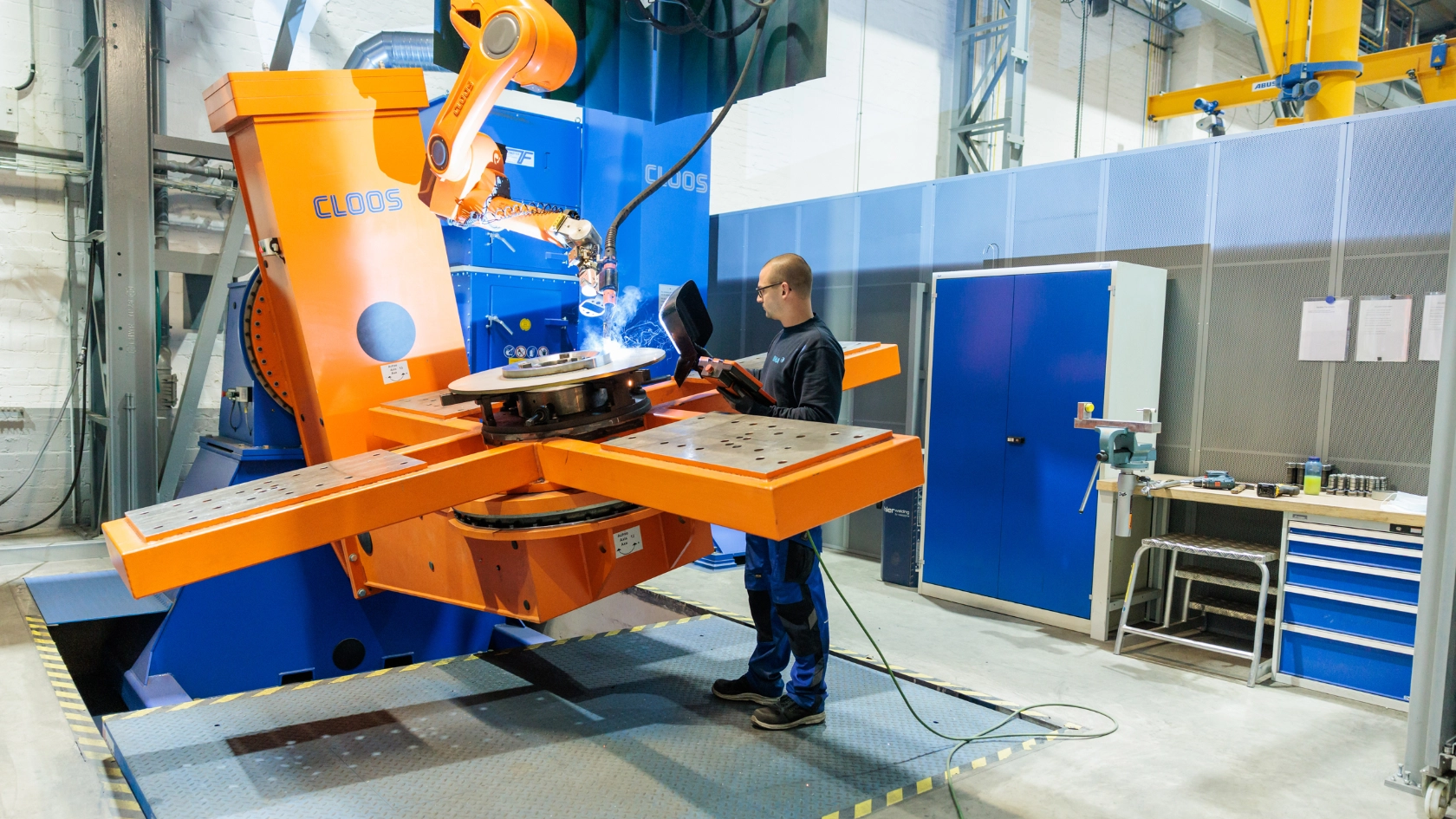
Many employees are exposed to excessive stress at their workplace—this applies to shift workers just as much as to colleagues in R&D, in offices, or in the field. This is because the types of stress that can arise during work are diverse: On the one hand, there are physical strains caused primarily by heavy loads, lifting, carrying, bending over, working overhead, or in twisted positions. However, excessive strain increasingly includes psychological factors that cause employees to feel overwhelmed or stressed: these include rising work intensity, constant availability, and steadily growing pressure.
The consequences of such work-related stressors should not be underestimated, because—as scientific studies have long made clear—both psychological and physical stress pose a significant health risk to employees. Work design and occupational health and safety thus become a matter of fundamental importance in the workplace. Work must be good—that is, it must promote and preserve health. Excessive stress in the workplace must be effectively reduced.
One thing is clear: Individual behavioral changes, such as those taught in stress management seminars, are usually not sufficient on their own. What is always necessary is a change in working conditions, a transformation of work organization, and the redesign of employees’ workstations.
Identifying and Recognizing Workplace Hazards
Under the Occupational Safety and Health Act, employers are required to conduct an appropriate risk assessment for all workplaces. They must identify the hazards to which employees are exposed in the workplace—and how these hazards can be eliminated. Hazards can arise in particular from the design of work and production processes, from workflows and working hours and their interaction, from insufficient training and instruction, and from “psychological stress at work.”
The law does not specify in detail how the risk assessment is to be conducted; it merely sets out general principles. This gives the works council—which must be involved in the risk assessment—considerable leeway in shaping the process. In principle, the goal is to develop a systematic understanding of the hazards at a workplace—and then to eliminate or mitigate them.
Taking Action Yourself
In addition to a thorough, comprehensive risk assessment, each individual can also take preventive steps to promote their own well-being—mind you: not as a substitute for a health-conscious work environment, but rather as a meaningful supplement. Everyone can help reduce stress, strengthen their immune system, and improve their ability to recover. Here are a few ways to tackle stress:
- Regularly review your own time management.
- Identify your own sources of stress—and try to minimize them as much as possible.
- Seek occupational health advice if you suspect a connection between health issues and your working conditions.
- Schedule time for relaxation—for example, through exercise and sports, or by pursuing hobbies and spending time with friends.
- Maintain a healthy diet with only moderate alcohol consumption.
- Bring potential sources of stress to the attention of your supervisor and/or the works council and work together to find solutions.
It’s important to realize that, as an employee, you’re not fighting this battle alone. It’s also important to know that stress can only be effectively and sustainably reduced if the way work is organized changes—and the works council is the right, competent point of contact to help initiate this process using the risk assessment. It can exercise its rights of co-determination when it comes to shaping working conditions. Identifying and recognizing workplace stressors is the first step. After that, good solutions must be sought together.