Employees in the metal and electrical industries in Baden-Württemberg will receive a 4.3 percent pay increase starting in April and, beginning in 2019, a collective bargaining bonus equal to 27.5 percent of their monthly pay. Employees with children, family members requiring care, or those working shifts can convert the collective bargaining bonus into additional days off. In addition, all employees will be entitled to temporarily reduce their working hours to up to 28 hours per week for up to 24 months. The collective bargaining agreement also provides for a one-time payment of 100 euros for the months of January through March 2018, as well as a lump sum of 400 euros, which is due no later than July 2019. Starting in 2020, the fixed amount will be incorporated into the total amount of the collective bargaining-based supplementary pay in accordance with wage indexation. This will particularly benefit employees in lower pay grades. The collective bargaining agreement runs through March 31, 2020.
For Roman Zitzelsberger, chief negotiator and IG Metall regional director for Baden-Württemberg, IG Metall has secured improvements for employees with children, relatives in need of care, and those working under restrictive work schedules such as shift work, despite resistance from employers. “We fought hard for every detail, but achieved a solid result on the issues that were crucial to us and secured greater autonomy for employees in determining their working hours.” IG Metall President Jörg Hofmann calls the agreement a milestone on the path to modern, self-determined working hours.
Goals Achieved
IG Metall had set several goals for this round of collective bargaining: a fair share of the industry’s economic success, greater autonomy over working hours, a better work-life balance, and relief for shift workers. “We have achieved these goals,” says Hofmann. “Employees will receive a significant increase in their real wages.” He adds that the outcome reflects the industry’s excellent economic situation. At the same time, the agreement marks a shift in working hours. Flexibility is thus no longer a privilege reserved for employers. Under the collective bargaining agreement, employees now have a legally enforceable right to work shorter hours if they need to do so for their own well-being, their health, or their family. For the President of IG Metall, the agreement demonstrates that collective bargaining agreements can create attractive working conditions in the interests of both employees and companies.
Placeholder graphic on working hours
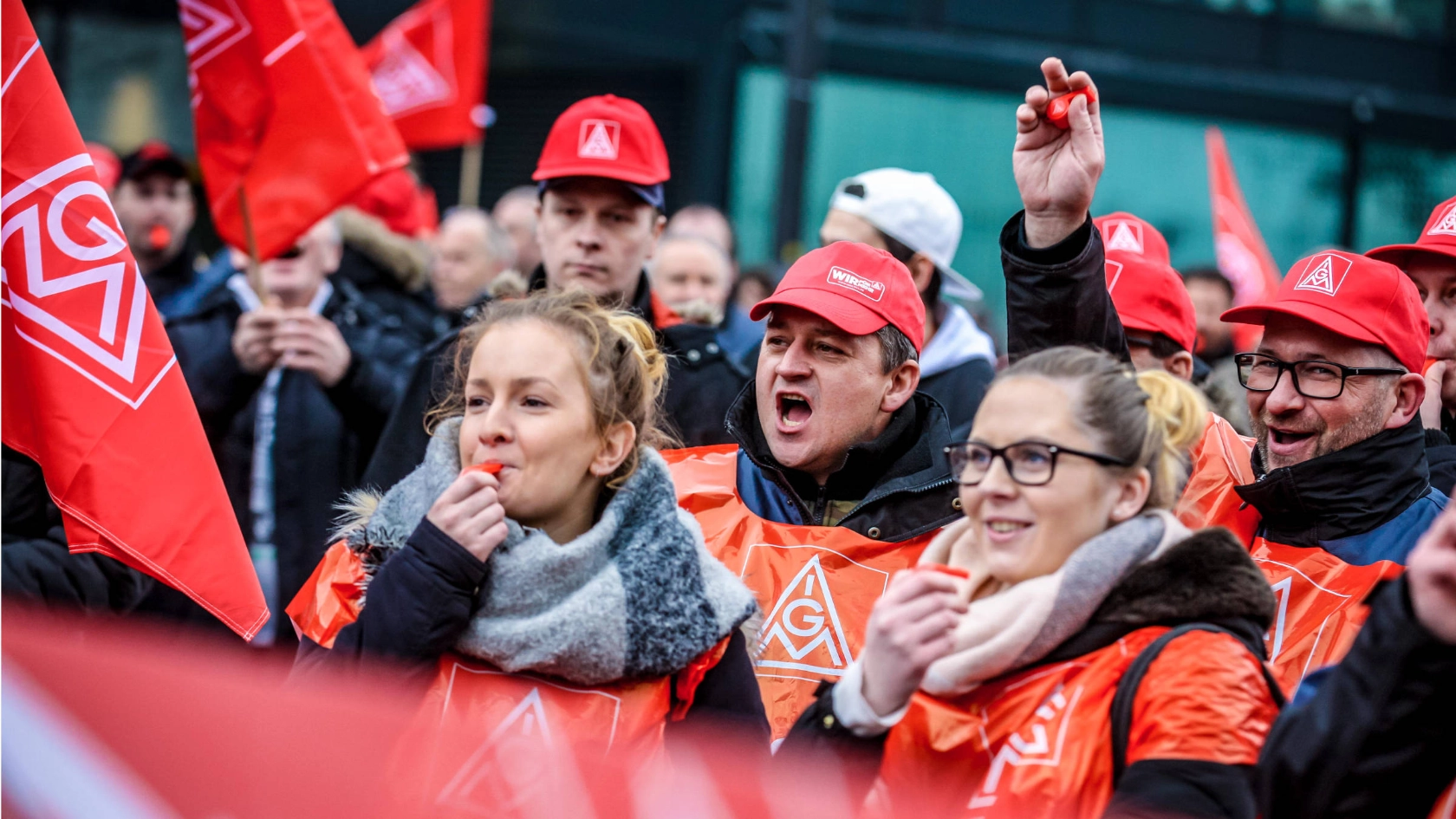
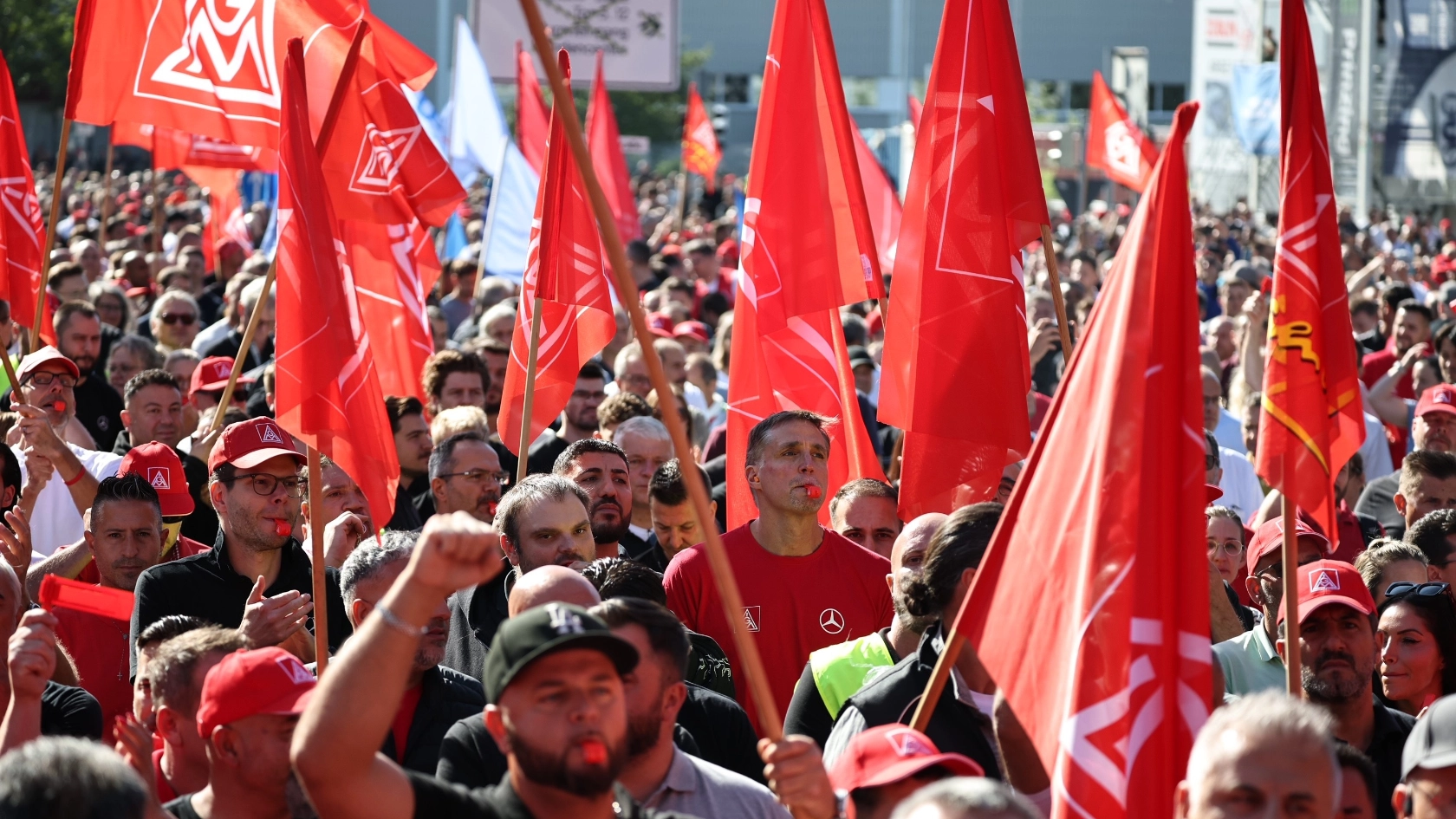
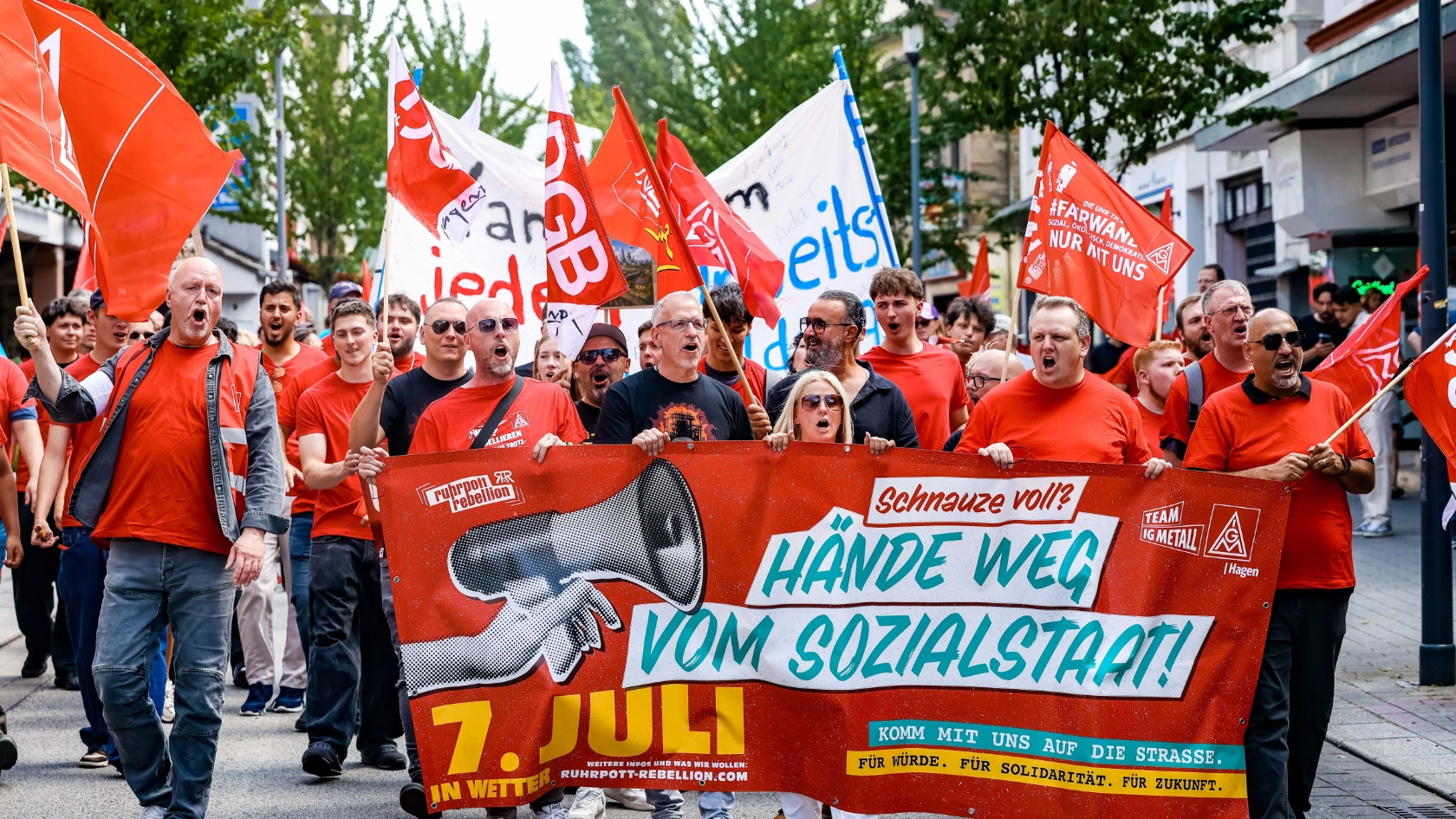
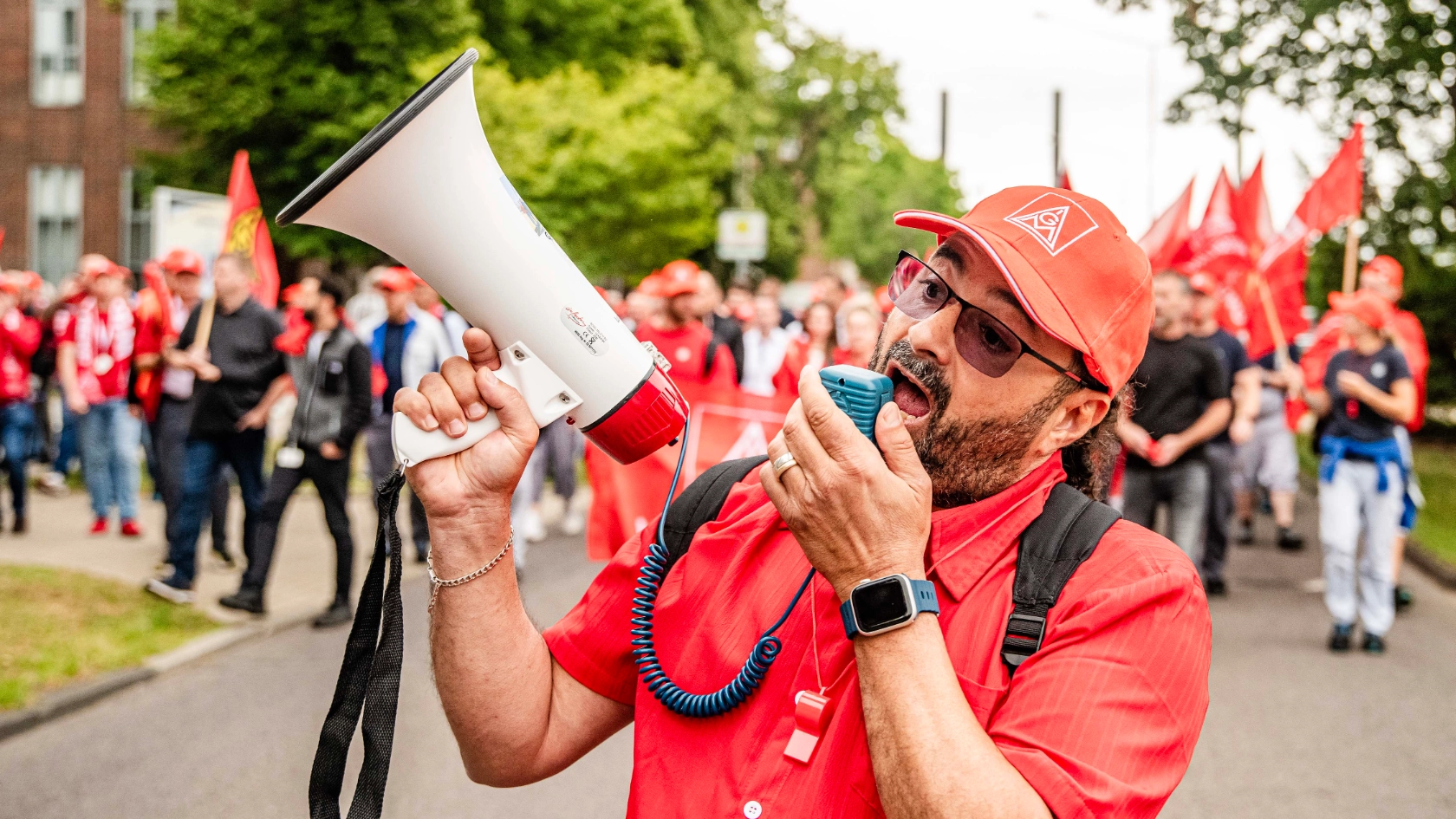
The breakthrough came late Monday evening in Stuttgart during the sixth round of negotiations. Just over a week earlier, the bargaining parties had broken off talks after 16 hours without reaching an agreement. IG Metall subsequently called for full-day warning strikes at more than 250 companies nationwide. The pressure had an effect. Hofmann thanked the approximately 1.5 million metalworkers who had participated in the short-term warning strikes and the full-day warning strikes. “In this dispute, we have proven that we can continue to mobilize as a large, united force to shape the future of work,” said Hofmann.
The collective bargaining agreement provides for a 4.3 percent increase in wages and apprenticeship stipends effective April 1, 2018. For January through March 2018, there will be a one-time payment of 100 euros; apprentices will receive a disproportionately higher one-time payment of 70 euros. In addition, starting in 2019, all employees will receive a fixed amount of 400 euros; trainees will also receive a disproportionately higher amount of 200 euros, plus a collective bargaining-based bonus equal to 27.5 percent of a monthly wage. Both components will take effect permanently starting in 2020.
The pressure had an effect
In the future, apprentices will receive two days off before their final exams to prepare. Starting in 2019, employees can reduce their working hours to up to 28 hours per week for a minimum of six and a maximum of 24 months; after the agreed-upon period expires, the employee can make a new decision. Starting in 2019, employees who are raising children, caring for relatives, or working shifts will, for the first time, be able to choose whether they want to take eight days off instead of the collective bargaining-based bonus. The employer will cover the cost of two of those days. “With this model, we are creating a balance to offset stress and ensuring that our colleagues stay healthy for longer,” says IG Metall negotiator Zitzelsberger. “We are also creating flexibility for important social responsibilities and making it easier to balance work and private life.”
IG Metall and Gesamtmetall recommend that the collective bargaining partners in the eastern German states hold discussions on the process of harmonizing working conditions immediately following the conclusion of the collective bargaining agreement. In doing so, the economic conditions must be taken into account.
Over the course of the week, the remaining IG Metall districts will discuss adopting the agreement in their respective democratically elected bargaining committees. The IG Metall Executive Board recommends adopting the key points of the agreement in the other bargaining regions.