Workers in the East German textile industry want an 8.5 percent pay increase —and thus to move a step closer to the higher wages in the West. However, the second round of negotiations for the East German textile industry on Wednesday in Meerane (Saxony) also ended without progress. Warning strikes are underway at the plants.
The employers’ offer remained the same in total amount as in the first round of negotiations in early May; only the payment schedule was different: 3 percent for 2024, another 3.3 percent at the start of next year, and a small increase at the end of the agreement period. From IG Metall’s perspective, this does not compensate for inflation or stabilize real wages—let alone represent further steps toward closing the gap between East and West.
Employers Do Not Want a Long-Term Agreement
“After long hours, the employers walked away from the negotiating table—despite intensive efforts on our part to find a fair and balanced solution,” reports Stefanie Haberkern, chief negotiator for IG Metall. “And they were also unwilling to sign a future agreement for the industry.”
In fact, companies in the East German textile industry—which employ nearly 8,000 people—are already facing a labor shortage. Orders cannot be fulfilled due to a lack of staff.
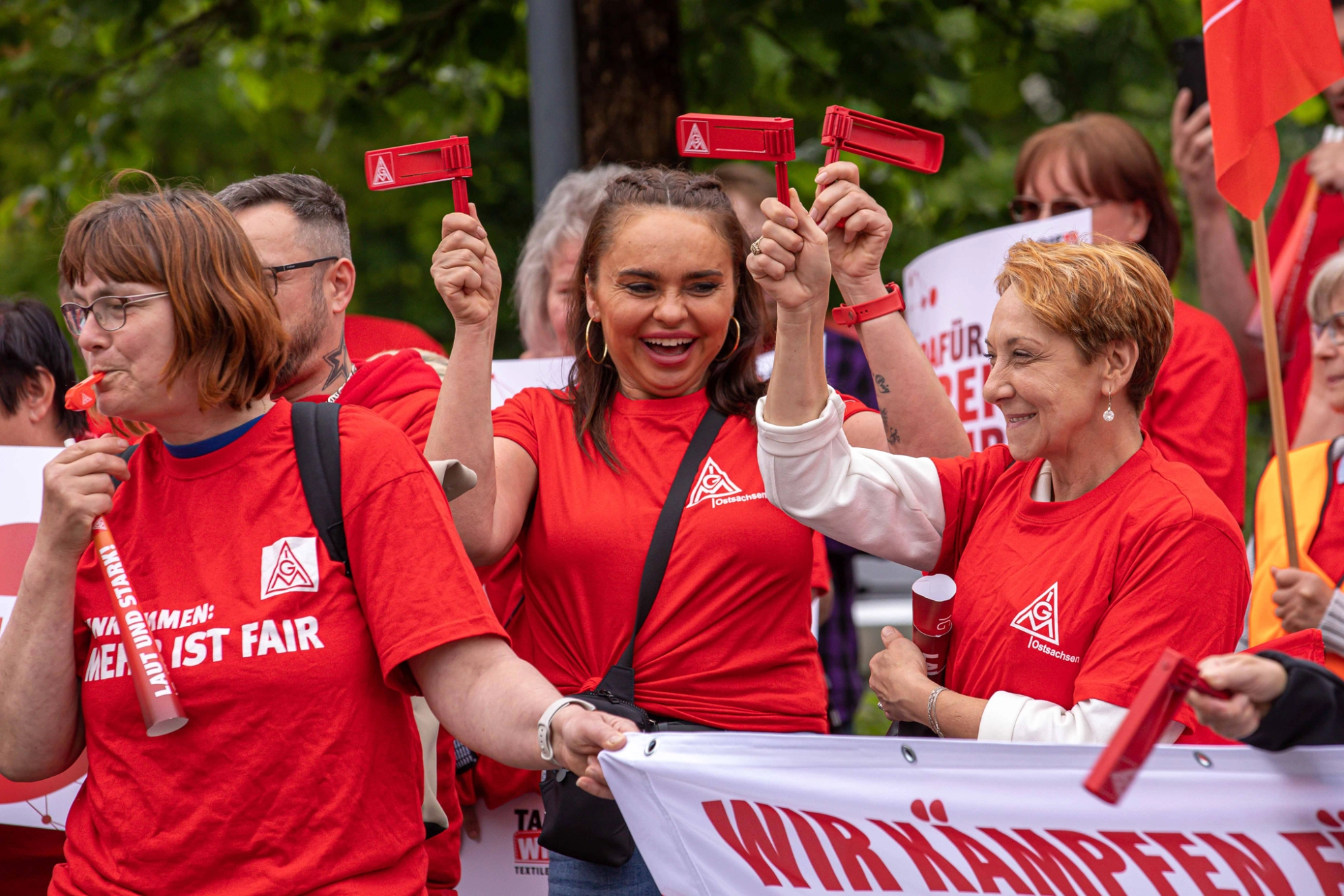
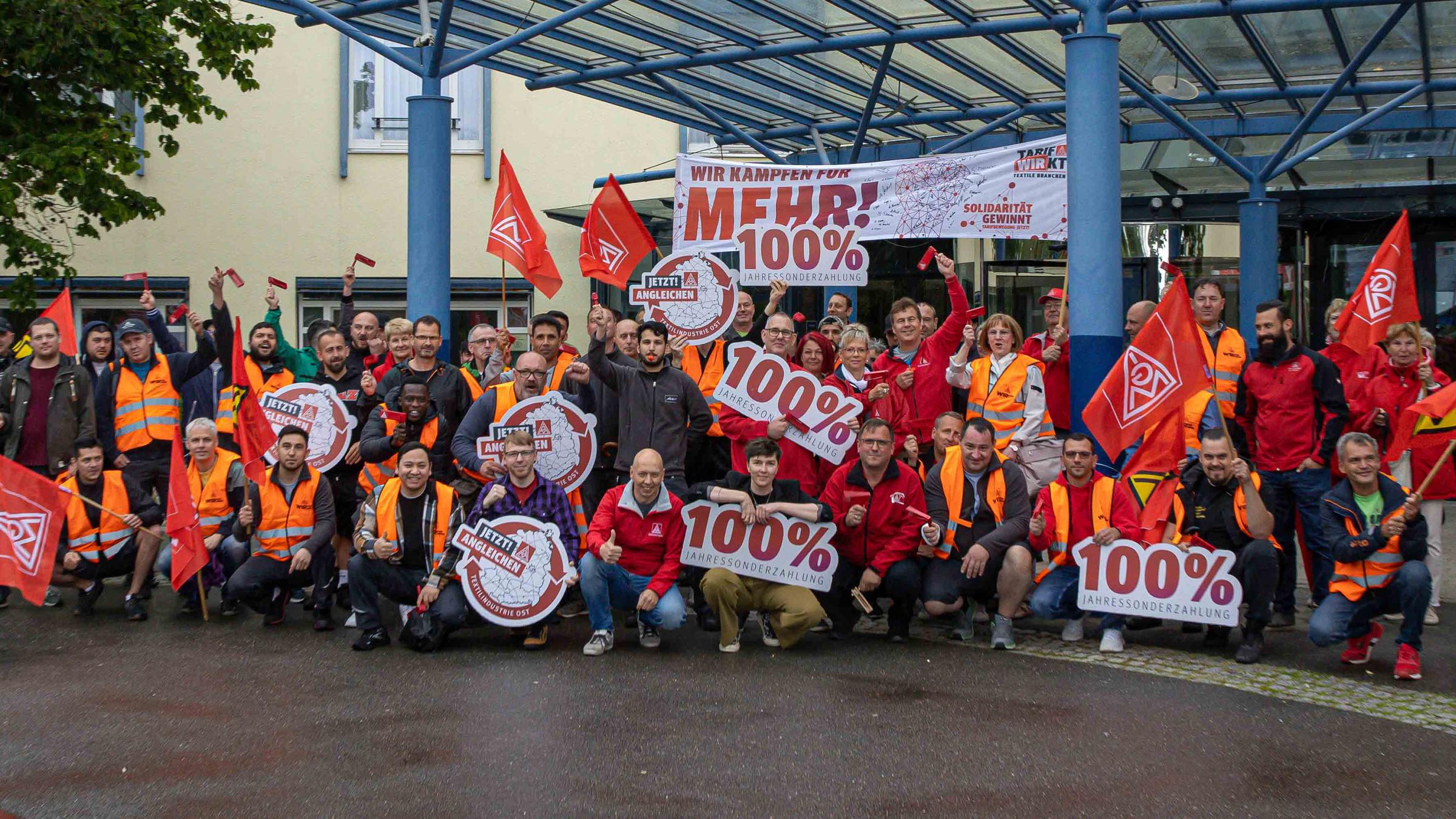
More than 100 workers demonstrated outside the negotiation venue, some of whom had traveled over 200 kilometers to be there. With drums and trumpets, they voiced their discontent and demonstrated their determination to fight for IG Metall’s demands.
Workers demonstrate outside the negotiation venue in Meerane in support of their demands
“Unfortunately, management was not willing to engage in direct talks with our colleagues,” criticizes Stefanie Haberkern. “They preferred to stay at the hotel and pointed to their supposedly open doors at the plant.”
Collective Bargaining Committee Criticizes Employers’ “Pass-the-Buck” Tactics
In addition to an 8.5 percent wage increase over 12 months, the IG Metall bargaining committee is demanding an increase in the annual bonus to 100 percent of one month’s pay, a social component, the continuation of partial retirement, and an extra bonus for apprentices.
Here, too, the employers continued to offer no options that IG Metall considered negotiable—just as with the size of the pay increase—criticizes Reiko Mothes, a works council member at the automotive seat manufacturer Adient and a member of the bargaining committee. “That was just a stalling tactic—and no improvement for our colleagues at the plant.”
Warning strikes underway – negotiations resume Friday
On May 31, the peace obligation in the East German textile industry ended. Several warning strikes have already taken place this week at companies in the East German textile industry. The next negotiation date has been set for Friday, June 7.
Demands for the 2024 Eastern Textile Industry Collective Bargaining Round
News on collective bargaining in the textile sectors