Automatic translation
This article has been translated automatically using computer technology. While we strive for accuracy, some wording or details may differ from those in the original article.
This translation was not manually reviewed. For important facts, quotations or legally sensitive information, please consult the German original. Individual selections, images, embedded media or technical terms may have been translated differently or incompletely.

2022 Metal and Electrical Industry Collective Bargaining Round FAQ: Questions and Answers on the 2022 Metal Industry Collective Bargaining Agreement

How much more money will I now receive as a result of the new collective bargaining agreement in the metal and electrical industry? When will the 5.2% and 3.3% raises take effect? Will I also receive the inflation adjustment bonus? When and how much? We answer the most pressing questions in our FAQ.

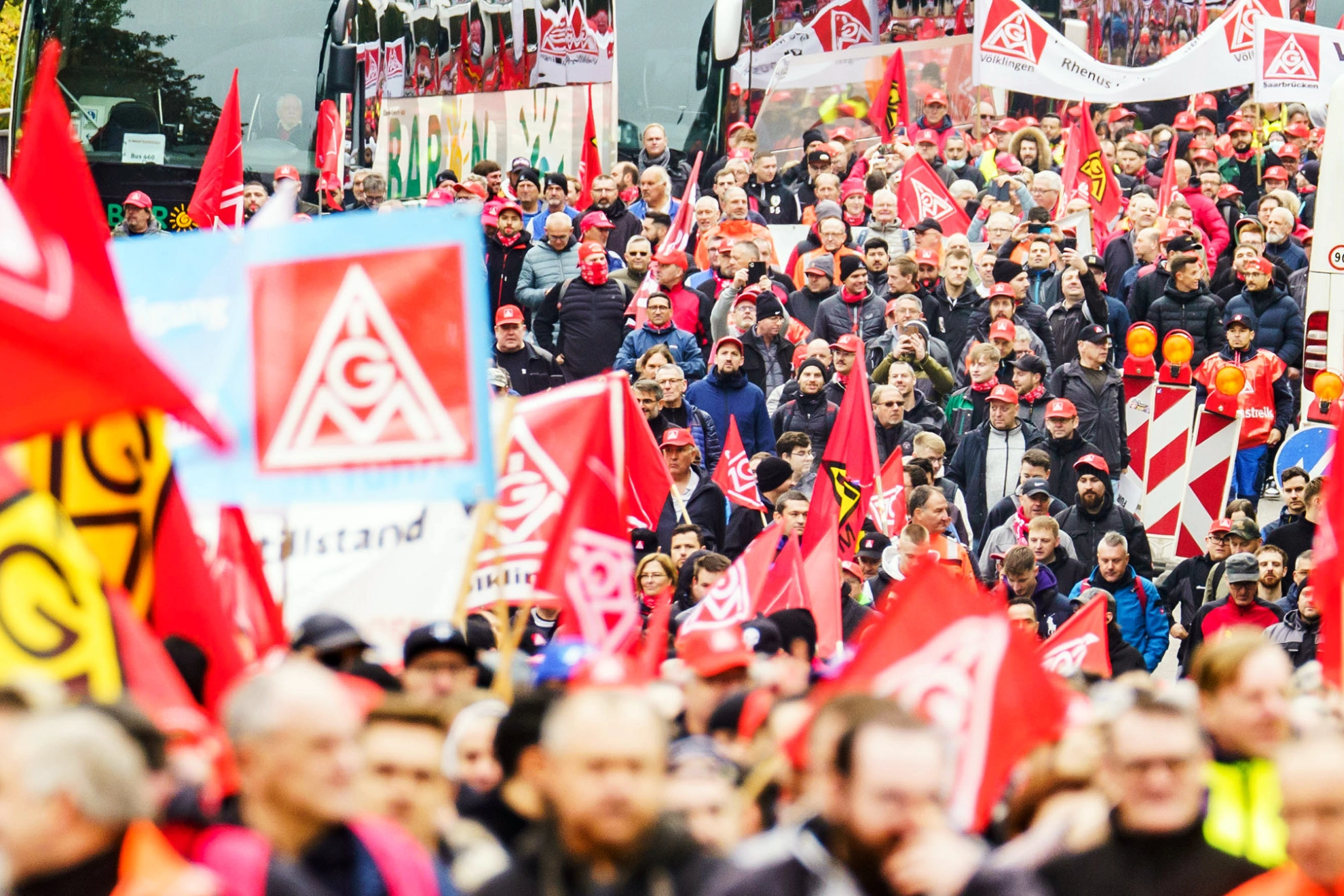
Aktion Tarifverhandlung 10.11.2022 Saarbrücken

1 December 2022 1 December 2022


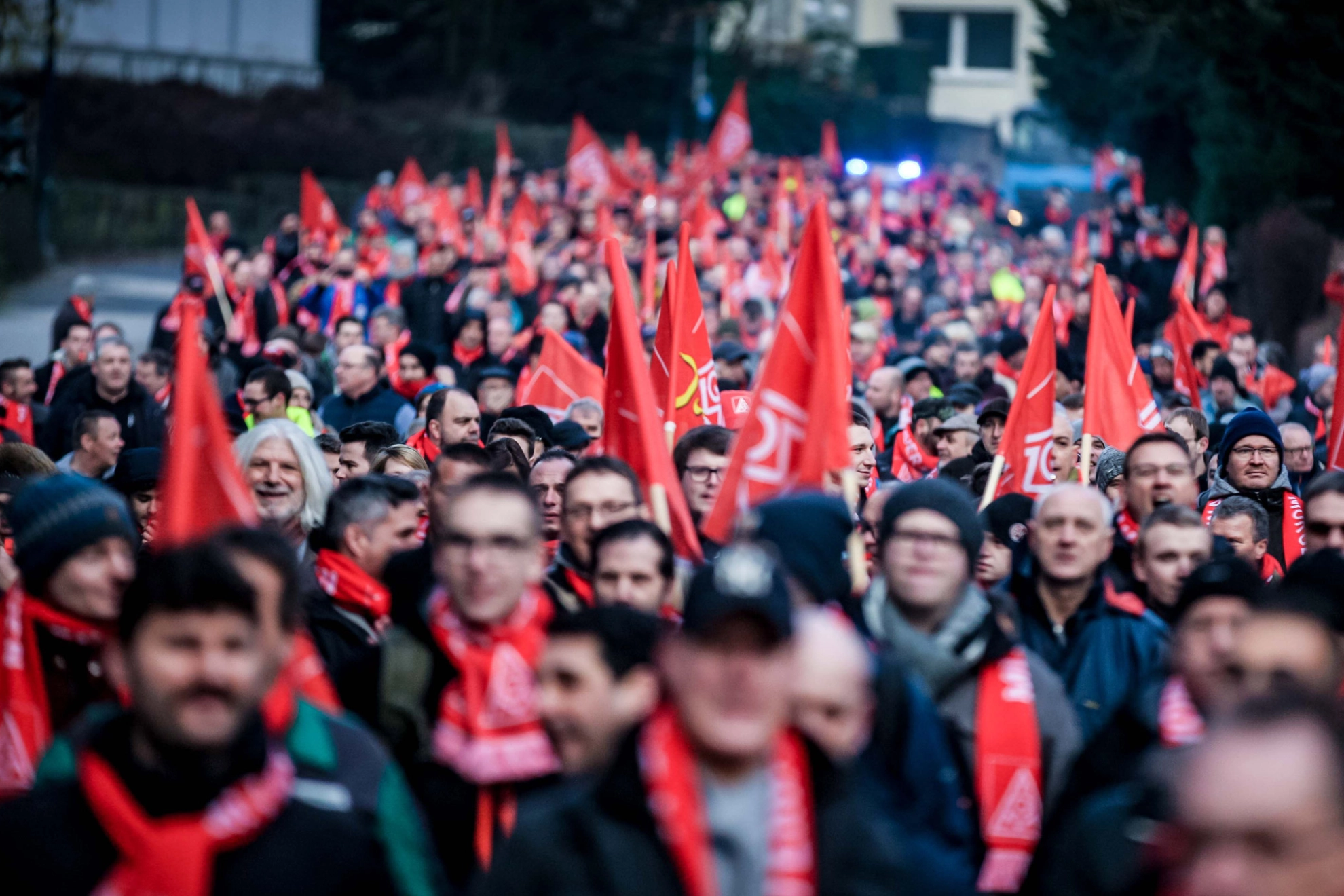
A 5.2 percent pay increase starting in June 2023, followed by an additional 3.3 percent starting in May 2024, plus an inflation adjustment bonus of 3,000 euros net. IG Metall secured this collective bargaining agreement through warning strikes in the metal and electrical industries. We answer the most frequently asked questions about the collective bargaining agreement.


What does the collective bargaining agreement mean for us?

A 5.2 percent pay increase starting in June 2023 (monthly base pay and apprenticeship wages).

A 3.3 percent pay increase starting in May 2024 (monthly base pay and apprenticeship wages).

Both increases are permanent and apply to the pay scales, meaning they raise the monthly base wages in the collective bargaining pay scales for the metal and electrical industries.

Term: Through September 30, 2024. After that, IG Metall can negotiate new pay increases.

In addition to the permanent wage increases, there will be one-time, tax- and contribution-free inflation adjustment bonuses totaling 3,000 euros:

1,500 euros, of which at least half will be paid out in January 2023, with the remaining amount generally paid by the end of February 2023 ( 550 euros for apprentices).

1,500 euros, which must generally be paid out by the end of February 2024 (550 euros for apprentices).

Part-time employees receive the inflation adjustment bonus—as well as vacation pay and Christmas bonuses—on a pro-rata basis according to their working hours compared to full-time employees. However, they receive at least 400 euros.
Who is covered by the collective bargaining agreement?

The collective bargaining agreement applies to employees at companies bound by IG Metall’s collective bargaining agreements in the metal and electrical industries. However, only members of IG Metall have a legal entitlement to the bonus.

When exactly will the inflation adjustment bonus be paid—and how much will it be?

2023 Inflation Adjustment Bonus: At least half of the bonus must be paid no later than with the January 2023 paycheck (750 euros for full-time employees, prorated for part-time employees, 275 euros for apprentices). The latest payment date for the remaining amount is March 1, 2023—that is, with the February paycheck.

Employers and the works council may also mutually agree on different payment dates through a voluntary works agreement.

2024 Inflation Adjustment Bonus: Here, too, employers and the works council may agree on the payment dates. In the absence of such an agreement, the latest payment date for the full bonus (1,500 euros for full-time employees) is March 1, 2024.

Who pays the inflation adjustment bonus—the employer or the government?

The federal government has made payments by employers of up to 3,000 euros tax- and social security contribution-free through the end of 2024, in accordance with Section 3 No. 11c of the Income Tax Act. However, this is not a government payment; the legislature intends this to provide an incentive for employers to offer their employees a tax-free benefit. However, there is no legal entitlement to such a payment solely on the basis of the law; a collective bargaining agreement is required for this.

The inflation adjustment bonus was only proposed and regulated by the government after we had formulated our demand. Our goal was then to ensure that employees could benefit in full from this tax- and social security contribution-free inflation adjustment bonus of up to 3,000 euros.

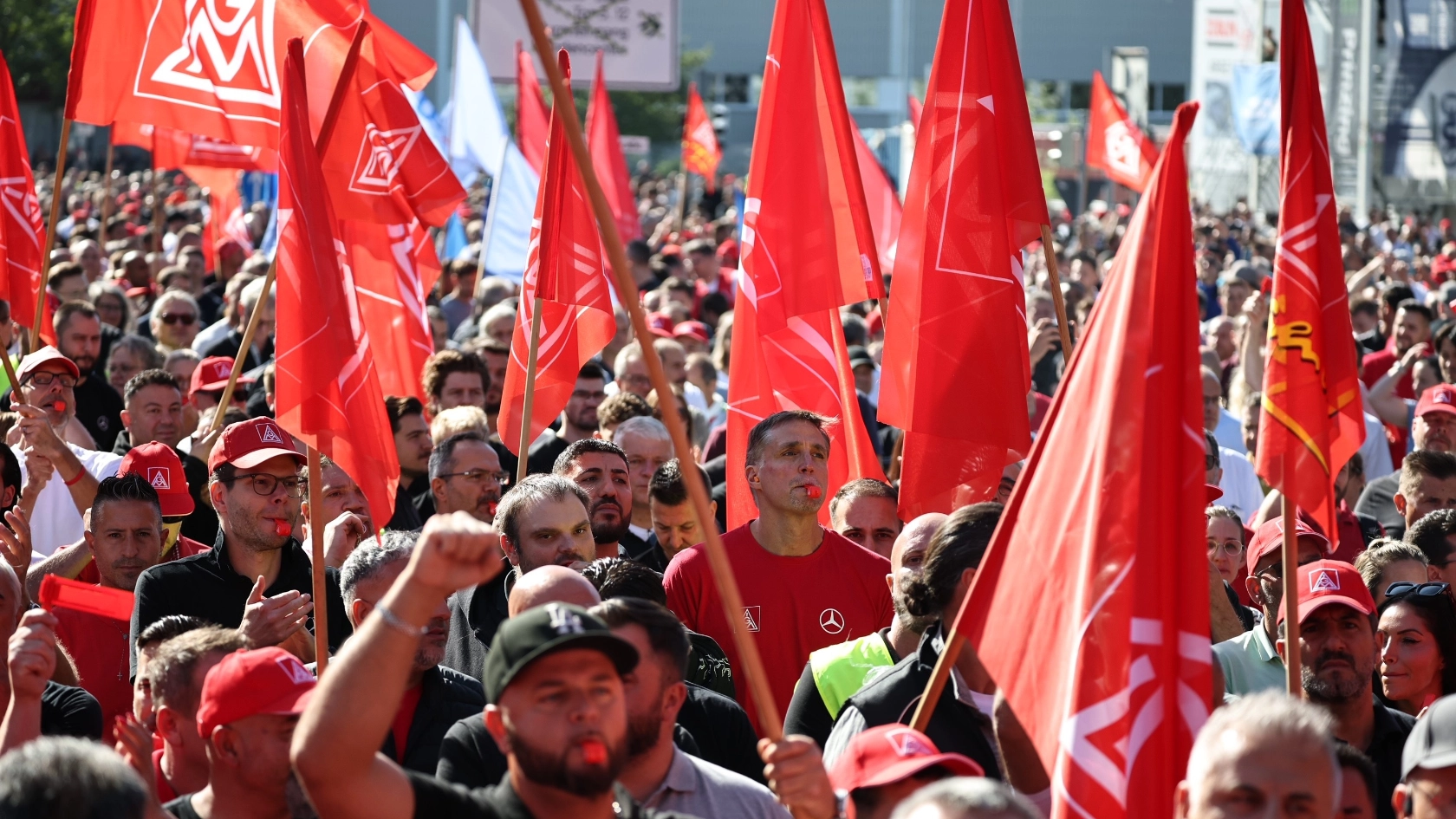
It is clear that this component of the collective bargaining agreement could only be secured at the negotiating table due to pressure from the more than 900,000 IG Metall members who participated in warning strikes.

Who is eligible for the inflation adjustment bonus?

For fully trained employees, eligibility requires six months of continuous service as of the cut-off dates of March 1, 2023, and March 1, 2024. The employer may move the cut-off dates forward to December 1, 2022, and December 1, 2023—for example, to record the payment in the previous year’s financial statements. In that case, the required length of service is reduced to three months.

No minimum length of service is required for apprentices.

I’m finishing my apprenticeship before March 1. How much of a bonus will I receive?

The decisive factor is your status as of the effective date (March 1 or, if the employer brings it forward, December 1). Trainees who complete their training before the effective date and are then hired by the company are entitled to the full amount of the inflation adjustment bonus for fully trained employees—two payments of 1,500 euros (for full-time employees).

I’m leaving the company. Will I still receive the inflation adjustment bonus?

The decisive factor is whether an employment relationship exists as of the cutoff date (usually March 1 or, if the employer prefers, December 1).

If the employee resigns voluntarily, there is no entitlement to the inflation adjustment bonus—not even on a pro-rata basis—even if they leave after the cutoff date.

The situation is different if the employer terminates the employment: If the employee leaves after the cutoff date, they are entitled to the full amount (1,500 euros for full-time employees).

What applies in cases of reduced working hours or short-time work mandated by the employer?

Full-time employees whose working hours have been reduced for company-related reasons receive the full inflation adjustment bonus of two payments of 1,500 euros.

This applies to the following cases:

  • Reductions in working hours under the “Employment Security” collective bargaining agreement, under which the works council and the employer can reduce working hours to secure jobs
  • Short-time work
  • Shift models that affect the duration of working hours, such as continuous-shift schedules

What applies to dual-track students?

There are countless different models for dual study programs in the individual federal states. For the majority of dual-track students, IG Metall has now secured that they are treated as apprentices and that the same collective bargaining agreements apply to them. Students at the Baden-Württemberg Cooperative State University, for example, receive the increase in apprenticeship pay and the inflation bonus for apprentices, as do most dual-track students in training-integrated programs, who therefore also have an apprenticeship contract. However, in many collective bargaining areas, employers have so far refused to include practice-integrated dual students in the collective bargaining agreement. Be sure to ask your youth and apprentice representatives, your works council, or your local IG Metall chapter exactly what applies to you.

I work part-time or in a mini-job. What applies in that case?

Part-time employees are, of course, also entitled to the percentage pay increases of 5.2 and 3.3 percent—as well as to a pro-rated inflation adjustment bonus, which is calculated based on the ratio of their contractual working hours to the collectively bargained working hours on the respective effective date.

Calculation: 1,500 euros: full-time collective bargaining rate (35 or 38 hours) × part-time hours = inflation adjustment bonus

However, part-time employees must receive at least two payments of 400 euros, regardless of their working hours.

This also applies to those in mini- and midi-jobs. They, too, will receive at least two payments of 400 euros. The inflation adjustment bonus has no effect on tax or social security obligations.

The first half of the inflation adjustment bonus (750 euros for full-time employees; see above: When will I receive the inflation adjustment bonus?), which must be paid out no later than January 2023, amounts to half of the part-time employee’s respective individual entitlement.

Example: Part-time employees working a 28-hour week at a company where the collective bargaining agreement sets the full-time workweek at 35 hours are entitled to a 1,200-euro inflation adjustment bonus (1,500 ÷ 35 × 28) and must therefore receive at least 600 euros in January 2023.

Please note: Full-time employees with company-imposed reduced working hours—such as those on short-time work (see above: Who is eligible for the inflation adjustment bonus?)—receive the full inflation adjustment bonus.

What applies to partial retirement?

Pay for partial retirement follows general collective bargaining trends during the partial retirement period. This is stipulated in the collective bargaining agreements on partial retirement (TV FlexÜ). This means:

Employees in partial retirement will receive the collective bargaining wage increases of 5.2 percent and 3.3 percent.

And they also receive the inflation adjustment bonus on a pro-rata basis, just like part-time employees (see above): For employees in partial retirement, the law stipulates that the partial retirement work schedule agreed upon in the employment contract must always amount to 50 percent of their previous working hours. In the standard block model with a work phase and a leave phase, this 50 percent work schedule is simply distributed differently. This means, for example, that if you previously worked full-time, you will receive half of the inflation adjustment bonus—twice 750 euros.

What do I receive during parental leave, sick leave, maternity leave, etc.?

To be eligible for the inflation adjustment bonus, you must be employed by your employer as of the effective date (see above: When do I receive the inflation adjustment bonus?). This also applies during parental leave, prolonged illness, or maternity leave. However, the entitlement may be prorated for the calendar year during the period in which the employment relationship is suspended. This does not apply during maternity leave or illness, even if it lasts longer than the 6-week period of continued pay. Examples of a suspended employment relationship include: voluntary military service, parental leave, caregiving leave, and unpaid leave/special leave.

In these cases, the premium may be reduced on a pro-rata basis.

Example: An employee is on parental leave and returns to work on April 1, 2023. As of the reference date of March 1, 2023, an employment relationship exists, even during parental leave. However, the employment relationship was suspended for three months in the calendar year 2023. The employee is therefore entitled to 9/12 of the inflation adjustment bonus, which amounts to 1,125 euros for 2023 for a full-time position.

If, however, the employment relationship is suspended for the entire calendar year, employees do not receive an inflation adjustment bonus.

I’m new to the company. What do I get?

Everyone is entitled to the wage increases of 5.2 percent in June 2023 and 3.3 percent in May 2024: The monthly base wages in the wage tables for the individual wage regions will be increased at that time. And these increases take effect on the first day of employment.

However, eligibility for the inflation adjustment bonus only applies after six months of service as of the cutoff date of March 1. Therefore, anyone who joined the company on or before September 1 of the calendar years 2022 and 2023 will receive the bonus. However, if the effective date is brought forward, the period may be shortened to three months (see above: Who is eligible for the inflation adjustment bonus?).

What about temporary agency workers? Do they receive the money as well?

Generally speaking, no. This is because the metal industry collective bargaining agreement applies to employees only if their employer is bound by the collective bargaining agreements of the metal and electrical industry. For temporary agency workers, the employer is not the company where they are assigned, but their staffing agency. And staffing agencies belong to the temporary employment sector and are organized within the employer associations iGZ and BAP. For these agencies, there are separate collective bargaining agreements from the DGB Bargaining Association and collective bargaining agreements on industry-specific surcharges with IG Metall.

Nevertheless, you may be affected by the collective bargaining agreement in the metal and electrical industry: Special rules apply in many companies—for example, in the automotive sector. Under these rules, employees are entitled to so-called “equal pay”—equal compensation—under certain conditions. However, these provisions are agreed upon on a company-by-company basis and vary widely. Therefore, only IG Metall at the local level can clarify whether temporary agency workers here receive the same pay as the employees of the host company—and thus also the same pay increases.

I’ve already received an inflation adjustment bonus or other one-time payments from my employer. Will that be taken into account?

The inflation adjustment bonus must be paid in addition to regular wages and may not be offset against payments exceeding the collective bargaining agreement. This is also stipulated in the new collective bargaining agreement.

If the employer has already paid an inflation adjustment bonus prior to the collective bargaining agreement taking effect, the employer must notify the parties to the collective bargaining agreement if the payment already made is to be recognized and taken into account as a benefit under the collective bargaining agreement.

The inflation adjustment bonus is tax-free, but do I have to pay anything back to the tax office after the annual tax adjustment?

The inflation adjustment bonus is tax-free and, unlike other net benefits—such as short-time work compensation or the top-up for partial retirement—is not subject to the so-called “progression clause.” This means the bonus does not increase taxable income and therefore does not increase the amount of tax owed.

What about the “differentiation” and “variabilization” required by employers?

Long before employers made an offer during collective bargaining, they demanded concessions from employees—the “differentiation” and “variabilization” of special payments. For IG Metall, it was clear from the start: This is non-negotiable, and that remains the case. Nothing has changed regarding the collectively bargained entitlements to vacation pay and Christmas bonuses.

The only differentiation applies to the additional amount of the collectively agreed supplementary payment (T-ZUG B), which amounts to 18.5 percent of the base pay (between 560 and 630 euros per year, depending on the collective bargaining region). Employers wanted to extend the existing differentiation rule from 2021 and even expand it. However, the outcome of the negotiations provides only for a continuation of the differentiation rule regarding the T-ZUG B/additional amount for 2023 and 2024. All other employer demands have been rejected.

The differentiation rule for the T-ZUG B/supplementary payment states: In a difficult economic situation, the employer may postpone payment of the T-ZUG B/supplementary payment until April of the following year and must notify employees and IG Metall of this four weeks before the due date. If the economic situation has not improved by then (net return on sales below 2.3 percent), the employer may forgo the payment.

The actual collective bargaining supplementary payment (T-ZUG A), amounting to 27.5 percent of individual monthly pay, remains unchanged—and with it, the T-ZUG option for up to 8 additional days off per year.

What about the T-ZUG B/supplementary amount and the T-Geld?

The transformation allowance (Trafobaustein, T-Geld, payable in February) amounted to 18.4 percent in 2022 and was scheduled to increase to 27.6 percent starting in 2023. The outcome of the negotiations stipulates that the transformation allowance will continue to amount to 18.4 percent of monthly pay in the future.

In return, the supplementary amount (ZUB) of the collective bargaining supplementary allowance (T-ZUG B) will increase from the previous 12.3 percent to 18.5 percent of the respective base pay, which corresponds to 560 to 630 euros depending on the collective bargaining region. Since the T-ZUG B/supplementary amount is calculated not based on the individual pay grade but on the base pay grade for each collective bargaining region, this measure also has a social component, as lower pay grades benefit from it at an above-average rate.

What does the “energy emergency clause” agreed upon in the negotiation results entail?

An “energy emergency clause” was agreed upon to facilitate discussions between IG Metall and the employers’ association regarding potential serious consequences associated with an energy emergency.

To this end, there will be regular discussions on energy supply security, particularly regarding whether and in which plants or regions production restrictions are likely due to a reduction in gas and/or electricity supplies.

In the event that a nationwide energy emergency is declared, the parties to the collective bargaining agreement have agreed to hold prompt discussions on any measures that may be necessary to ensure the preservation of jobs and competitiveness. There is no “emergency shut-off clause” with automatic effect in the collective bargaining agreements—such as a reduction in wage increases, as originally demanded by the employers.


Please note: The collective bargaining agreements in the individual bargaining regions differ slightly on certain points. This applies, for example, to monthly wages, working hours, vacation pay, Christmas bonuses, and provisions regarding dual-track students. Please contact your local IG Metall chapter.

Streik, Menschenmenge, Demonstration
With push notifications
IG Metall App

News on collective bargaining and current issues, guides, wage tables, strike pay calculators, shift calendars, and much more—download the IG Metall app for Android or iOS!

New on igmetall.de
Aktionstag bei Mercedes Benz, Daimler, in Sindelfingen gegen die Angriffe auf Beschäftigten in der Automobilindustrie.
Resistance to Attempts at Drastic Cuts Auto industry workers issue a warning
Sie wollen doch nur dein Bestes
Redistribution Making Germany more equitable: We need this tax reform now
Der Streik bei Kelvion in Nobitz-Wilchwitz begann am 4. August 2026. Die Geschäftsleitung will nach Sarstedt/Niedersachsen verlagern - obwohl die Produktion in Wilchwitz profitabel und bis ins nächste Jahr ausgelastet ist.
"It’s worth fighting for!" Kelvion workers strike for a social collective bargaining agreement
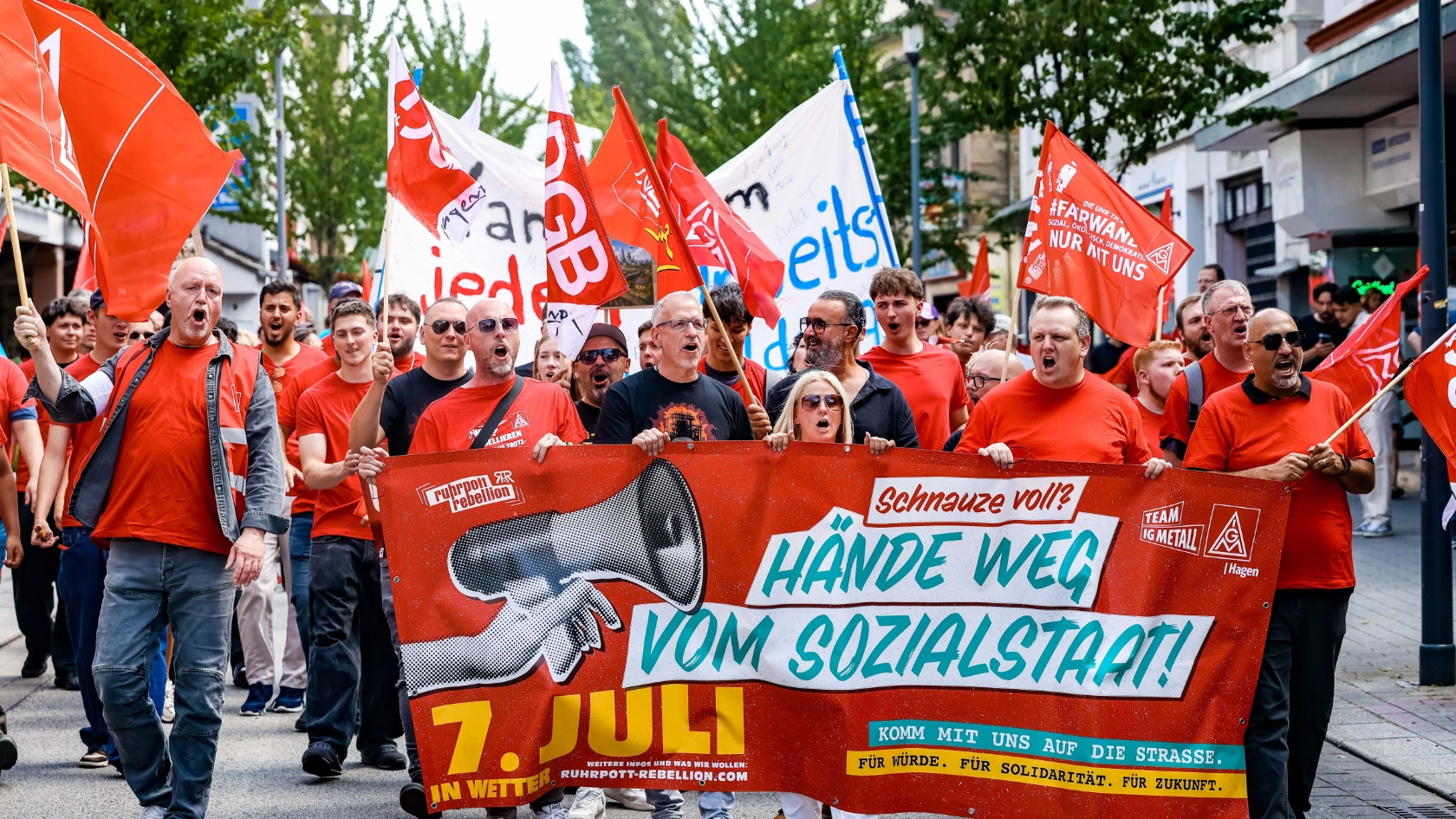
Ruhrpott Rebellion am 07.07.2026
Welfare State September 26: Nationwide Day of Action for Social Policy
Beschäftigter arbeitet an einem Getriebe in einer Fabrik
Working Hours Why working longer doesn’t help—and actually does more harm than good
Ein männlicher Land- & Baumaschinenmechatroniker prüft einen Traktor mit einem Tablet
2026 Collective Bargaining Agreement for the Metalworking and Agricultural Engineering Sectors Greater Flexibility in the Metalworking and Agricultural Engineering Sectors in Lower Saxony and Bremen
Elektronikerin prüft die Spannung an einem Schaltschrank.
2026 Collective Bargaining Round for the Electrical Trades Wage Increase in the Electrical Trades in Berlin-Brandenburg
Benjamin Heine ist Mitarbeiter der BMA in Braunschweig
2026 Collective Bargaining Round for Metal Fabrication and Precision Engineering Higher Wages in the Metal Fabrication and Precision Engineering Sectors in Southwest Germany
Metall-Arbeiter beim Schleifen
2026 Collective Bargaining Round for the Metalworking Trade Employees in the Berlin-Brandenburg metalworking sector will receive higher pay
Beschäftigte von Thyssenkrupp demonstrieren in Essen am 23. Mai 2024 gegen das Vorgehen der Geschäftsführung beim geplanten Teilverkauf des Unternehmens.
Defend the welfare state All dates for nationwide actions against cuts to social services
IGM Aktion VW Wolfsburg
On September 21, things will get loud Nationwide Day of Action: Auto Industry Workers Fight Back Against Mass Layoffs
Auszubildender in einer Schreinerei
Apprenticeship Wages Questions and Answers About Apprenticeship Wages

Subscribe to the newsletter