Automatic translation
This article has been translated automatically using computer technology. While we strive for accuracy, some wording or details may differ from those in the original article.
This translation was not manually reviewed. For important facts, quotations or legally sensitive information, please consult the German original. Individual selections, images, embedded media or technical terms may have been translated differently or incompletely.

2022 Metal and Electrical Industry Collective Bargaining Round Negotiation Outcome: Wage Increase in Two Stages Plus 3,000 Euros

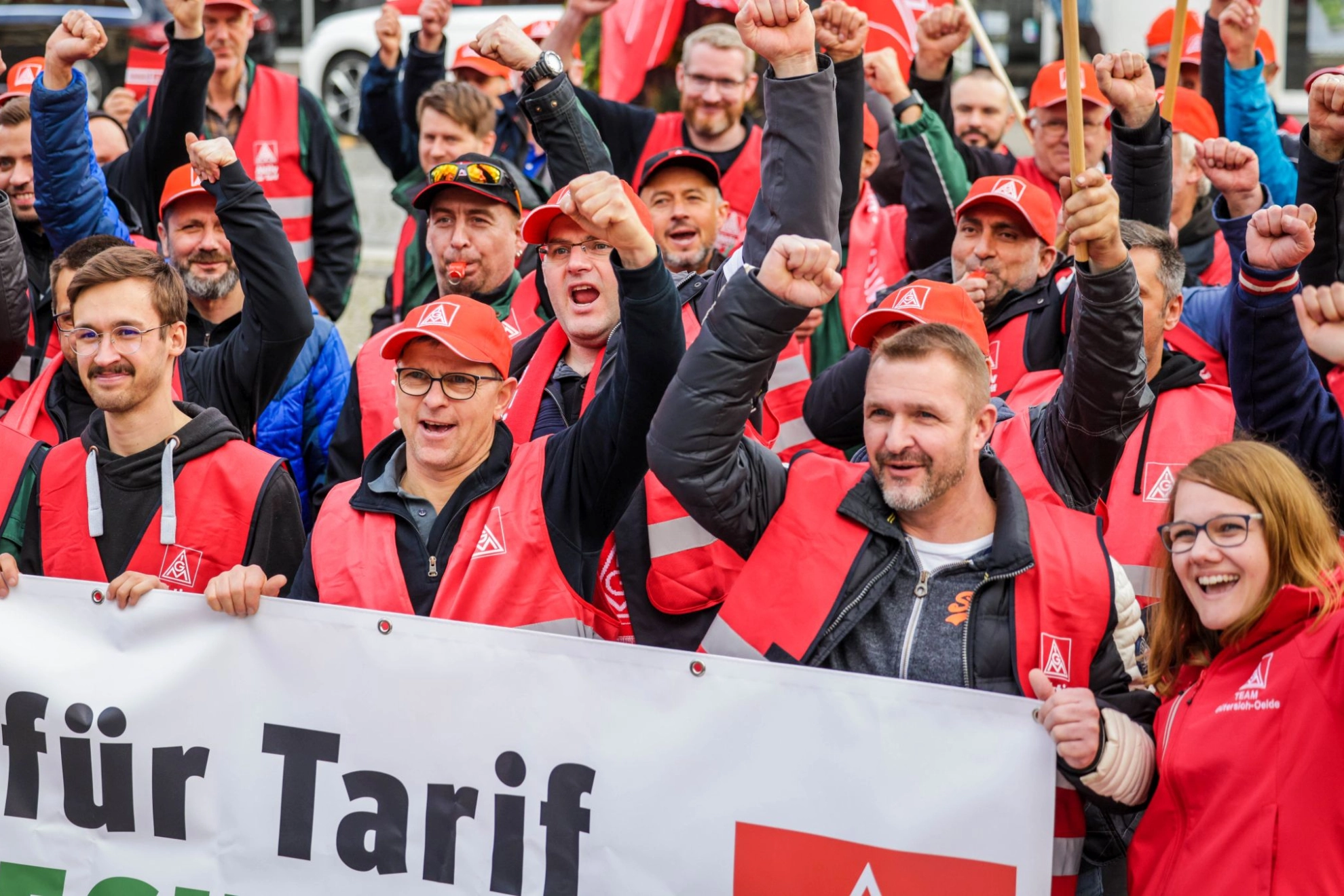
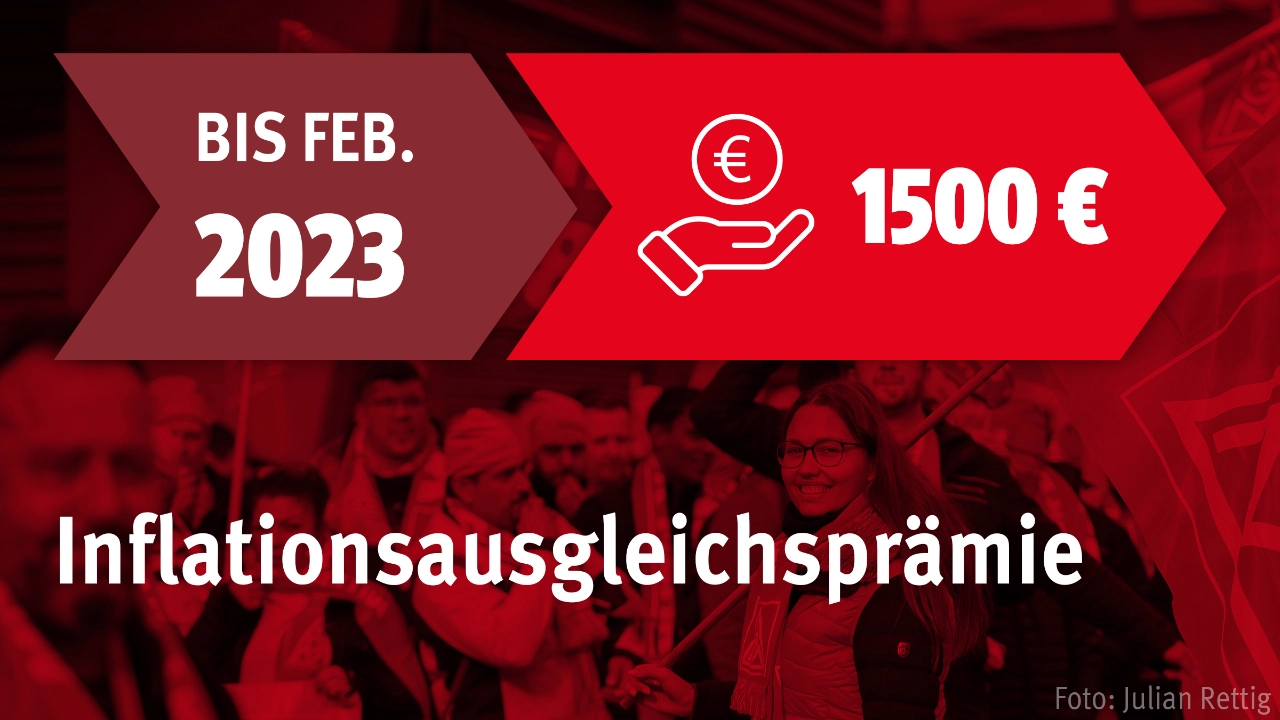
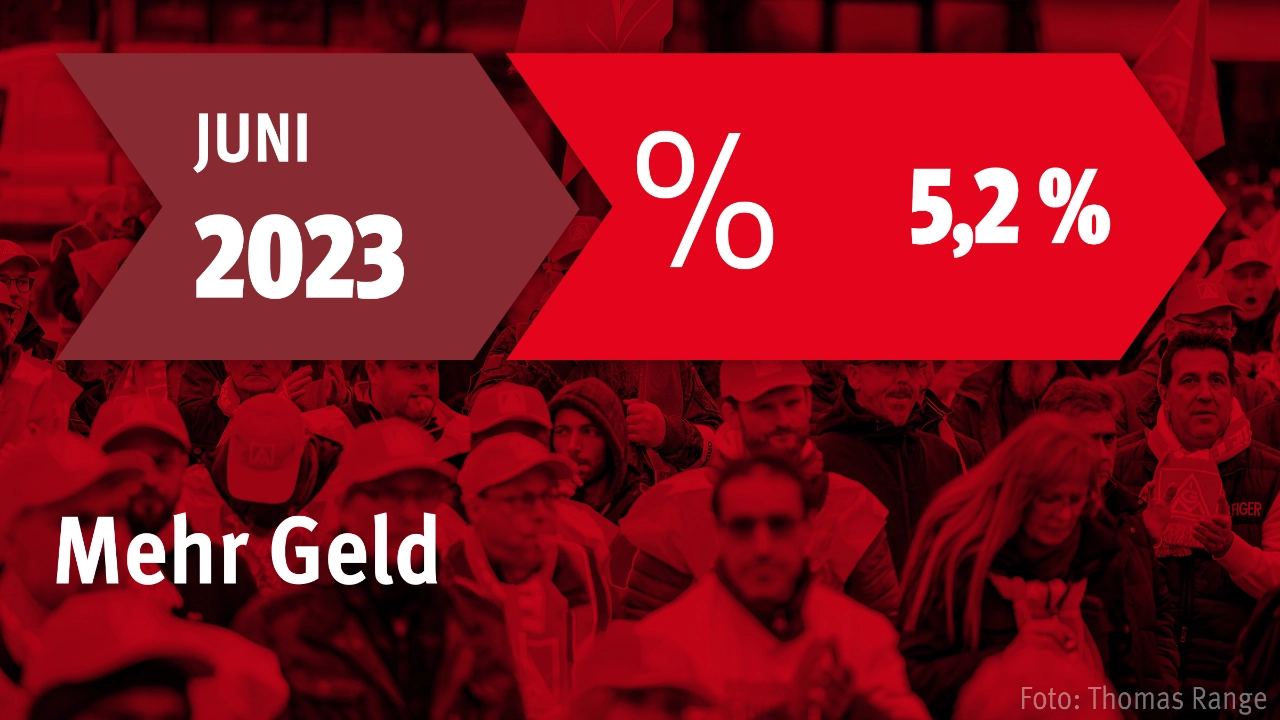
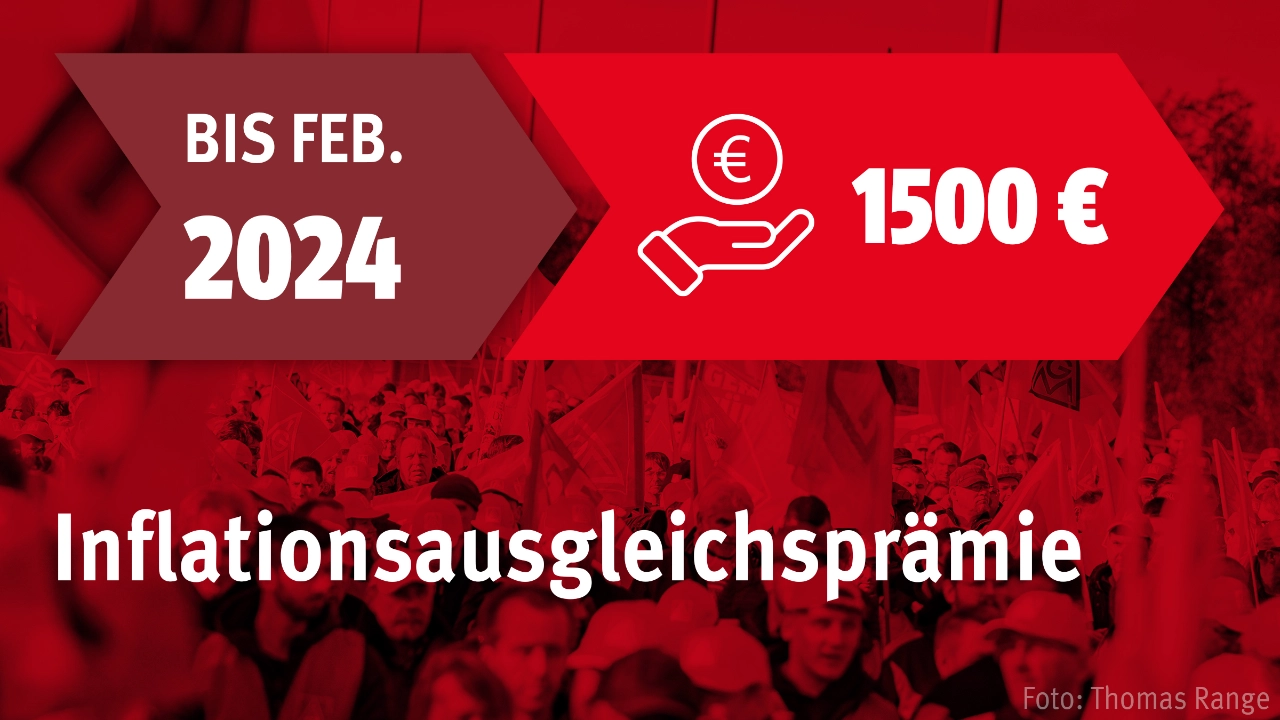
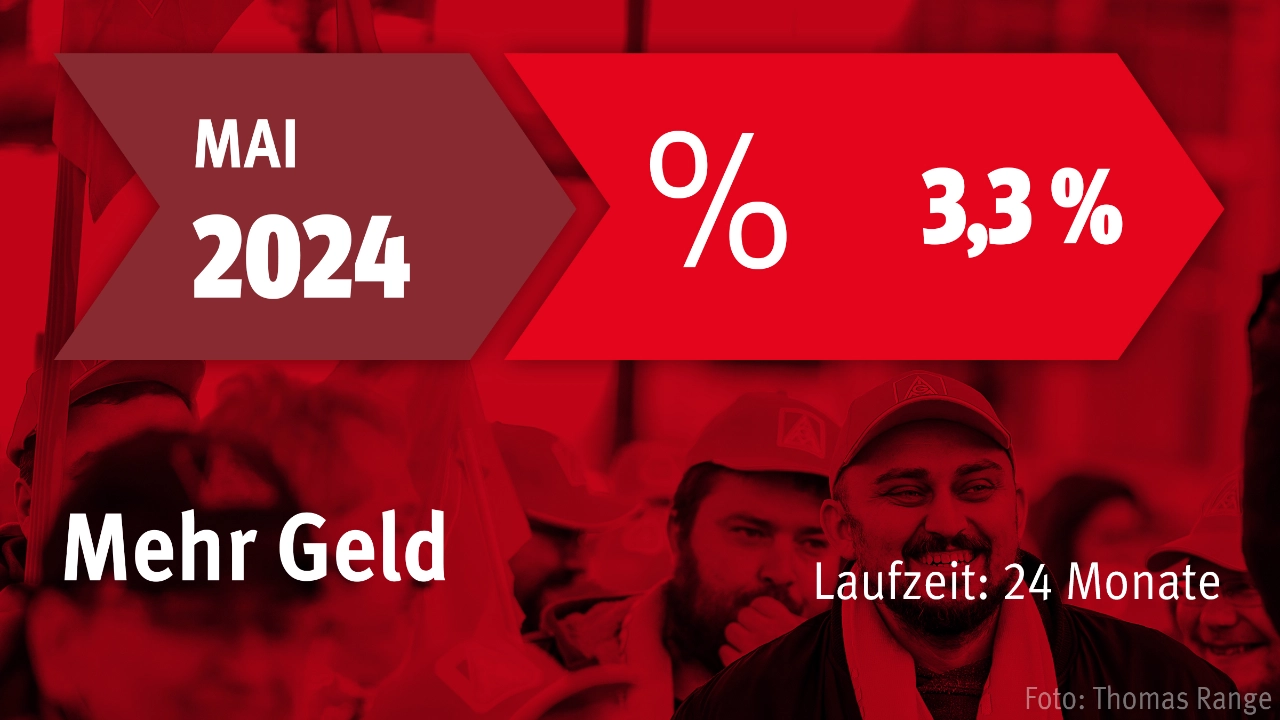
More pay in the metal and electrical industry: a 5.2 percent increase starting in June 2023, followed by an additional 3.3 percent starting in May 2024. In addition, there will be a 1,500-euro inflation adjustment bonus by February 2023 and another 1,500 euros by February 2024. More than 900,000 workers applied pressure through warning strikes to secure these gains.

Warnstreikaktion in Oelde

18 November 2022 18 November 2022 |
Updated on 25 November 2022 25 November 2022


After 11 hours of collective bargaining, IG Metall and employers in Ludwigsburg reached an agreement for the metal and electrical industry in Baden-Württemberg: a package consisting of permanent wage increases totaling 8.5 percent, as well as inflation adjustment bonuses of 3,000 euros paid in two installments.  

At the beginning of 2023, the first installment of the inflation adjustment bonus—1,500 euros net (550 euros for apprentices)—will be paid by the end of February. In June 2023, collective bargaining wages will increase by 5.2 percent.  

At the beginning of 2024, employees will receive the second installment of the inflation adjustment bonus in the amount of an additional 1,500 euros (550 euros for apprentices). In May 2024, collective bargaining wages will then increase by 3.3 percent. The agreement is valid through September 30, 2024. 

2022 Metal and Electrical Industry Negotiation Results

Sustained wage increases and a two-stage inflation adjustment bonus

Verhandlungsergebnis Metall- und Elektroindustrie

More Money, Long-Term 

“Employees will soon have significantly more money in their pockets—and this will be permanent,” explains Jörg Hofmann, President of IG Metall, regarding the outcome. “In addition, there are tax- and contribution-free one-time payments. Together—the one-time payments and the percentage increase—these provide employees with tangible relief in the face of rising prices.”

For skilled workers in the so-called base pay group, the collective bargaining agreement will result in an additional 7,000 euros over the 24-month term, of which 4,000 euros is permanent and 3,000 euros is tax- and contribution-free.

“It was our colleagues who made both of these possible in the first place with their warning strikes,” Hofmann emphasized. “We owe them a huge thank you for their dedication.” 

Employers had long hesitated to even present an offer, thereby provoking a major wave of warning strikes. Nationwide, over 900,000 metalworkers took part in the warning strikes. 
 

Tangible Relief for Workers 

In light of the sharp rise in prices, IG Metall had successfully lobbied political circles in Berlin for tangible relief measures in parallel with the collective bargaining round. Hundreds of thousands of metalworkers advocated, among other things, for effective measures to cap gas and electricity prices.  

“Thus, during an extremely challenging time, we have succeeded in providing tangible relief to workers, stabilizing incomes in the long term, and strengthening purchasing power,” says Hofmann. “The collective bargaining agreement reached today therefore also supports the German economy.” 

For more details on the collective bargaining agreement, contact IG Metall Baden-Württemberg, check our FAQ, or reach out to your local IG Metall chapter.
 

Adoption of the Pilot Agreement in Other Collective Bargaining Areas

The IG Metall Executive Board has recommended that the pilot agreement from Baden-Württemberg be adopted in all other collective bargaining regions as well. In those regions, IG Metall and employer associations are negotiating the adoption separately.

All collective bargaining regions in the metal and electrical industries have now adopted the pilot agreement:

  • Baden-Württemberg (pilot agreement)
  • Bavaria
  • Berlin and Brandenburg
  • Central Group (Hesse, Rhineland-Palatinate, Saarland)
  • North Rhine-Westphalia
  • Lower Saxony
  • Osnabrück-Emsland-Grafschaft Bentheim
  • Coastal Wage Area (Hamburg, Berlin, Mecklenburg-Western Pomerania, Lower Saxony Coast, Schleswig-Holstein)
  • Thuringia
  • Saxony
  • Saxony-Anhalt


Beschäftigte stehen zu einem großen Herz zusammen
Become a member
Become part of a strong community

From legal protection in labor and social law matters to fair wages and salaries—we take personal and reliable care of our members.

New on igmetall.de

Subscribe to the newsletter