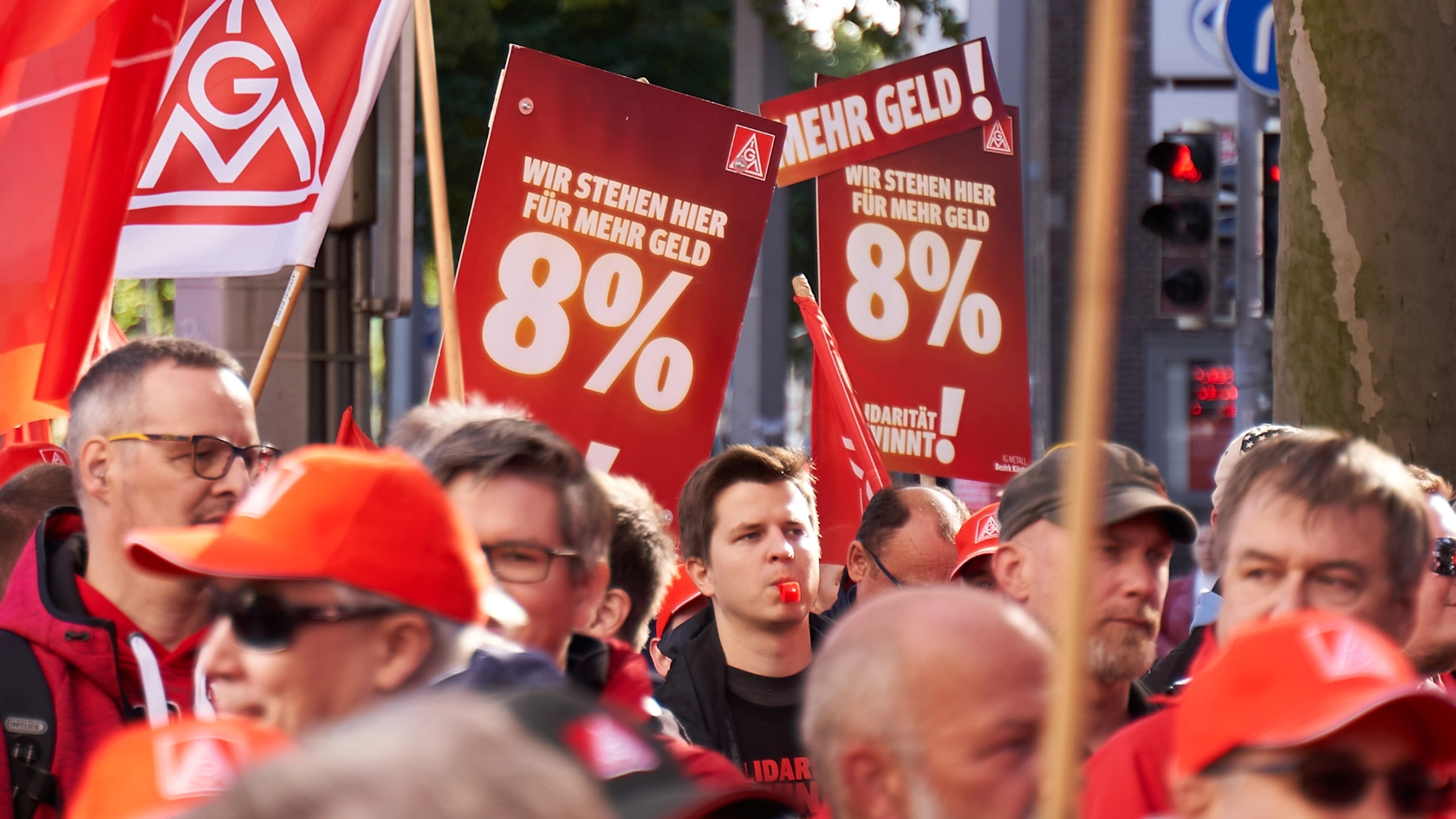
Still nothing: The second round of collective bargaining in the metal and electrical industries has been disappointing so far. In eight regional collective bargaining rounds to date, employers have been unable to present IG Metall with an offer. IG Metall is demanding an 8 percent increase in monthly wages, effective across the board, in light of high inflation.
“No offer, no convergence, no progress—that is the sobering result of two rounds of negotiations,” explained Irene Schulz, regional director of IG Metall Berlin-Brandenburg-Saxony and chief negotiator, following Thursday’s negotiations for Berlin and Brandenburg. “The employers are still coming up empty-handed. But wages cannot stagnate when prices are skyrocketing at a rate not seen in 70 years. Anyone who believes that is clinging to an absurd notion.”
Thousands Apply Pressure at Rallies Ahead of Negotiations
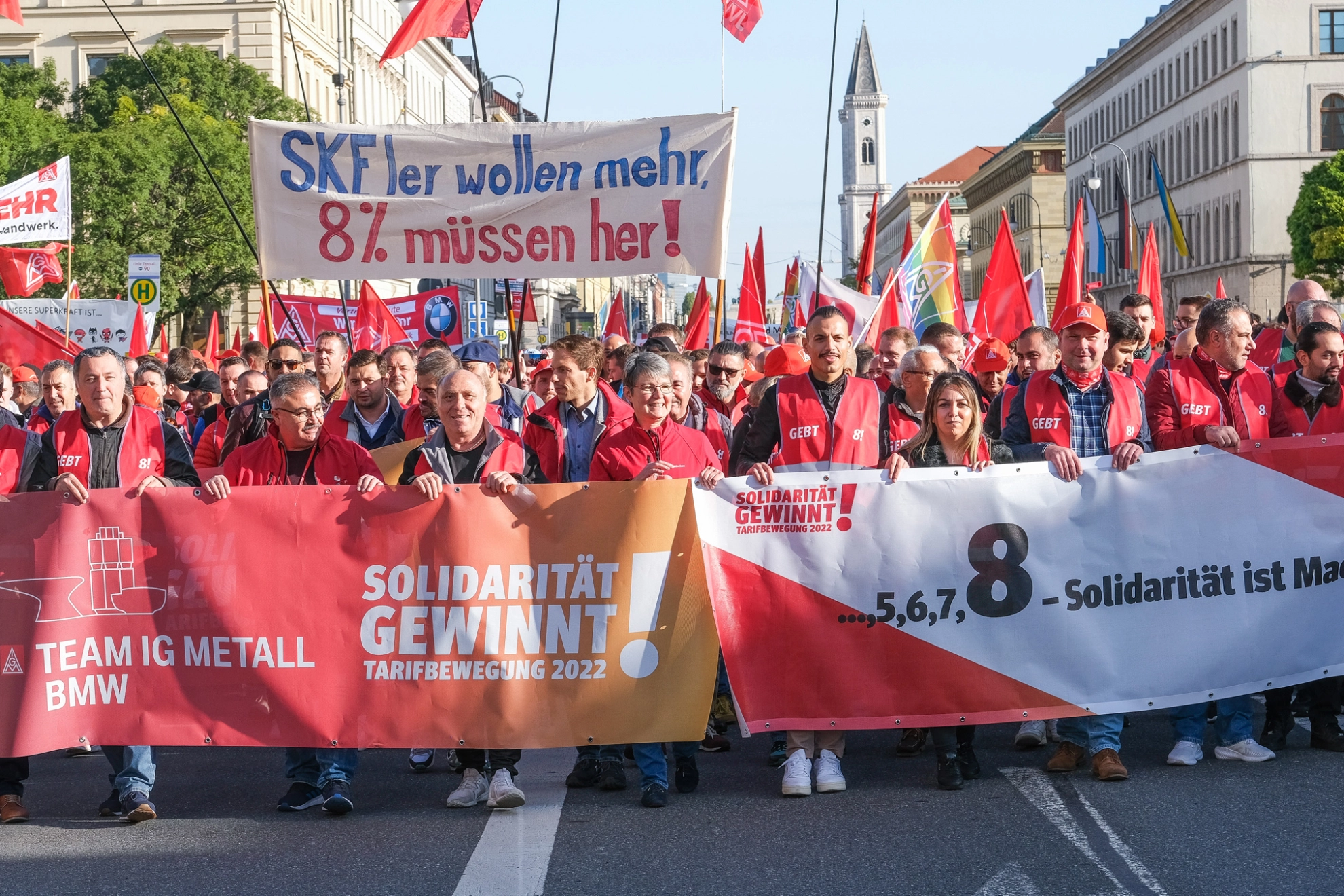
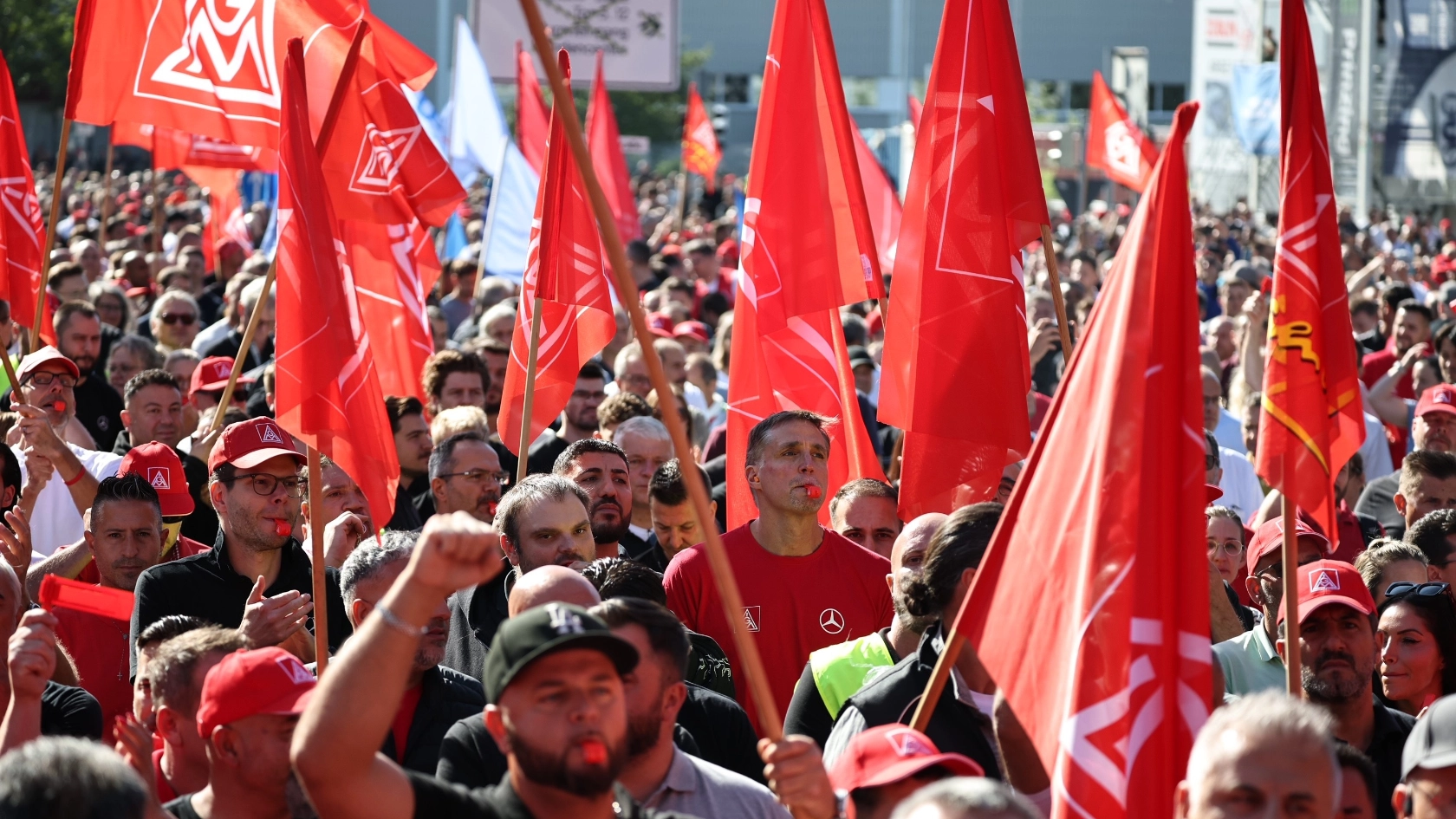
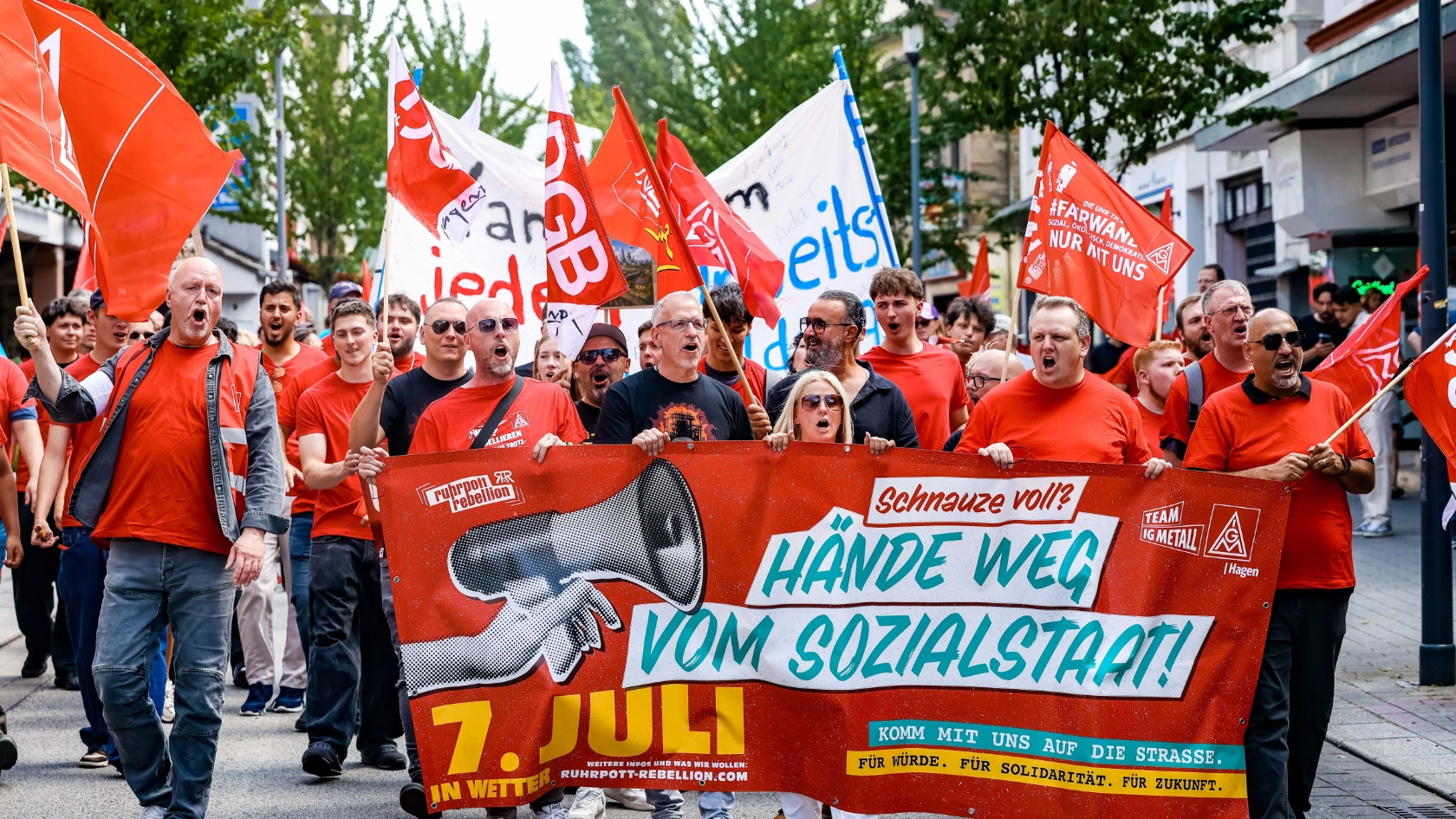
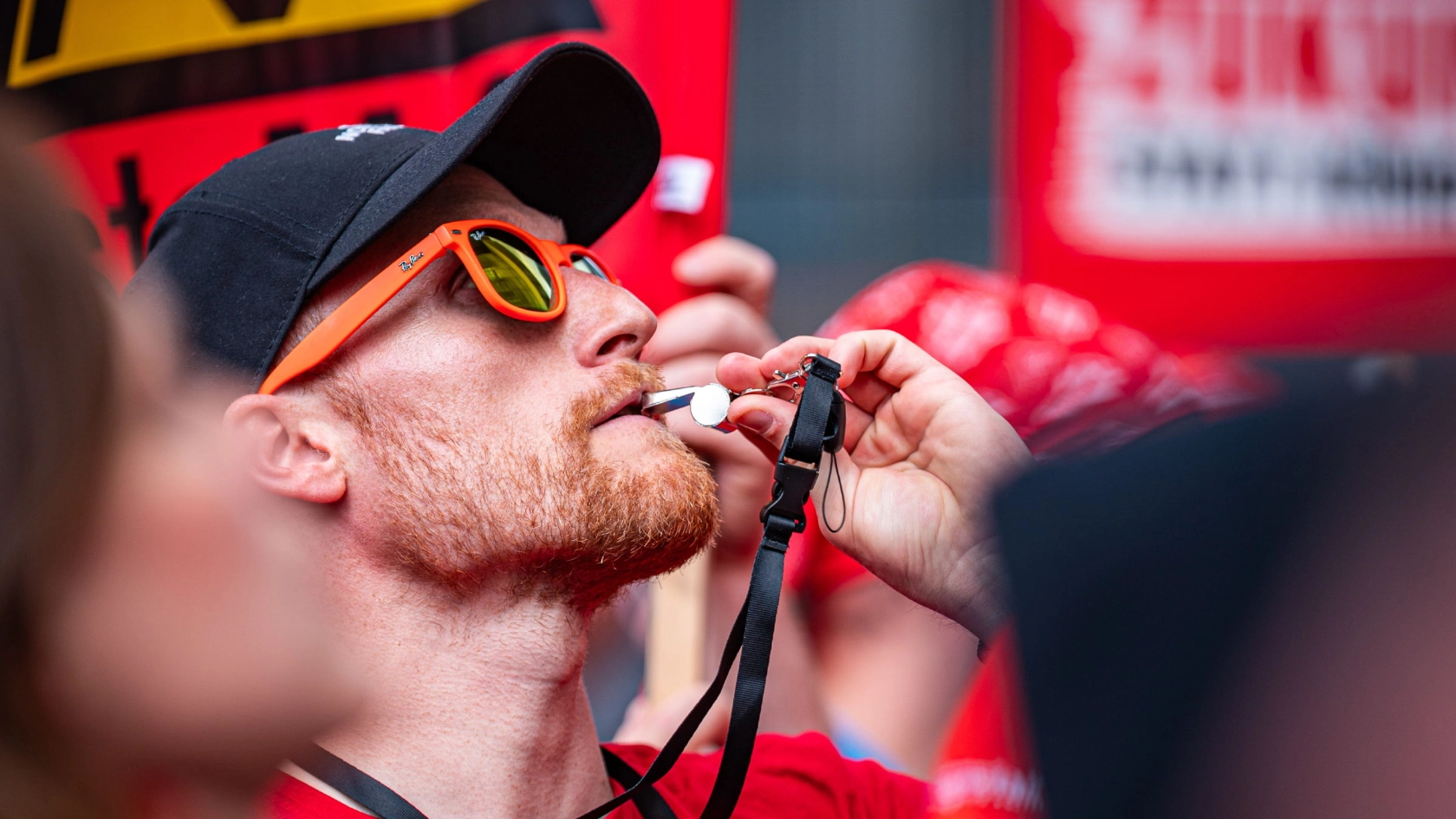
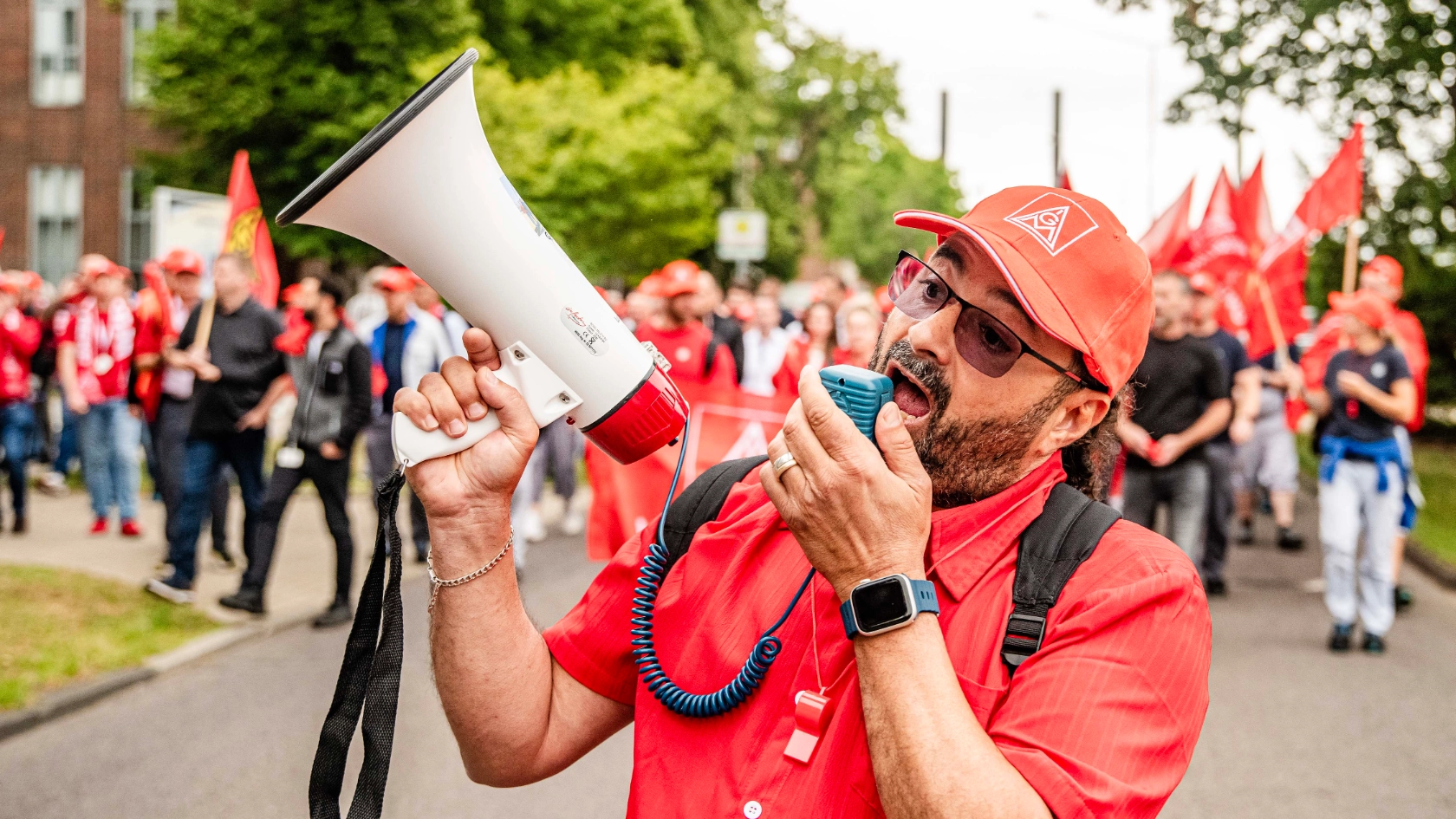
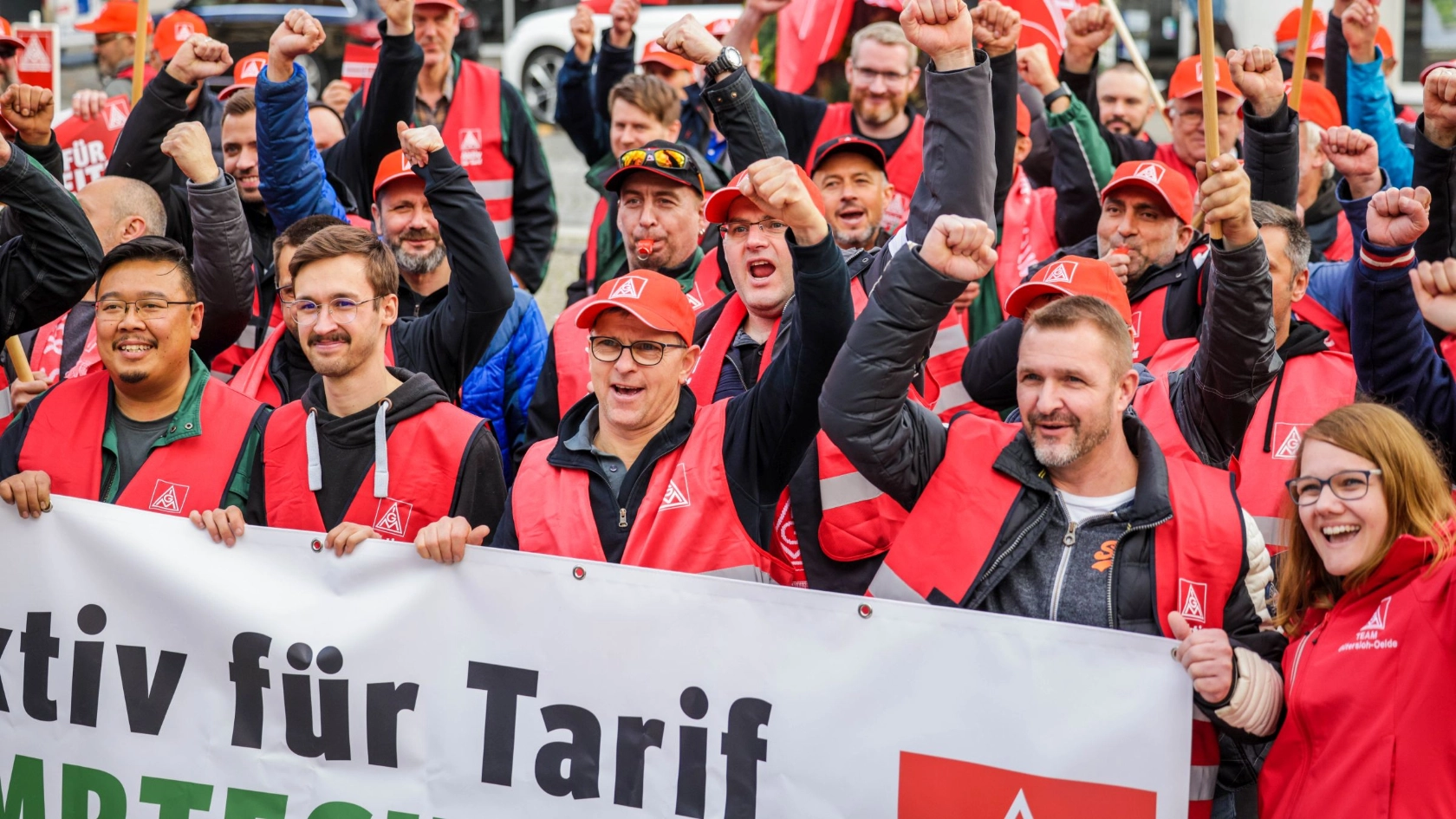
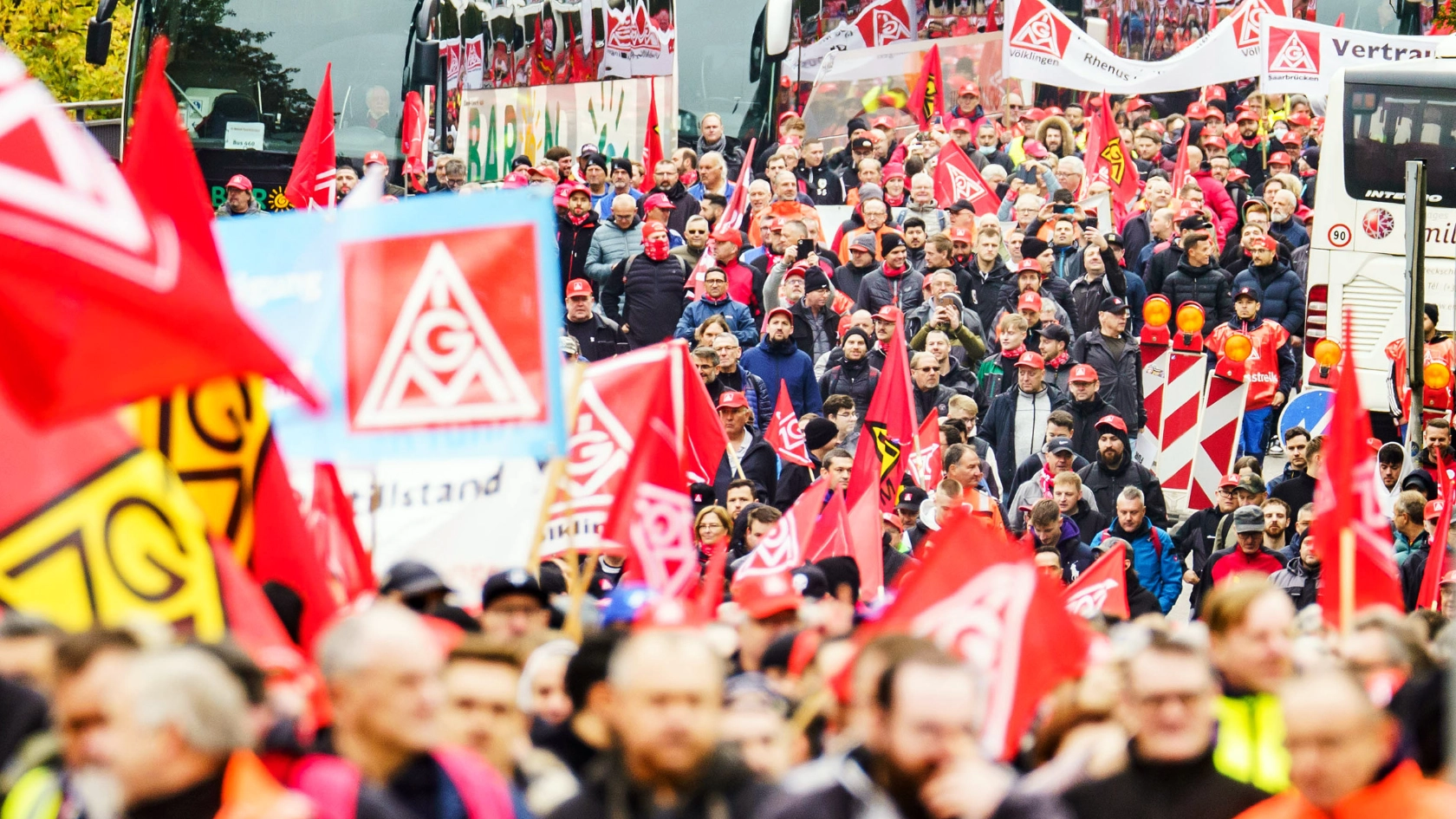
Ahead of the negotiations, thousands of metalworkers once again applied pressure outside the negotiation venues with demonstrations and actions.
In many bargaining regions, there were also “gifts” for the employers. At the collective bargaining session for the Central Group (Hesse, Rhineland-Palatinate, Saarland) in Landau (Palatinate), for example, IG Metall presented the employers with a basket of groceries, baby food, and everyday care products to illustrate the price increases of recent months.
Jörg Köhlinger, the chief negotiator for IG Metall’s Central District, accused the employers of adopting a “blocking stance”: “If no proposals are made and there are no ideas for solving the problem, ultimately no compromise can be reached. This attitude on the part of the employers only makes our people even angrier. We could certainly have saved the energy costs associated with these negotiations.”
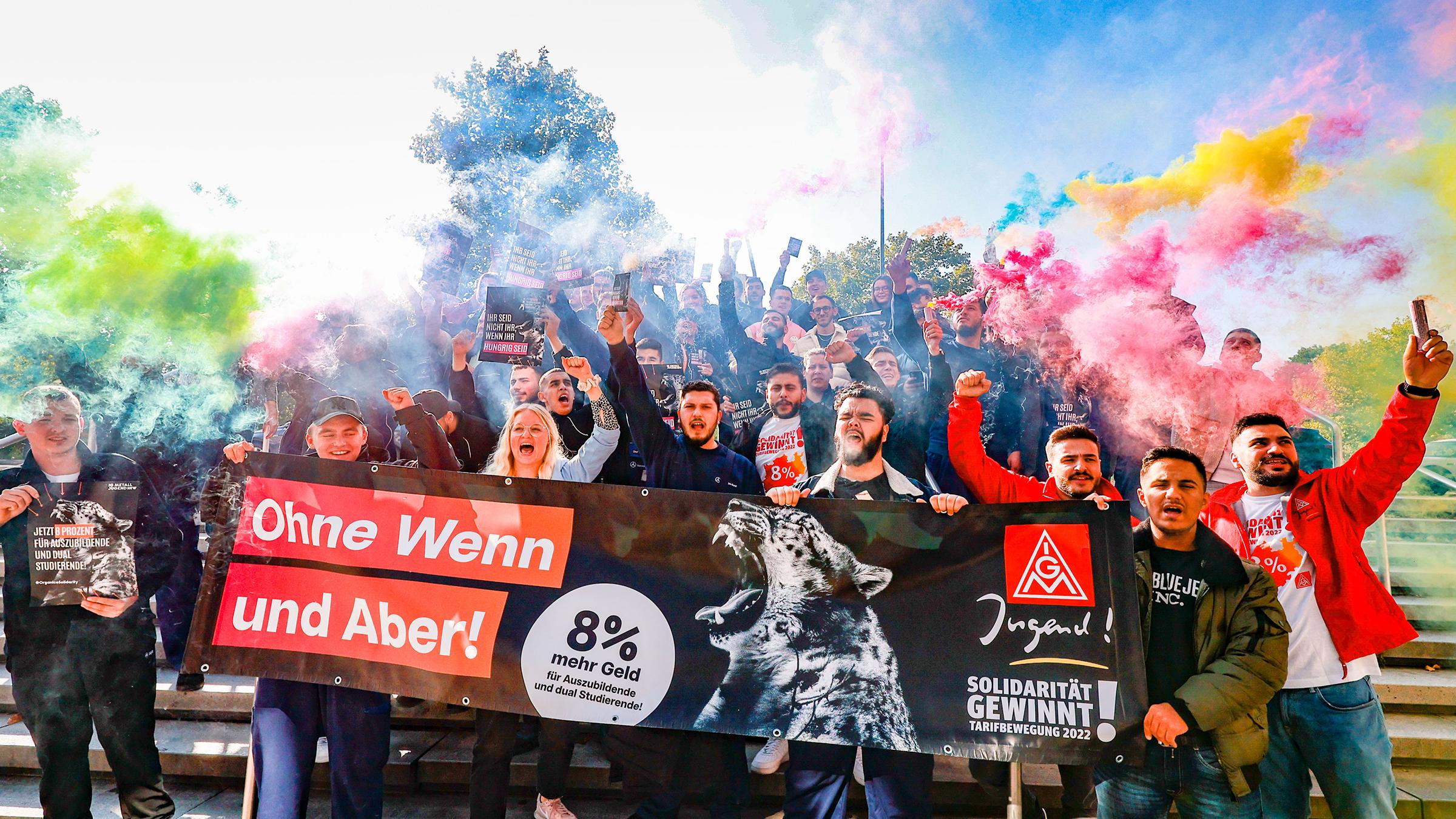
Youth protest at the second round of collective bargaining for North Rhine-Westphalia in Neuss (Photo: Thomas Range)
Employers Want to Make Special Payments “Variable”
They’re offering nothing—and on top of that, some regional employers’ associations are even demanding cuts to the collective agreement by making special payments “variable.” In Bavaria, for example, employers want to link the collectively agreed-upon Christmas bonus and other special payments to profit margins, and be allowed to pay less without IG Metall’s consent.
“IG Metall and the workers will not allow that,” clarified Johann Horn, chief negotiator and district director of IG Metall. “If there is an imbalance within the metal and electrical industry—with some companies posting ever-larger record profits while others face difficulties—then workers certainly cannot be expected to compensate for that by forgoing pay raises and Christmas bonuses.” Horn points out that there are already proven and successful mechanisms in the collective bargaining agreements that make it possible to stabilize companies in financial distress and thus preserve jobs and locations.
Negotiations will continue next week. On Monday, IG Metall and employers representing the metal and electrical industry will negotiate in Lower Saxony. Negotiations will continue on October 12 in Baden-Württemberg, on October 14 in Saxony, and on October 17 in Osnabrück-Emsland-Grafschaft-Bentheim.
The first dates for the third round of negotiations have already been set: Negotiations will begin on October 27 in Central Germany and Bavaria. They will continue on October 28 in Saxony-Anhalt and Thuringia.
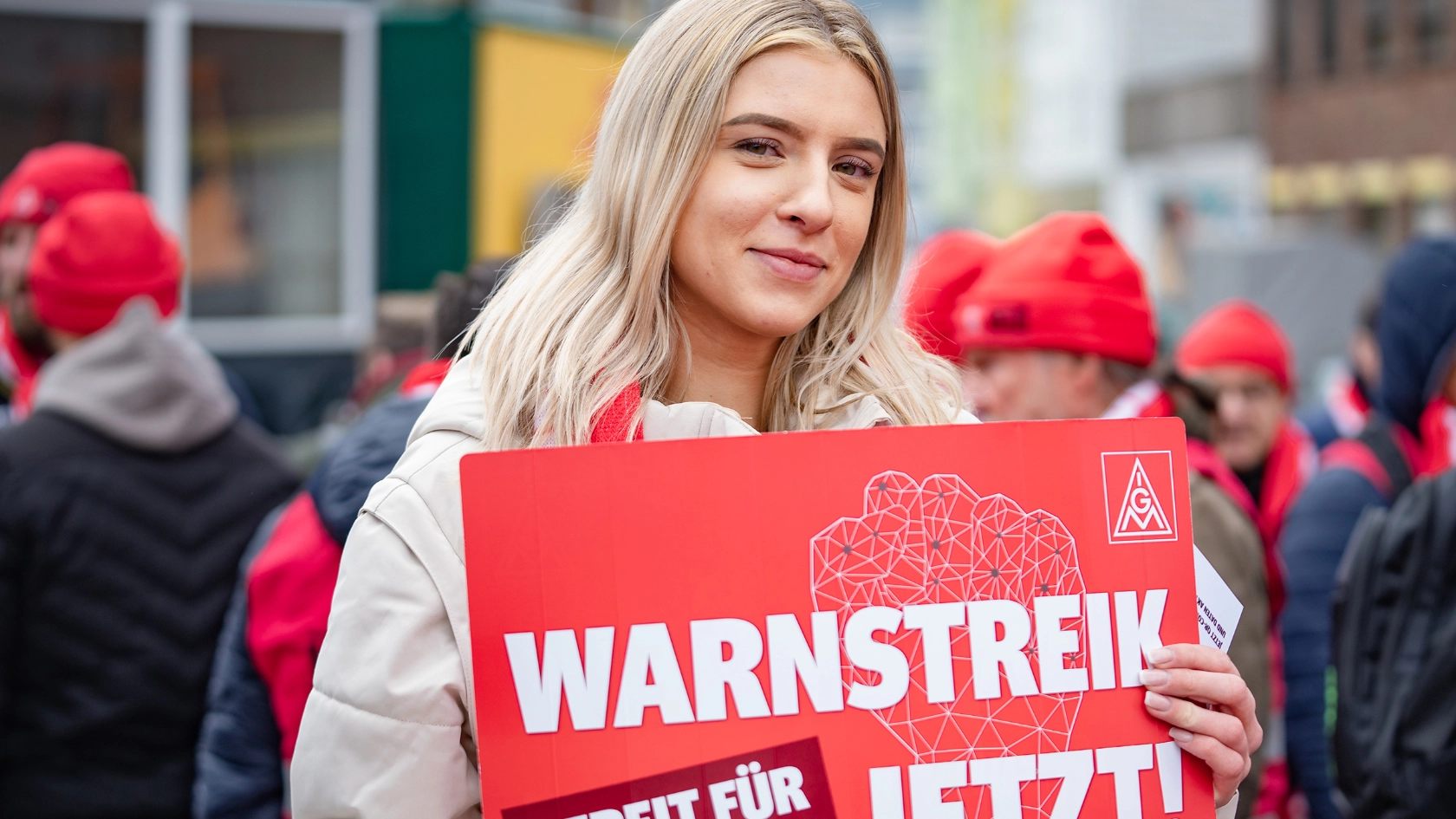
The no-strike clause ends at midnight on October 28. After that, warning strikes are permitted.


To load this video, you must enable YouTube cookies and thereby agree to the YouTube privacy policy.