Automatic translation
This article has been translated automatically using computer technology. While we strive for accuracy, some wording or details may differ from those in the original article.
This translation was not manually reviewed. For important facts, quotations or legally sensitive information, please consult the German original. Individual selections, images, embedded media or technical terms may have been translated differently or incompletely.

Tips for Summer Workers What to keep in mind when working a summer job

Vacation isn’t just a great opportunity to relax—it’s also a chance to boost your income. A summer job is a great way to do that, but there are a few rules to keep in mind. We’ll explain what they are.

Eine junge Frau lehnt an einem Gabelstapler.

17 June 2025 17 June 2025


Summer break or semester break—many high school and college students use the weeks from June to September to earn money with a summer job. Whether you have to pay social security contributions depends on whether it’s a permanent position or a temporary job. Find out what else you need to keep in mind when working a summer job in our overview.


What do minors need to keep in mind when working a summer job?

From age 13 through age 14, children may work only with their parents’ consent—but only for up to two hours a day (three hours a day in agriculture), between 8 a.m. and 6 p.m.

Teenagers between the ages of 15 and 17 may work part-time during school breaks for a maximum of four weeks per year. They are not allowed to work more than eight hours a day or 40 hours a week, and their working hours must be between 6 a.m. and 8 p.m. Exceptions apply to older students aged 16 and older, who are allowed to work until 10 p.m. in restaurants and until 11 p.m. in multi-shift operations. Weekend work is generally not permitted, except for certain events or in exceptional cases (e.g., agriculture).

Anyone who works must also take breaks. For those under 18, the break entitlement is at least 30 minutes for four and a half to six hours of work per day, and 60 minutes for more than six hours.

What regulations apply when working a mini-job?

High school and college students who work in “mini-jobs” and earn up to 556 euros per month pay only minimal contributions to the pension insurance system.

They are required to be insured under the pension insurance system; however, they may apply for an exemption. For minors, the legal guardian must sign the application for exemption from mandatory pension insurance. If no exemption has been granted, mandatory pension insurance contributions of 18.6 percent must be paid for long-term marginal employment; of this, 15 percent is paid by the employer and 3.6 percent by the student. If an exemption is granted, the employer must pay flat-rate pension insurance contributions of 15 percent.

Those in mini-jobs do not make any contributions to health, long-term care, or unemployment insurance. For permanently employed individuals in marginal employment who are already covered by statutory health insurance, the employer pays a flat-rate contribution of 13 percent.

Students are generally exempt from unemployment insurance. However, those who begin vocational training immediately after a summer job are subject to insurance coverage even during the summer job. This does not apply to those who begin school or college after the summer job.

The Deutschland-Ticket does not count toward earnings from a mini-job

A company may provide employees with subsidies toward the cost of public transportation between their home and primary place of work, or cover the full cost. These subsidies are tax-free if they are provided in addition to regular earnings. They are also exempt from social security contributions.

It is important to note that the subsidy or the provision of the so-called “Deutschlandticket” must truly be in addition to the employee’s regular earnings.

If the employer finances the “Deutschlandticket” in addition to the regular wages, it is not to be included when calculating the regular earnings from the mini-job. For example, if a mini-job worker earns 556 euros per month, she can also receive the “Deutschlandticket” without any changes to her mini-job.

Do collective bargaining agreements apply to me when working a summer job?

Working students are regular employees who work on a fixed-term or part-time basis. The so-called “working student” status applies solely to social security. All laws, collective bargaining agreements, and company agreements apply directly and mandatorily to working students as well. Therefore, if they are members of IG Metall, all provisions of the collective bargaining agreement also apply to them. In particular, the pay for working students must correspond to the pay of a comparable, permanently employed worker.

Do I have to pay social security contributions for a summer job?

For employed students who have neither a short-term job nor a “minijob,” the so-called “working student privilege” may apply under social security law. If their studies take priority and their weekly working hours do not exceed 20 hours, the job is exempt from the obligation to contribute to health, long-term care, and unemployment insurance.

If the work is adapted to and subordinate to the requirements of the student’s studies, exemption from insurance may also apply even if the weekly working hours exceed 20 hours. This applies when working students work on weekends, in the evenings or at night, or during semester breaks. If they hold multiple temporary jobs, they are exempt from insurance contributions only if all jobs combined do not exceed 26 weeks or 180 calendar days per year.

If the employment lasts longer than three months or 70 working days in a calendar year, contributions to health and long-term care insurance are not due only if the employment is limited exclusively to the period during which no coursework is required. Students always pay contributions to the pension fund if the employment lasts longer than three months or if they regularly earn more than 520 euros per month. They split the contribution equally with the employer.

If the employment is limited to a maximum of three months or 70 working days in the calendar year, no pension contributions are required. For this to apply, the work must either be contractually specified in advance or limited by the nature of the employment relationship and must not be performed on a professional basis.

Detailed questions regarding social security obligations are answered by the German Pension Insurance.

What is the maximum amount I can earn to remain covered under my family’s health insurance?

Students who are covered under their parents’ family health insurance plan must be careful. If they wish to remain covered under their parents’ health insurance, their total net income must not exceed 535 euros per month.

Income from marginal employment up to the 556-euro minijob limit does not affect existing contribution-free coverage under the statutory health insurance system, known as family coverage.


Does a summer job affect my BAföG?

Students who receive BAföG can earn an additional 556 euros gross per month without it affecting their benefits. If they exceed this amount, their financial aid will be reduced. Detailed information on the income allowances is provided by the Federal Ministry of Education and Research.

Do I receive the minimum wage for a summer job?

The statutory minimum wage also applies to students. It is currently 12.82 euros per hour. Unfortunately, the Minimum Wage Act does not apply to those under 18 who have not completed vocational training.

The German Trade Union Federation answers detailed questions about the minimum wage on its website.

Do I have to pay taxes on my summer job?

As with all other employees, students are also entitled to a basic tax-free allowance. In 2025, this amounts to 12,096 euros per year for single individuals. 

If an employer has nevertheless withheld taxes, high school students and college students can regularly claim a refund from the tax office by filing an income tax return. This applies especially if they were not employed for the entire year or if they can claim income-related expenses, special expenses, or extraordinary burdens.

Citizen’s Income: Summer jobs are not counted

Students attending general or vocational schools whose parents receive the citizen’s income benefit can earn some extra money during school breaks without it being counted against their benefits. This rule has been in effect since July 1, 2023, provided that those working summer jobs have not yet turned 25 and work exclusively during school breaks. For students who are 25 years of age or older, however, income from summer jobs is counted toward benefits just like regular earned income.

Outside of school breaks, the following applies: Young people who work regularly may keep income from student jobs and income from vocational training up to the mini-job limit of 556 euros per month without it being counted against their benefits.

Questions about summer jobs: Who can help?

Working students or those in mini-jobs who have questions should contact the IG Metall works council or the youth representatives.

Guide

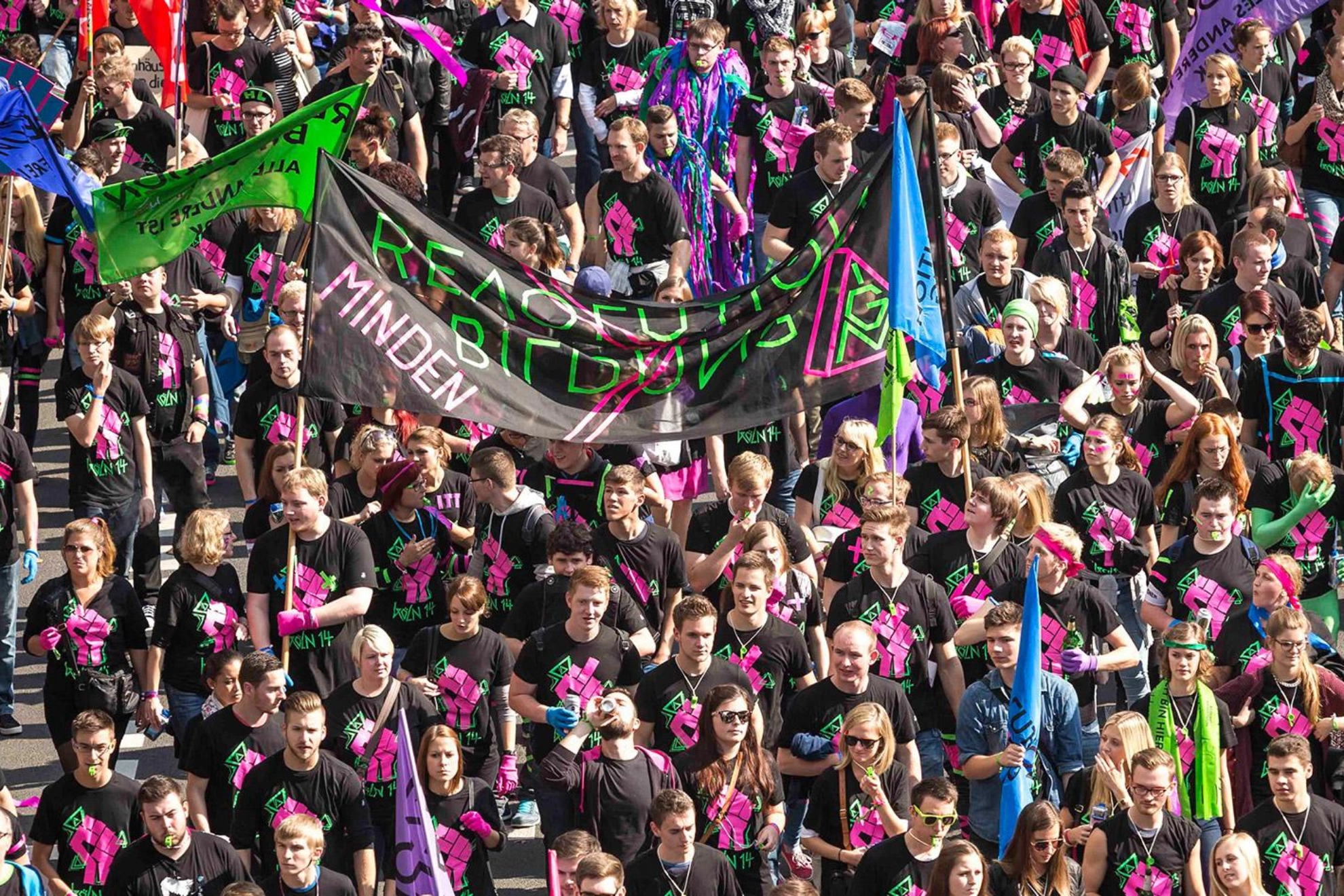
REVOLUTION BILDUNG
Become a Member Now
Without you, there is no “we.”

Whether it’s fair compensation, labor law protection, recreational accident insurance, or advice on training, college, and starting your career—we’ve got your best interests at heart. With you. For you.

New on igmetall.de
Aktionstag bei Mercedes Benz, Daimler, in Sindelfingen gegen die Angriffe auf Beschäftigten in der Automobilindustrie.
Resistance to Attempts at Drastic Cuts Auto industry workers issue a warning
Sie wollen doch nur dein Bestes
Redistribution Making Germany more equitable: We need this tax reform now
Der Streik bei Kelvion in Nobitz-Wilchwitz begann am 4. August 2026. Die Geschäftsleitung will nach Sarstedt/Niedersachsen verlagern - obwohl die Produktion in Wilchwitz profitabel und bis ins nächste Jahr ausgelastet ist.
"It’s worth fighting for!" Kelvion workers strike for a social collective bargaining agreement
Ruhrpott Rebellion am 07.07.2026
Welfare State September 26: Nationwide Day of Action for Social Policy
Beschäftigter arbeitet an einem Getriebe in einer Fabrik
Working Hours Why working longer doesn’t help—and actually does more harm than good
Ein männlicher Land- & Baumaschinenmechatroniker prüft einen Traktor mit einem Tablet
2026 Collective Bargaining Agreement for the Metalworking and Agricultural Engineering Sectors Greater Flexibility in the Metalworking and Agricultural Engineering Sectors in Lower Saxony and Bremen
Elektronikerin prüft die Spannung an einem Schaltschrank.
2026 Collective Bargaining Round for the Electrical Trades Wage Increase in the Electrical Trades in Berlin-Brandenburg
Benjamin Heine ist Mitarbeiter der BMA in Braunschweig
2026 Collective Bargaining Round for Metal Fabrication and Precision Engineering Higher Wages in the Metal Fabrication and Precision Engineering Sectors in Southwest Germany
Metall-Arbeiter beim Schleifen
2026 Collective Bargaining Round for the Metalworking Trade Employees in the Berlin-Brandenburg metalworking sector will receive higher pay
Beschäftigte von Thyssenkrupp demonstrieren in Essen am 23. Mai 2024 gegen das Vorgehen der Geschäftsführung beim geplanten Teilverkauf des Unternehmens.
Defend the welfare state All dates for nationwide actions against cuts to social services
IGM Aktion VW Wolfsburg
On September 21, things will get loud Nationwide Day of Action: Auto Industry Workers Fight Back Against Mass Layoffs
Auszubildender in einer Schreinerei
Apprenticeship Wages Questions and Answers About Apprenticeship Wages

Subscribe to the newsletter