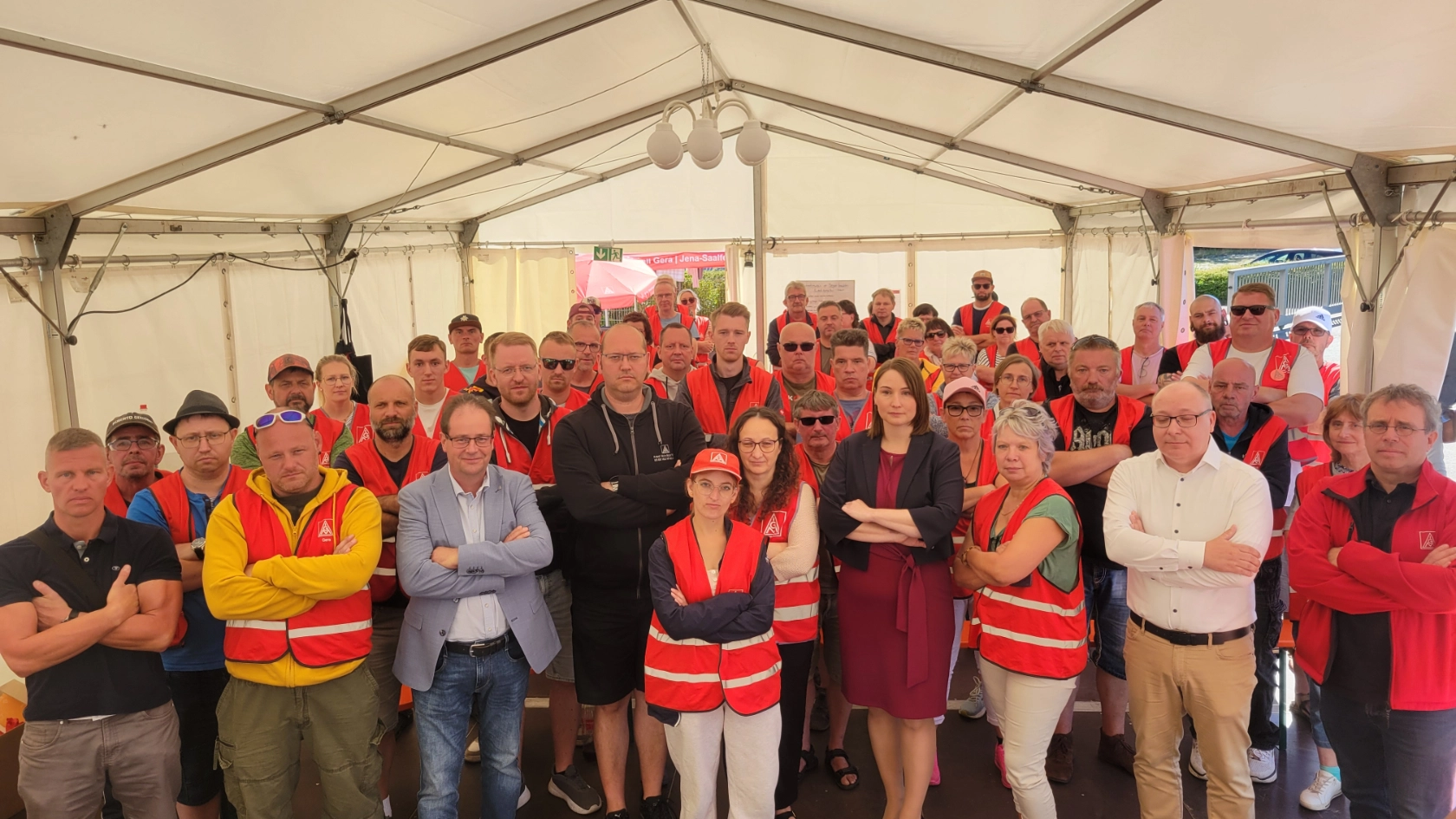
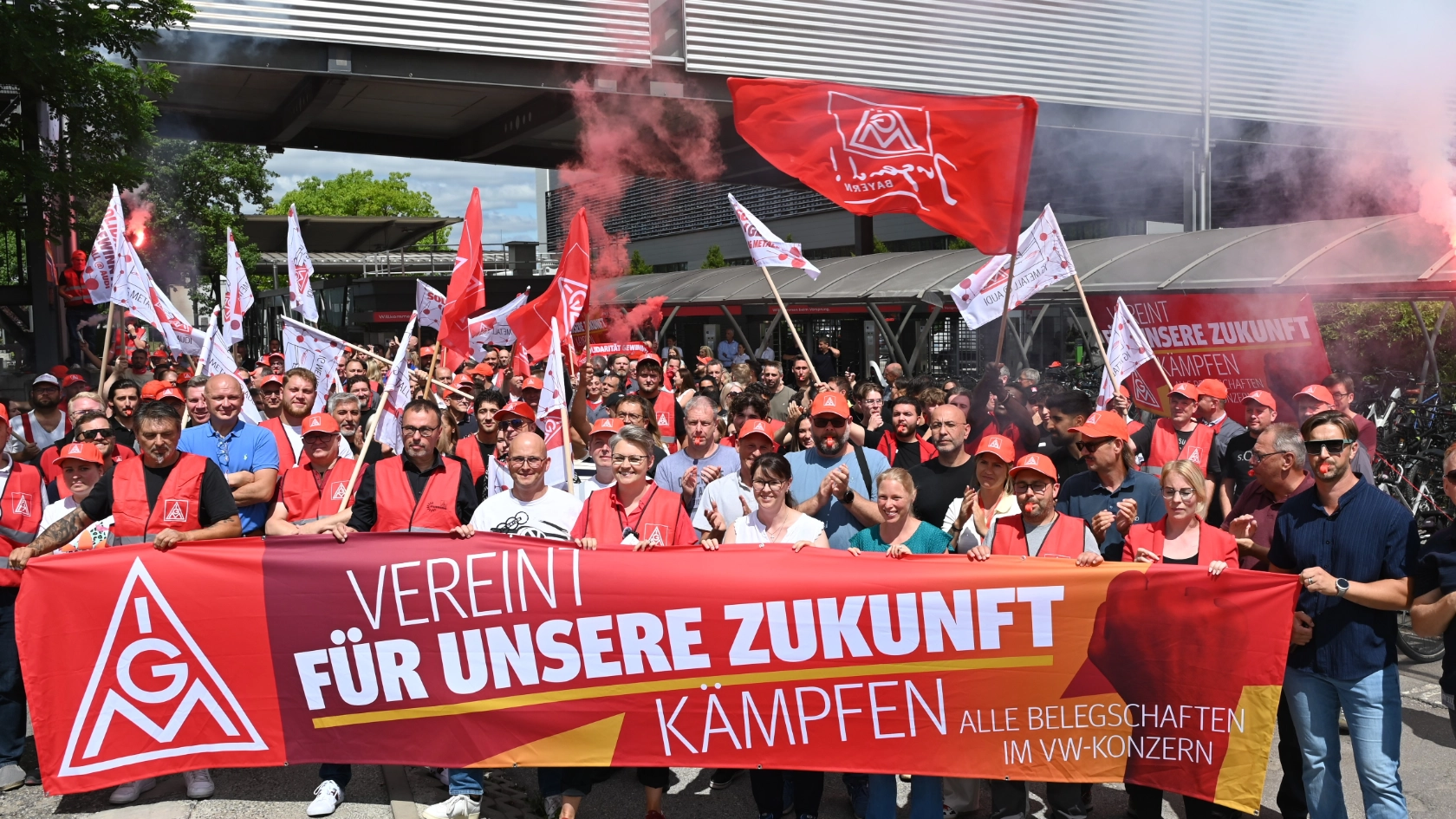
The automotive industry currently illustrates what it means when economic change becomes a reality: Volkswagen is rapidly shifting toward e-mobility and plans to cut thousands of jobs as a result. At supplier Bosch, numerous work shifts are being canceled at diesel-related sites, and workers fear for the future of entire locations.
These upheavals will continue. Digitalization, climate protection measures, globalization, and demographic shifts are driving this transformation. This has consequences for the labor market: Many jobs will undergo significant changes. New skills will be required. Some jobs will disappear, while others will be created.
How can this transformation be managed without leaving large numbers of people unemployed?
IG Metall has a proposal: a new form of short-time work allowance (KuG), the “transformation short-time work allowance.” This would provide support to companies and employees affected by technological or other structural changes.
A New Tool for the Labor Market
“Companies urgently need to plan more strategically—both in terms of their workforce and their products,” says Jörg Hofmann, President of IG Metall. “But an active labor market policy will also be necessary. This calls for new tools, such as a transformation short-time work allowance.”
Here’s how the transformation short-time work allowance works:
A company is facing a restructuring process. Production is declining. The restructuring takes time, and there is initially a loss of work. Employees will face new and changed requirements and tasks.
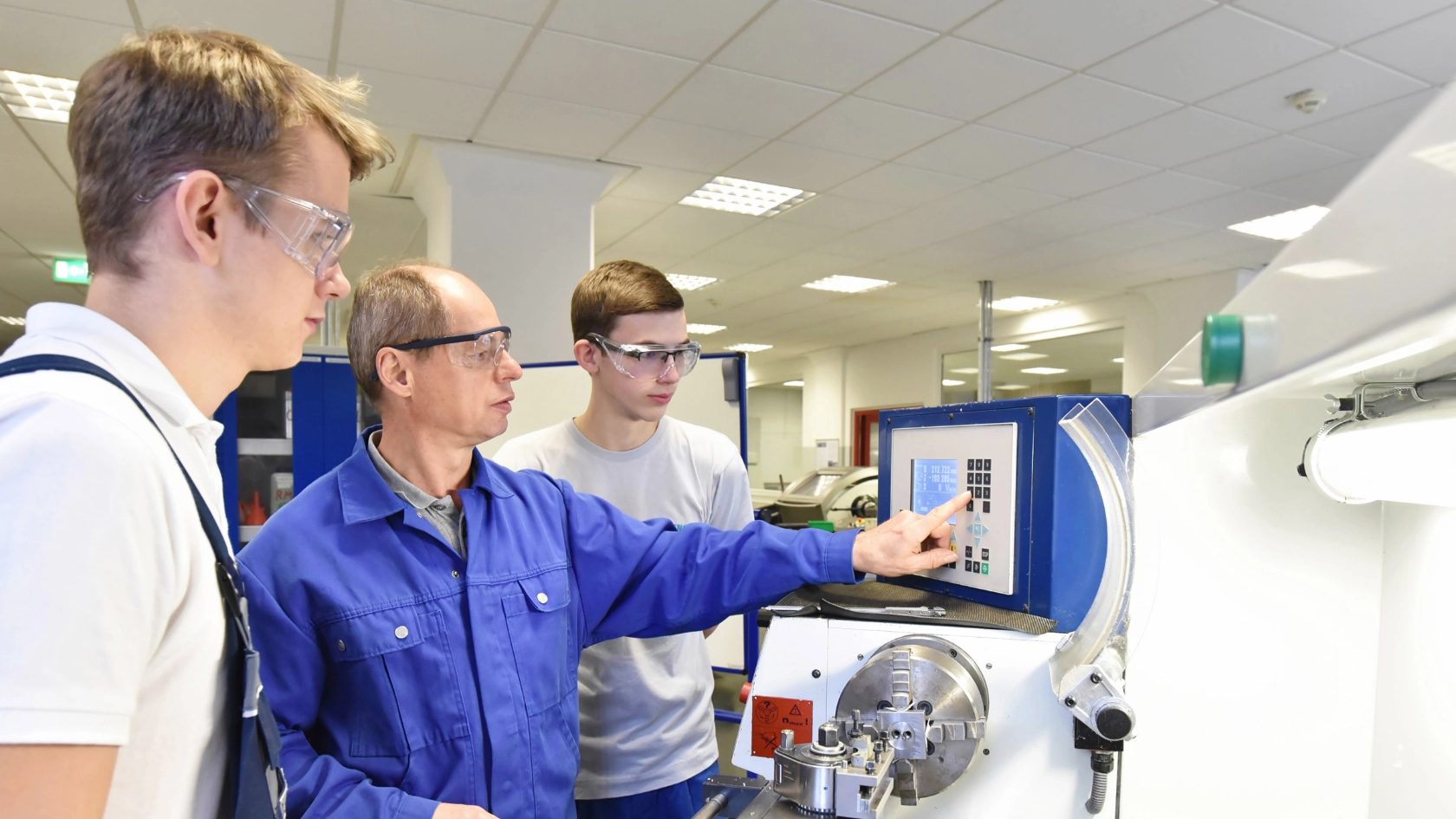
In such situations, the transformation short-time work allowance is intended to bridge the gap. It prevents layoffs and minimizes employees’ loss of pay during the work stoppage. In addition, short-time work is to be combined with training. Companies and works councils decide together which training makes the most sense. After the transformation process, employees can continue to be employed with their new skills.
Positive Experience
During the 2009 financial and economic crisis, Germany had positive experiences with short-time work. Combined with training, it stabilized employment and prevented major disruptions in the labor market. The impending transformation of the economy presents a comparable challenge. The Transformation Short-Time Work Allowance helps to address it.
The Transformation-KuG is to be funded from the budget of the Federal Employment Agency. This investment is worthwhile: It is more socially and economically sound to keep employees in work and train them for new fields of activity than to lay them off into unemployment.