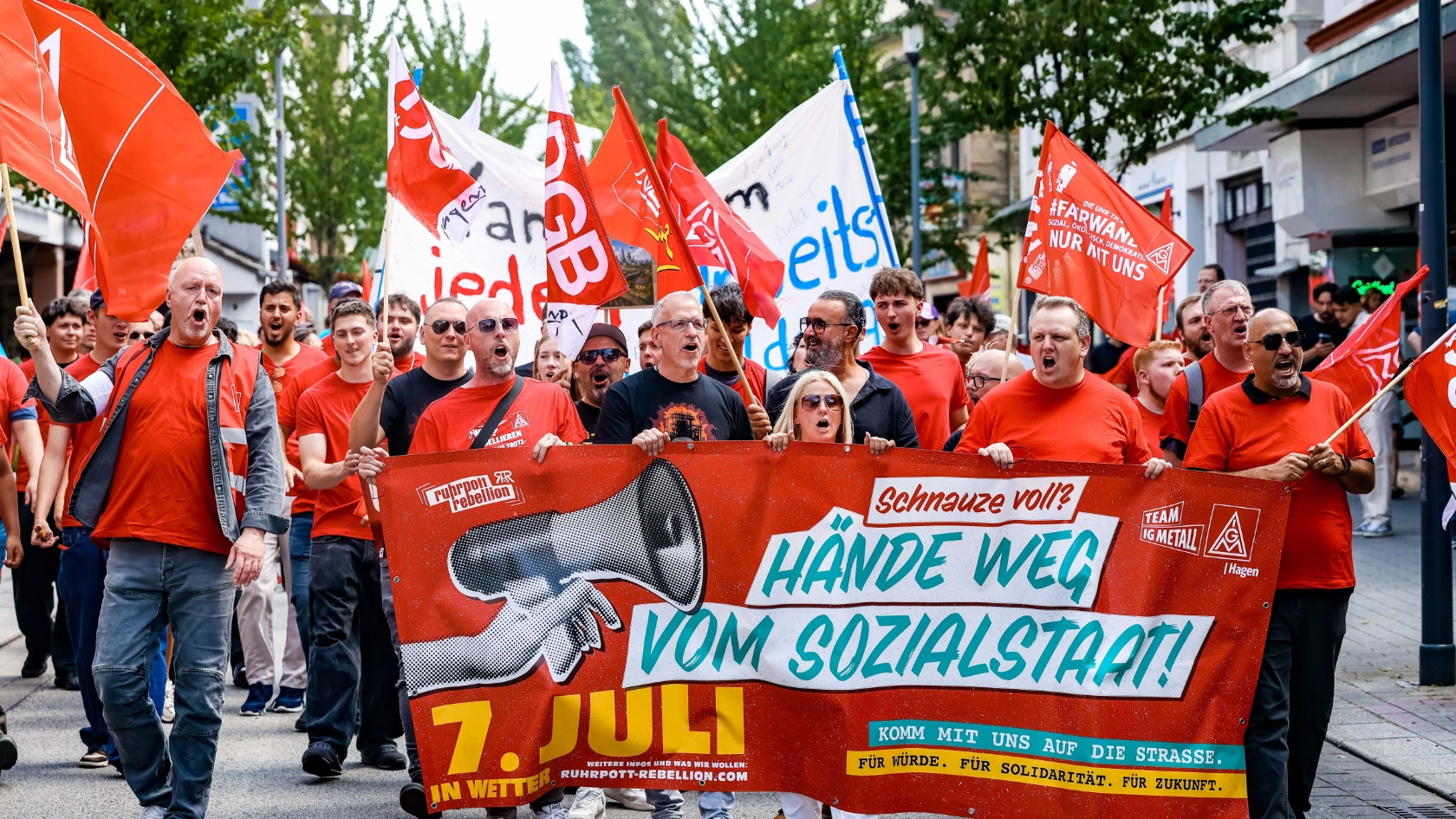
When it comes to the German healthcare system, one issue regularly stirs up controversy: a two-tier healthcare system, where those with public and private insurance exist side by side.
A large majority of people in Germany consider this system unfair. No wonder: Patients with public insurance often wait months for doctor’s appointments, while those with private insurance are seen quickly.
There’s also a wide gap in the quality of care. For those with public insurance, many necessary treatments are now only available in their low-cost versions—for example, dental prosthetics.
The dual system also creates perverse incentives: In metropolitan areas, where many affluent privately insured people live, there is sometimes an oversupply of medical services. In rural areas, on the other hand, there is a shortage of doctors’ offices in many places.
At the same time, the financing of statutory health insurance (GKV) is becoming increasingly precarious. There is a shortage of high-income premium payers, who are primarily found in private health insurance (PKV).
IG Metall’s response to these problems: a universal health insurance system into which everyone contributes.
What is a universal health insurance system?
The guiding principle of universal health insurance is that all citizens are part of a health care system and contribute to the financing of statutory health insurance—in proportion to their economic capacity. This gives the health care system a completely new, solidarity-based foundation.
The goal of universal health insurance: needs-based health care for everyone, regardless of age, place of residence, or financial means.
What are the benefits of a citizens’ health insurance system?
A citizens’ health insurance plan ensures the long-term stability of the healthcare system. The statutory health insurance system (GKV) will thus have significantly more funds available through premiums.
Two additional measures create further financial leeway: raising the contribution assessment ceiling to the level of the pension insurance system; and subjecting other forms of income, such as investment income, to contributions, with an exemption for small savers.
What do people think about universal health insurance?
The vast majority of people in Germany support the principle of solidarity underlying a universal health insurance system. Nearly 80 percent are in favor of it, as shown by a recent survey by the German Trade Union Federation (DGB). A majority of privately insured individuals also support the system change.
Among IG Metall members, support for a universal health insurance system is even greater. In a survey, 98 percent expressed support for including all occupational groups in the social insurance system.
How can a universal health insurance system be introduced?
Not by force, but gradually. Take civil servants as an example: Only newly appointed civil servants would be enrolled in the universal health insurance system as of a specific cutoff date. In the future, their employer would be responsible for paying the employer’s contribution to the universal health insurance system.
Private health insurance would then handle only “existing cases” (keyword: grandfather clause).