Why Do Pensions Need to Increase?
Pension increases—officially known as “pension adjustments”—are essential for maintaining the standard of living in old age. Without pension adjustments, retirees would face a problem: they would be disconnected from general wage trends . As the incomes of the working population and prices rise, retirees would lose a little purchasing power every month.
The amount of the pension adjustment depends on several factors. The most important one is general wage growth. If wages rise, pensions typically follow suit the following year—always effective July 1.
Example: Due to strong wage increases in the previous year (2023), there was a 4.57 percent pension increase in 2024. However, there have also been years with no pension increases— for example, in 2021, when wages fell during the COVID-19 crisis.
Technically speaking, when pensions increase, the so-called “pension value” rises. This is the monthly amount to which an average earner is entitled based on a year’s worth of pension contributions.
In addition to wage trends, there are other factors that influence pension adjustments: changes in the pension insurance contribution rate and the so-called sustainability factor. This factor describes the numerical ratio between pensioners and contributors. If the number of pensioners rises faster than the number of contributors, this limits the pension increase.
There is also the so-called“safety net.” This means that the pension level may not fall below 48 percent. This safety net came into effect during the 2025 pension adjustment.
Under current law, the safety net applies only through 2025. What happens next with pensions depends on the federal government. In their coalition agreement, the CDU/CSU and SPD stated that they intend to maintain the pension level at 48 percent through 2031.
Can pensions also be cut?
No. The so-called pension guarantee prevents this. However, this does not mean there is cause for general reassurance regarding pensions. Even if pensions do not decrease in nominal terms, the so-called pension level has been declining for years. This means that pensions are lagging behind general wage growth. As a result, their purchasing power is eroding.
Who decides on pension adjustments?
The federal government decides on pension adjustments by decree. The Bundesrat must approve it.
Why were pension increases different in the East and West for so long?
For years, the so-called pension value was lower in the East than in the West. Higher pension adjustments in the East gradually brought the values into line. This process is now complete. In the future, pension increases will be the same in both the East and the West.
What does the long-term future hold for pensions?
There is fierce debate over the future of the statutory pension insurance system. Employer associations and business-friendly politicians want to further cut benefits and raise the retirement age even higher.
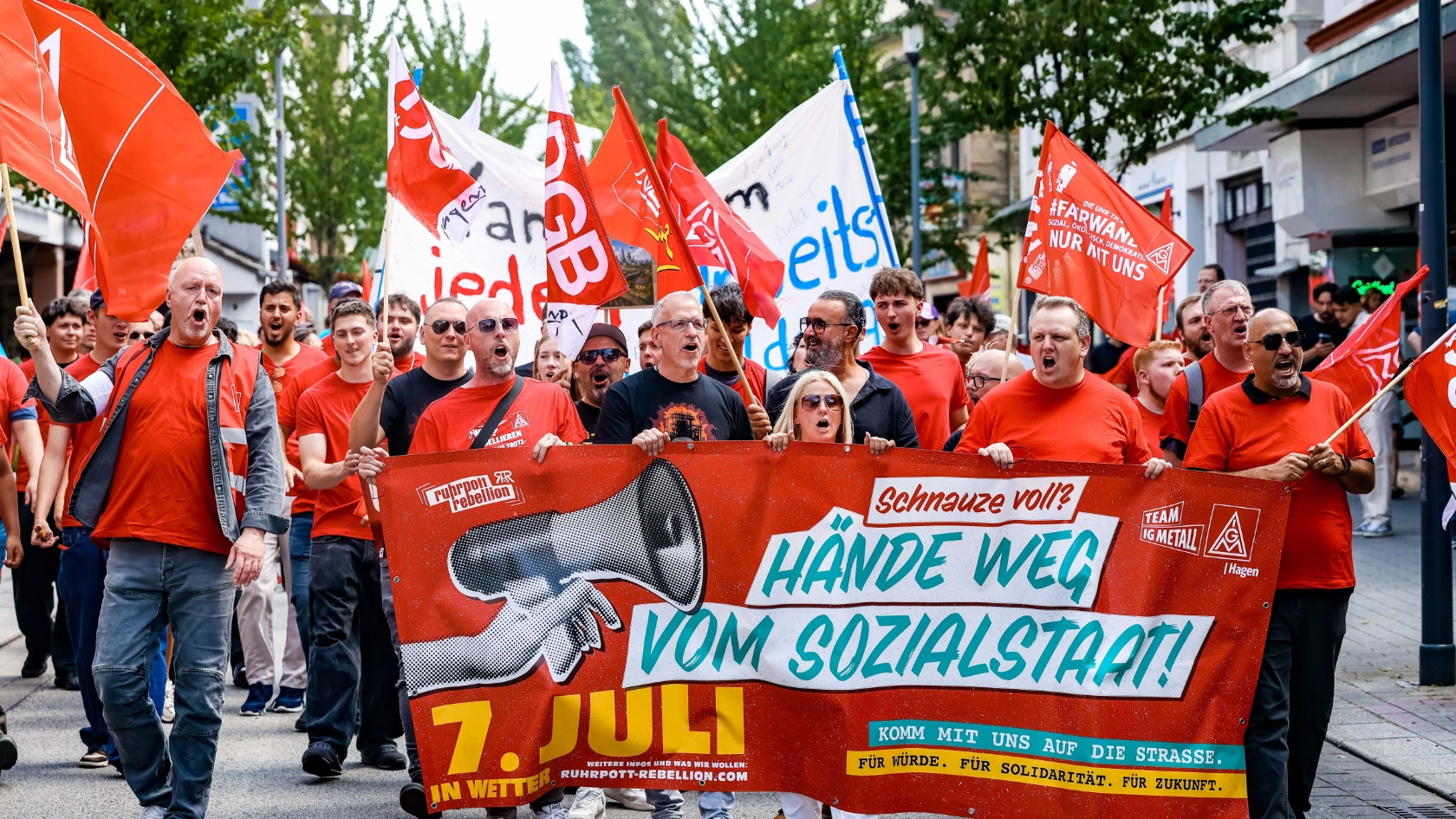
IG Metall has a different proposal: a solidarity-based restructuring of the old-age pension system. Under this proposal, all working people should contribute to the statutory pension insurance system—including doctors, lawyers, civil servants, the self-employed, and members of parliament.
Pension levels should rise and once again track wage growth. Flexible transitions to retirement should make it possible to receive a pension without significant reductions.
Tip: IG Metall’s complete pensionproposal is available here.