Since 2010, Bosch in Salzgitter has had a company agreement in place that governs the systematic training of employees. This ensures that continuing education is not distributed haphazardly. Every employee at the site has the right to training and to an individually tailored training plan. This plan is based on an analysis of the individual employee’s skills and abilities, on the one hand, and on an internal needs assessment—that is, an evaluation of the qualifications that will be necessary in the future for specific tasks—on the other.
“We need to know what each employee is capable of, where they stand, and we need to know what qualifications we’ll need in the future,” says Achim Brandt, “only then can we offer training that’s perfectly tailored.”
A Week of Training—Back Then
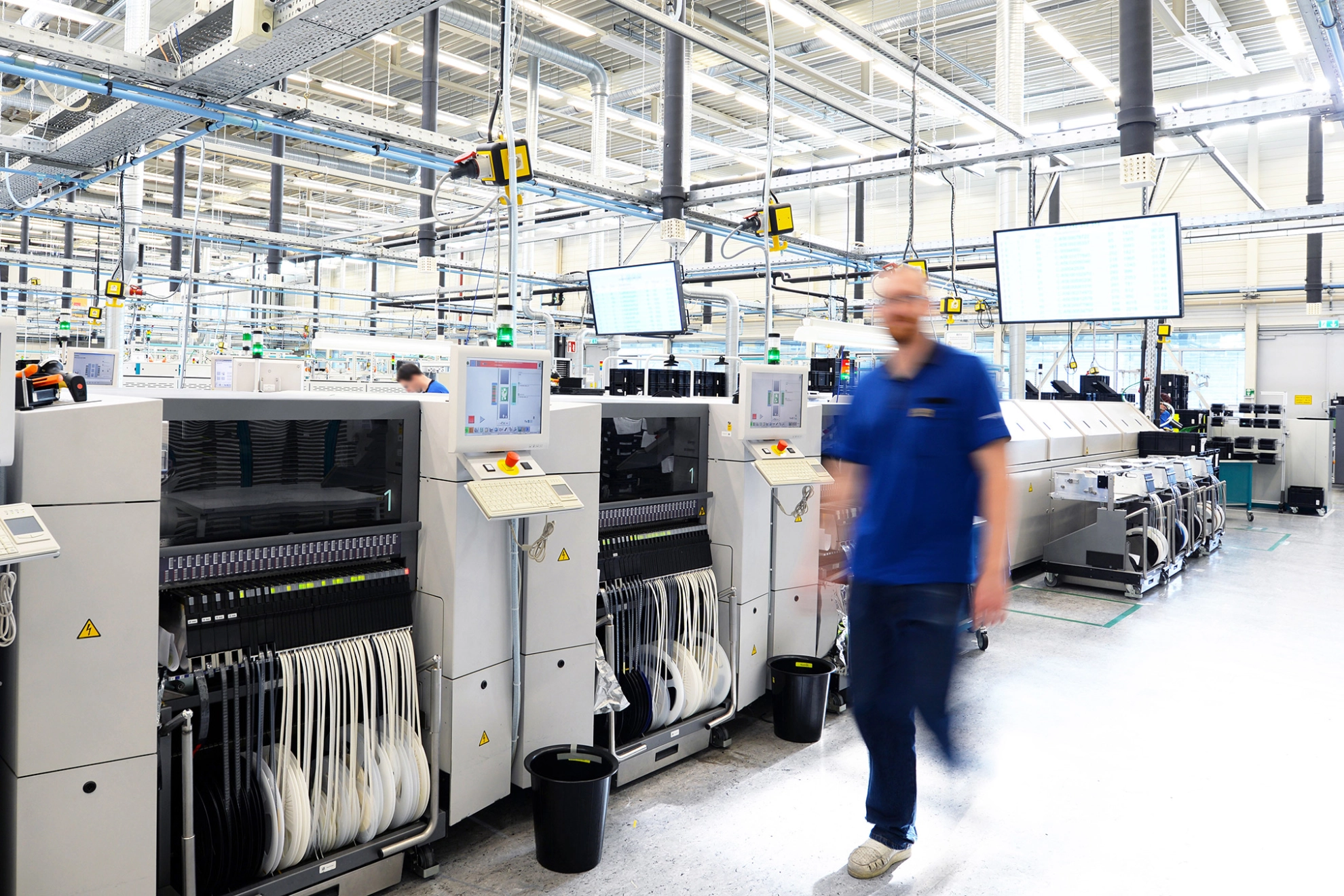
This is urgently needed, because the work has changed radically in recent years for the approximately 1,500 employees at the site. In Salzgitter, electronic control units and fuel injection systems for the automotive industry are produced, and printed circuit boards are assembled.
Until the late 1980s, this work was mainly carried out by semi-skilled and unskilled workers. Back then, Achim Brandt recalls, colleagues stood side by side on the assembly line and inserted electronic components into the printed circuit boards by hand on a piecework basis—all they needed to do the job was a week of training and dexterity. Then they were ready to go.
New Tasks, New Requirements
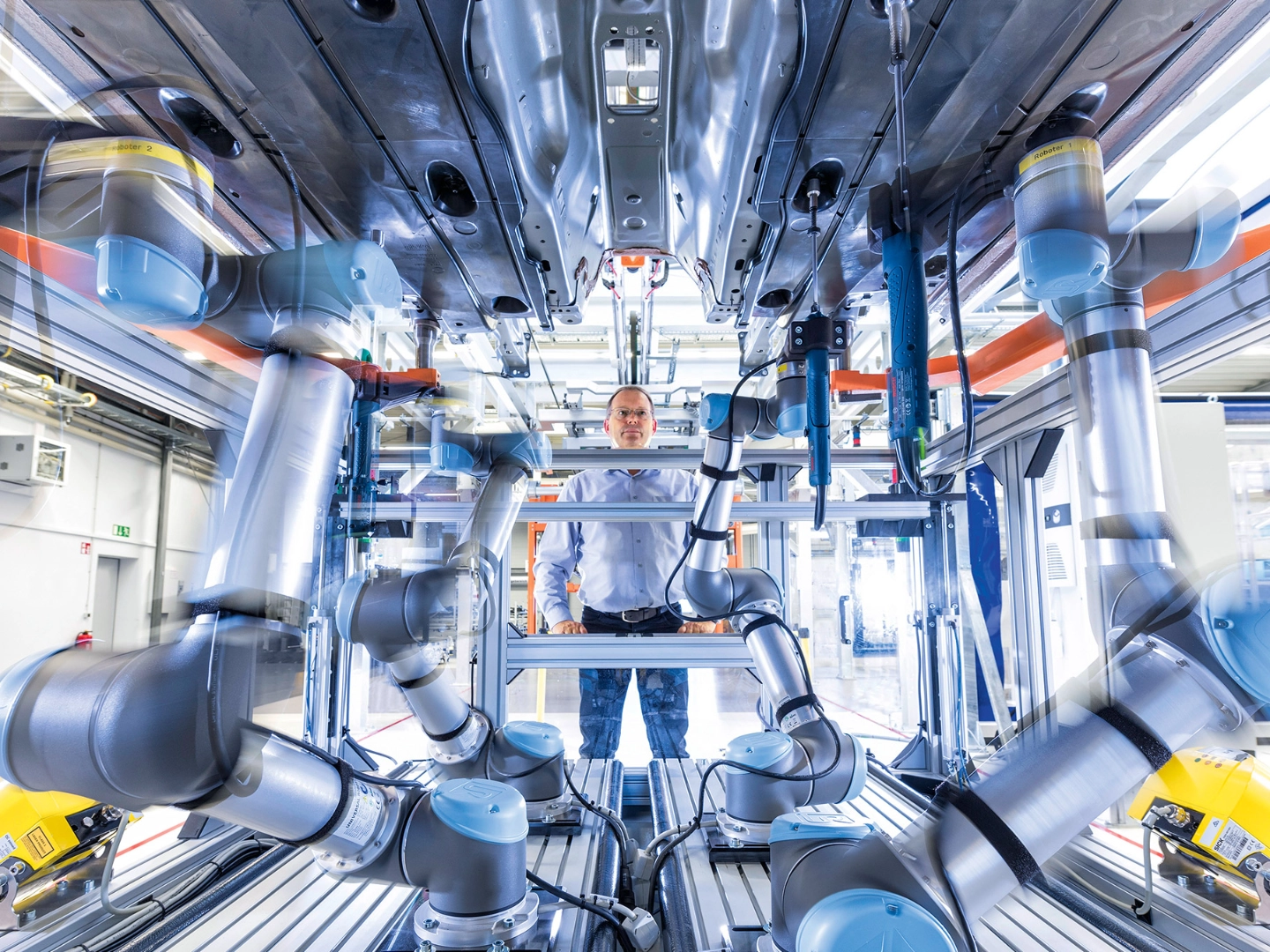
Those days are long gone. Over the years, production has become increasingly automated, and the machines installed have become ever better, faster, and more error-free at assembling the circuit boards, which are becoming smaller and more complex—thus, the manual work of semi-skilled and unskilled workers has been increasingly pushed to the sidelines and has become increasingly redundant. In its place, entirely new tasks and job profiles have emerged in production.
Above all, service personnel as well as machine and plant operators were—and still are—in high demand: people who set up, adjust, and commission the machines; load their programs; maintain them; and—when necessary—troubleshoot malfunctions. To accomplish this requires specialized knowledge and specific skills. “It won’t work without proper training and professional development for employees,” says Achim Brandt.
Identifying Training Needs
However, the purpose of the works agreement at Bosch is precisely not to train every employee—regardless of their individual abilities—to fill a new position or perform a new task in a sort of “blind” manner. “It’s equally about building, maintaining, and further developing the competencies required for the respective role,” says Achim Brandt, “the training offered is intended to support colleagues on their individual paths, but not to force them into a specific mold.”
To ensure this succeeds, there are coordinators in all departments who oversee the continuing education of their colleagues. At the beginning of each year, every employee has a skills assessment meeting with their manager—during which their individual training needs are identified. For one employee, maintaining current skills may be a priority, while for another, developing new skills is more urgent. And for yet another, the question of suitable retraining may arise because their current job duties will be phased out in the future.
Customized Training Programs
The duration of the training depends on the specific program; sometimes it can last two days, and other times it may take a week. The employer covers the costs of the training, and employees have the option to use a portion of their time credits toward it.
And very importantly: When designing the program, the educational level and specific characteristics of the respective target group are taken into account, and the content is tailored accordingly. “This allows us to reach our colleagues and provide them with individualized training,” says Achim Brandt. “We will continue down this path. Especially in the age of Industry 4.0, training is of fundamental importance.”