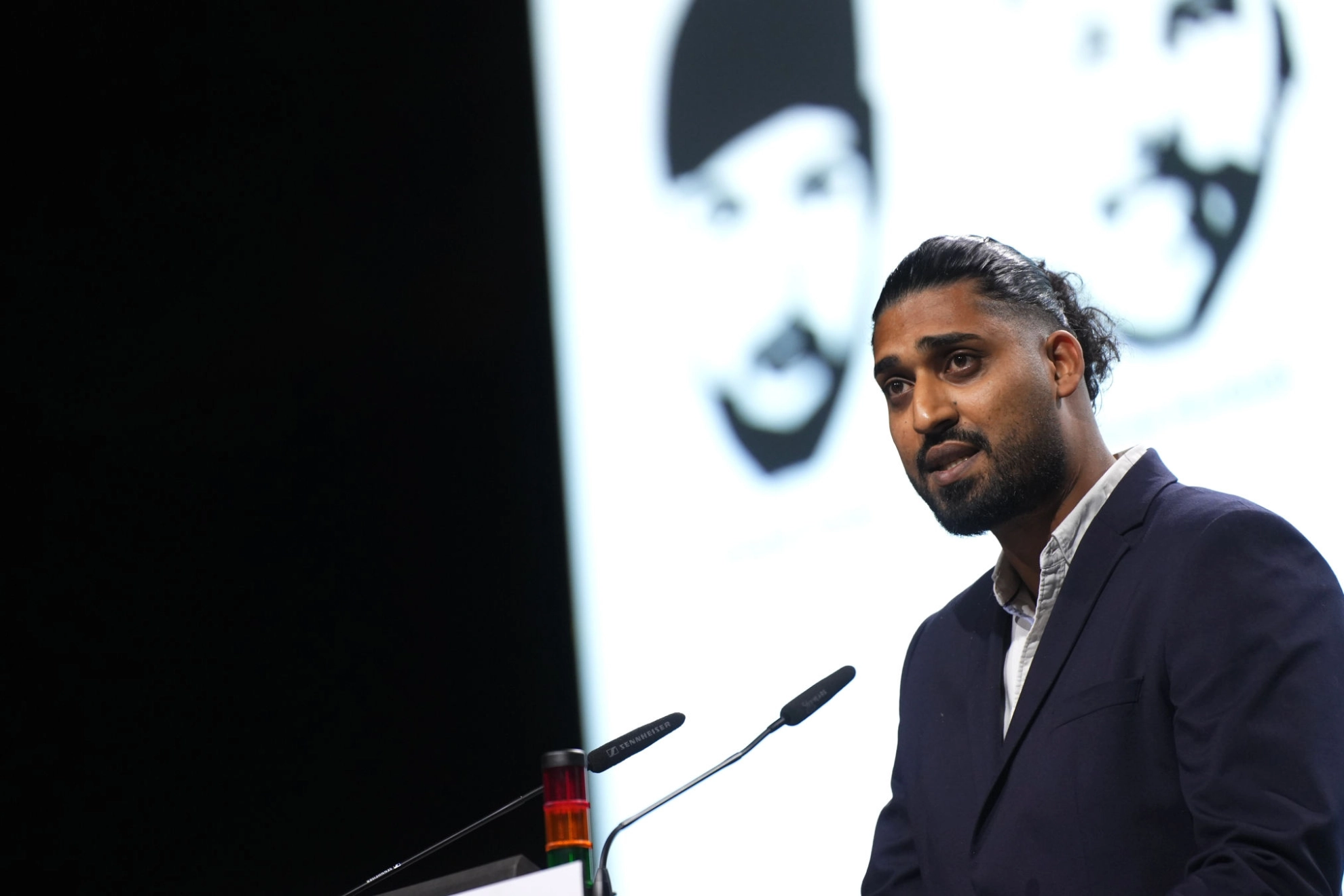
The debate on migration is becoming increasingly aggressive. Migration is almost exclusively discussed as a “problem” that needs to be “solved.” How does that come across to someone like you, who was born in Germany and whose family has lived and worked here for decades?
You develop a kind of paranoia. You constantly ask yourself: What is the person I’m talking to thinking about me right now? The fact that migration is discussed as a problem isn’t new. But the debate is happening at ever-shorter intervals. The message that comes across to me is: No matter what happens—it’s the migrants’ fault. The people in my circle of friends work, have gone to college, and are integrated. And yet we still feel like this is directed at us. We’re under general suspicion.
What are the consequences of this?
Many are now wondering whether they have a future here at all. I know people who have already left Germany. They’re now working in Spain or Dubai. Internationally oriented employers offer opportunities like that.
You criticize the way the media reports on migration. What’s going wrong?
The media all too often stoke excitement and fear. For example, there’s hardly any coverage of rescue efforts carried out by people with a migrant background. You could see that in the coverage of the recent attacks. The statistics show that crime in Germany is on the decline. But negative news sells better. This creates a distorted picture of reality. Many people think Germany is becoming increasingly crime-ridden. Another problem with the media: Everyone talks about migrants. But no one actually talks to the migrants themselves.
You say “integration” sounds to you like a “test that never ends.” Why?
Because no one says when integration is actually complete. Someone like me—who works, has an education, and meets expectations—is still confronted with it time and again. You’re on probation your whole life. Older migrants, in particular, often have a reflex: they want to constantly prove themselves, to show how hardworking they are. But if they make a mistake, people say, “You’re not integrated after all!”
How can this be changed?
There’s a lack of political participation for people with a migrant background. Well over 20 million people in Germany have a history of migration. But that isn’t reflected in parliaments or government agencies. It’s very difficult for migrants to work their way up in politics or public administration. Genuine participation doesn’t yet exist in Germany.
How can we strengthen participation?
Strictly speaking, that’s the job of politicians. But they clearly struggle with it. Other actors will likely have to take the lead—for example, labor unions. Representation is crucial for a sense of solidarity.
Can events like the “International Weeks Against Racism” make a difference?
Yes. Because a lot happens during these events, especially in schools and educational institutions. I also visit schools myself for such events and share my experiences. The goal is to show what reality looks like. Children should learn that racism exists—and what terrible consequences it can have. At the end of the day, it’s about humanity. When we recognize each other as human beings, we’re already integrated.
Do you think a society completely free of racism is possible?
That’s a tough question. It’s probably a struggle that lasts a lifetime, spanning generations. There’s no button you can just press to make racism suddenly disappear. But the younger generation gives me hope. They’re already experiencing diversity in school and in kindergarten. There, children and teens with different family backgrounds form friendships. As a child, I myself had very little contact with Germans without an immigrant background. They went to different schools—some of them private schools.
Where do you find the strength to keep fighting against discrimination?
I have the opportunity to be heard. I have to make the most of it. After all, I’m not just fighting for myself, but for many people in this country. I feel a sense of duty.