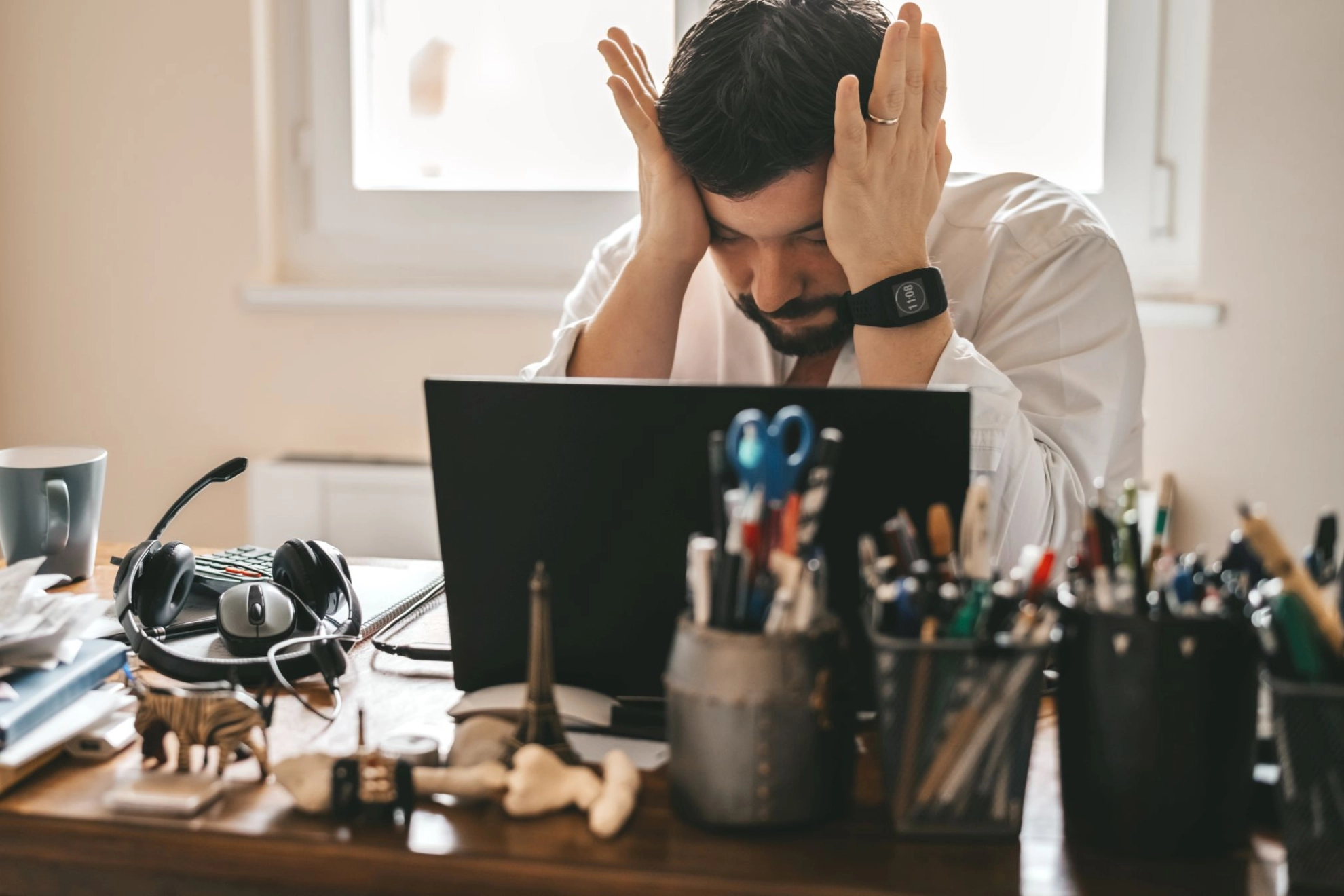
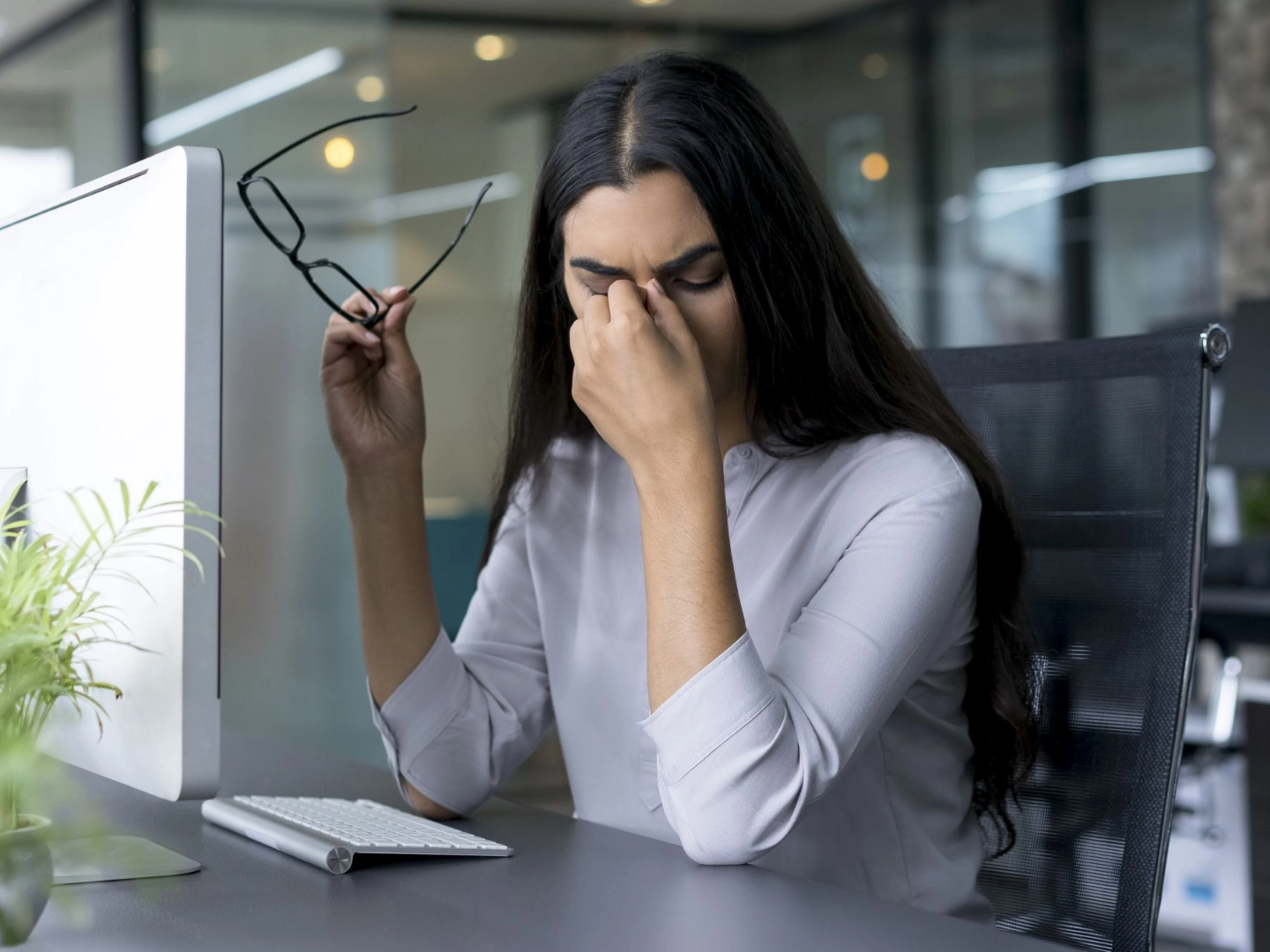
It took three weeks. Three weeks, and then the first people started speaking up. They reported burning eyes, back pain, and stiff, aching back muscles. “I was afraid this would happen,” says Thomas Richter, a works council member at Bosch in Schwieberdingen.
Anyone who hunch over a small laptop every day from morning to night, anyone who sits in an uncomfortable chair in a room that’s too small, will—sooner or later—feel the physical consequences. Sooner or later, they’ll complain of pain. “It’s not enough to simply give employees the option to work from home,” says works council member Richter. “You also have to make sure they can work well there and stay healthy.”
Working from home virtually overnight
But that doesn’t happen automatically. It doesn’t just happen on its own. That’s the experience they’ve had at Bosch in Schwieberdingen over the past weeks and months. 6,500 people work at the site—the vast majority of them in development. When the COVID-19 pandemic hit Germany in February and March of last year, Bosch sent employees—whenever possible—to work from home virtually overnight.
“At times, up to 80 percent of the workforce was working from home,” says Thomas Richter. “Colleagues simply packed up their laptops and cell phones, and they were ready to go.”
At first, many improvised
They were ready to go. But very few were able to set up a well-equipped, ergonomically designed workspace. “In the first few days and weeks, many improvised—they worked at the kitchen table or in the bedroom. That was okay at first. But soon it wasn’t anymore. That’s when the first complaints started coming in.”
It was clear to Richter and his team that they had to do something—that they needed to start a dialogue with their colleagues. They also knew they’d have to proceed cautiously, without precise guidelines.
“In 2014, we concluded a company agreement on remote work that regulates many good, fundamental aspects,” says Richter. For example, the principle of voluntary participation was enshrined. It was stipulated that no one may be forced to work from home; instead, working from home must always be agreed upon directly between employees and their supervisors.
“The vast majority of our colleagues have agreed to work from home once every one or two weeks,” says Thomas Richter. “In most cases, this has not led to significant physical or mental strain. Ergonomic equipment for home offices has not been a major issue so far.”
Quick, Unbureaucratic Measures
That changed during the weeks of the pandemic. “We reacted quickly; the employer reacted quickly.” Employees were able to take their monitors, keyboards, and mice home, so they no longer had to stare at a screen that was too small. “These initial, unbureaucratic measures helped a lot,” says Thomas Richter. “However, they are no substitute for a thorough risk assessment comparable to the one we conduct at the workplace for each individual workstation.”
It was precisely here, at this point, that Richter and his team encountered a Gordian knot that they could not—and still cannot—cut through: On the one hand, the risk assessment is the method of choice when it comes to identifying, documenting, and evaluating hazards in the workplace; it serves as a solid foundation upon which measures can be developed to reduce strain, minimize risks, and enable good, healthy working conditions for employees.
On the other hand, however, the inviolability of the home applies as a matter of principle. “No colleague is required to open the doors to their own home so that a risk assessment can be conducted. No one is required to grant the employer access to their living space.”
In-Depth Discussions with Employees
Richter and his works council colleagues have therefore spoken frequently and at length with employees working from home over the phone and held long conversations. They listened carefully, asked many questions, and occasionally offered advice. Eventually, says Thomas Richter, the vast majority opened up and shared details about their personal situations.
For many, the situation is fine; others report cramped spaces, small desks, and a lack of lighting. Wobbly stools. A lack of a quiet space and the constant stress of somehow managing to juggle work and childcare at the same time. That’s when Thomas Richter was able to step in. “Partly due to the requirement under the COVID-19 Occupational Safety and Health Regulation to conduct a risk assessment for home offices as well, we looked for a good solution at our location and found one,” says Richter.
The German Social Accident Insurance (DGUV) has developed a“Home Office Check-Up,”which Richter and his team use in their work—and recommend to their colleagues as a tool. A checklist for working from home is available that asks about work equipment such as monitors, keyboards, and mice; examines the desk and office chair; and poses questions about the work environment—specifically lighting, indoor climate, and space requirements. It also takes into account work organization and individual workflows.
Mental Health Concerns Also Addressed
“Of course, the questionnaire is voluntary. And naturally, no information is shared with the employer without your consent,” says Thomas Richter. “However, I think the check-up is a successful combination of design guidelines and questions about the home work situation. Contrary to the time-based classification in the check-up, we believe that meeting the minimum requirements for computer workstations should be a prerequisite not only for regular telework but also for working from home for several days at a time.
We base this on the requirement that every computer workstation and office workstation—regardless of the duration and intensity of use—must meet the safety and ergonomic requirements of the Workplace Ordinance. We can only comply with the provisions of the Occupational Safety and Health Act if we achieve the same protective goals for work arrangements in regularly used home offices as we do for on-site workplaces.”
Richter and his team on the works council will now discuss how to put together a practical package for working from home, drawing “on the findings of the checkup, the company-wide agreement on comprehensive risk assessment, and a strictly private self-assessment regarding working from home.”
This is important—after all, strain does not arise solely from a lack of ergonomic equipment, but also from psychological stress factors such as constant availability, insufficient rest periods, and excessive working hours. “We want to promote healthy working conditions in the home office as well,” says Thomas Richter.