Victory: In the new works council election at the Fondium iron foundry in Mettmann, North Rhine-Westphalia, all 15 seats went to IG Metall candidates. Management actually wanted to get rid of them—and hired expensive lawyers to do so. Works council chair Halit Efetürk was to be removed from office by court order and was repeatedly attacked in public and through posted notices. But the nearly 1,000 employees clearly stood behind their works council members in the new election, with a voter turnout of 80.7 percent. And Halit Efetürk received the most votes.
“We’re grateful for the trust our colleagues have placed in us for the past 13 years,” Halit Efetürk said regarding the works council election. “And we hope that the employer will now accept the works council as an equal partner and try to find solutions with us.”
For 13 years—ever since he was first elected works council chair—management has been trying to get rid of the state-certified electrical engineer. Halit Efetürk has been in and out of court, receiving warnings and termination notices. Yet he remains, because he sees this as his mission: to secure good collective bargaining conditions for the employees.
Management Wanted to Get Rid of the Works Council
The election of a new works council was necessary: Management had threatened to have the works council dissolved through the courts due to a “lack of cooperative trust.” Therefore, a new, legally sound works council was needed, one whose decisions would stand. The entire works council resigned to make the new election possible.
The employer has already tried twice, with the help of its lawyers, to have the works council elections halted via a preliminary injunction. And both times, they failed in court.
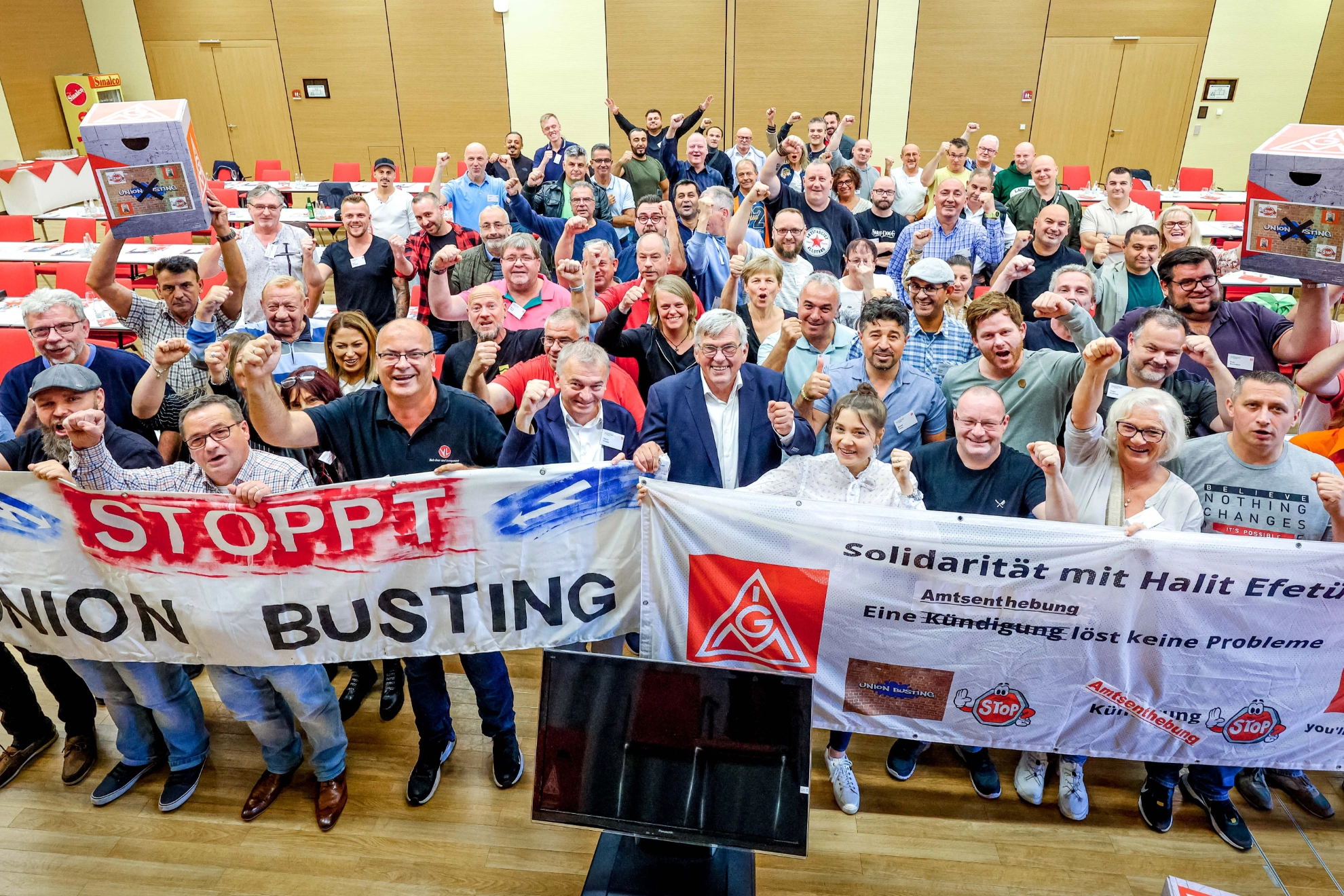
In addition, management constantly harassed the works council members and deducted pay from their wages for works council work and training. But they did not let themselves be discouraged—and ran for election again. IG Metall Velbert supports them and provides them with legal counsel. And above all, the employees of the Fondium iron foundry stand behind their works council members: This was already evident a week before the works council election at the company meeting—“There’s never been applause like that here before,” says Halit Efetürk—and especially now during the election.
At the works meeting, Halit still appeared as chair of the election committee. This is because he had been barred from exercising his duties as a works council member in recent weeks: management had secured this ruling from the State Labor Court—with the help of attorneys from the large Düsseldorf law firm Kliemt.
Fondium Hires Expensive Lawyers Against the Works Council
Kliemt’s lawyers are expensive: they charged around one million euros for consulting services at another company, reports Hakan Civelek, executive director of IG Metall Velbert. “We’re actually surprised that a nationally renowned law firm would lend itself to something like this: this isn’t about the issue at hand.”
The Kliemt law firm is already involved in proceedings at many companies where employers are fighting works councils—for example, at Lieferando—and is listed on websites such as Arbeitsunrecht.de as a “union-busting” firm.
In addition, the Fondium shareholders recently hired a lawyer as an additional managing director. He repeatedly provoked the works councils, barged into works council meetings, and refused to leave. Ultimately, the works council decided that “cooperation based on trust” as defined by the Works Constitution Act was not possible with this managing director. Halit Efetürk was not even present when the decision was made—yet the Fondium lawyers still sought to remove him from office for refusing to cooperate in a spirit of trust. Originally, the hearing before the State Labor Court was scheduled for early October—but that matter has now been resolved with the election of a new works council.
Works Council Stands Firm Against Pay Cuts
But why does management want to get rid of its works council? Because the works council members are standing firm against wage cuts and reductions in collective bargaining agreements: Management wants to cut employees’ wages by 30 percent, stop paying overtime, and make Saturdays and Sundays part of regular working hours.
The works council and IG Metall are willing to negotiate. But they want job security—and they want the company to hire additional staff for the extra shifts. After all, the machines are already understaffed and the employees are overworked. Sick leave rates are in the double digits, well above the average for the foundry industry. How is that supposed to work?
“This is a dead end. We’ve made that clear to the shareholders time and again in discussions,” reports IG Metall Executive Director Hakan Civelek. “It makes much more sense to involve the works council and employees more closely and to move forward together.”
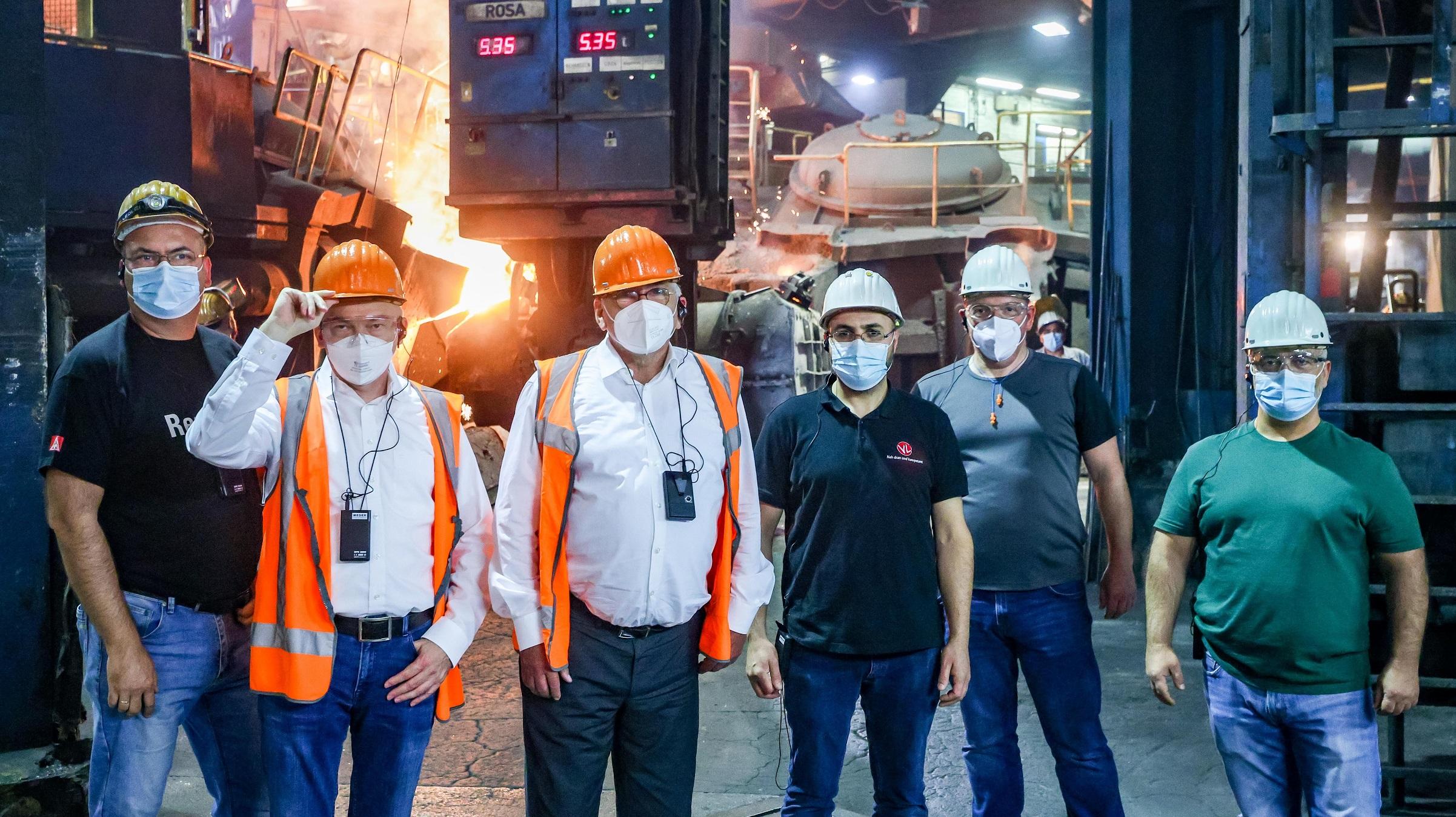
Just under two years ago, management had already made more progress. At that time, Jörg Hofmann, the president of IG Metall, visited the plant to discuss its future (photo below), focusing primarily on transformation and hydrogen. IG Metall Velbert and the works councils established contacts with policymakers. Fondium plays a central role in the regional transformation network initiated by IG Metall.
Fondium works council members with Hakan Civelek, IG Metall Velbert (2nd from left), during a plant visit by IG Metall Chairman Jörg Hofmann (3rd from left).
To the right of Jörg Hofmann: re-elected works council chair Halit Efetürk.
“We’re also involved when it comes to things like subsidies,” explains works council member Halit Efetürk, who has repeatedly called for support for his company and the industry in the media. “Cooperation is essential, especially in times of transformation and a shortage of skilled workers.”
Works Council Has Achieved a Lot for the Workforce
Back in 2010, when Halit first ran for office, the company—then still known as Georg Fischer—was already cutting costs and reducing staff. Many had to work massive amounts of overtime just to make a decent wage—and sometimes even show up on short notice on Saturdays or Sundays. With the help of IG Metall, however, the works council secured significantly more pay, particularly in the wake of the ERA implementation: Over 94 percent of employees were reclassified into higher pay grades, in some cases earning up to 1,000 euros more per month.
That is why the workforce stands behind its works council members. Since 2010, Halit and his works council colleagues have consistently won the clear trust of the workforce in every works council election—and have received more votes with each election, despite the constant conflicts.
In this election as well, management once again attempted to divide the workforce from the works council: “Once Halit Efetürk is gone, the new managing director will leave too,” reads a notice posted to the employees.
Hakan Civelek of IG Metall Velbert stood behind his IG Metall works council members at the works meeting. “If the works council does not cooperate in good faith, it can be removed from office. But what happens to the employer who violates the law every day, for example by ordering unauthorized overtime without the works council’s approval?”
More and More Cases of Union-Busting
Unfortunately, Fondium is not an isolated case. IG Metall Velbert is dealing with an increasing number of cases of“union busting”(the systematic suppression of unions and works councils) in its member companies. This trend can also be observed nationwide. Even at the company run by BDA President Rainer Dulger, management is deliberately bullying works council members out of their positions. As a result, IG Metall has established a special “Union Busting” task force to support works councils and local IG Metall offices.
The goal of IG Metall and the works councils is to foster a trusting working relationship and ensure companies are successful—but not at the expense of employees by dismantling the works council to cut costs. Especially not in times of a skilled labor shortage, emphasizes Hakan Civelek. “Many employees are demotivated. Fondium has always been an attractive employer in the region. But I am firmly convinced that things will improve after tomorrow’s works council election. Of course, we will reach out to management. But the employer must finally stop working against us—and instead work with its works councils to shape the future of the company.”
A Works Council Driven by Conviction—for the Employees
Why did the IG Metall works council members run for re-election? Halit Efetürk has been under constant stress for the past 13 years: numerous court cases, warnings, and terminations—and public controversy. He was denied an apartment because the landlord had Googled and found out that dismissal proceedings were pending against him.
Halit Efetürk certainly doesn’t need the position: the state-certified technician has an employment contract as head of the electrical engineering department. But he serves on the works council out of conviction—for the future of the company and for his colleagues. “Sure, it’s often stressful,” Halit admits. “But I’m convinced it’s the right thing to do. It’s worth it for the colleagues who have placed their trust in us. We’ve now secured good working conditions for them for 13 years. We know why we’re doing this.”