Automatic translation
This article has been translated automatically using computer technology. While we strive for accuracy, some wording or details may differ from those in the original article.
This translation was not manually reviewed. For important facts, quotations or legally sensitive information, please consult the German original. Individual selections, images, embedded media or technical terms may have been translated differently or incompletely.

Trainee Program Our trainee program teaches these skills

Theoretical training, hands-on assignments, project work, and much more—key information about the content of the trainee program.

Vorstand, BPE:jugend/junge-aktive/bildung, BPE:aktive/mitbestimmen/zukunft-der-arbeit-gestalten


How are the theoretical phases structured?

A core component of the IG Metall trainee program consists of three- to five-week seminar phases during which trainees explore sociopolitical, economic, collective bargaining, and legal topics.

During each three- to five-week seminar phase, the trainees work together as a cohesive group. These sessions take place at IG Metall training centers throughout Germany, most often in Bad Orb. The instructors include both internal and external experts.

The content of the theoretical phases:

  • Union Policy and Social Theory
  • Collective Bargaining Policy
  • Business Administration
  • Economics
  • Labor Law
  • Social Policy
  • Industrial Relations

What do the practical assignments look like?

The six-week practical placements take place at the IG Metall Executive Board, in a district office, and at local branch offices. This allows trainees to become familiar with all organizational units and gain diverse insights into daily life and work processes at each placement location.

For example, they have the opportunity to participate in office meetings, plant visits, delegate assemblies, works meetings, and negotiations.
During the practical placements, the trainees have a contact person on site who acts as a “mentor” for the duration of the placement.

The content of the practical placements:

  • Getting to Know IG Metall’s Structures and Organizational Units
  • Gain insights into membership and organizational development
  • Learn about successful local branch operations
  • Working with workplace committees
  • Experiencing the Interaction Between the Works Council, Union Representatives, and the Local Office
  • Participating in campaigns and actions
  • Recruiting and engaging members

What does “project work” entail?

The methodology of project-based work is taught in seminars (using member projects as examples) and during the practical placements.

Trainees work on an individual project within one of IG Metall’s organizational units (regional offices, district offices, executive board administration), typically at one of the regional offices. Directly or indirectly, the goal is to strengthen the union’s bargaining power in workplaces.

The content of the project work:

  • Planning and developing a project according to basic guidelines
  • Time Management
  • Personal work organization
  • Implementing the project
  • Delivering the results to the client
  • Project management
  • Project Documentation and Evaluation

What work techniques are taught?

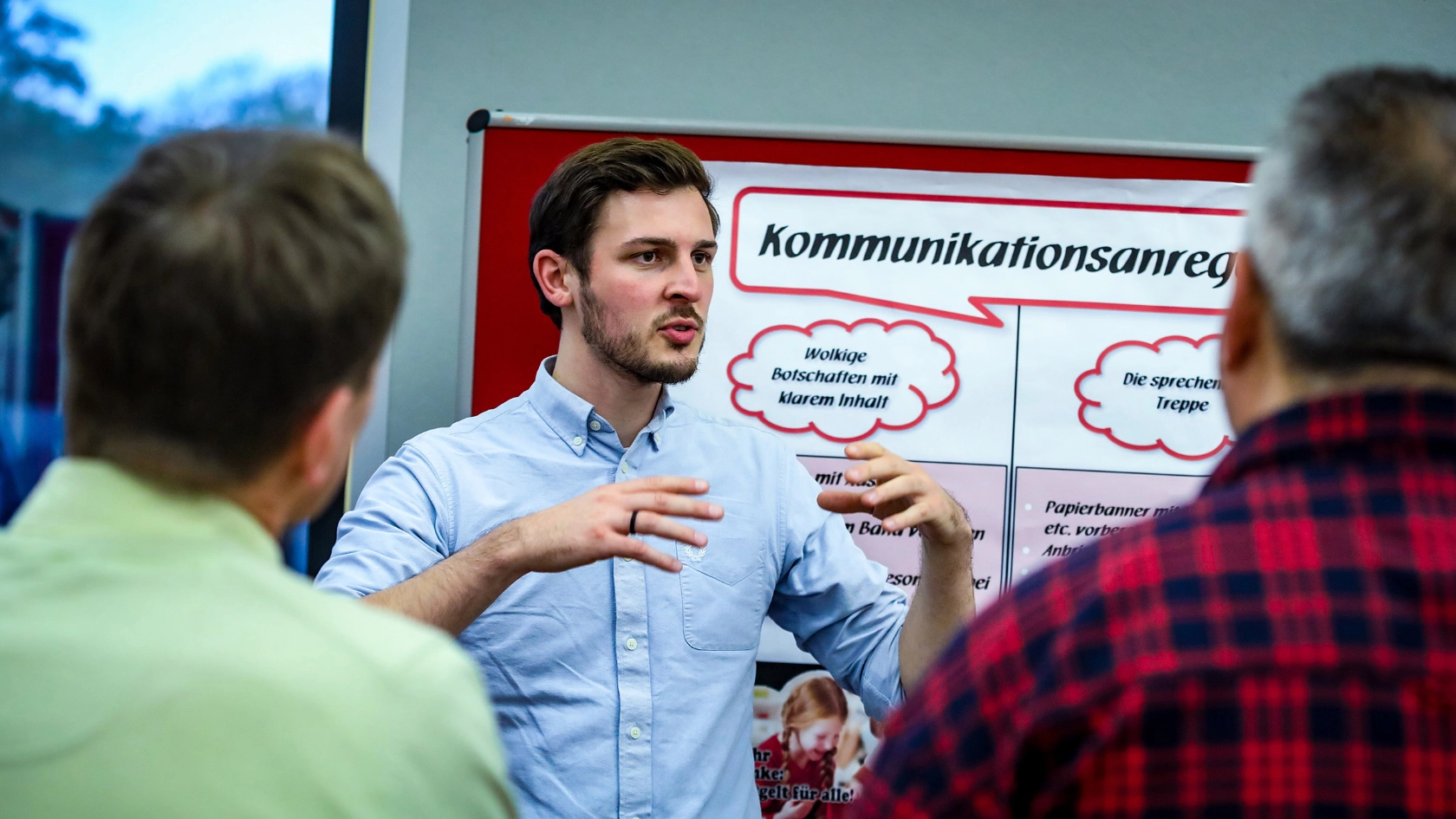
In the seminars on work techniques and communication, IG Metall provides insights and tools for practical work. Trainees learn methods for counseling and work organization.

In the seminars on work techniques and communication, IG Metall provides insights and tools for practical work. Trainees learn methods for counseling and work organization, always with a focus on engaging, involving, and retaining members. This component is enriched by the experience of and exchanges with colleagues from the regional offices, who draw on their practical experience to discuss current topics such as a focus on participation, the ability to engage in labor disputes, project work and management, and working with committees. In addition, the trainees are introduced to various forms of presentation and have the opportunity to test and refine these skills in a group setting.

Communication techniques and channels are also taught in a practical manner and are directly applied and practiced during the course.

The content of the work techniques and communication module:

  • Presentation Techniques
  • Negotiation techniques
  • Conversation Skills
  • Conflict Resolution
  • Creativity Techniques
  • Leading Teams/Groups
  • Consulting Skills
  • Information Gathering
  • Work Organization
  • Addressing Members
  • Communication Training
  • Peer Counseling
  • Communication Strategies

What does “personal competence” mean?

In addition to work techniques and organizational skills, IG Metall trainees naturally also continue to develop their personal competencies. Various programs are available for this purpose.

Another component of the trainee program involves trainees reflecting on their future role as a union secretary, as well as preparing for and debriefing on their practical assignments from the perspectives of occupational and organizational psychology.

The content of the personal skills module:

  • Self-Management and Self-Direction
  • Role Clarification
  • Individual – Group – Organization

Any questions?
Paths to IG Metall

Subscribe to the newsletter