Automatic translation
This article has been translated automatically using computer technology. While we strive for accuracy, some wording or details may differ from those in the original article.
This translation was not manually reviewed. For important facts, quotations or legally sensitive information, please consult the German original. Individual selections, images, embedded media or technical terms may have been translated differently or incompletely.

2026 Collective Bargaining Round for the Eastern Textile Industry Negotiation Outcome for Eastern Textile Industry Stabilizes Incomes

A breakthrough has been achieved in the third round of collective bargaining in the Eastern Textile Industry. The outcome of the negotiations brings relief to employees and apprentices and extends the collective bargaining-based partial retirement program.
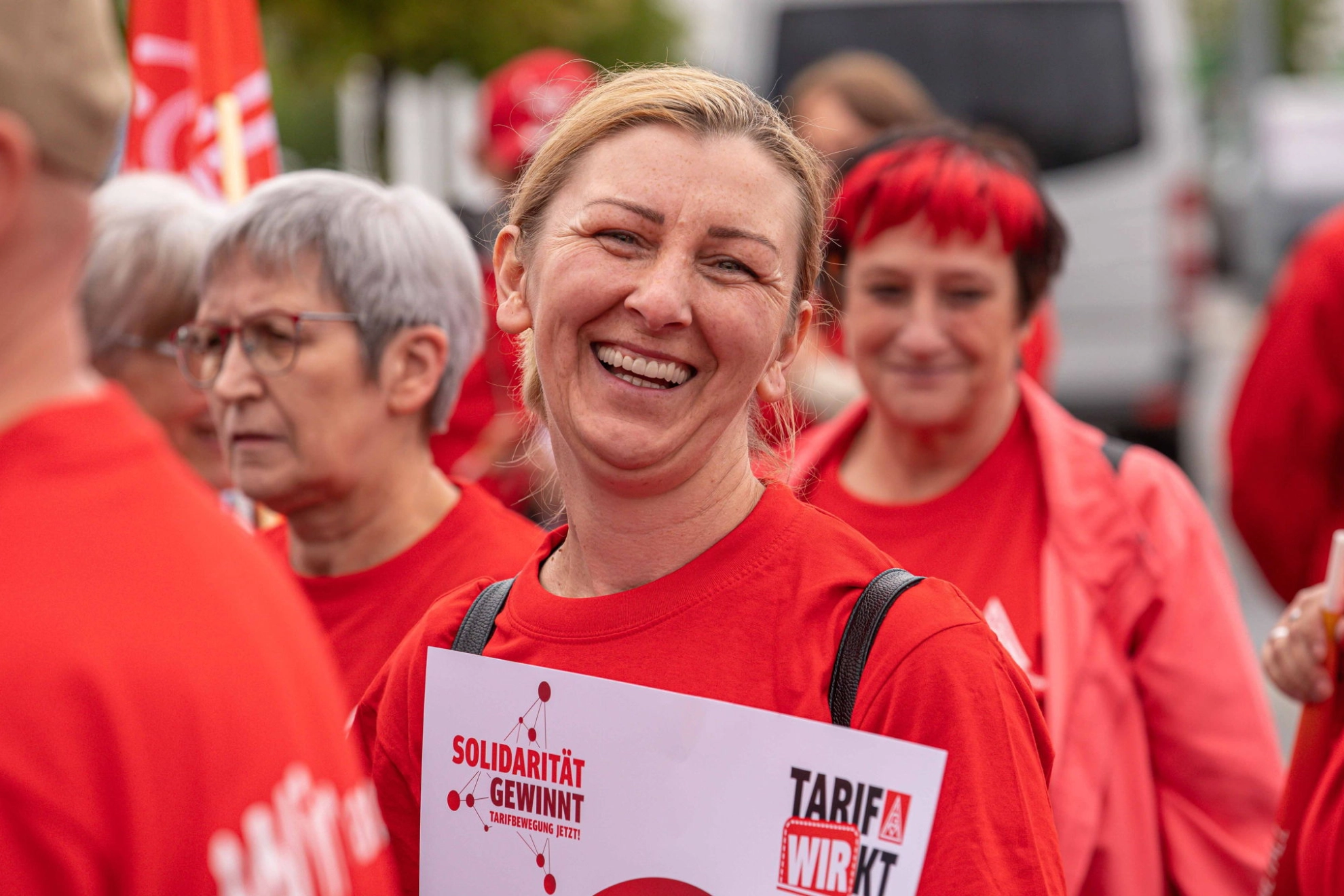
Eine Frau im roten T-Shirt lächelt in die Kamera.

23 February 2026 23 February 2026 |
Updated on 15 April 2026 15 April 2026


Following intensive negotiations and significant pressure from the workplaces, a sustainable agreement has been reached for the textile industry in eastern Germany.

“Despite massive resistance from employers, we were able to prevent a zero wage increase that would have lasted well into next year,” said IG Metall negotiator Eileen Müller. “With their powerful warning strikes, our colleagues broke through the deadlock in the negotiations.”


Solution Reached in Third Round of Negotiations 

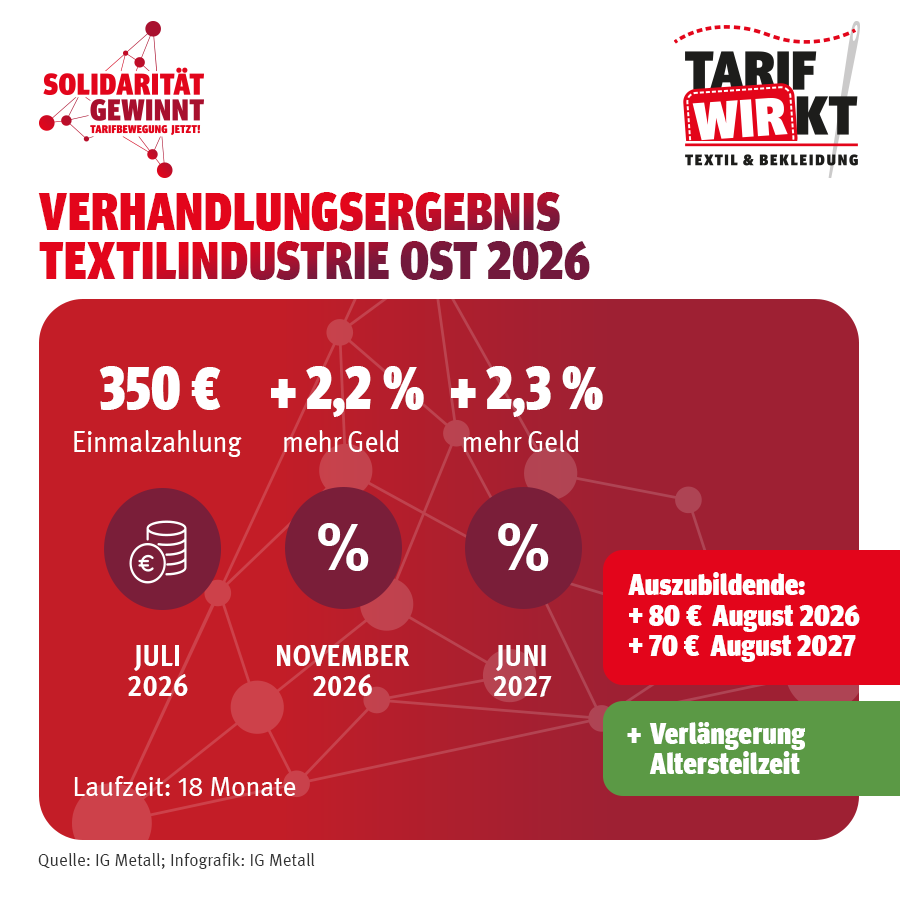
After three rounds of negotiations, IG Metall and the employers agreed on an 18-month term. Employees will receive a one-time payment of 350 euros in July 2026. Starting in November 2026, wages will increase by 2.2 percent, followed by a further increase of 2.3 percent in June 2027.

Apprentices will also benefit. Their pay will increase by 80 euros in August 2026 and by an additional 70 euros in August 2027. This sends a clear signal about the appeal of apprenticeships in the eastern textile industry.

Another key component of the negotiation outcome is the extension of the collective bargaining-based partial retirement program. It provides planning security for older employees and continues to enable reliable transitions into retirement.



Verhandlungsergebnis Textil Ost 2026


An Important Signal in Economically Challenging Times 

“This agreement sends an important signal regarding stable incomes, better prospects for apprentices, and social security until the transition to partial retirement. The outcome strengthens employees and provides planning certainty for the coming months,” said Müller.

Beschäftigte stehen zu einem großen Herz zusammen
Become a member
Become part of a strong community

From legal protection in labor and social law matters to fair wages and salaries—we take personal and reliable care of our members.

New on igmetall.de

Subscribe to the newsletter











