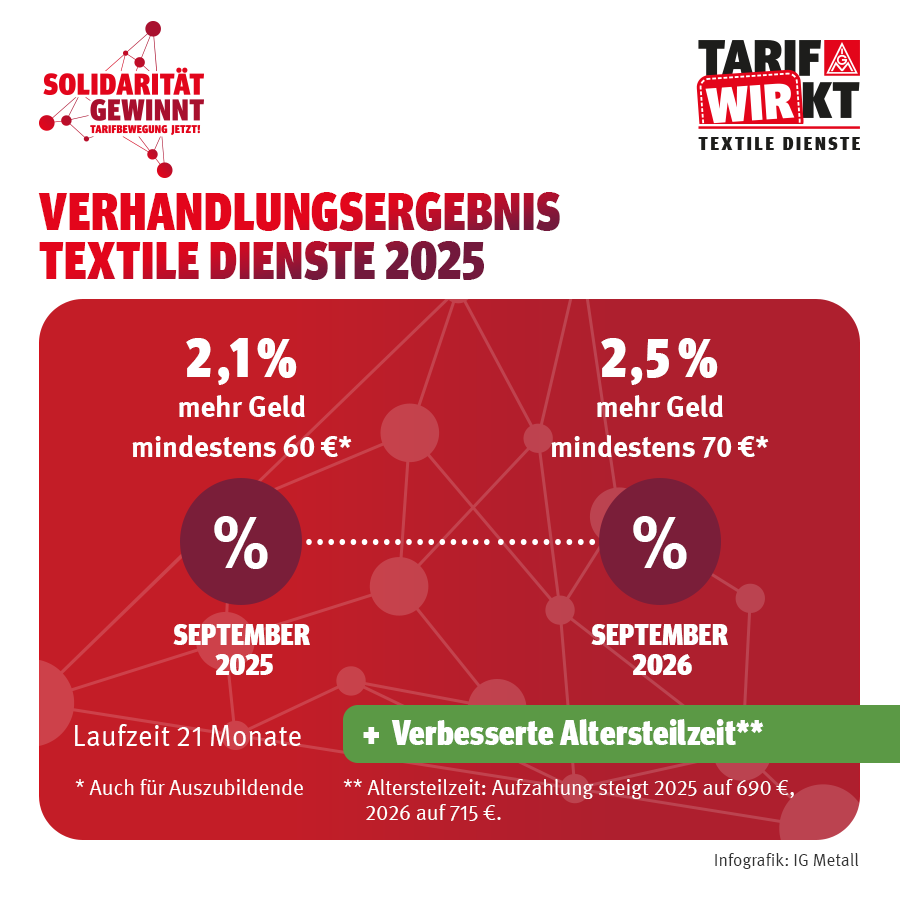
Starting in September, employees in the textile services sector will receive a 2.1 percent pay increase, with a minimum of 60 euros. Trainees will receive an additional 60 euros in training stipends starting in September 2025. The supplement for partial retirement will also increase starting in September, from the current 665 euros to 690 euros. IG Metall secured these terms in the collective bargaining agreement reached in the summer of 2025.
Next year, the second phase of the increase will take effect: an additional 2.5 percent. At least 70 euros—including for apprentices. The supplement for partial retirement will rise to 715 euros per month in 2026. The agreement is valid for 21 months.
“This outcome stands for stability, solidarity, and security: more real wages in workers’ pockets, improved conditions for employees in the lower pay grades, and a more attractive partial retirement program for those under strain,” said Miriam Bürger, IG Metall’s chief negotiator, assessing the outcome of the negotiations.
Solution Reached After Fourth Round of Negotiations
This was preceded by four rounds of negotiations in which employers had only moved toward IG Metall in small steps. “When you look at what the employers’ association offered us at the beginning, we were able to achieve a great deal with our strike actions,” said Jürgen Meyer of Bardusch Siedenburg, a member of the Federal Collective Bargaining Commission. “We fought for this outcome together through our unity.”
In addition to the two-step pay increase, the collective bargaining agreement’s partial retirement program will also be extended and improved. “It was particularly important to us that the partial retirement program be continued. This is a vital tool that we need for our older colleagues,” explained Kirsten Lücke, a member of the Federal Bargaining Commission from CWS Hygiene Solingen. Lücke viewed the total increase of 50 euros as particularly positive.
Crucial to this collective bargaining campaign: collective bargaining ambassadors
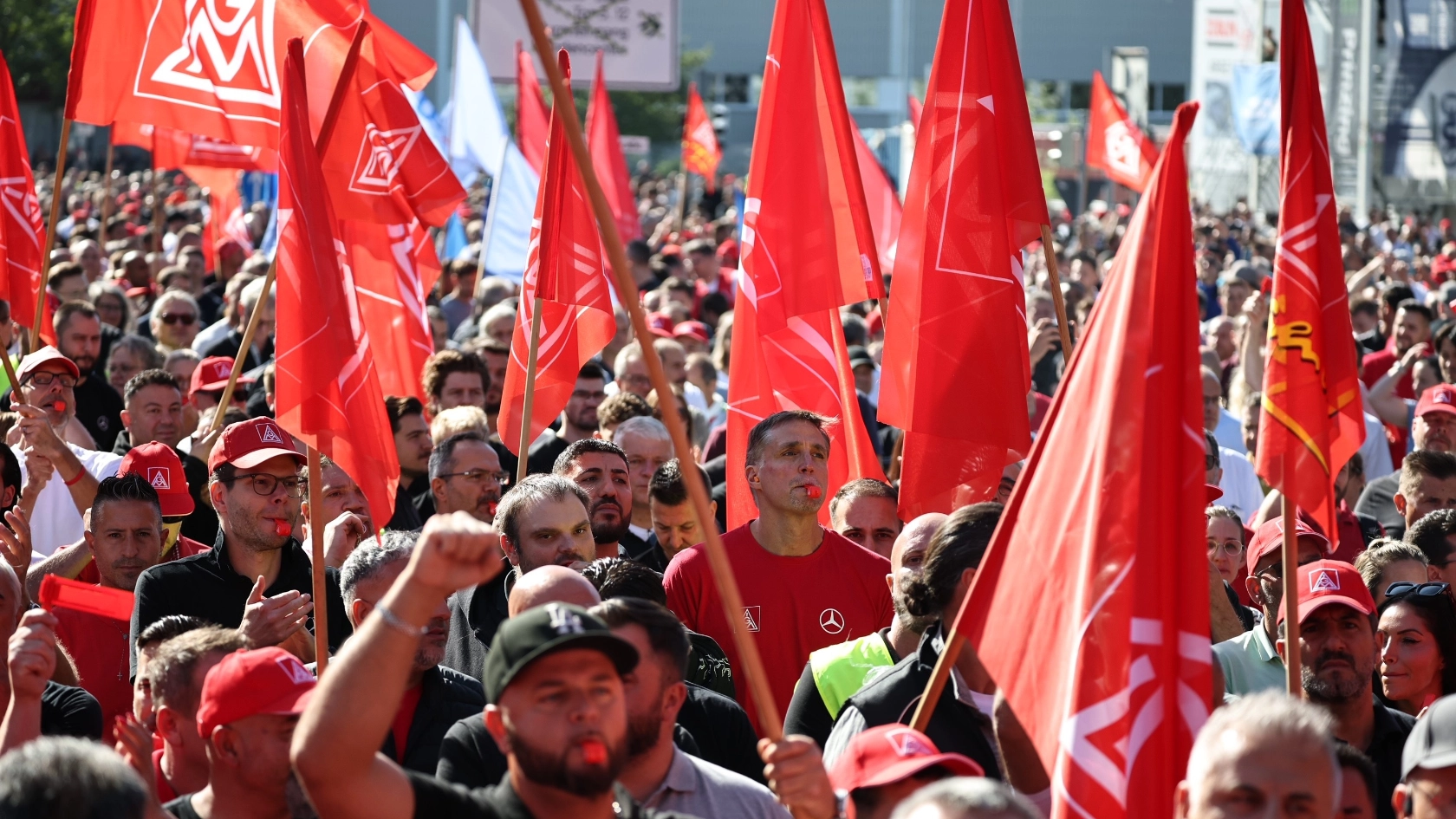
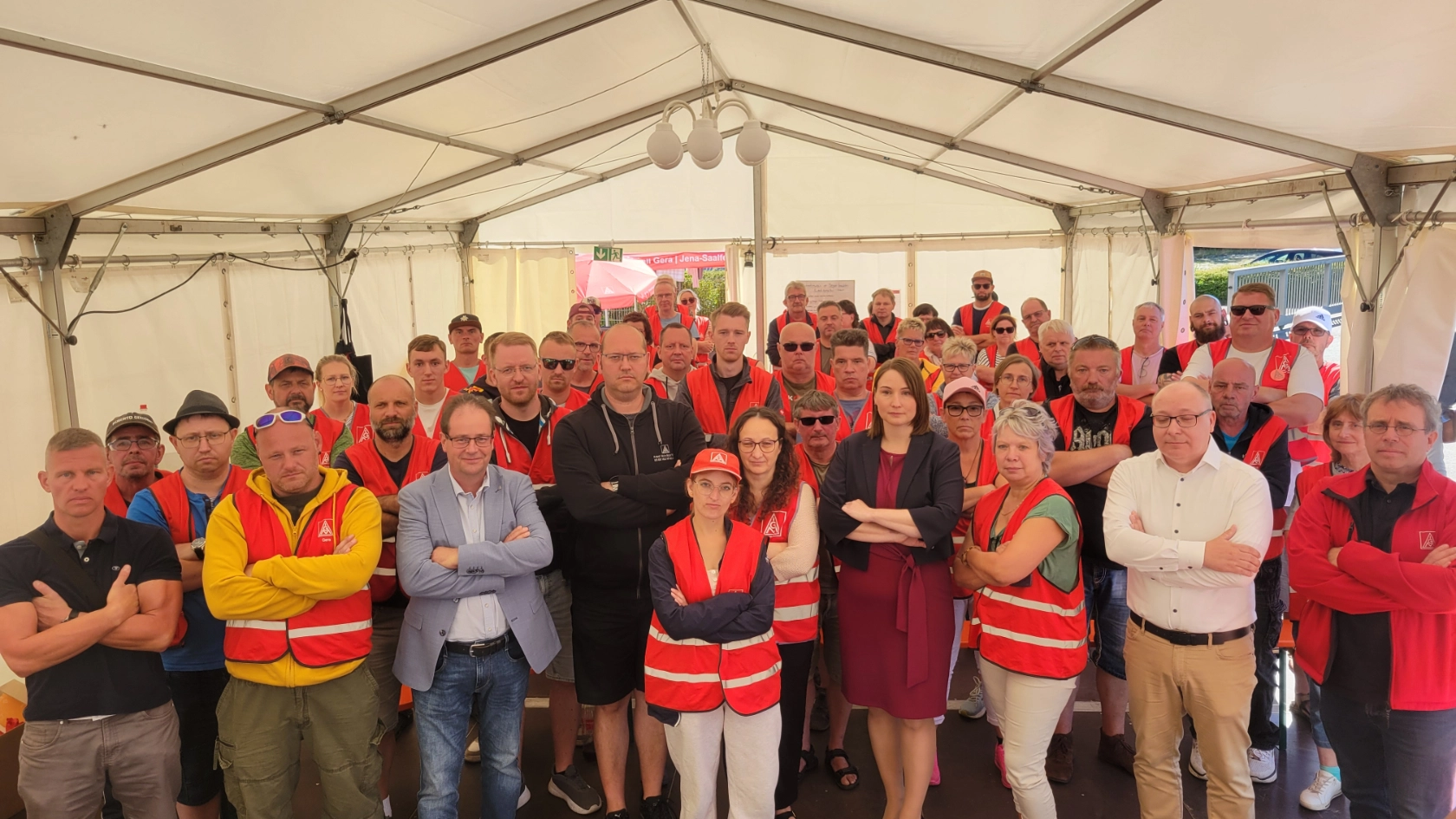
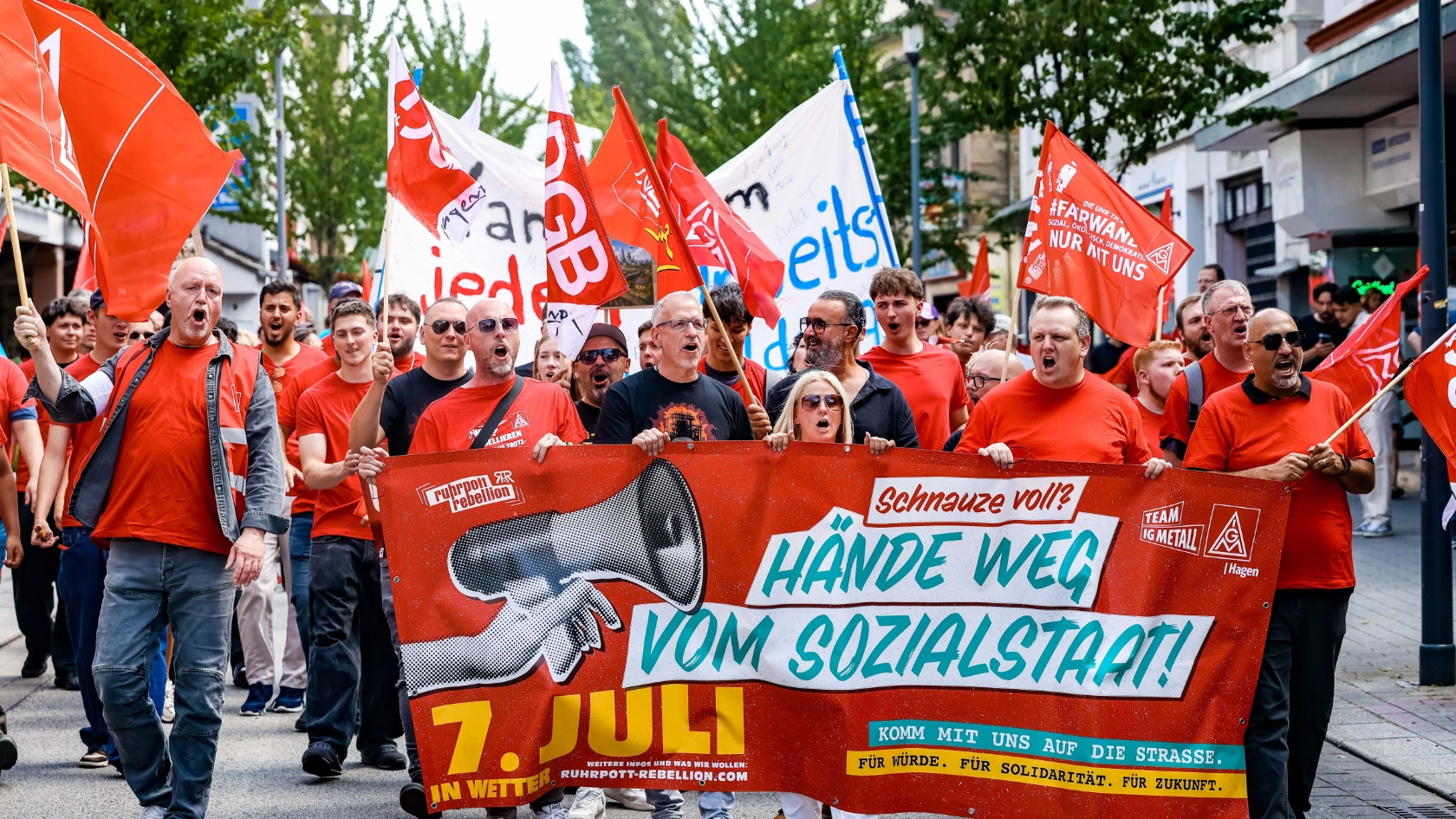
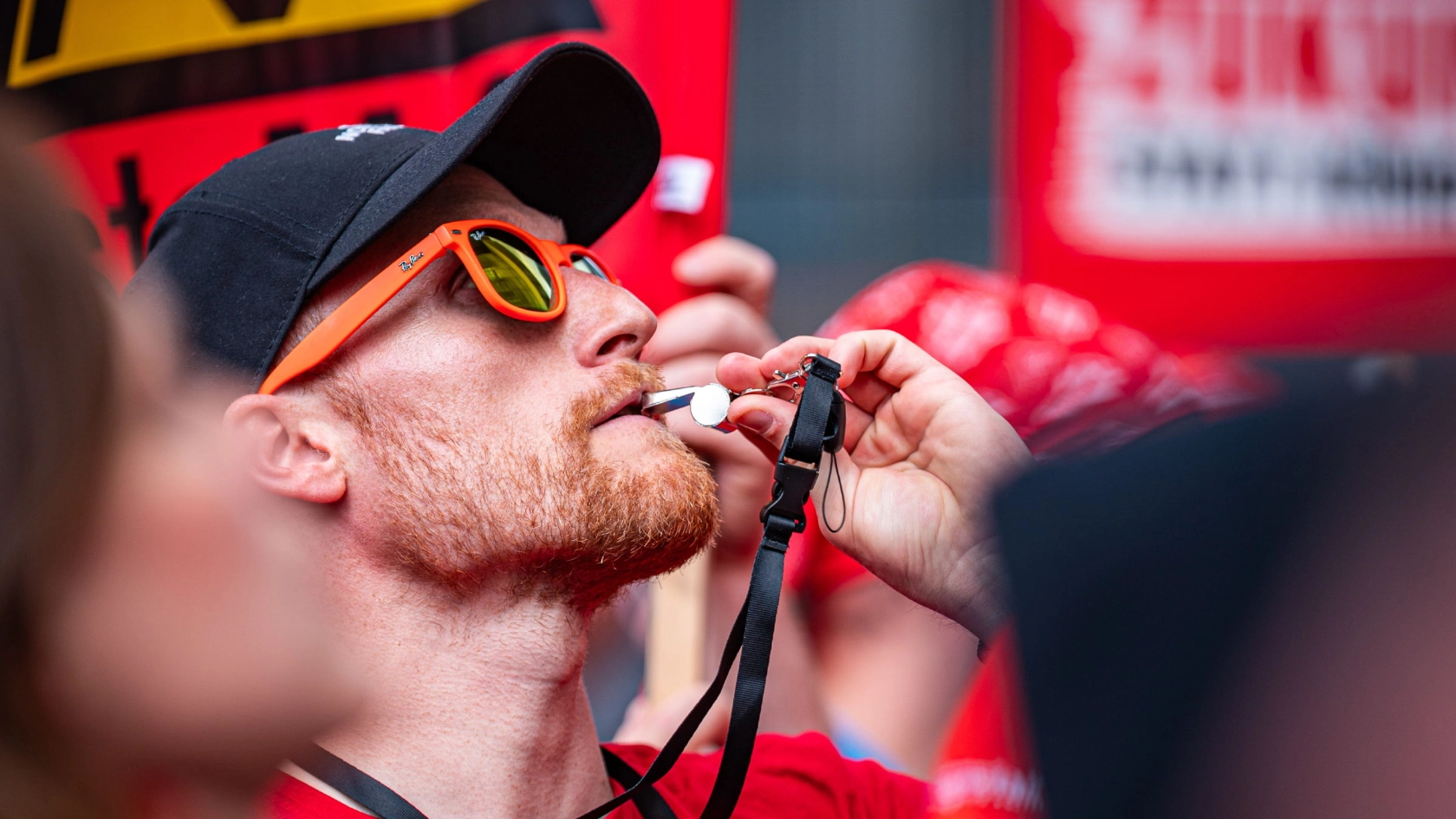
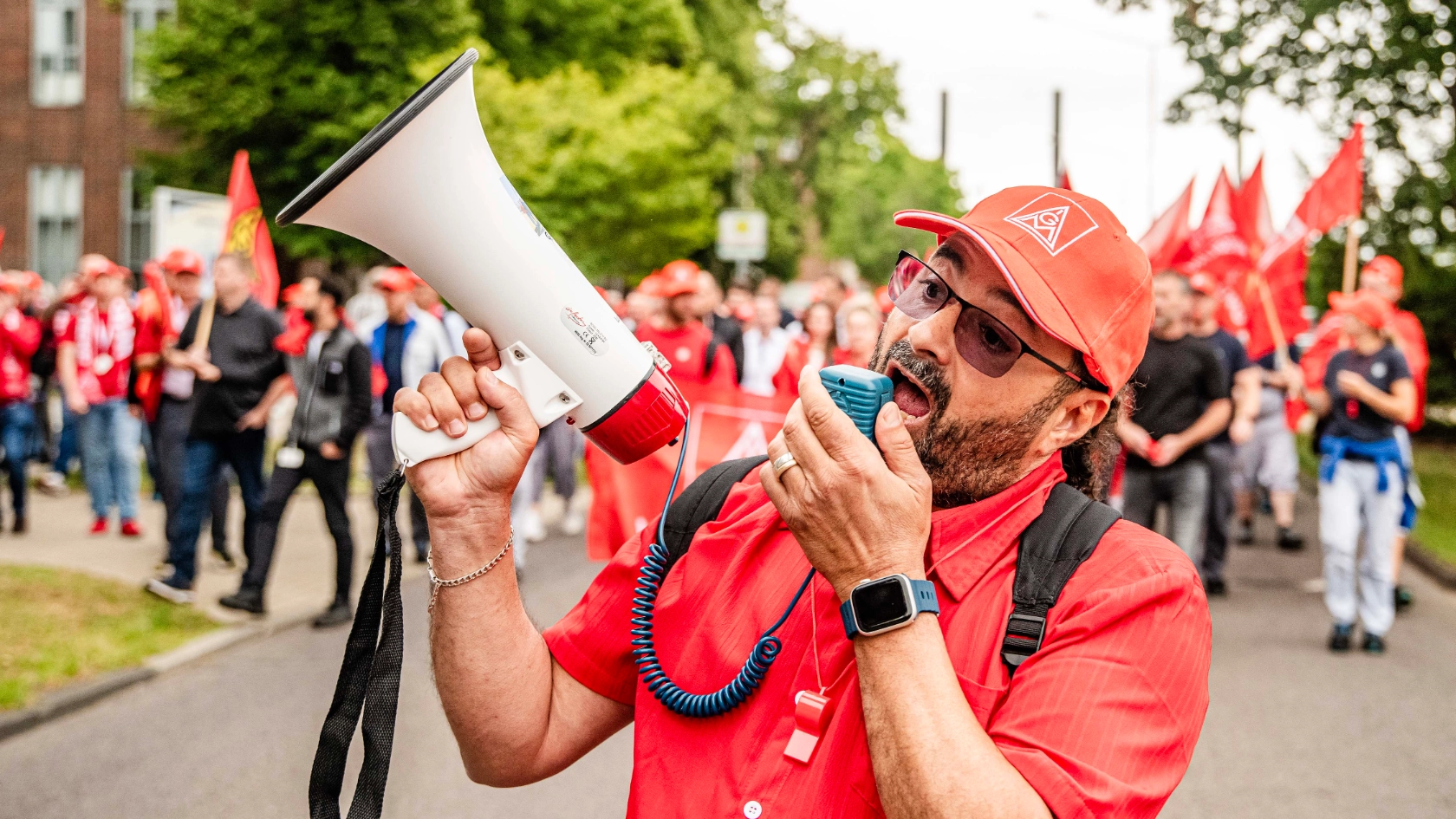
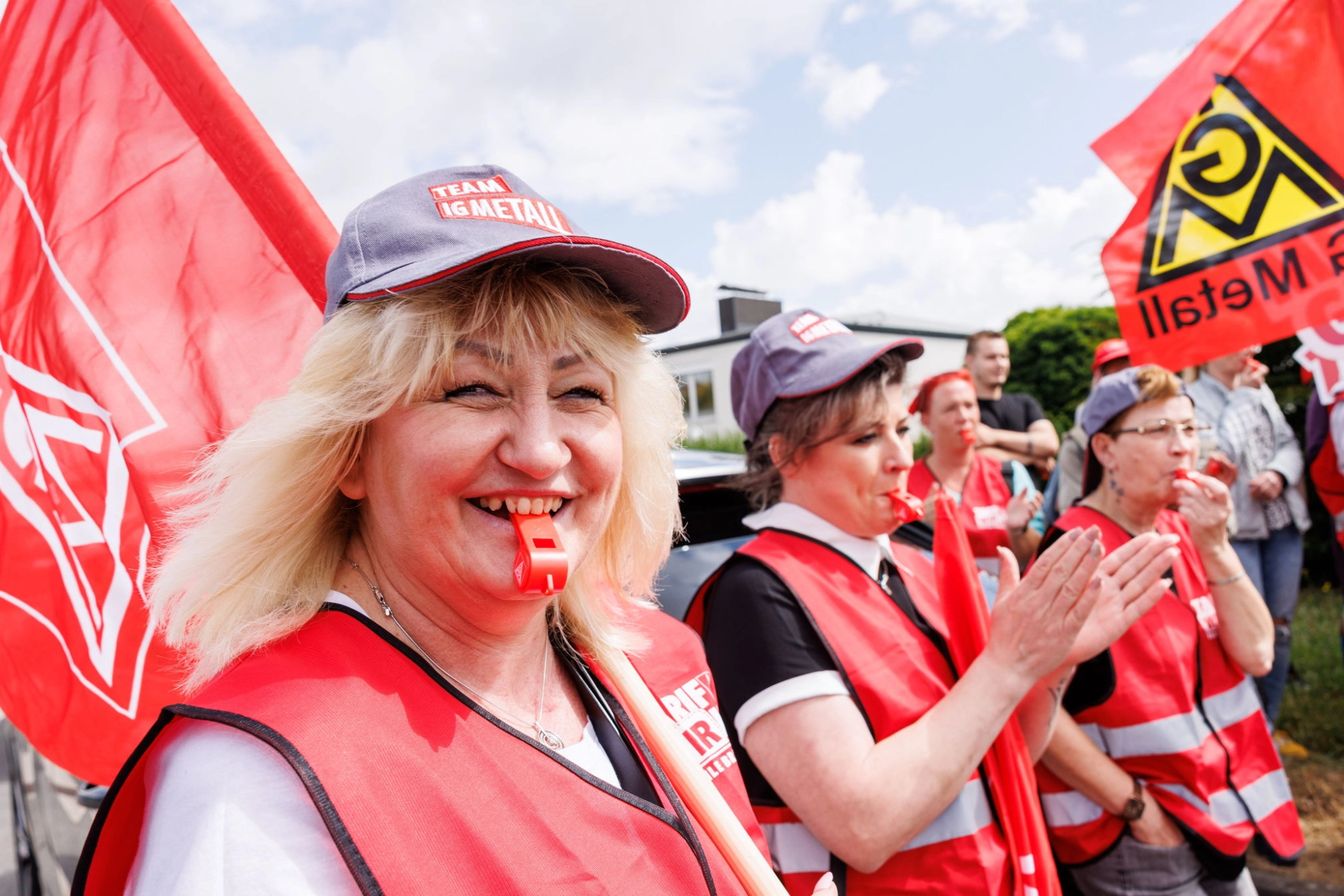
Approximately 5,500 employees participated in warning strikes and actions during the collective bargaining campaign. On the day of the fourth round of negotiations, employees at numerous companies walked off the job as part of a nationwide day of action. Among others, employees at CWS Warburg went on strike for four hours and gathered in front of the negotiation venue in Göttingen. With chants, they showed their support for their Federal Bargaining Commission —and demonstrated their solidarity.
“The employees showed courage and expressed their anger,” said Bürger. After the first region-wide warning strike took place during the last collective bargaining round in 2023, the 2025 collective bargaining campaign succeeded in organizing two waves of warning strikes. “Our colleagues can be very proud of this. It was only through their commitment that we were able to achieve this result.”
The collective bargaining ambassadors were crucial to the success of the 2025 collective bargaining campaign. Serving as a link between the Federal Collective Bargaining Commission and the employees at the workplaces, they kept their colleagues informed about the current status of the negotiations, mobilized them to participate in actions, and gauged the mood among the workforce. Based on this information, the Federal Collective Bargaining Commission decided on its next steps during the bargaining campaign.
After an agreement was reached during the fourth round of collective bargaining between employers and IG Metall, the feedback from the workplaces was clear: Employees wanted to accept the outcome and promised to get even more involved in the next round of collective bargaining.
Based on this, the Federal Bargaining Commission voted unanimously in mid-July to accept the negotiated agreement.
 IG Metall Locally