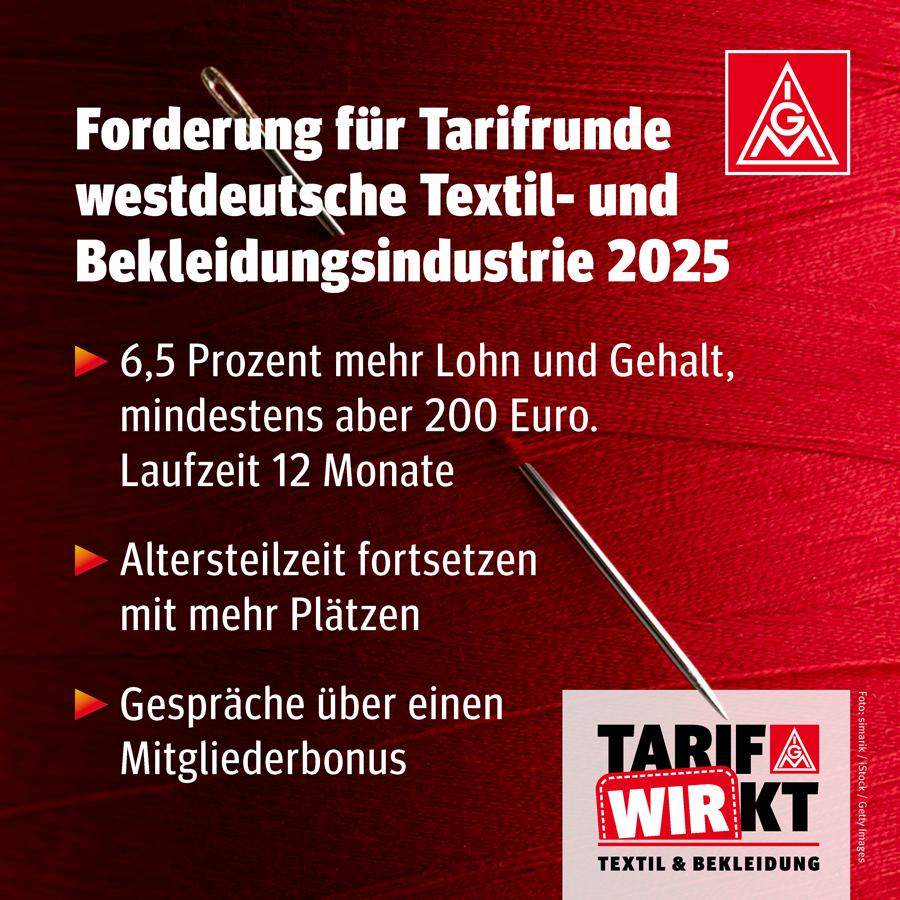
IG Metall is demanding a 6.5 percent pay increase for workers in the textile and apparel industry—but at least 200 euros. In addition, the terms for partial retirement are to be improved, and the number of available spots is to be increased. The new collective bargaining agreement is to run for 12 months. The IG Metall executive board approved these demands on Tuesday following a recommendation from the bargaining committees . Talks on special terms for IG Metall members are also planned.
Workers in the textile and apparel industry are under particular strain. While prices continue to rise, lower-income earners remain particularly affected.
Workers Have No Financial Buffer
Although an 8.1 percent pay increase in two stages was secured for workers in the last round of collective bargaining in the textile and apparel industry, price increases are outpacing this compensation. An IG Metall employee survey therefore also found that 69 percent still consider compensation for the rising cost of living to be urgent.
The economic situation in some companies is strained, but not exclusively so, as the employee survey shows. 67 percent view the situation at their companies as solid to good, and 4 percent even consider it very good.
IG Metall negotiator Miriam Bürger emphasized the urgency of substantial pay increases: “Our demand is affordable, fair, and urgently needed. Employees are worse off than companies. They have no financial cushion; more money is urgently needed. We are calling for a significant pay increase, especially for employees in lower pay grades.”
Skilled Labor Shortage and Heavy Workloads
In addition to higher wages, IG Metall is calling for the continuation and expansion of partial retirement programs within companies. Bürger said: “Workloads are high, and the average age of employees is high. The industry therefore needs more attractive working conditions to combat the shortage of skilled workers and more options for employees to transition out of the workforce as they age.”
It is not only older workers who are under heavy strain; the core workforce is also severely affected. Over 90 percent of those surveyed agreed with the statement that the shortage of skilled workers and the resulting higher workload lead to stress and make them sick. A look at the companies confirms this: In at least two-thirds of the companies, open positions cannot be adequately filled.
IG Metall members are also under particular strain. Through their membership, they not only make a financial contribution to securing good collective bargaining agreements as a community based on solidarity, but they also invest more of their time than other employees by participating in union activities. For this reason, IG Metall will also negotiate benefits for union members during this round of collective bargaining.
The first round of negotiations between employers and employees—the central bargaining committee—will take place on January 30. The peace obligation ends on February 28. Starting March 1, employees may go on warning strikes to press their demands.