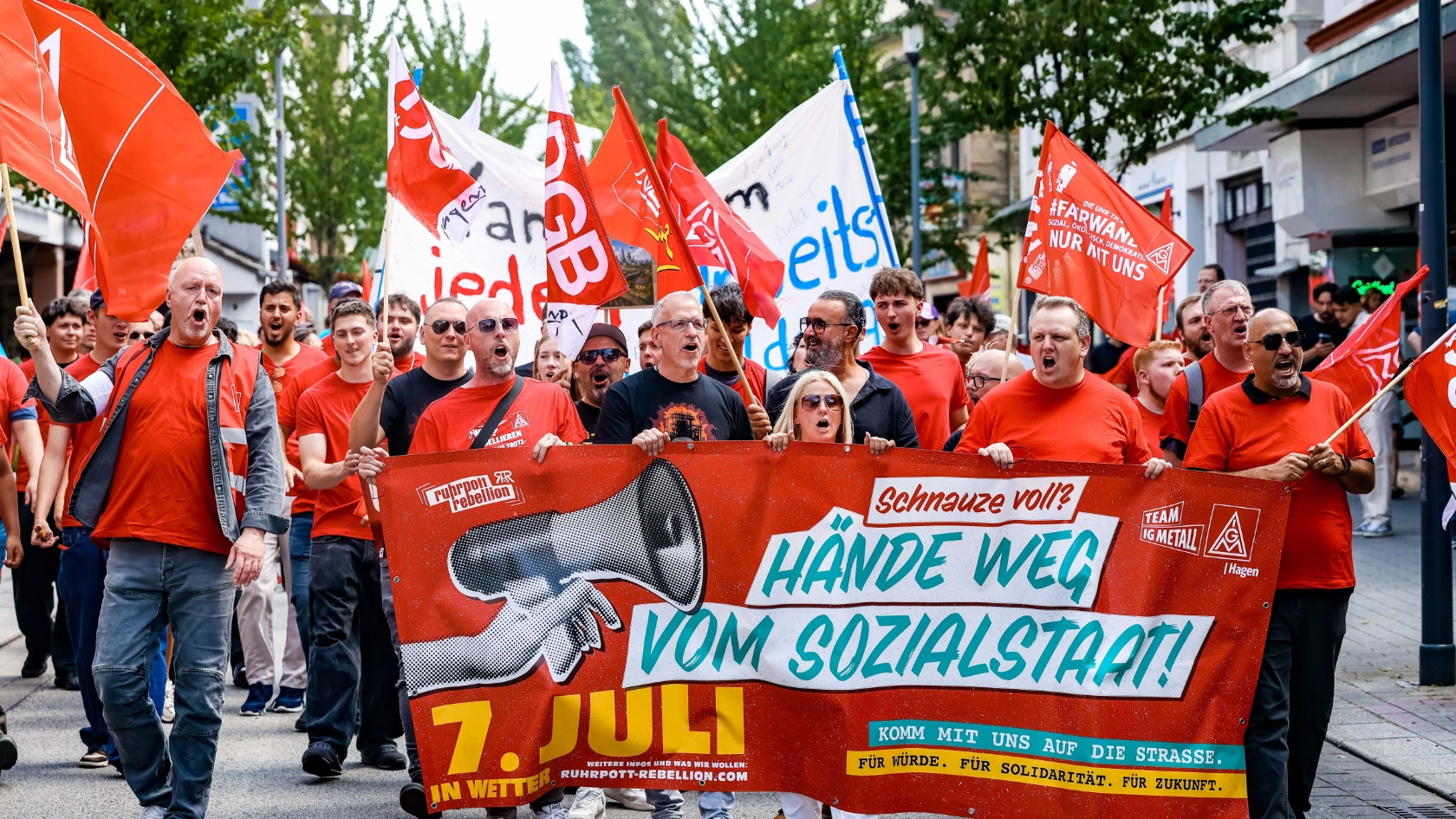
Starting in October, IG Metall will once again negotiate higher wages for 3.8 million workers in the metal and electrical industries. To kick off the collective bargaining cycle, IG Metall’s bargaining committees decided on Wednesday to terminate the current wage agreements in the metal and electrical industries—a prerequisite for collective bargaining—and launched discussions on the economic situation and potential demands for the negotiations.
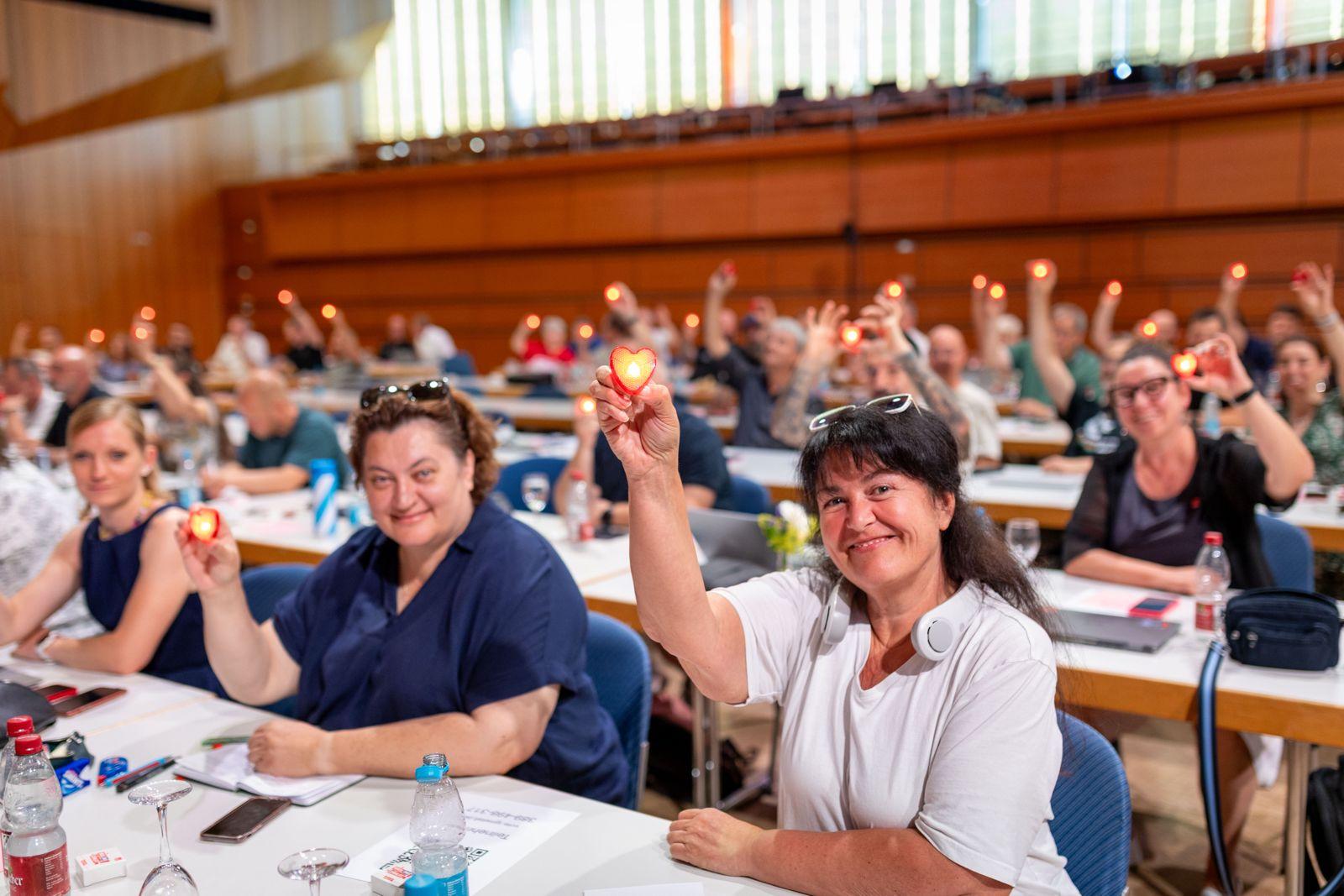
To this end, the bargaining committees from all seven IG Metall districts connected via live video conference. Meanwhile, debates were taking place in the regional bargaining committees on-site. The works councils and shop stewards shared their experiences and discussions from the workplaces. Some reported a lack of orders, reduced working hours, job cuts, as well as impending relocations and closures—others reported a strong and long-term secure order situation. One thing is clear: The situation in the workplaces varies greatly—and that is precisely what will shape the collective bargaining round.
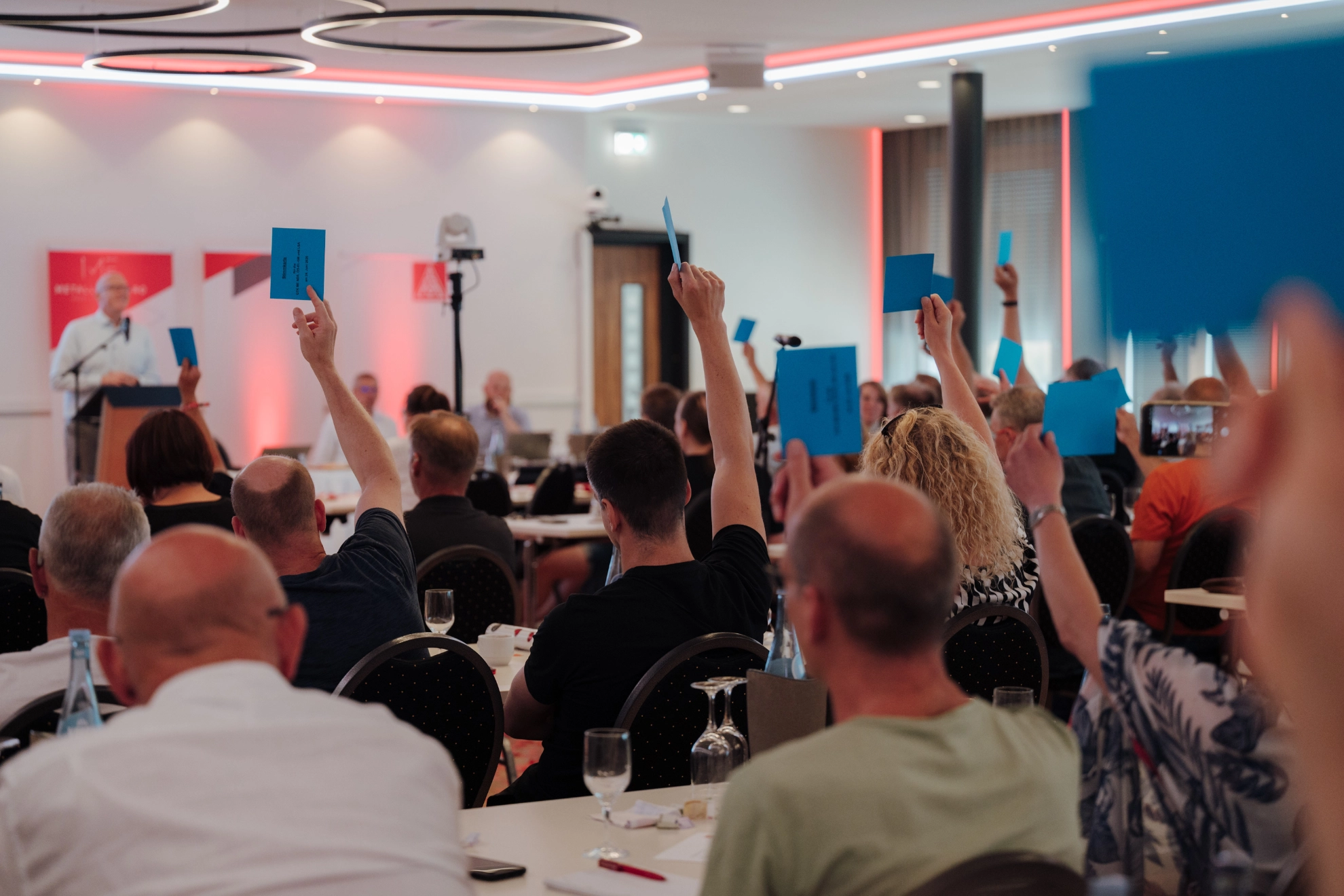
In Sindelfingen, the bargaining committee decides to terminate the wage collective bargaining agreements in the metal and electrical industries.
Companies in crisis—companies doing well
“The economic situation is extremely varied,” explained Nadine Boguslawski, IG Metall’s collective bargaining director, during the live broadcast. “On the one hand, we have many companies in financial distress. But we also continue to have companies that are doing really well. The challenge will be to formulate collective bargaining demands that work for everyone.”
The situation is particularly difficult in the automotive and mechanical engineering industries. Things are going significantly better in the aerospace industry, the defense industry, the semiconductor sector, and the renewable energy sector. This is shown by an analysis presented to the collective bargaining committees by Sebastian Dullien of the Institute for Macroeconomics and Economic Research (IMK).
German industry is struggling above all with the increasingly aggressive industrial and trade policies of China and the U.S. China, for example, has been heavily subsidizing its own industry for years in order to become the global market leader in electric cars and renewable energy. As a result, German exports to China have plummeted by 30 percent over the past five years.
For this reason, the push by employers to cut labor costs makes no sense at all, emphasized Christiane Benner, First Chairwoman of IG Metall. Rather, she argued, companies must be supported through German and European industrial policy, innovation and investment must be driven forward, the welfare state must be defended—and, above all, purchasing power and thus domestic demand must be strengthened: “We cannot restore our economy through austerity alone. Under no circumstances can we afford to make concessions in the collective bargaining round. We will have to find differentiated solutions.”
Focus on Purchasing Power and Employment
“The goal in the collective bargaining round will be not only to increase wages but also to stand up for the future and for employment,” said IG Metall’s collective bargaining board member Nadine Boguslawski. The aim is to provide tangible relief for workers while simultaneously stabilizing economic development. “Purchasing power is a driver of growth in this country.”
In many districts, members of the collective bargaining committees emphasized that workers are directly feeling the impact of rising prices, and the pressure to achieve wage increases that offset this is correspondingly high. In addition, workers have achieved a great deal in recent years, which must also be recognized. Furthermore, the goal is to create opportunities for jobs and apprenticeships. We need answers on how to shape the future.




To load this video, you must enable YouTube cookies and thereby agree to the YouTube privacy policy.