The harmonization of working hours between East and West is progressing in the metal and electrical industries. Effective July 1, MTU in Ludwigsfelde is reducing the weekly workweek from 38 to 35 hours. This means that the more than 1,000 employees in Brandenburg will now work the same number of hours as their colleagues in the West—an important step toward greater equity between East and West, 35 years after German reunification.
“It took 35 years after German reunification for the 35-hour workweek to be introduced in companies in Brandenburg as well,” says Tobias Kunzmann, chief representative of IG Metall Ludwigsfelde. “Starting July 1, this harmonization will truly be put into practice at MTU in Ludwigsfelde. What’s special about MTU is that the change is being implemented in a single step. For many, it took almost too long, but MTU sets a good example for the aviation industry in Brandenburg. Fair working hours and good pay are only possible with a collective bargaining agreement. IG Metall has now fought for and secured agreements on the 35-hour workweek with employees in the east at numerous companies.”
35-hour workweek secured for 85 percent of IG Metall members
Since 2021, IG Metall in Berlin, Brandenburg, and Saxony—together with works councils and employees—has secured the 35-hour workweek for approximately 85 percent of the affected members in the metal and electrical industries. The basis for this is the collective bargaining agreement dated June 25, 2021. In it, following a long and hard labor struggle with the employers’ associations in Berlin, Brandenburg, and Saxony, IG Metall agreed on a framework for transitioning to the 35-hour workweek. This makes it possible to negotiate a reduction in working hours down to the level in western Germany through company agreements at individual workplaces.
“The 35-hour workweek in the East German metal and electrical industry is now unstoppable. IG Metall’s 2021 framework collective bargaining agreement for the introduction of the 35-hour workweek is working,” explains Sophie Jänicke, head of the collective bargaining team at IG Metall Berlin-Brandenburg-Saxony. “We now have corresponding company agreements for about 85 percent of our members in companies covered by regional collective bargaining agreements. This means we have largely implemented the 35-hour workweek. One thing is also clear: We want 100 percent. We will continue to apply pressure until working hours in the East and West are fully aligned.”
The 35-hour workweek makes companies more attractive to skilled workers
The 35-hour workweek in the East German metal and electrical industry is also a matter of fairness for employees. For companies, it is now becoming increasingly important for attracting and retaining skilled workers.
“The aviation industry is a forward-looking sector that is developing positively despite the challenging economic environment. This is especially true for MTU. The signs point to growth, but the shortage of skilled workers threatens to slow this development,” warns Jürgen Kerner, Second Chairman of IG Metall. “Through our collective bargaining policy, we ensure that jobs remain attractive—especially in the east. The introduction of the 35-hour workweek at MTU in Ludwigsfelde will help retain and attract skilled workers there. First and foremost, however, this step is a matter of fairness toward the MTU workforce, which is now finally being treated on an equal footing with their colleagues in the west.”
To partially offset the reduction in working hours, MTU employees temporarily contributed the collectively agreed-upon transformation allowance for three years. This helps cushion the higher costs—approximately 8.5 percent—associated with the reduction in working hours. With the implementation of this change, the 35-hour workweek now applies at all three locations (Munich, Hanover, Ludwigsfelde) of the DAX-listed MTU Group in Germany.
“We may have started late, but we’re getting there sooner,” says Randolph Landrock, chairman of the works council at MTU Ludwigsfelde. “Our colleagues have waited long enough to finally be treated equally within the group. Thanks to strong participation by the workforce and the support of IG Metall, we’ve achieved a result after intensive negotiations with an employer open to dialogue—a result that brings the long-awaited fairness for all of us.”
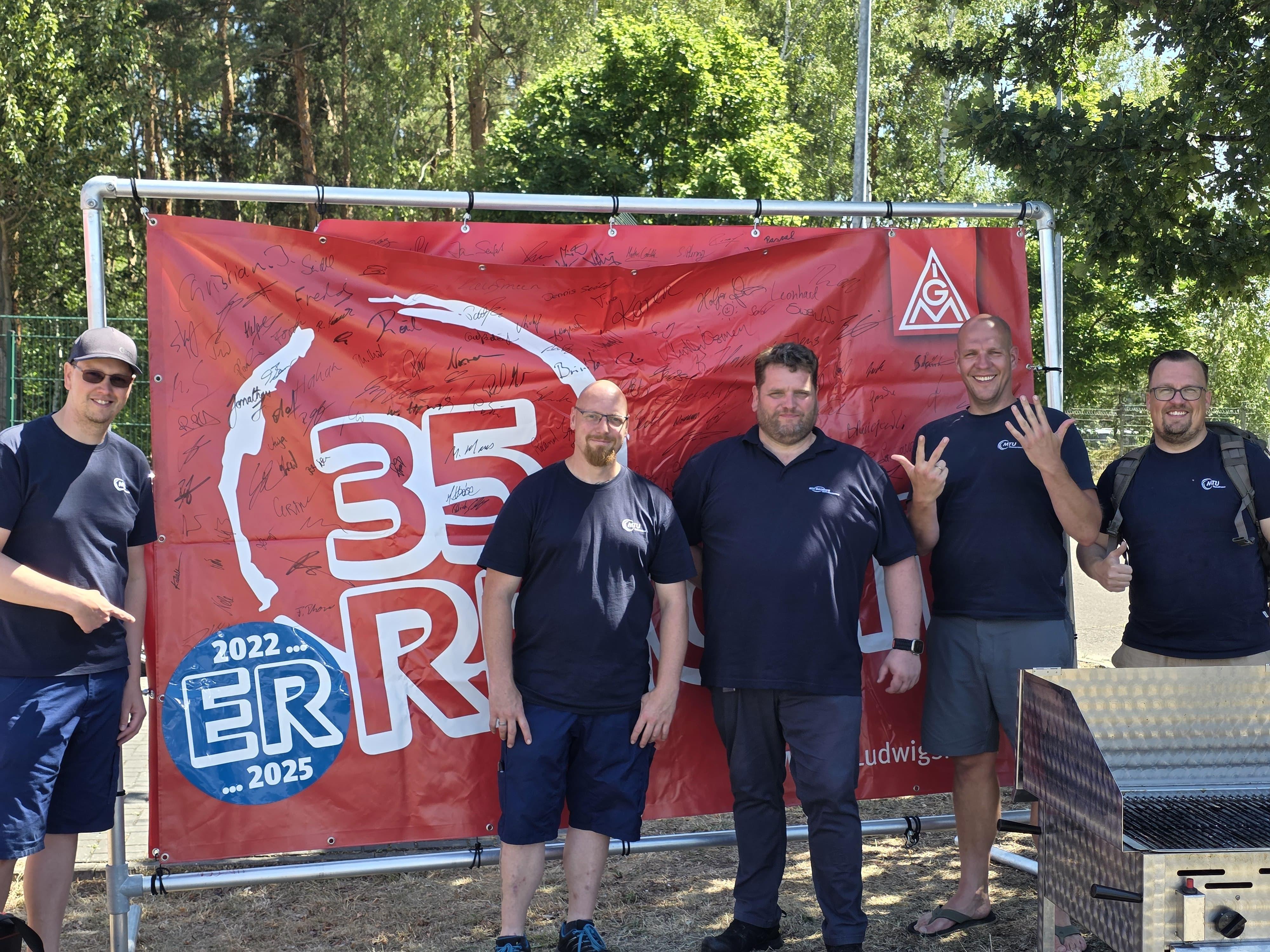
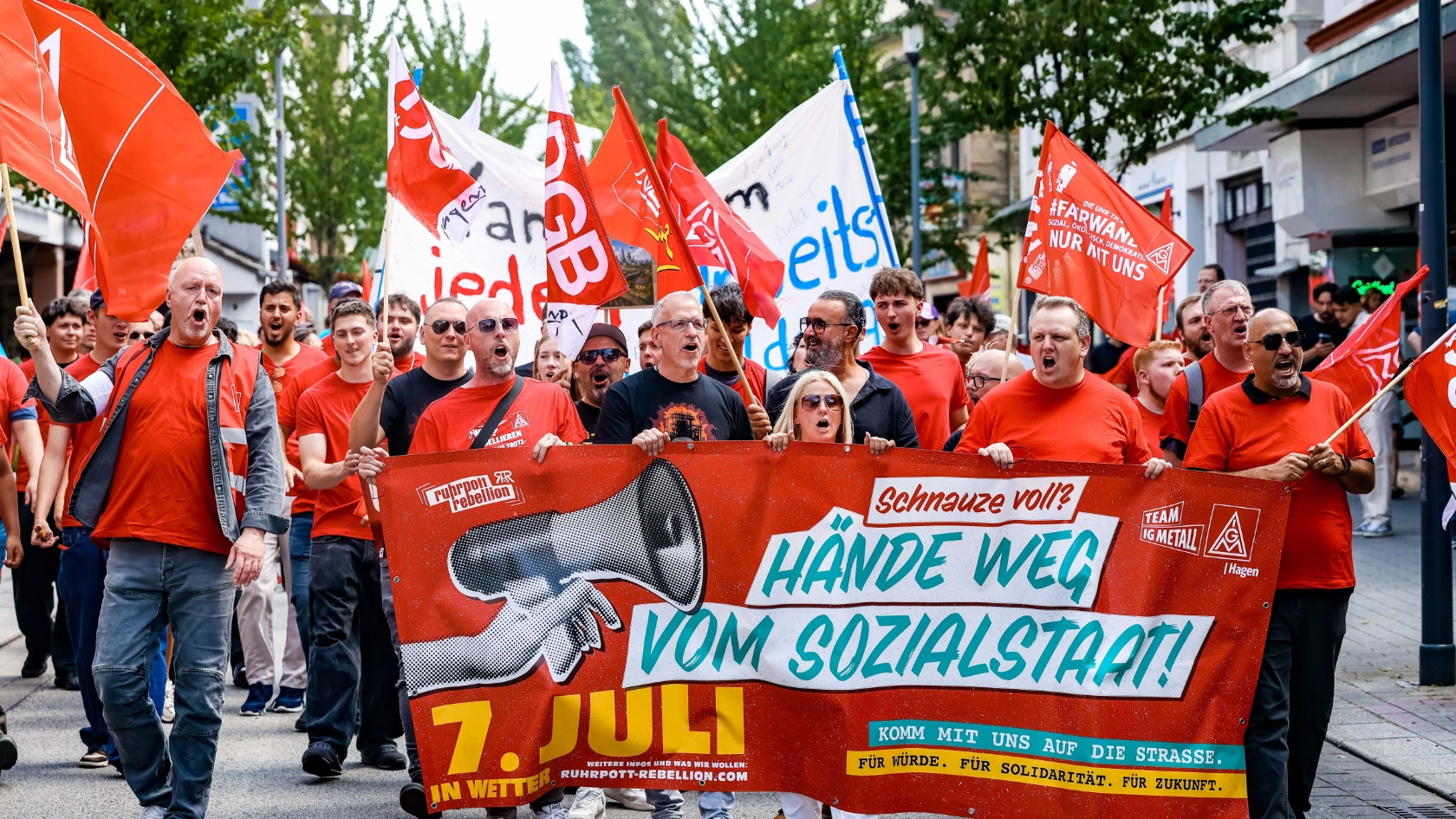
The employees at MTU Ludwigsfelde are celebrating their 35-hour workweek.
The 35-hour week is already in place here
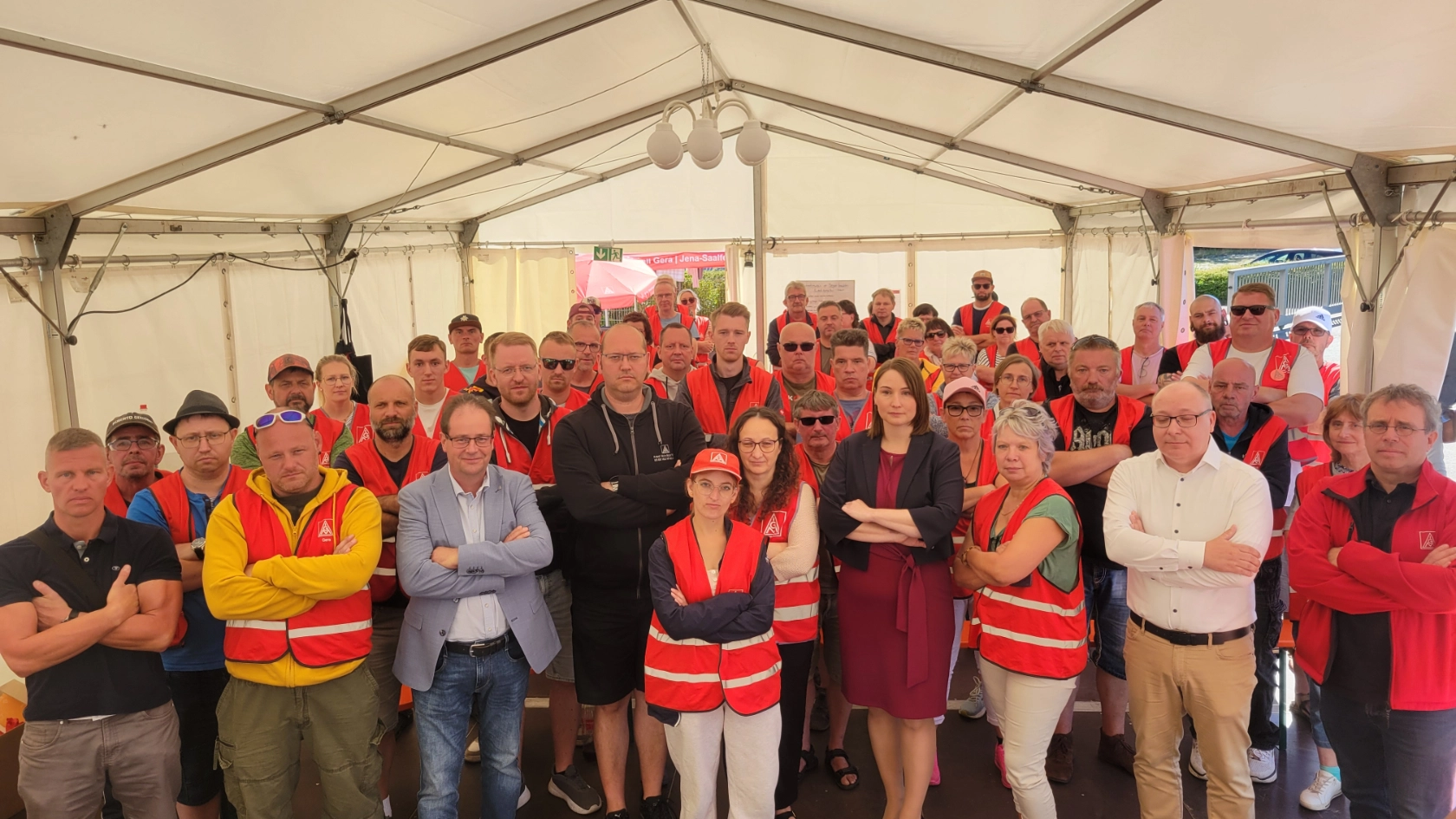
IG Metall is securing the 35-hour workweek at an increasing number of metalworking plants in eastern Germany. At BMW and Porsche in Leipzig, Mercedes in Ludwigsfelde, Volkswagen in Zwickau, Carl Zeiss in Jena, Rolls-Royce in Magdeburg, Thyssenkrupp Presta in Schönebeck, Siemens Energy and Siemens Healthineers, at Mahle, Airbus Defense, and dozens of other companies, the workweek is being reduced to 35 hours: STILL in Leipzig, Carl ZEISS in Jena, Elbe Flugzeugwerke in Dresden, Kaeser Kompressoren in Gera, and the measurement systems manufacturer Numerik in Jena.
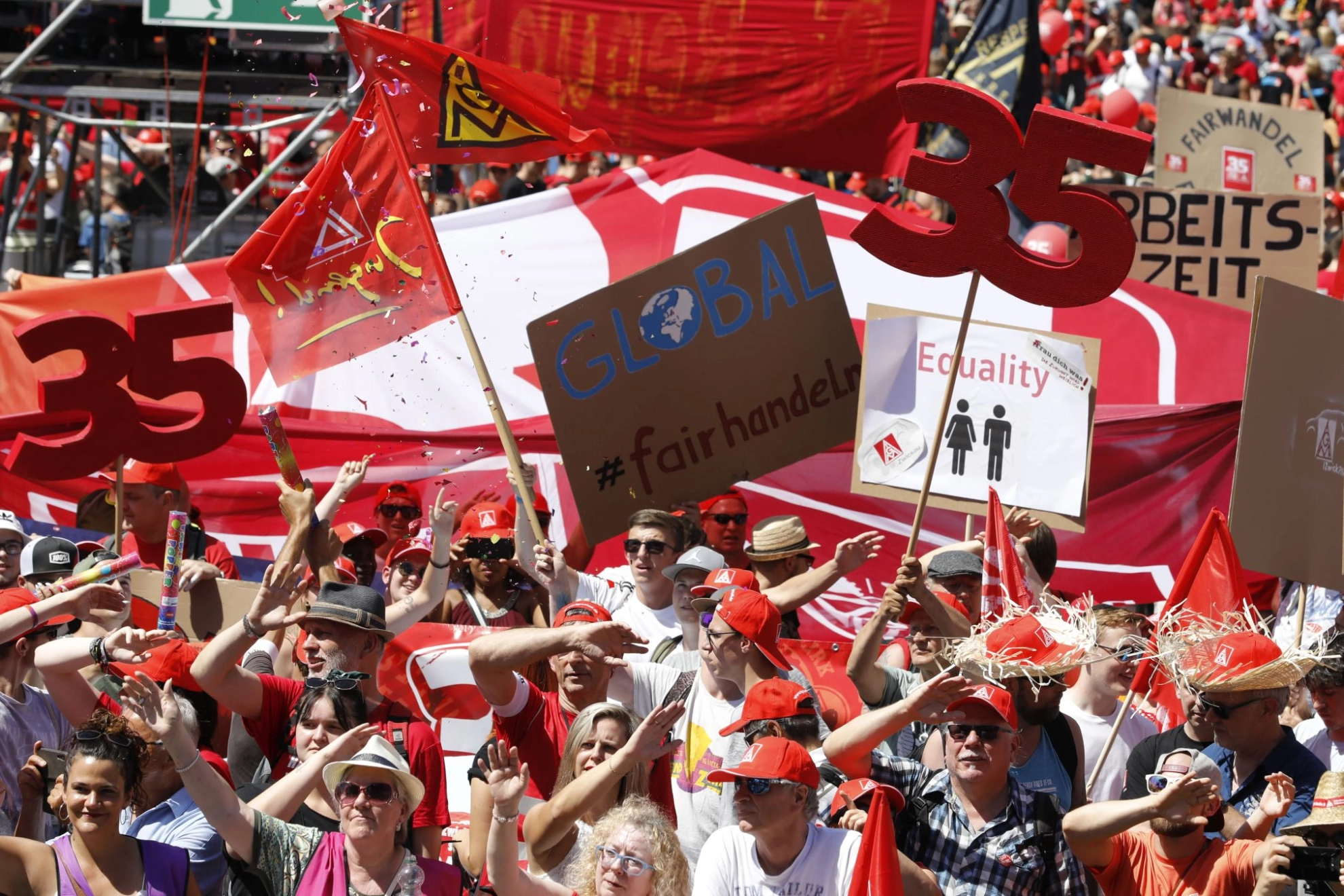
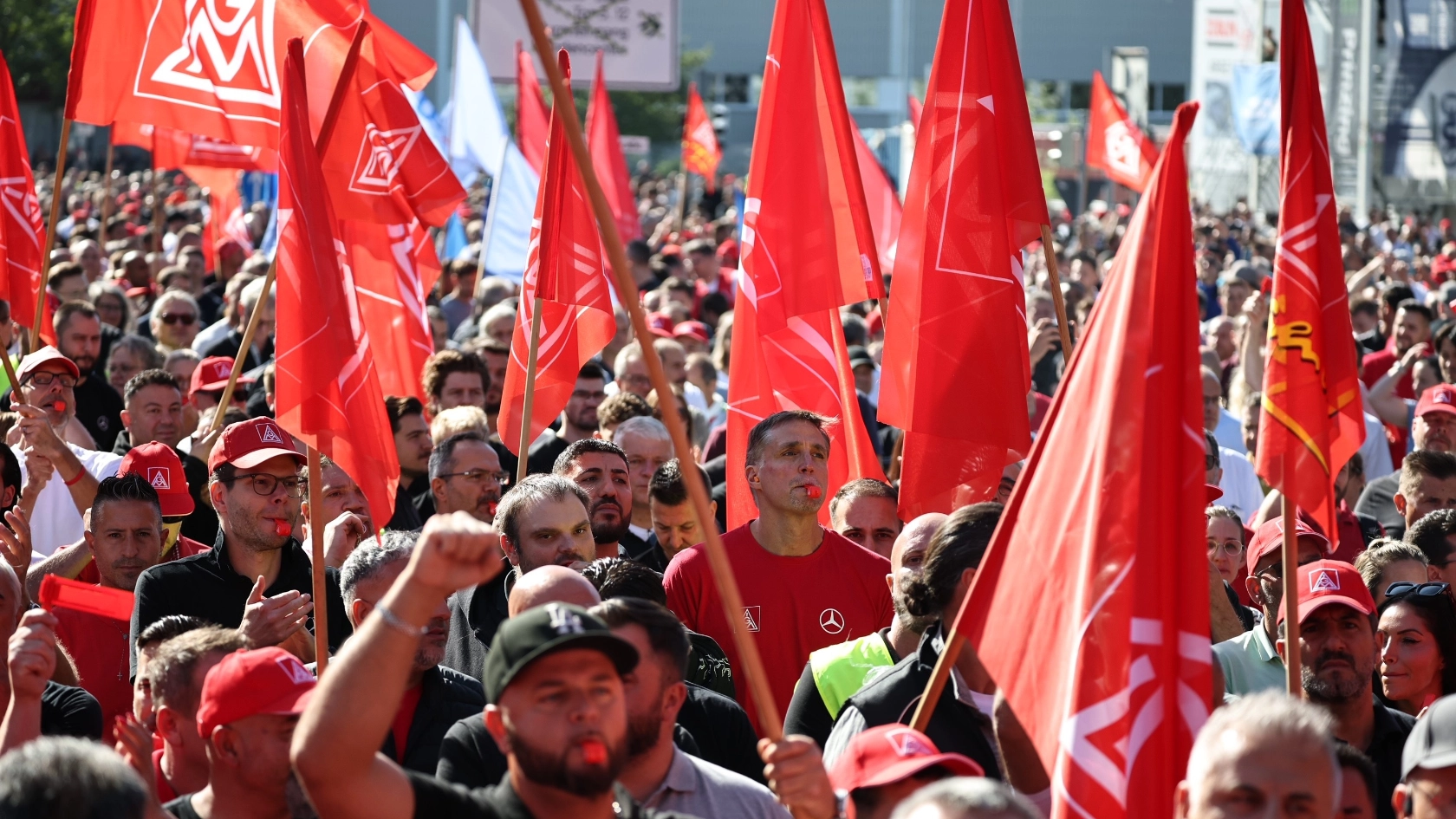
It was a long struggle: Unlike in the East German steel industry, where the 35-hour workweek has been in effect since 2009, employers in the East German metal and electrical industries resisted for years. In 2018, IG Metall secured the first company-level collective bargaining agreement to introduce the 35-hour workweek at the fastener manufacturer EJOT in Tambach-Dietharz, Thuringia. After weeks of warning strikes, IG Metall secured framework collective bargaining agreements in the Berlin-Brandenburg-Saxony district in 2021 to introduce the 35-hour workweek in companies, a feat it repeated a few months later in the collective bargaining regions of Thuringia and, shortly thereafter, in Saxony-Anhalt.
The convergence of East and West continues: IG Metall is currently negotiating with numerous other companies regarding the reduction of working hours and the introduction of the 35-hour workweek.