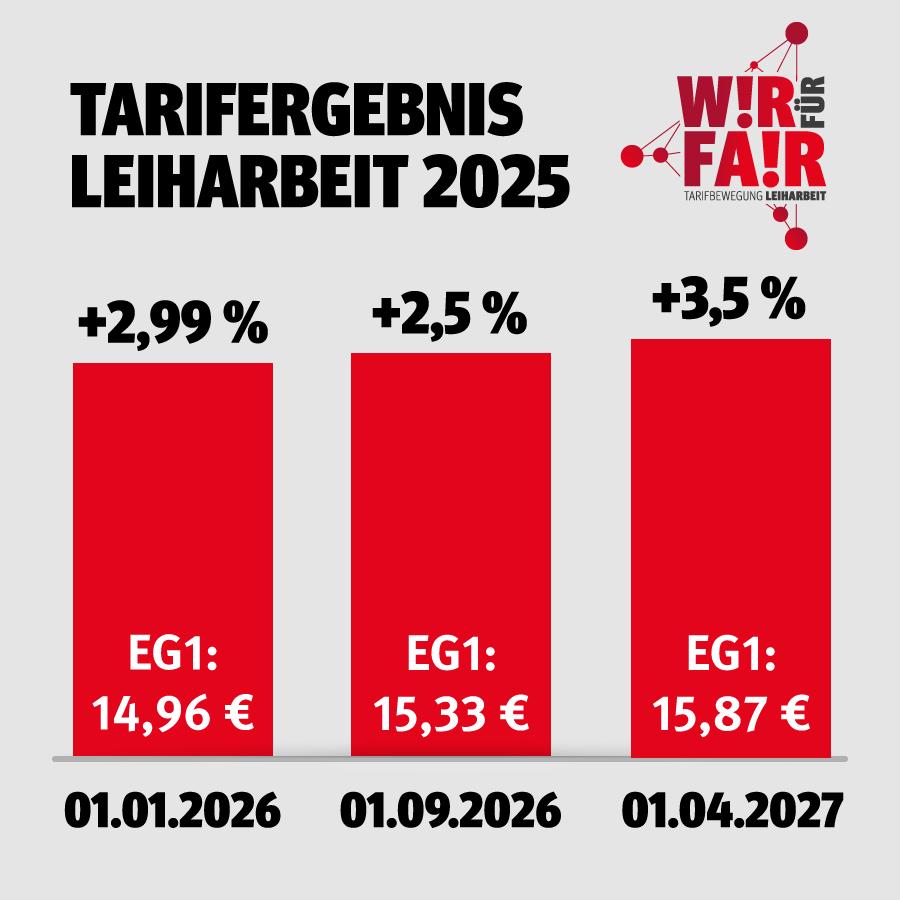
A negotiated settlement has been reached in the 2025 collective bargaining round for temporary agency workers. In the second round of negotiations last Friday, IG Metall, together with the other DGB unions, secured a substantial wage increase for temporary agency workers. Specifically, wages will increase by 2.99 percent as of January 1, 2026, by 2.5 percent as of September 1, 2026, and by an additional 3.5 percent as of April 1, 2027. The hourly wage in pay grade 1 (EG1) will thus rise from the current 14.53 euros to 14.96 euros as of January 1, 2026, to 15.33 euros as of September 1, 2026, and then to 15.87 euros as of April 1, 2027. The collective bargaining agreement is valid through September 30, 2027.
“The negotiations were very tough and, at times, highly contentious,” reported Dirk Schumann, one of the IG Metall representatives on the DGB negotiating committee. “However, we were able to make it clear to the employers that an agreement involving a loss in real wages is not an option for the employees. The result we achieved provides for a decent increase in three stages, and the lowest pay grade will rise significantly above the 15-euro mark over the course of the year.”
The temporary staffing industry—like many other sectors—is in crisis. Since peaking at one million temporary workers in November 2017, their numbers have fallen by nearly 40 percent. Revenue and order backlogs have declined sharply, and the number of bankruptcies is proportionally higher than in other sectors. On this basis, employers in the General Association of Personnel Service Providers (GVP) initially wanted to pay only an inflation adjustment, linked to further demands. The DGB unions firmly rejected this, arguing that temporary work must not revert to the old days of being a low-wage industry. They made it clear that there needs to be an appropriate margin above the statutory minimum wage.
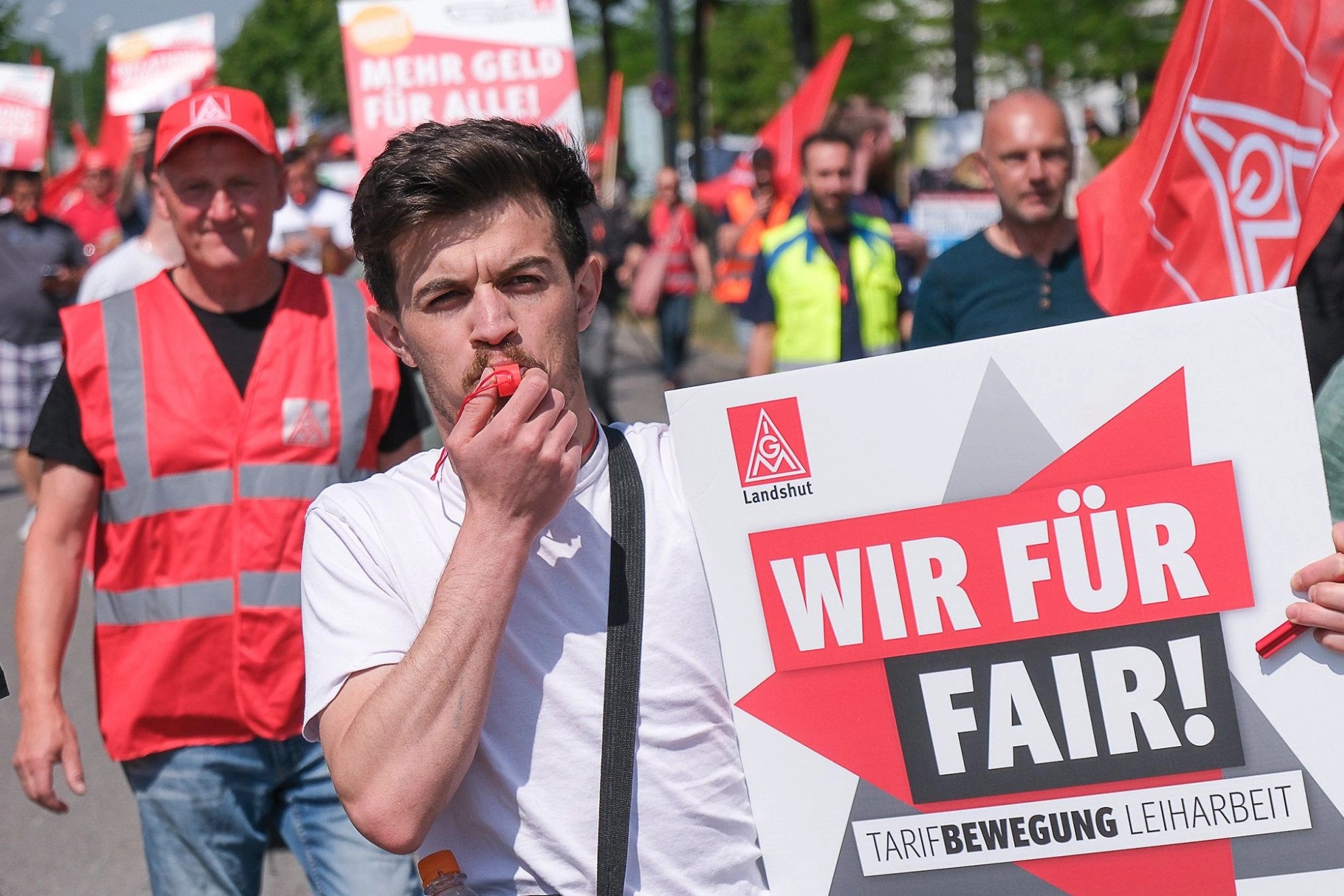
IG Metall does not negotiate the collective bargaining agreements for temporary work alone, but rather together with all DGB unions as the DGB collective bargaining group. They are facing off against the General Association of Personnel Service Providers (GVP). The DGB collective bargaining group had demanded a 7.5 percent pay increase across all pay grades for a twelve-month term. As in the past, a significant gap between the lowest pay grade (Pay Grade 1) and the general minimum wage was to be maintained.
Higher Special Payments and Greater Member Benefits
The collective bargaining agreement not only increases wages but also raises special payments such as vacation pay and Christmas bonuses, as well as the “temporary work” member benefit. This is due to the wage indexation mechanism already in place. This means that for every X percent increase in wages, there is also an X percent increase in special and additional payments.
Higher “cap” on industry surcharges in the future
IG Metall was also able to secure improvements in the collective bargaining agreement regarding industry surcharges in the metal and electrical industries. These industry surcharges ensure that temporary agency workers assigned to the metal and electrical industries receive a surcharge on their pay starting from their very first day of assignment. This surcharge increases in stages over the course of the assignment.
However, the so-called cap has so far limited the supplement to 90 percent of the hourly wage of a comparable employee at the host company. This means that, particularly in the fifth supplement level (after nine months of assignment), the supplement is no longer paid in full but is “capped.”
IG Metall wanted to change this and has secured a new regulation. Specifically, the cap in the fifth bonus tier will be raised to 92.5 percent as of January 1, 2028, and to 95 percent as of January 1, 2029. In return, the bonus will be reduced—but the bottom line is that this effectively means more money for temporary agency workers.
New Collective Bargaining Agreements in the Temporary Employment Sector
Unions and the GVP had already concluded a new framework collective bargaining agreement and a new wage framework collective bargaining agreement in May of this year, following the merger of the two temporary staffing employer associations, iGZ and BAP, into the GVP. The new collective bargaining agreements standardize the provisions of the iGZ and BAP collective bargaining agreements that are still in effect. They will take effect on January 1, 2026. A new rule regarding the written form of the employment contract will take effect as early as August 1, 2025. We’ve compiled all the information and important changes for you here.
Get involved—support IG Metall
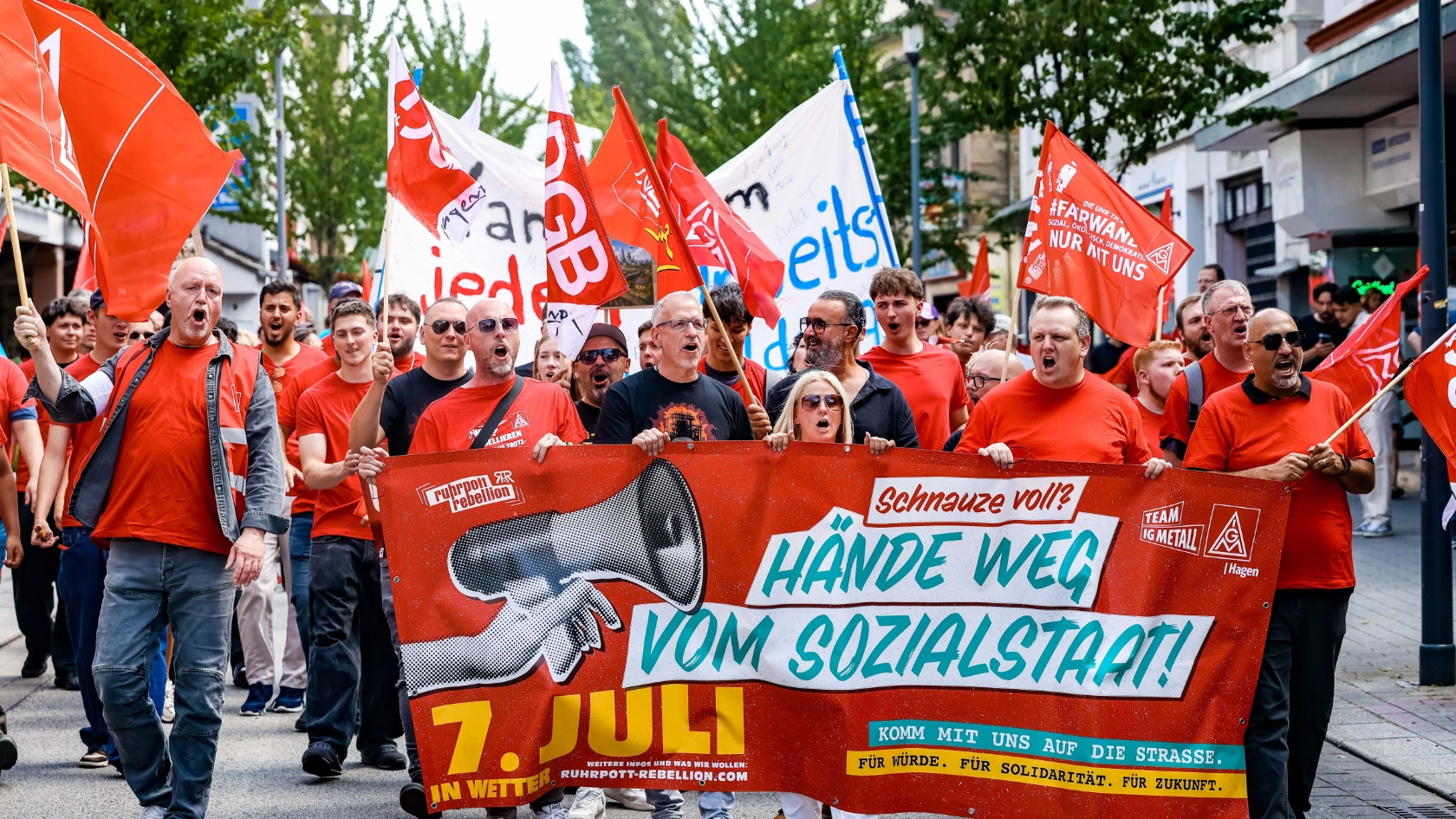
It’s also essential for temporary workers that their wages increase regularly. But a wage increase isn’t handed to you on a silver platter. Employers regularly put up resistance; they regularly refuse wage increases or try to keep them as low as possible. We can still achieve our legitimate demands—if we work together. Not a member yet? Then sign up here.