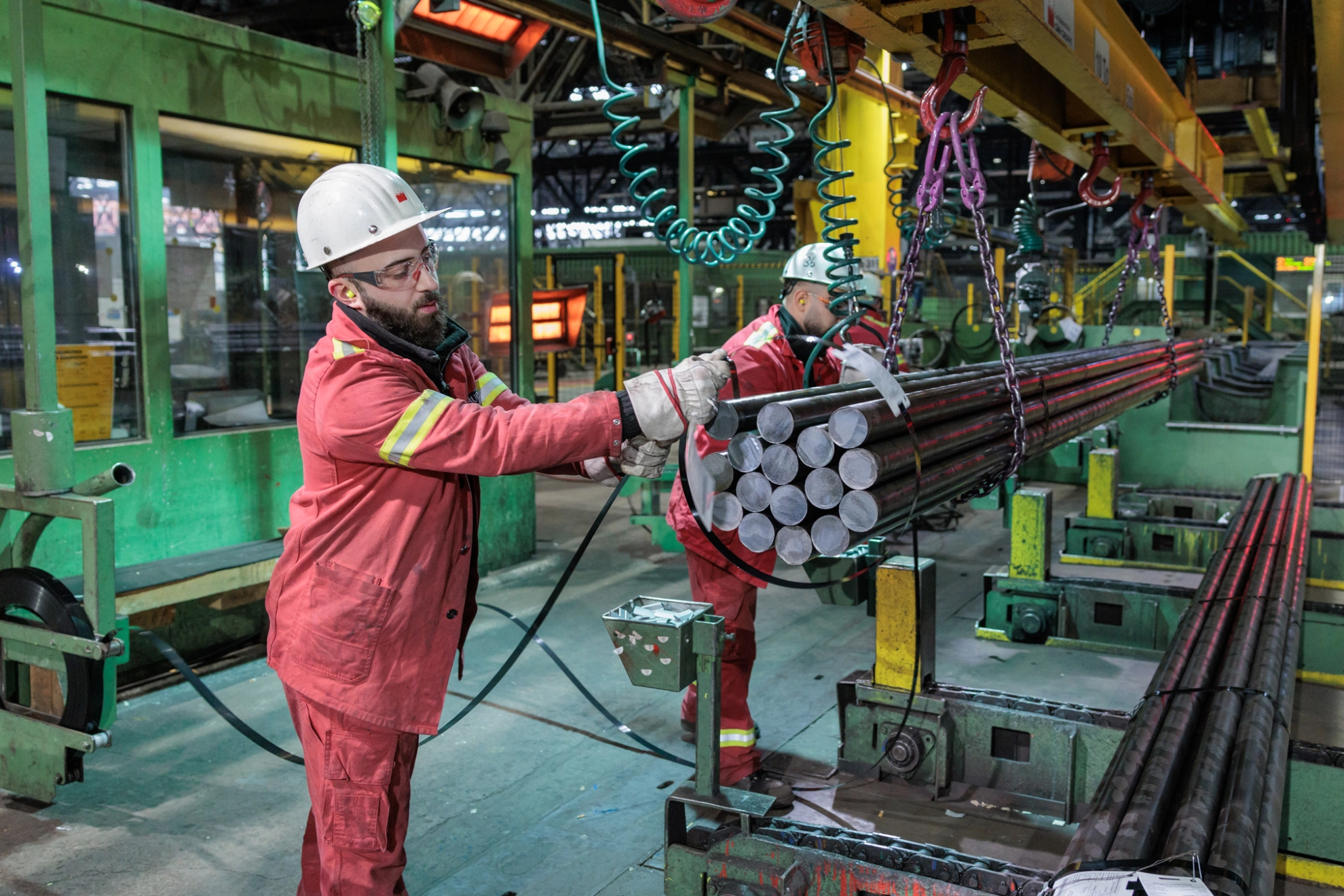
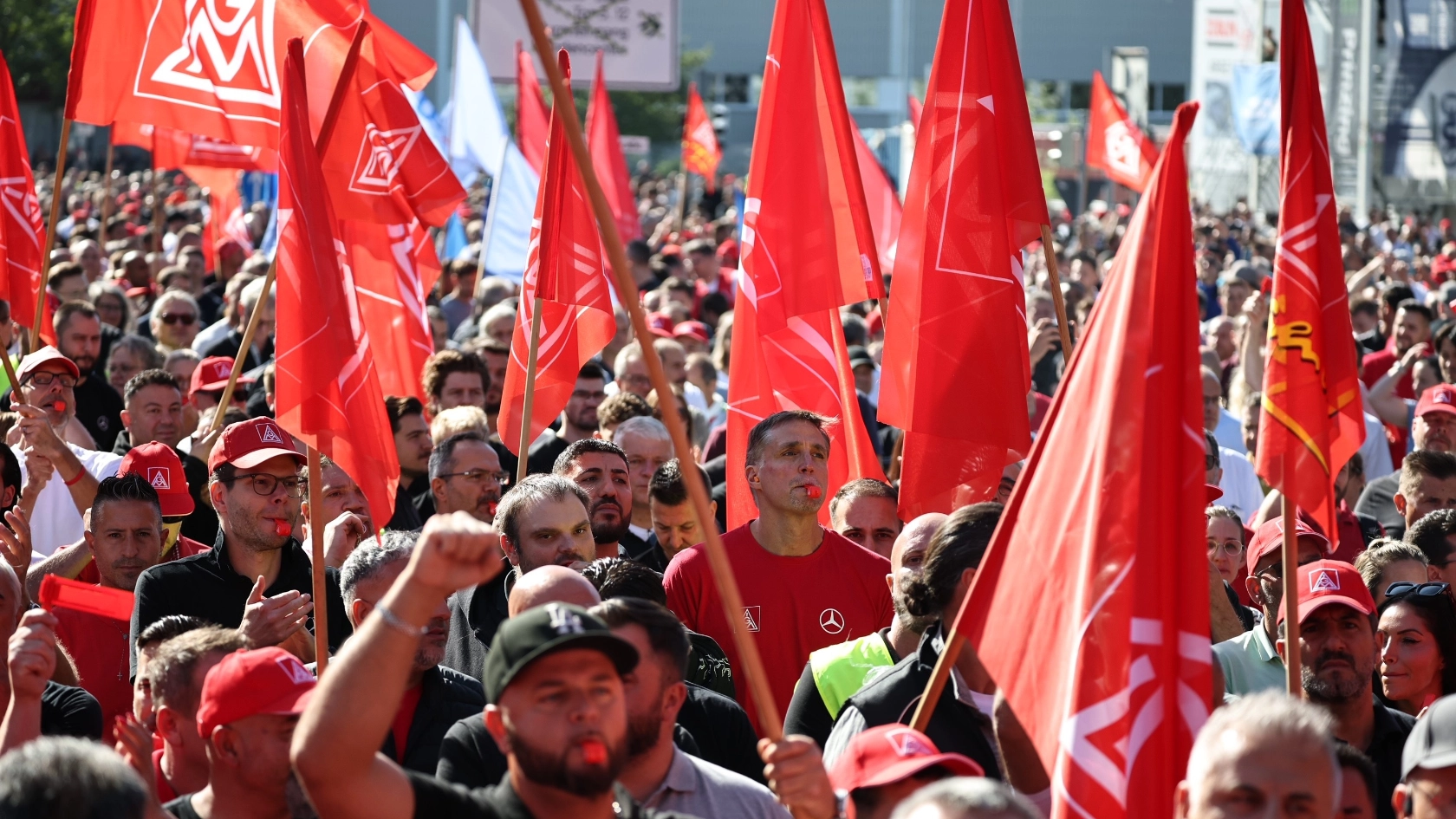
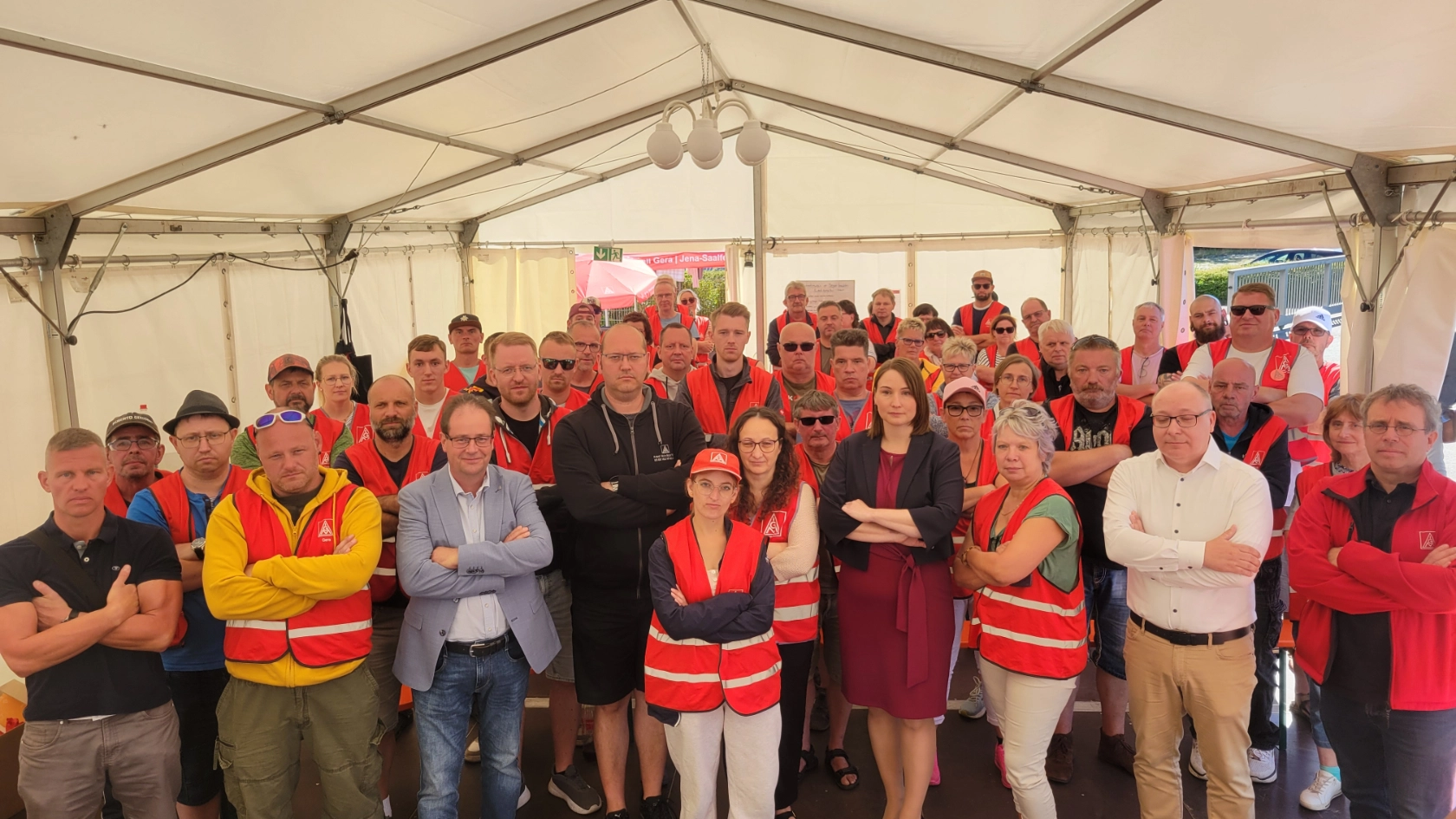
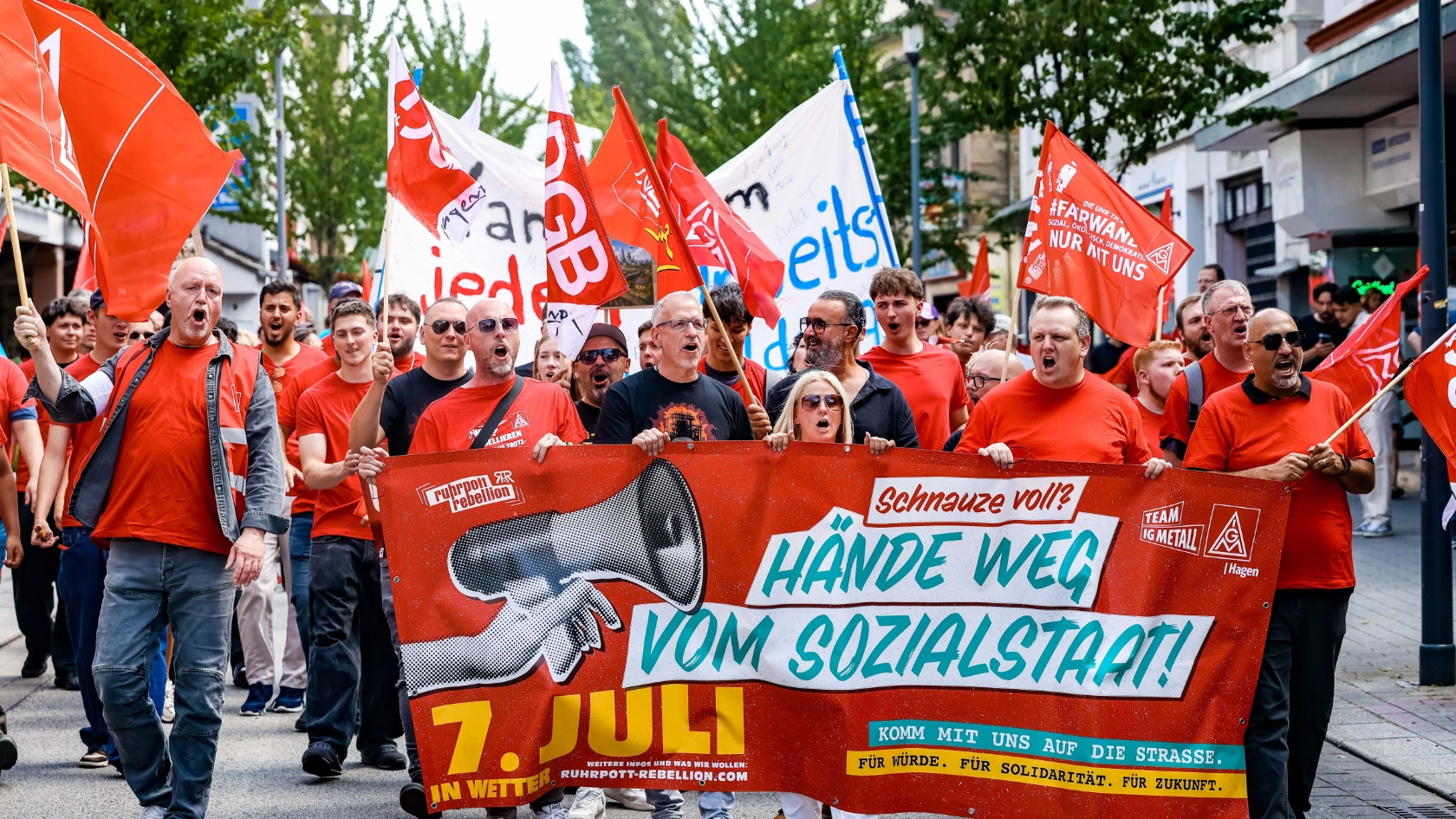
IG Metall members at various plants are currently discussing their demands for the 2023 steel industry collective bargaining round. The top priority is more pay—on a permanent basis and reflected in the pay scale. In addition, they are calling for a collectively agreed inflation adjustment bonus —similar to that in the metal and electrical industries. This is shown by a survey of over 11,000 workers.
Next on the list is securing jobs through a reduction in working hours—for example, to a 32-hour workweek, including a four-day workweek with compensatory pay—as well as through partial retirement. From the employees’ perspective, this will help retain the workforce during the industry’s transformation.
Shorter working hours secure jobs and skilled workers
“Reducing working hours with full wage compensation is the right response to the challenges facing the steel industry and the likely decline in the number of jobs,” says Nils Knierim, a member of the Northwest Negotiating Committee and IG Metall shop steward at Salzgitter Flachstahl, where the transition to green steel is already underway. “Our people are aware of this. They’re already seeing the conversion of our blast furnace line from coke to hydrogen—and they know that the future facilities will be operated with fewer staff. We’re already having discussions with our employees: Where do you see your job in the future? Still at the blast furnace—or perhaps somewhere else?”
Shorter work hours secure jobs. In addition, shorter work hours are healthier, more family-friendly, and more attractive to employees. Ninety percent of the employees surveyed agree with this. With a 32-hour workweek, for example, a four-day workweek is also possible, depending on the shift model.
More than a third already work fewer than 35 hours
32 hours a week—it’s possible: Already, 37 percent of the steelworkers surveyed work fewer than 35 hours
Take ThyssenKrupp (TKSE AG), for example: The company offers a flexible workweek of 33 to 35 hours, though employees must waive their right to overtime pay. Nevertheless, the majority of employees opt for shorter working hours.
Or at ArcelorMittal. In Eisenhüttenstadt (Brandenburg), a 32-hour workweek is already in effect, though without wage compensation—and with the option to individually increase working hours to 35 hours. Here, too, the majority still opt for fewer than 35 hours.
At ArcelorMittal. In Bremen, working hours have been reduced to an average of 33.6 hours, depending on the order situation—though, again, without wage compensation. There is also a four-day workweek with 28 hours and partial wage compensation, but this is primarily for older employees. For the majority of shift workers, it is more important that a reduction to 32 hours—with wage compensation—eliminates their additional shifts (up to eleven per year), explains Mike Böhlken, deputy works council chair, who is also a member of the negotiating committee for the upcoming collective bargaining talks in the northwest. “This will allow us to retain our people during the transformation when our employment protection expires at the end of 2025—and at the same time, we’ll become more attractive to skilled workers with the option of a four-day workweek. Most importantly, however, for our employees, we need to secure something in the collective bargaining agreement—a decent, permanent pay raise.”
Here’s what’s next in the steel industry collective bargaining round
On September 6 and 7, the bargaining committees of the steel industry in northwestern and eastern Germany will finalize their demands. Negotiations will begin in mid-November. At midnight on November 30, the wage agreements and the no-strike clause will expire. After that, warning strikes will be permitted.
The steel industry in Saarland is governed by its own collective bargaining agreements with different terms. There, the wage agreement cannot be terminated until February 29, 2024.
For the latest information and background on the collective bargaining round and the survey: tarifrunde-stahl.de