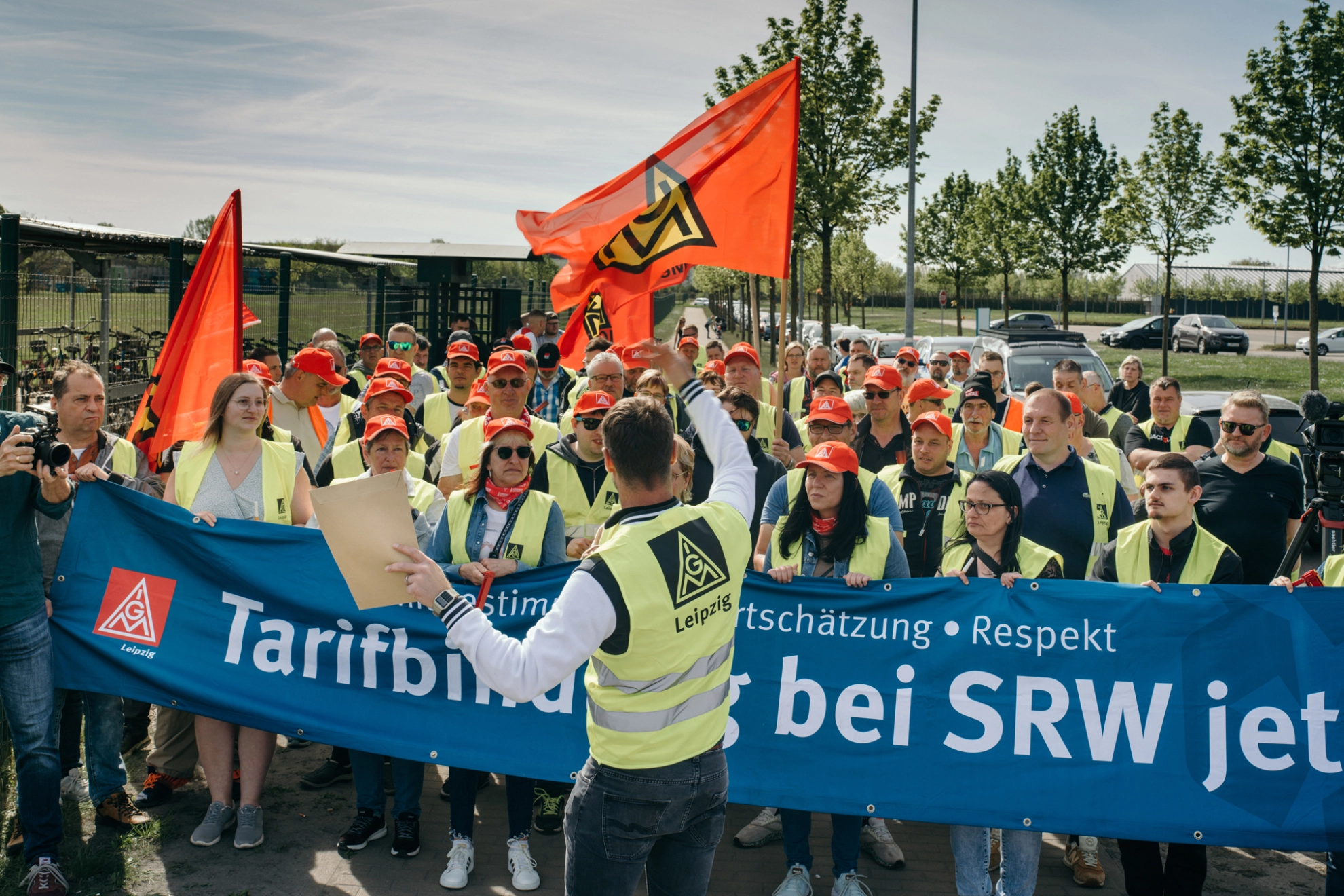
Following a strike vote by the workers, IG Metall ended the strike at SRW metalfloat in Espenhain near Leipzig after 180 days.
Things had actually started off well last year: The workers, together with IG Metall, presented their collective bargaining demands. They finally wanted higher pay. For often less than 2,000 euros gross per month, they sort scrap metal while being exposed to metal dust, heat, and cold.
But in August, management unexpectedly broke off negotiations.
“The Chinese shareholder turned what was a routine collective bargaining negotiation with a fairly modest demand into a culture war,” criticizes Steffen Reißig, chief representative of IG Metall Leipzig. “When an employer takes such an unyielding stance against unions, employee participation, and legal certainty, there is no path open for a responsible solution based on social partnership.”
Employer Responds to Peace Offer with Lockout
After 180 days of striking, IG Metall suspended the strike on May 6 to pave the way for a joint resolution to the collective bargaining dispute. The employer’s response was to lock out the employees. Nothing like this has happened in Germany in 40 years. In a press release, the employer stated that it would continue to negotiate only with the works council, not with IG Metall.
“German labor law stipulates that issues such as wages, vacation, and working hours must be negotiated collectively with a union,” explains Michael Hecker, Second Representative of IG Metall Leipzig. “The Federal Labor Court has described collective bargaining without the right to strike as ‘collective begging,’ since this would not guarantee a proper balance between the interests of employers and employees. The works council is not authorized to conduct collective bargaining, and demanding that it do so is impermissible. Scholz Recycling and SRW metalfloat are disregarding our German right to co-determination.”
IG Metall Is Now Helping with the Transition to Decent Work
SRW now plans to end the lockout on May 20. But for the company—backed by the multi-billion-euro Chinese Chiho Group, which has more than 200 locations worldwide—its stubbornness could backfire: Many employees are now looking for other jobs. The Leipzig region has long been facing a labor shortage.
“But now the priority is to support employees who are willing to switch jobs in finding positions at companies bound by collective bargaining agreements,” explains Steffen Reißig. “We will do everything we can to make that happen.”