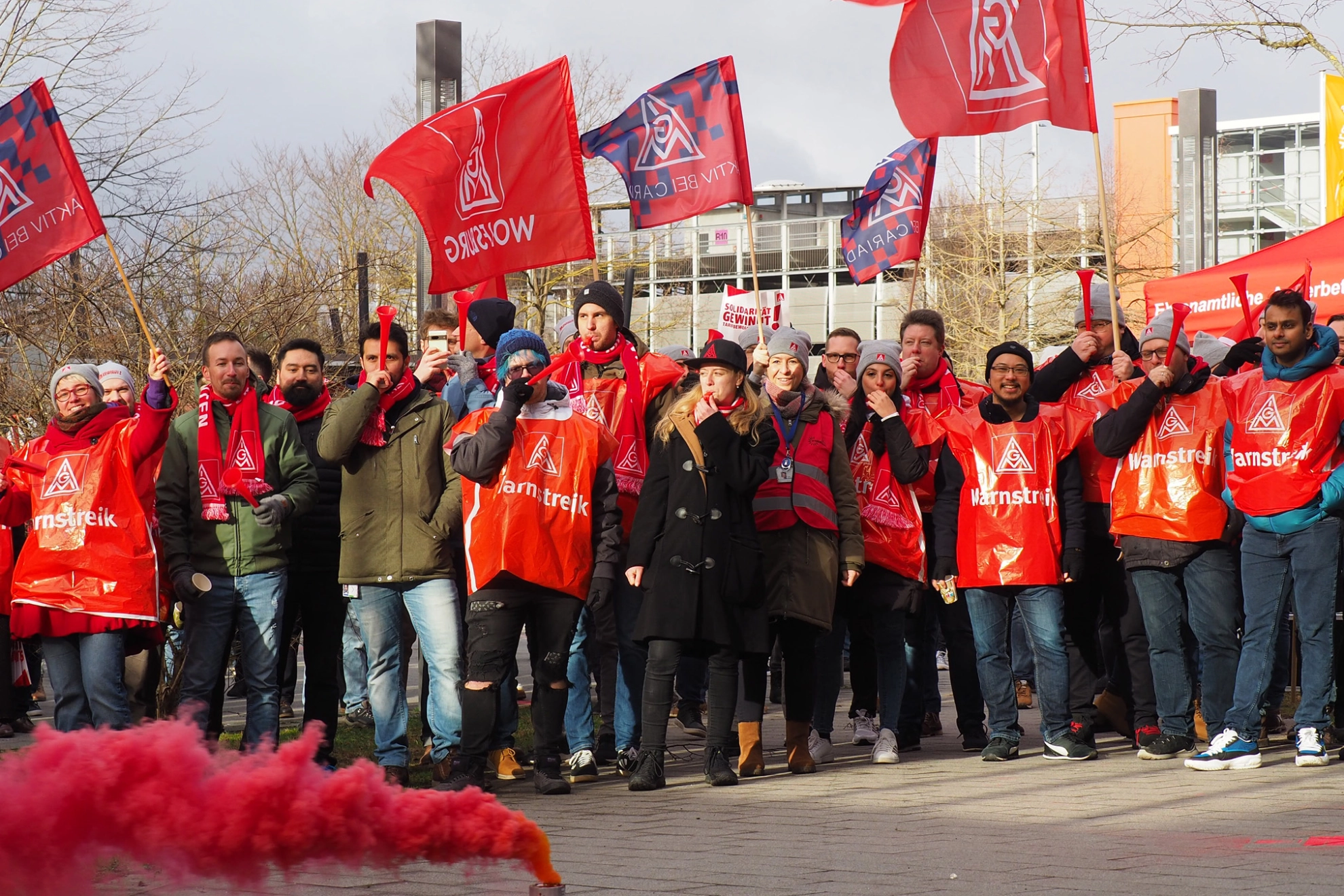
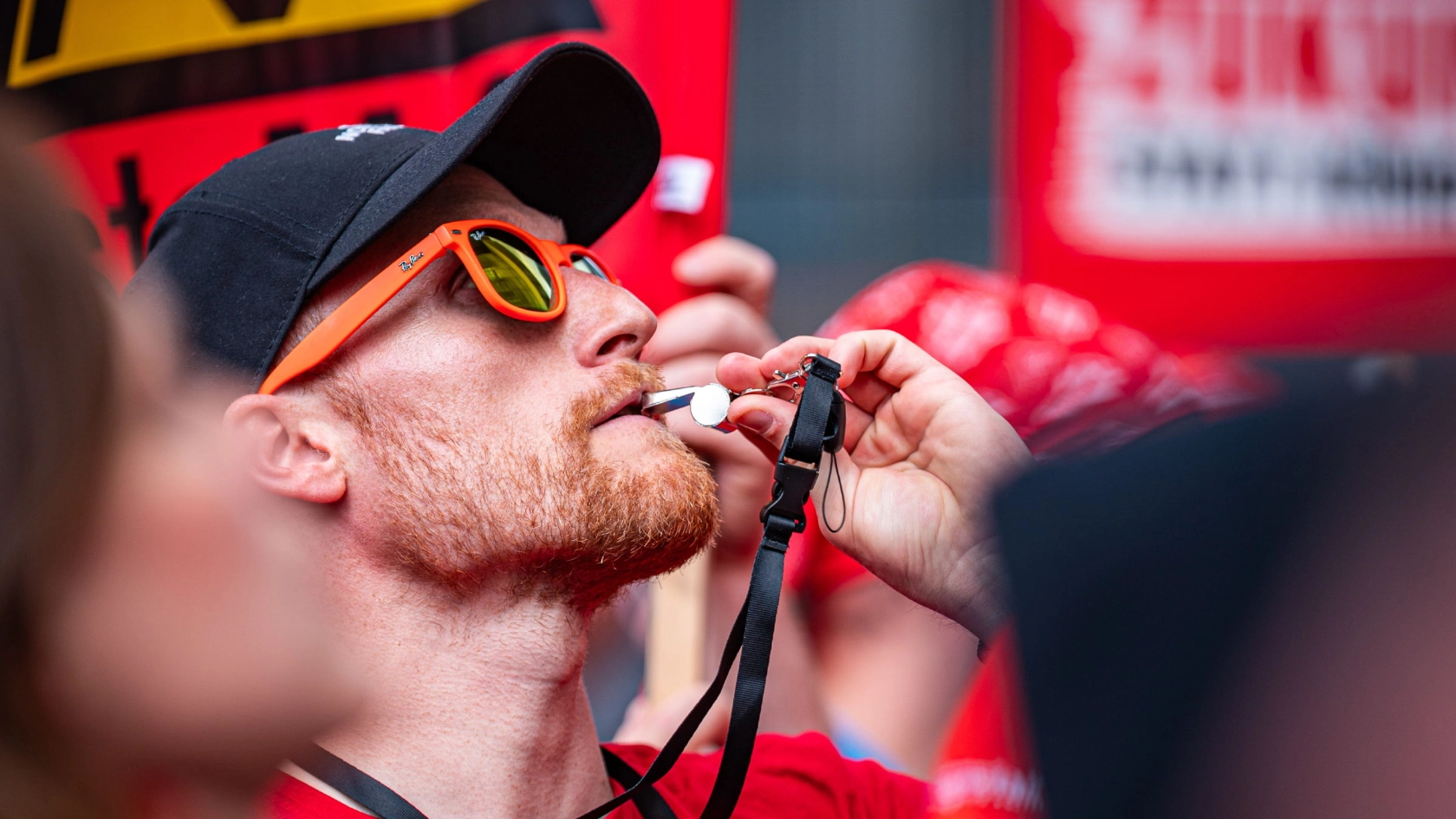
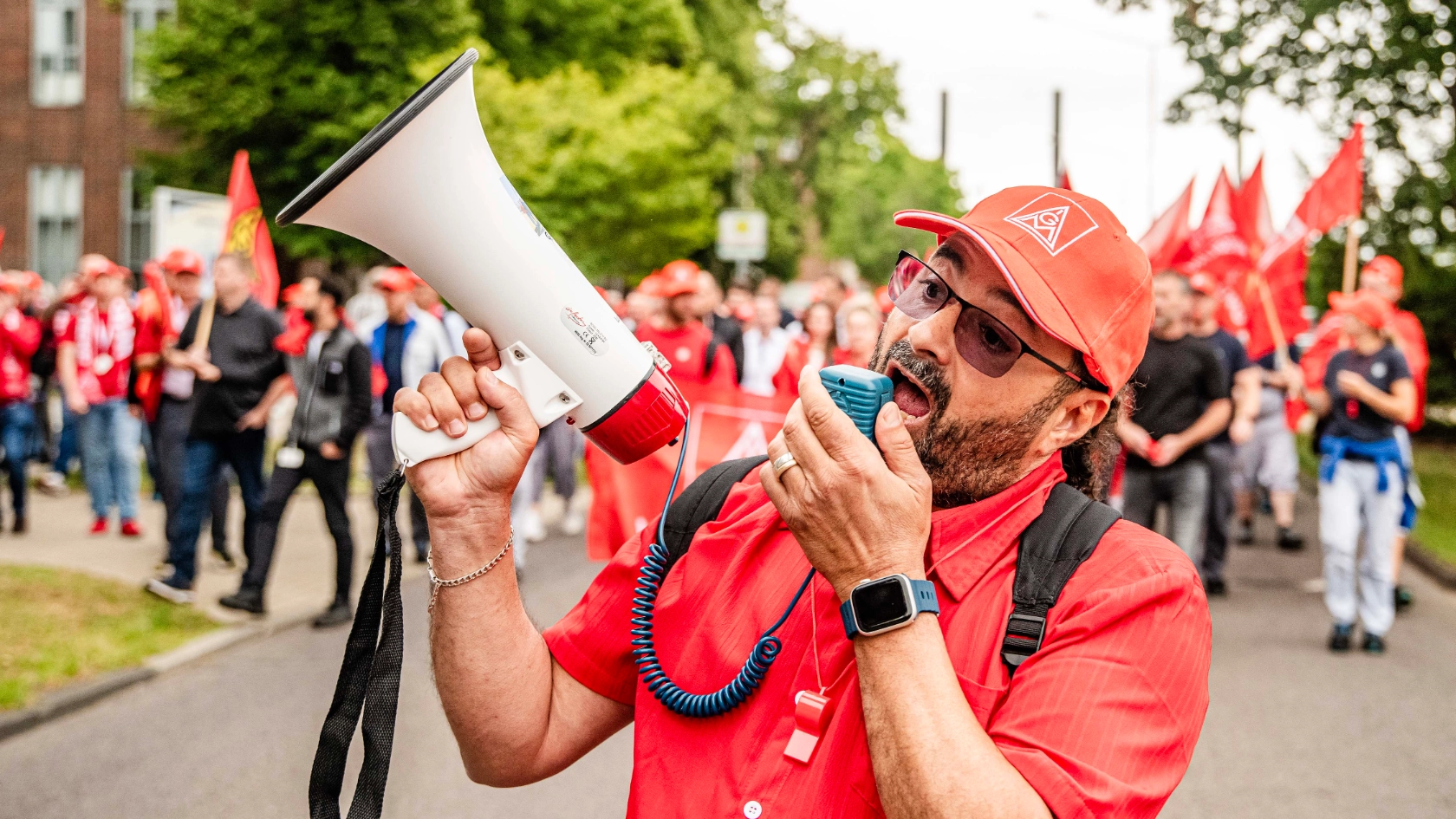
Yes: Software developers can go on strike, too. 1,200 employees at VW’s software subsidiary CARIAD staged warning strikes to press for their new collective bargaining agreement. And in the fourth round of negotiations, a breakthrough was reached: The nearly 6,000 employees nationwide will receive permanent pay increases in three stages: a 3 percent increase starting in August, another 3 percent starting in January 2024, and an additional 2.5 percent starting in November 2024.
In addition, they are already receiving an inflation adjustment bonus of 3,000 euros net, which will be paid out in full in February, as well as another lump-sum special payment of 750 euros gross in February 2024.
Furthermore, CARIAD will begin negotiations with IG Metall regarding a profit-sharing plan by 2025.
The elected IG Metall bargaining committee , comprising “Caridians” from all locations, unanimously approved the outcome of the negotiations.
“We Have to Negotiate for Ourselves”
“IG Metall knows software, too. We’ve proven that at CARIAD,” says Gerhard Retzer, a CARIAD works council member from Ingolstadt and a member of the IG Metall negotiating committee. He previously served on the IG Metall works council at Audi in Ingolstadt and helped negotiate CARIAD’s very first collective bargaining agreement two years ago, even before the company had any employees. Back then, they were still following in the wake of the “brands”—VW, Audi, and Porsche—and essentially aligned their collective bargaining agreements with theirs.
That changed for the first time during the 2023 CARIAD collective bargaining round, emphasizes Britta Berlet, a CARIAD works council member from Berlin and a member of the negotiating committee. “For the first time, we had to negotiate on our own behalf. And during the negotiations, it quickly became clear to us that we were facing a negotiating partner with its own—and in some cases conflicting—interests.”
More and more employees share this view: Nearly 700 “Caridians” have joined IG Metall in the last 12 months.
More and More IT Professionals Joining IG Metall
IG Metall also reached a new collective bargaining agreement a few weeks ago with the French IT service provider ATOS, which has around 30 locations in Germany—together with IG BCE. Employees will receive a 5.2 percent pay increase (effective October 2023) and a 3.3 percent increase (effective October 2024). IG Metall members will also receive an exclusive additional inflation adjustment bonus of 1,500 euros. Furthermore, the collective bargaining agreement helped reduce staff cuts resulting from the ATOS Group’s international restructuring and ruled out layoffs for operational reasons through 2027.
At ATOS, too, this was only possible because the employees took action to pressure the company into reaching a collective bargaining agreement. They had already secured their first collective bargaining agreement back in 2013.
A new feature at the time: Employees could freely choose their working hours between 35 and 40 hours. IG Metall also negotiated a similar arrangement at CARIAD two years ago: There, 28 to 40 hours are possible.
“An end to self-exploitation” was one of the goals of the ATOS employees at the time. In addition, the employer was no longer to have sole authority over pay raises.
Without a collective bargaining agreement, salary negotiations often go nowhere
More and more IT professionals are realizing how important a collective bargaining agreement is. After all, without one, things often don’t work out. Employees at the Indian IT company HCL Technologies’ Wolfsburg location (whose main client is VW), for example, have had enough: 200 out of 800 employees have resigned in the last two years. The main reason: wages are about 25 percent below the IG Metall collective bargaining agreement for the metal and electrical industries.
“There have never really been any salary adjustments,” criticizes HCL works council member Patrick Kohl. “IT consultants here earn just slightly above the minimum wage.”
Incidentally, there is no inflation adjustment bonus at HCL either.
HCL employees are now organizing under IG Metall. They are demanding inclusion in the metal industry collective bargaining agreement, including an inflation adjustment bonus of 3,000 euros.
Higher Pay and Shorter Work Hours Under a Collective Bargaining Agreement
In fact, IT specialists are in desperate demand everywhere. However, that doesn’t necessarily mean salaries are rising. HCL is no exception: in many IT companies, salaries have remained largely unchanged for years. This is also shown by IG Metall’s ICT wage analysis.
With a collective bargaining agreement, employees in the ICT (information and communications technology) sector also earn more: On average, companies with a collective bargaining agreement pay 14 percent more for comparable work than those without one, although the employee composition is not always comparable.
The differences in working hours are even more extreme: Two-thirds of employees at ICT companies with a collective bargaining agreement work 37.5 hours or fewer per week. At companies without a collective bargaining agreement, nearly half of the employees work 40 hours or more.
Better Collective Bargaining Agreements Only with Enough IG Metall Members
Whether employees can secure a collective bargaining agreement with IG Metall—and how favorable the terms will be—depends primarily on the strength of IG Metall within the company.
At CARIAD, too, many employees are not yet organized in IG Metall. The members of the bargaining committee, the works councils, and the shop stewards want to change that and are now working to convince even more employees to join. Throughout the collective bargaining process, the IG Metall bargaining committee prioritized transparency and communication. During “Tarif Tuesday,” they regularly addressed questions and opinions via video conference, even immediately after the negotiation results were announced.
Many employees asked follow-up questions or even posted their own Excel calculations in the chat. It soon became clear, however, that the new CARIAD in-house collective bargaining agreement is impressive and stands up well in comparison to the industry-wide collective bargaining agreement for the metal and electrical industries from November 2022, which also applies at Audi and Porsche.
“All in all, this is a good collective bargaining agreement, especially given our current situation,” says Stefan Heinze, a CARIAD works council member from Wolfsburg and a member of the negotiating committee—particularly in light of the difficult situation at the VW Group and the teething problems in the development of VW.OS, the operating system for cars across all the Group’s brands. In Stefan’s view, to achieve even better collective bargaining results, more employees need to join IG Metall: “We have to learn to stand on our own two feet. And we need to grow in numbers.”
Information on the collective bargaining agreement and background on the collective bargaining process at CARIAD