Who Is Eligible?
Employees covered by statutory health insurance and recipients of Unemployment Benefit I (ALG I) are eligible for sick pay. Employees whose employment contract is limited to no more than four weeks from the outset are not entitled to sick pay.
When Is Sick Pay Paid?
If the employment relationship had lasted at least four weeks before the onset of the inability to work (AU), the employer is legally obligated to continue paying wages for six weeks. After that, you must apply for sick pay.
If employment lasted less than four weeks, sick pay is provided immediately. For ALG I recipients, the Employment Agency continues to pay benefits for the first six weeks of illness-related incapacity to work; after that, the health insurance provider takes over.
How do you apply?
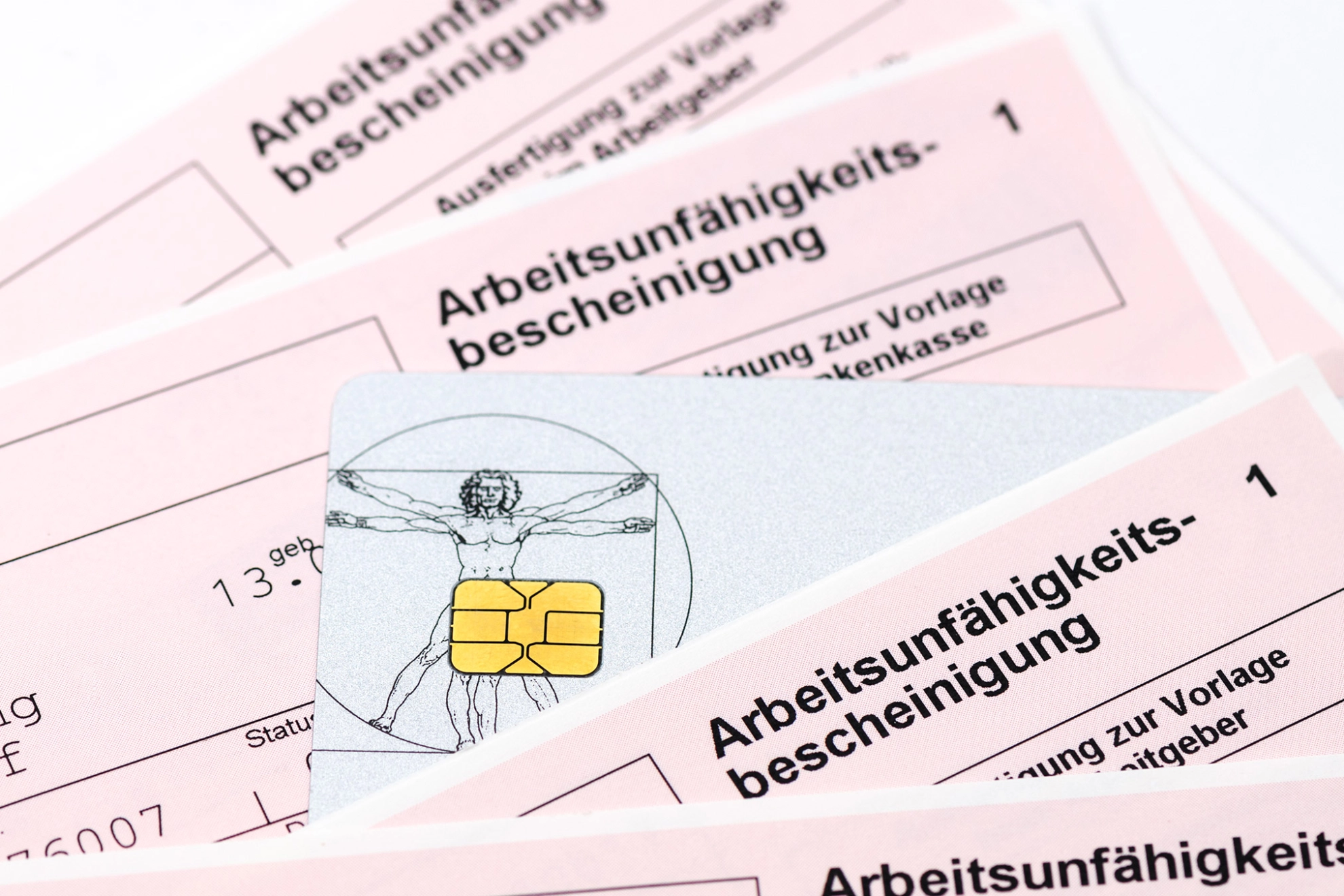
Since January 1, 2016, a doctor certifies the incapacity for work on the certificate of incapacity for work even after six weeks. Insured individuals must send the first page to their health insurance provider. Sick pay is always paid retroactively and up to the date of the last doctor’s visit.
As a rule, the employer informs the health insurance provider when continued pay ends and what the insured person’s salary was.
How long is sick pay available?
For a single illness, sickness benefits can be received for a maximum of 78 weeks within a three-year period. In most cases, the first six weeks are covered by continued pay from the employer; after that, there are 72 weeks during which the health insurance provider provides income support. A new entitlement arises only after the insured person has not been unable to work due to the same illness for at least six months. However, if another illness prevents the insured person from working, a separate three-year period applies to that illness. The new illness, however, must not have already developed during the previous period.
How much money is paid out?
Sick pay amounts to 70 percent of the last salary subject to contributions, but no more than 90 percent of net pay. In 2018, the upper limit per calendar day is 103.25 euros. Contributions to pension, long-term care, and unemployment insurance are deducted from sick pay; no contributions are made toward health insurance. The health insurance provider withholds and remits these deductions.
What does “uninterrupted medical certificate” mean?
To be eligible for sick pay, it is important to ensure that the medical certificate is issued without any gaps. A new medical certificate must be issued by a doctor no later than the business day following the last day of the sick leave. Saturdays do not count as business days. For example, if the medical certificate is valid through Friday, you must see a doctor by Monday at the latest. Under certain circumstances—such as termination by your employer—your entitlement to sick pay may be lost if there are gaps in your medical certification.
Insured individuals should make sure to send the appropriate copy of the sick leave certificate to their health insurance provider within seven days, even while still receiving continued pay from their employer. This is because anyone who is unable to work for a longer period and may need to receive sick pay can only secure their entitlement if this deadline is met.
What happens next when the entitlement ends?
After 78 weeks, the entitlement to sick pay is exhausted, and the health insurance provider stops payments—this is known as “exhaustion of benefits.” In this case, you may be eligible for Unemployment Benefit I if you remain unable to perform your most recent job and cannot work at least 15 hours per week. Furthermore, you must not yet have a reduced earning capacity as defined by the pension insurance system. In addition, all other requirements for Unemployment Benefit I must be met.
What is child sickness benefit?
Insured individuals who are themselves entitled to sick pay can also receive this benefit if they are caring for their sick child at home. Prerequisite: the child must be under twelve years of age and covered by statutory health insurance. As a rule, employers must grant employees time off work for ten days per child per year—up to a maximum of 25 days if there are more than two children. Single parents are entitled to twice as many days. If no salary is paid for this period, child sickness benefits can be claimed. Child sickness benefits are applied for with the health insurance provider using the appropriate confirmation from the pediatrician.
Is there a supplement from the employer?
Some employers pay their employees a supplement to sick pay—this may be stipulated in a collective bargaining agreement, a company agreement, or the terms of employment. The supplement makes up the difference between sick pay and net wages. It’s worth asking.
Note: IG Metall members are represented free of charge by attorneys from DGB Rechtsschutz GmbH in labor and social courts, if necessary. The first point of contact for any issues is your local IG Metall office. More information is available here.