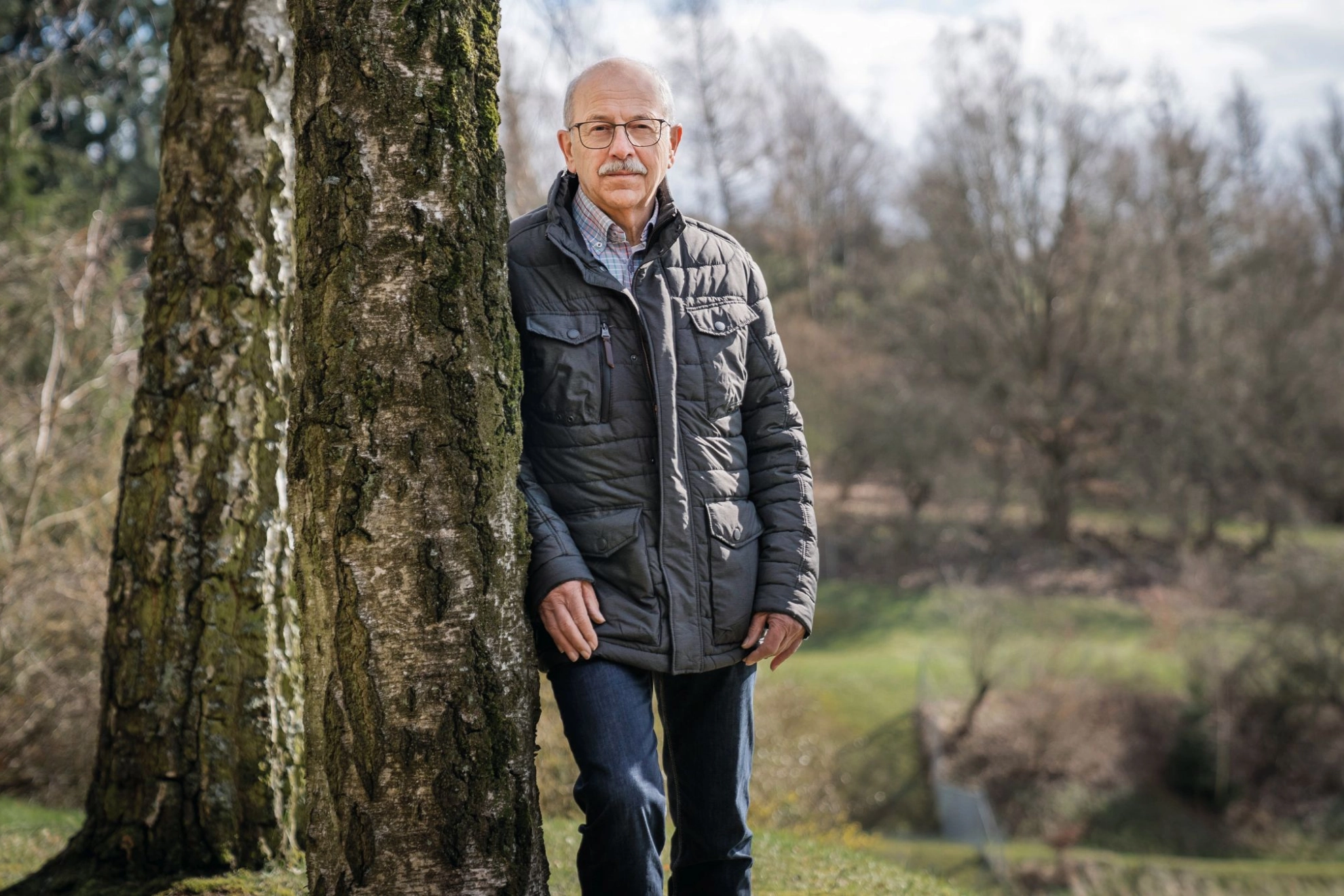
The full extent of the disaster only came to light after the death of a colleague, sometime in the fall of 1995: Peter Bickel’s colleague Gerhard Zöll had died in August. He was only 54 years old. “It all happened so fast,” says Bickel on this gray February day in his living room in Bebra. “Gerhard fell ill in 1995 and passed away that same year. It was a huge shock.”
It was also a shock what the doctors found in the deceased’s lungs: asbestos fibers. It was now clear that Gerhard Zöll had died from asbestos. But it also became clear in the months that followed that he had come into contact with asbestos at his workplace. And Gerhard Zöll wasn’t the only one affected.
Peter Bickel is 72 years old today. In October 2007, doctors diagnosed him with asbestosis. Small and microscopic asbestos fibers had accumulated in his lungs. There, they cause the lung tissue to harden, making it increasingly difficult to breathe and potentially leading to lung cancer. The lung disease is incurable—and has a long history.
In 1966, Peter Bickel, then a young man, started his new job. In the early years, he worked as a machinist in the main workshop. There, employees came into contact with Marinite, a heat-resistant insulating material. They sawed, cut, and sanded the asbestos sheets. They performed all this work without protective gear. They were unaware of the danger. But this wasn’t just true for him and his colleagues—it was true throughout Germany. Although the dangers of asbestos were widely known, they were downplayed for a long time. As early as 1900, scientists had proven its deadly effect on the lungs. But it wasn’t until 1993 that the production and use of asbestos were banned in Germany. Yet even though asbestos hasn’t been used in construction for decades now, the long-term health consequences remain a pressing issue. That’s because asbestos doesn’t reveal its deadly effects until decades later. That’s what makes it so insidious.
For Peter Bickel, the diagnosis came as a shock and marked the beginning of a struggle: as a patient, to have his illness recognized as an occupational disease; and as a member of an asbestosis support group, to advocate for the interests of his colleagues. “This is important. Often, the shock of the diagnosis is compounded by a second one: when the person affected realizes that the path to having an illness recognized as an occupational disease can sometimes be long and arduous.”
Those affected must provide the evidence themselves
Although asbestosis has been listed as an occupational disease since 1936, that doesn’t mean it’s easy for those affected to have their condition officially recognized as such. The main reason is this: In Germany, patients must prove on their own that their illness is attributable to their work—and that the link is both causal and fundamental. But that is anything but simple. “We see colleagues who have to explain exactly which asbestos-containing materials they came into contact with 30 years ago, over what period of time, and to what degree,” says Bickel. Many don’t know this. And they’re unable to investigate it either. “Either because there are no records at the company, or because the company no longer exists.”
In Peter Bickel’s case, at least, there were documents. But even with them, recognition isn’t automatic. “It’s extremely important that those affected seek advice at every stage of the recognition process,” says the 72-year-old. “This way, mistakes can be avoided that, in the worst case, could lead to a loss of entitlements.”
Peter Bickel successfully asserted his claims. Just under four months after his diagnosis, he received a notice from his workers’ compensation association—his asbestosis has been recognized as an occupational disease. The costs for examinations and resulting treatments will be covered. A success, yes. But the decision cannot reverse the diagnosis or make the disease go away. “I have to live with the disease. As best I can.”