Funding:
Sustainable Funding and True Parity
The COVID-19 pandemic has shown how important a well-resourced healthcare system is. The core problem in healthcare policy is the sustainable financing of statutory health insurance (GKV). Expensive legislation without improvements in care has been leading to deficits in the billions for years.
The situation is tense, especially in light of the debate over the “black zero” and the 40-percent cap on social security contributions. There is a risk that costs will be shifted unilaterally onto employees. Employers are once again increasingly calling for the abolition of“parity”—in other words, they want to do away with the equitable financing of the healthcare system.
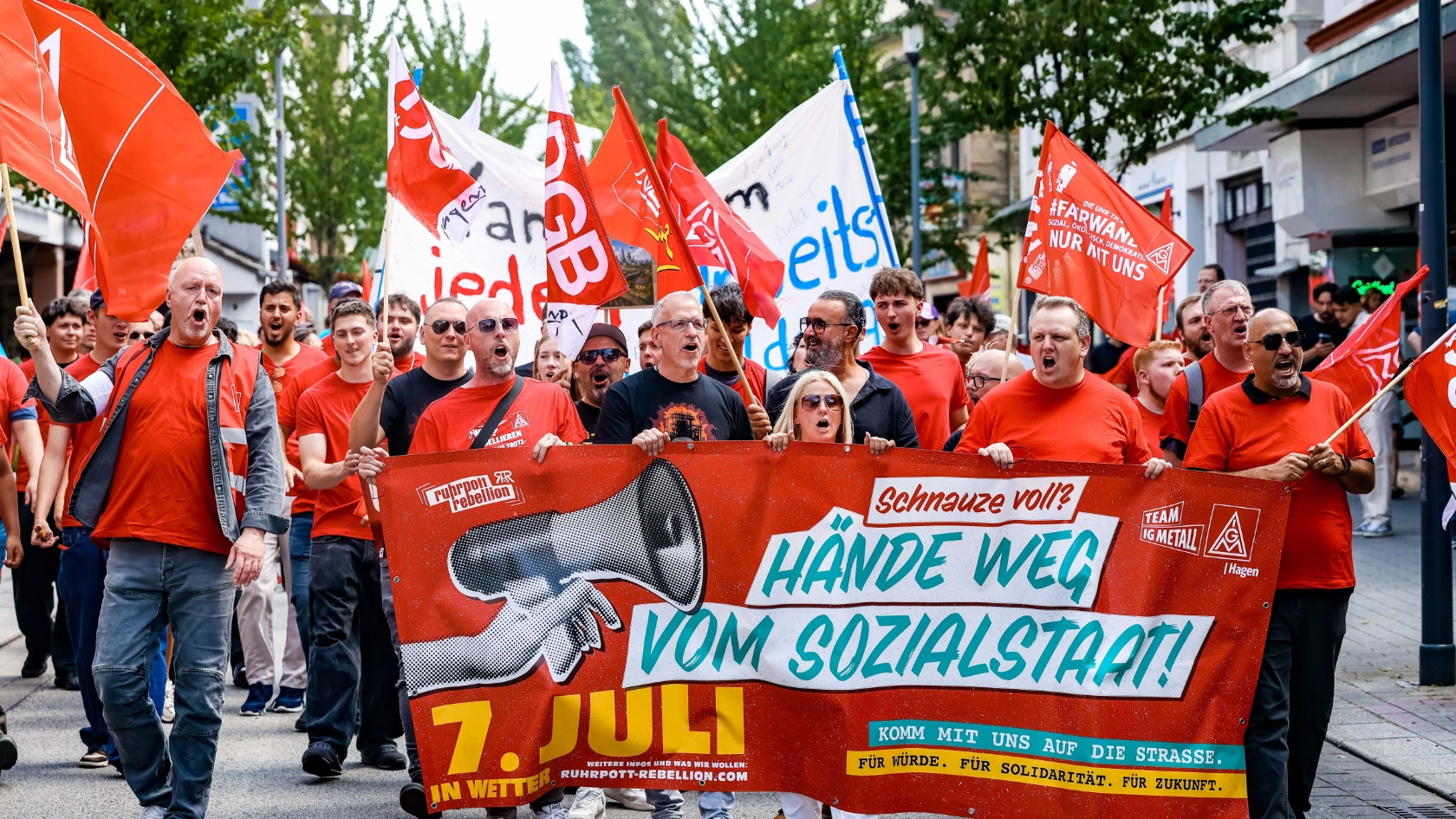
IG Metall opposes this. Employees already bear many of the costs for their health care, in which employers do not participate. IG Metall wants true parity and good health care for all: with improved health benefits and no out-of-pocket payments.
Solidarity-Based Citizens’ Insurance
High-quality health care for all is possible—with a universal health insurance system into which everyone contributes. The division between statutory and private health and long-term care insurance must end. It is outdated and leads to problems of fairness and financing. In the future, everyone should be included in a statutory system.
Raise the Contribution Assessment Ceiling
Health insurance premiums are levied only up to the premium assessment ceiling, which is currently 4,987.50 euros. As a result, those with higher incomes contribute a smaller percentage than those with lower incomes. IG Metall wants to raise this ceiling to the level of the pension insurance system (currently 7,300 euros in western Germany).
Health and Long-Term Care:
What has been proven to be effective should reach patients
IG Metall supports the principle of evidence-based medicine. Medications and treatment methods whose therapeutic benefits have been proven by scientific studies should be covered by statutory health insurance (GKV). Free of copayments and additional charges.
Comprehensive long-term care insurance instead of partial coverage
Inpatient long-term care poses a risk of poverty for many. Monthly payments to nursing homes are barely affordable even with a good pension. As a result, about one-third of all people requiring inpatient long-term care receive social assistance. From IG Metall’s perspective, this situation cannot continue. Our demand: A universal health insurance system for long-term care that includes everyone and fully covers all long-term care services.
Quality Matters: Restructuring the Hospital Landscape
Currently, neither the quality of treatment nor a region’s medical needs are the priority; instead, every hospital tries to maximize its revenue. Instead of “Whoever can, may,” the guiding principle must be: What is needed locally? How do we achieve the highest possible quality?
Focus on Patients
The much-vaunted approach of communicative and empathetic medicine is rarely found, yet it is the be-all and end-all of good treatment. What is needed is a new culture of care based on listening, assessing the overall situation, providing clear information, and mutual respect. Health insurance companies can also play their part, for example by providing clear information.
Social Self-Governance:
Creating Closer Ties with Insured Persons
The trend toward larger health insurance companies goes hand in hand with a loss of proximity to the insured. IG Metall advocates for structures that bring the insured closer to the system, such as trusted representatives or regional advisory boards: short lines of communication and local points of contact!
Expanding a care-oriented approach
Being closer to insured members and their problems also means being closer to the delivery of care. IG Metall’s self-governing representatives agree on priority issues and work specifically to improve care. Example: Health insurance providers’ sick pay case management.