No one can really object to this plan: Our welfare state is to become “fairer, simpler, and more socially oriented.” That is what the responsible minister, Bärbel Bas (SPD), has announced. Her goal: “Less paperwork, simpler applications, faster decisions, and more time for people.”
To achieve this goal, Bas established a commission, which has now presented its final report .
The report contains numerous proposals for a fundamental overhaul of the welfare state:
- Social benefits should be reorganized and, in some cases, bundled. Child allowances and housing subsidies, for example, should be merged with basic income support.
- The “incentive to work” for basic income recipients should be increased, primarily by ensuring that higher additional income is offset less significantly against social benefits. This is intended to make work more rewarding.
- Benefits should be standardized. Others should be paid automatically without the need to apply—for example, child benefits immediately after the birth of a child.
- Finally, the government is set to take a major step forward in digitalization—for example, by establishing a unified digital infrastructure for all social benefits or by creating a new digital social services portal that provides access to all social benefits.
Caution is advised
From IG Metall’s perspective, the plan to restructure the welfare state is promising. For Christiane Benner, President of IG Metall, it contains numerous proposals that are fundamentally sound and welcome: “Simplifying the welfare state without cutting back on it. These are exactly the kinds of signals of progress we need right now!”
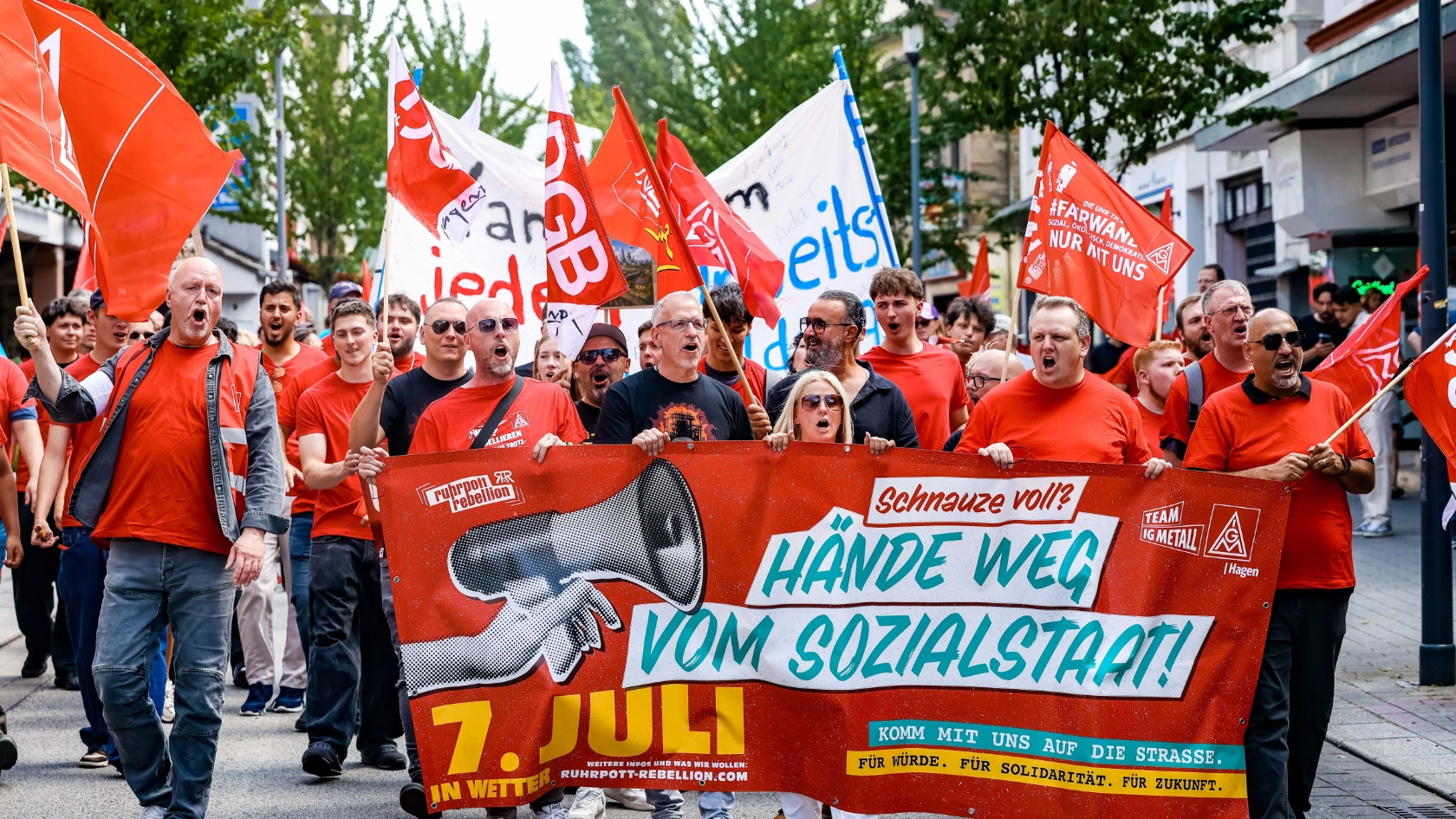
This already highlights the crux of the project: If social benefits are calculated on a flat-rate basis, if exemption thresholds are lowered, or if earned income is factored in more heavily, then the bottom line could very well result in cuts. It would amount to a backdoor dismantling of the welfare state .
Federal Labor Minister Bas has already ruled this out: The “level of social protection” will be maintained. But given tight budgets, it’s worth taking a closer look. The reform plan includes strict funding caveats. Furthermore, the parties involved have differing interests in some areas: The federal government, the states, and local municipalities will fight hard over jurisdiction and the distribution of costs.
“There is a risk of cuts,” says Hans-Jürgen Urban, social affairs director at IG Metall. “We will closely monitor the implementation of the proposals and examine their distributional effects.” Less bureaucracy must under no circumstances mean fewer benefits. “That is our red line.”
What happens next?
The planned welfare state reform will take several years. The federal government is now set to review the expert commission’s proposals. Afterward, the relevant ministries are to draw up implementation timelines as quickly as possible. The goal is “to begin the fundamental work during this legislative term and to present the first draft bills for implementation.”
Specifically, the plan is as follows: For proposals that can be implemented more quickly, legislation is to be finalized by mid-2027 (e.g., automatic payment of child benefits).
More complex projects are to be completed by the end of 2027, if possible (e.g., bundling of social benefits). A separate expert panel will be established to address the digitization of social administration.
For IG Metall, one thing is clear: simplification and citizen-friendly access to good social protection benefits are worth supporting. Both can help ensure that citizens actually take advantage of their benefits and receive them quickly.
Cuts to social services, on the other hand, are not a model for the future. They would hurt the wrong people and create additional uncertainty in already uncertain times.