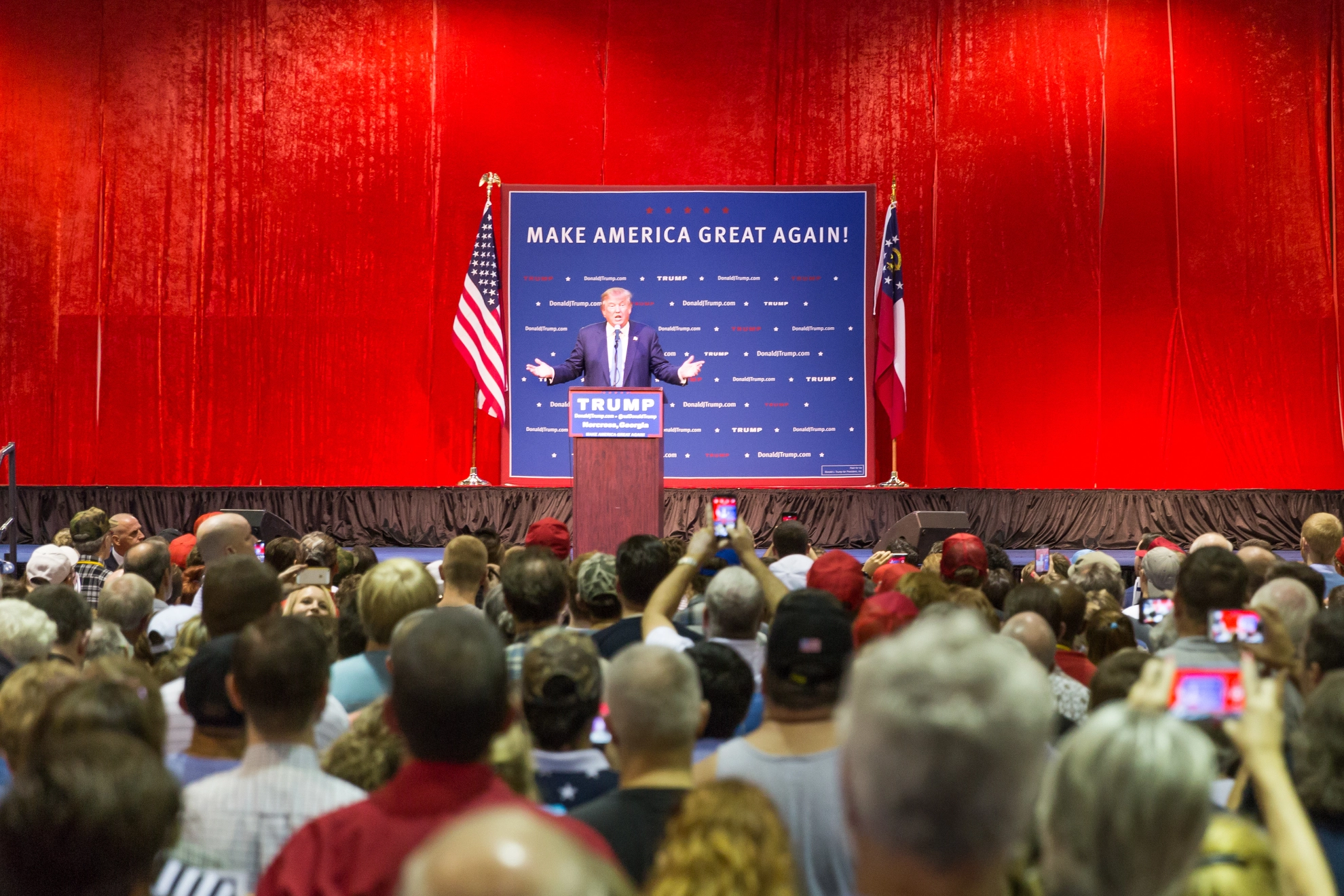
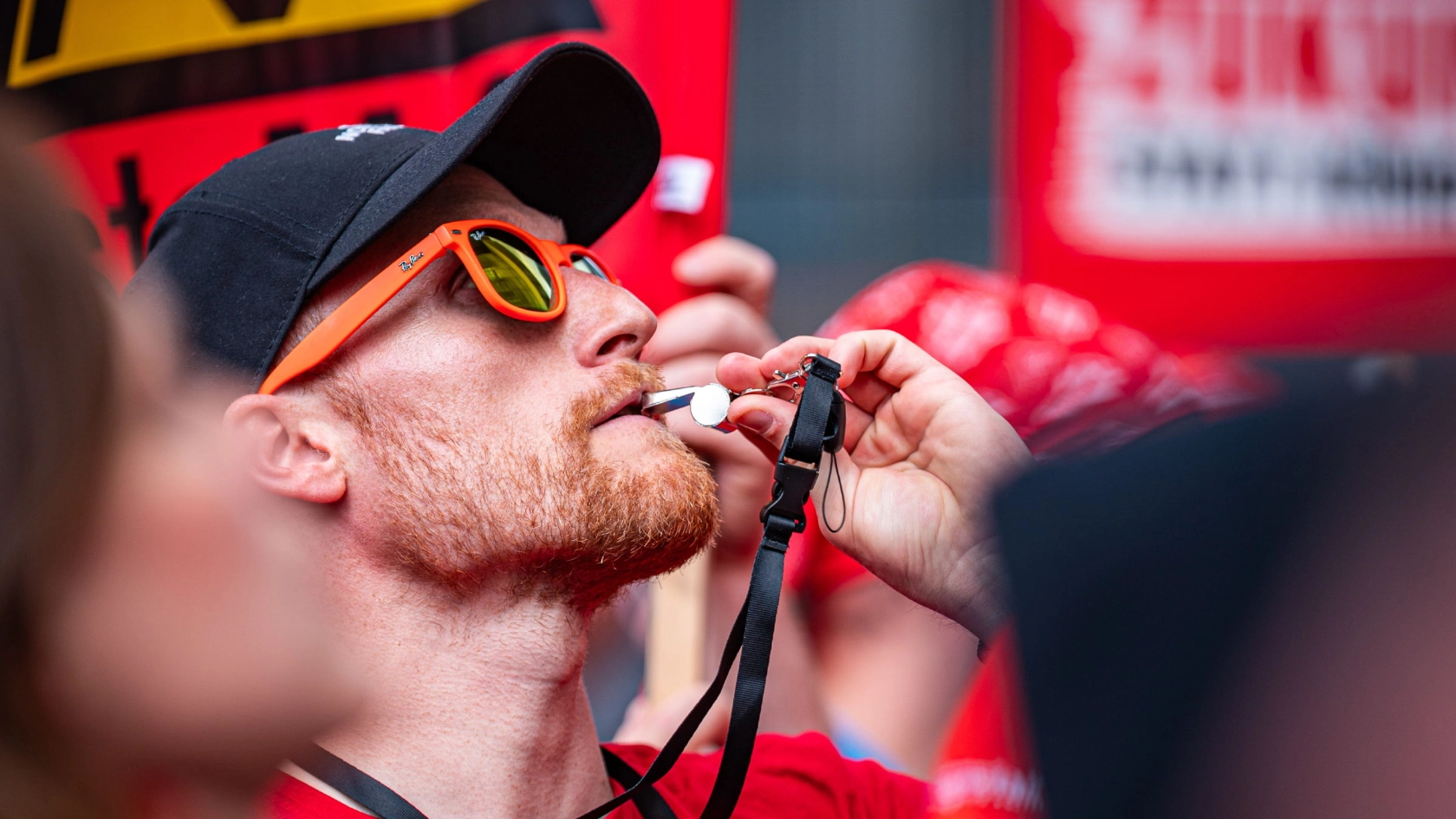
During the election campaign, the majority of U.S. labor unions had supported the Democrats. Many union leaders had warned of the risks posed by another Trump presidency. For example, Shawn Fain, president of the United Auto Workers (UAW), pointedly wore a T-shirt bearing the slogan “Trump is a scab.” The implication was that Trump is a strike-breaker, a reference to a statement Trump had made in which he had spoken out in favor of firing striking auto workers.
Trump has been in office since Monday. Under the new president, the cards are being reshuffled.
- On the one hand, labor unions welcome Trump’s announcements regarding the creation of industrial jobs in the U.S. Many hope that the tariffs on China and Mexico will bring back jobs that have been outsourced.
- On the other hand, unions have serious concerns about the general direction of Trump’s administration. It is likely that changes to the National Labor Relations Board will undermine worker protections.
- Union organizing will become even more difficult; many workers will no longer receive overtime pay; health insurance will become more expensive; and occupational safety and health protections will be weakened.
Elon Musk’s Major Influence
A key player in this new political landscape is the notorious union opponent Elon Musk. He supported Trump with the largest single campaign donation during the election. Musk and Trump maintain a strategic alliance. Both are known for their blunt rhetoric. They take a critical—if not outright hostile—stance toward unions, albeit for different reasons:
- Musk has repeatedly described unions as unnecessary in the past. The Tesla CEO has been criticized on multiple occasions for actively obstructing union organizing efforts at his plants—a practice known as “union busting.”
- Trump, on the other hand, likes to portray himself as a “president of the working class,” especially among his working-class base. He presents himself as an advocate for the common people and courts them rhetorically with his “America First” speeches.
- However, his policies often reflect an anti-union stance. During his first term, Trump supported anti-worker measures that strengthened corporations and employers, for example through deregulation.
- Trump’s business empire spans hotels, golf courses, and real estate development. Employees at his hotel in Las Vegas have complained about low wages and poor working conditions.
Trump advised unionized automakers to relocate their factories to the South to reduce labor costs. He admires Elon Musk for his rigorous approach to managing employees. Trump and Musk focus on individual performance and emphasize personal responsibility. Both tend to side with businesses and view unions as potential obstacles to their respective goals. Unions are seen as potentially hindering innovation (Musk) or economic growth (Trump).
Trump aims to weaken unions and workers’ rights, promote business-friendly policies, and favor employers. In summary, unions remain highly vigilant against any political measures that could undermine workers’ rights.
Trump’s Economic and Trade Policies
The new U.S. president wants to completely overhaul many areas.
- Deregulation is expected in various areas, such as climate protection, labor standards, and occupational safety and health.
- The announced mass deportations could affect approximately 11 million immigrants. For the many workers without valid work permits, the situation has deteriorated dramatically.
- Trump aims to reduce dependence on other countries and trade deficits, strengthen national security, and create more industrial jobs.
- U.S. dominance in the energy sector is to be expanded. The expansion of fossil fuels, oil, gas, and coal production, as well as fracking, is to be increased, thereby making more energy available at lower costs. The goal is energy security.
- Support for electric mobility and renewable energy will likely be scaled back—a move that Tesla CEO Musk also supports, as he, as an already established producer of electric cars, would benefit relative to other automakers.
Above all, however, the tariffs that Trump has made a priority will put pressure on European and Chinese exporters. During the campaign, Trump announced the following tariffs:
- 10 to 20 percent on all imports
- 10 to 60 percent on imports from China
- 25 percent on imports from Mexico and Canada
- 100 percent on countries that seek to replace the U.S. dollar as the reserve currency
What does this mean for German industry?
The consequences for German industry vary by sector and location. There will be winners and losers. The tariffs announced by U.S. President Trump could threaten thousands of jobs in Germany, as many jobs here depend on exports to the U.S. The announced punitive tariffs on imports into the U.S. threaten to cause serious economic damage in Germany. According to calculations by the Institute for Macroeconomics and Economic Research (IMK), 300,000 jobs could be lost in Germany if Trump implements his tariff plans and other countries respond with retaliatory tariffs.
Affected, for example, are companies with a strong presence in Mexico, from where they supply the North American market. 80 percent of all cars produced in Mexico are exported to the U.S. These companies are thus following the slogan “Build where you sell,” and more and more German automakers have opened factories in Mexico to take advantage of the labor force and proximity to the U.S. German automakers and suppliers are also well represented in Mexico, from where they export to the U.S. (and elsewhere). The announced 25 percent tariffs are to be imposed on every cross-border shipment between the U.S. and Mexico during the production process and would affect companies such as VW and its suppliers in Mexico. In 2024, VW exported approximately 16,000 vehicles from the EU to the U.S., but nearly 242,000 from Mexico. Trump’s return to the presidency will therefore have significant consequences for Germany’s economy and German workers as well.