When Hasan Özen received the news in the fall of 1963 that he would be going to Germany to work, he faced a problem. He wanted to prepare himself for this big step into the unknown. But how do you prepare for a journey into the unknown?
“I lived in a village; I knew nothing about Germany,” recalls the metalworker, who is now 82 years old. “So I bought a dictionary. I thought: First, I have to learn the language.”
The train ride from Istanbul to Germany takes three days and two nights. During that time, Hasan memorizes his first 100 German words.
Hasan still remembers his arrival in Duisburg vividly: People were crowding the train platform. Strangers offered him cans of Coke and handed him flowers. At a restaurant, there were half chickens for him and the other new arrivals. “Germany is a beautiful country,” he thought at the time. But he soon experienced the dark side of his new life as a “guest worker,” as they were called back then.
60 men in one room
In his first living quarters, he shared a room with 60 other men. He had hardly any opportunity to learn German. His first paycheck was 200 Deutschmarks a month. “Of that, 50 marks went toward rent and 60 marks toward food,” he says. “I sent the rest home to my family.”
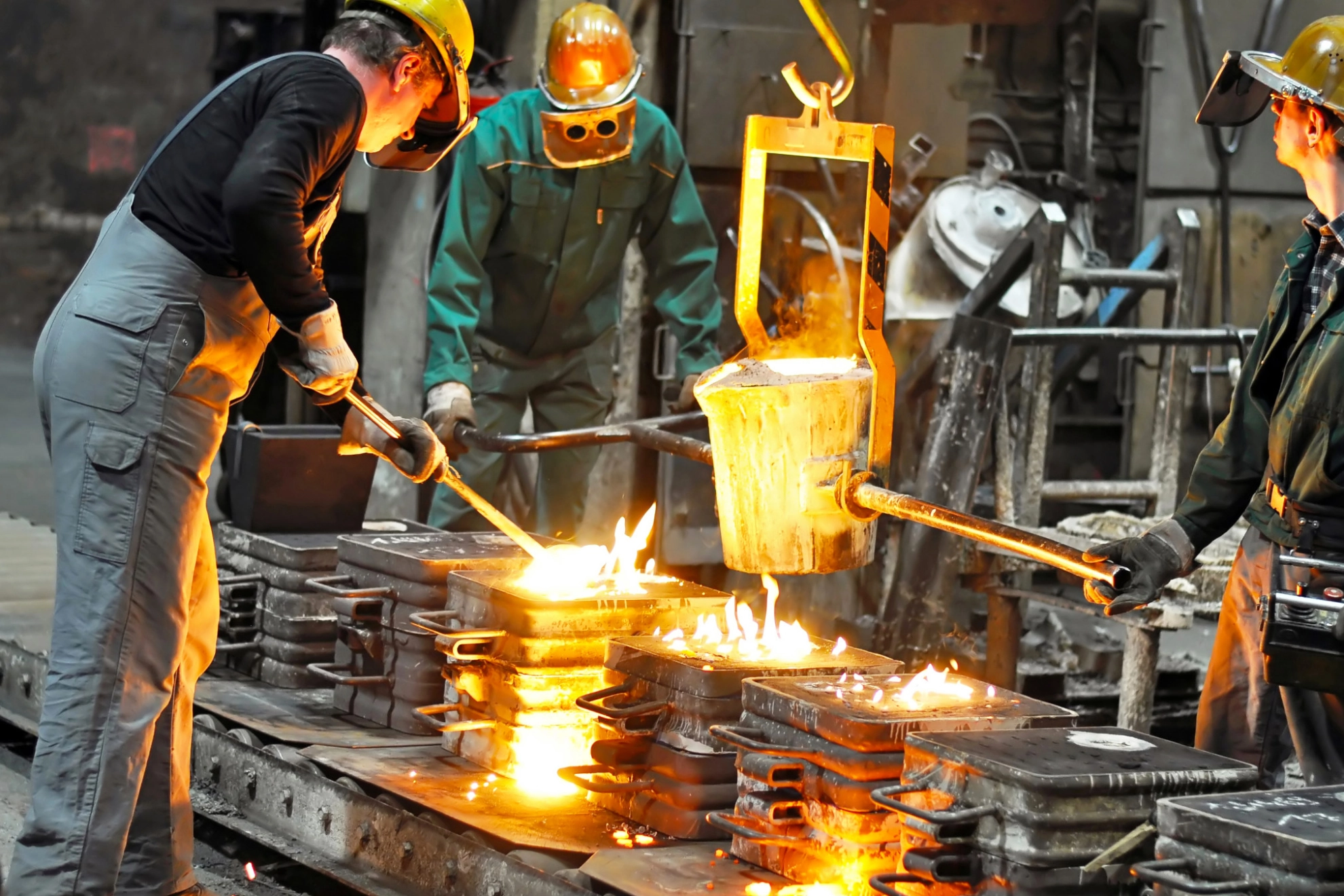
The average wage for workers at the time was around 700 marks a month. To earn more, Hasan changed companies several times. Eventually, he ended up at the HKM steel mill in southern Duisburg. There, he worked as a yardman until he retired.
Hasan Özen is one of about 14 million people who came to Germany as so-called guest workers.
In 1955, the Federal Republic of Germany signed its first recruitment agreement with Italy. The country, in the midst of its economic miracle, was short on workers. Agreements followed with Spain, Greece, Turkey, Morocco, South Korea, Portugal, Tunisia, and Yugoslavia.
The term “guest worker” remains ambiguous—and inaccurate—to this day. This is true simply because, while around 11 million of them returned to their home countries, many also remained in Germany. They started families or brought their children over.
“Migrants did not come as ‘guests in our home.’ They helped build that home,” says Christiane Benner, vice chair of IG Metall. “As drywall installers, they laid the foundation; as steelworkers, they made the support beams; and as textile workers, they manufactured the upholstered furniture. And they assembled the car parked in front of the house.”
Many businesses would likely no longer exist today without the work of “guest workers.” They were rarely thanked for it. Many of them never felt at home. Discrimination when looking for jobs and housing was part of everyday life—and still is today.
Opportunity for Participation
Among the few places where they could find a sense of belonging were the workplace and the unions. A recent study by IG Metall shows that, for a long time, migrants had no other place where they could participate in democratic life. Those who came to Germany at a young age were able to experience a sense of community in the unions. Nearly all respondents in the study describe IG Metall as a political home or a community of solidarity. In the industries covered by IG Metall, more than half of foreign workers joined the union by 1975.
Today, people with a migration background are represented in IG Metall at the same rate as in the general population: Nearly one in four members has a migration background.
The picture is even more striking when it comes to works council members, shop stewards, and representatives for employees with severe disabilities. Metalworkers with a migration background are particularly well-represented in these roles: For example, around 34 percent of IG Metall shop stewards have a migration background. Among works council members, the figure is 25 percent.
Not Always the Early Shift
Hasan Özen, too, has spent his entire life advocating for the interests of his colleagues. He took on his first role as a representative shortly after his arrival: Many of his foreign colleagues, he explains, were working exclusively on the early shift at the time, where they earned less. Hasan approached the works council and secured a more equitable shift schedule. This marked the beginning of his lifelong commitment to the union.
However, he could not become a works council member until after 1972. At that time, the federal government reformed the Works Constitution Act: Employees without a German passport were granted the right to stand for election, meaning they could run for the works council. Hasan took advantage of this new right immediately.
Mixed Feelings
Five decades later, the grandchildren of the first generation of guest workers look back on their grandparents’ lives with mixed feelings.
“I’ll never forget what my grandpa did for us,” says Burcu Sicilia, whose grandfather also came to Germany from Turkey. “If he hadn’t had the courage to pursue the ‘German Dream,’ I wouldn’t be here today.”
The metalworker, born in 1991, also sees the other side of the story: she has hardly any memories of her grandfather herself. He died when she was four years old. “My grandpa worked in the wire industry under very harsh conditions—lots of dirt, no occupational safety,” she says. “He toiled his whole life; he died shortly after retiring.”
Burcu completed a dual degree program at Volkswagen in Wolfsburg. She has worked in purchasing and is active on the works council. Her professional life now has little in common with her grandfather’s. But her family’s migration history still plays a role for her. At school, a teacher once told her she couldn’t get an A in German because she wasn’t German.
People with a history of migration still experience this feeling of not being “normal” to this day. It’s still newsworthy when Federal President Frank-Walter Steinmeier publicly thanks former guest workers and says, “You have helped build this country for decades and continue to do so today. This country owes you a great deal.”
Hasan Özen, a first-generation “guest worker,” hopes that someday this will no longer need to be emphasized—that it will simply be taken for granted.