The pressure was intense. It stemmed from the fact that, at Airbus in Hamburg, the existing office structures no longer met the requirements for collaboration and flexibility—and at the same time, the appeal of working on-site was waning. “Traditional office environments had long since ceased to fit the flexible reality,” says Works Council member Malte Delventhal. “At the same time, the limited space at the Hamburg site forced us to consider new space concepts to ensure long-term growth and employment. We had to take action.”
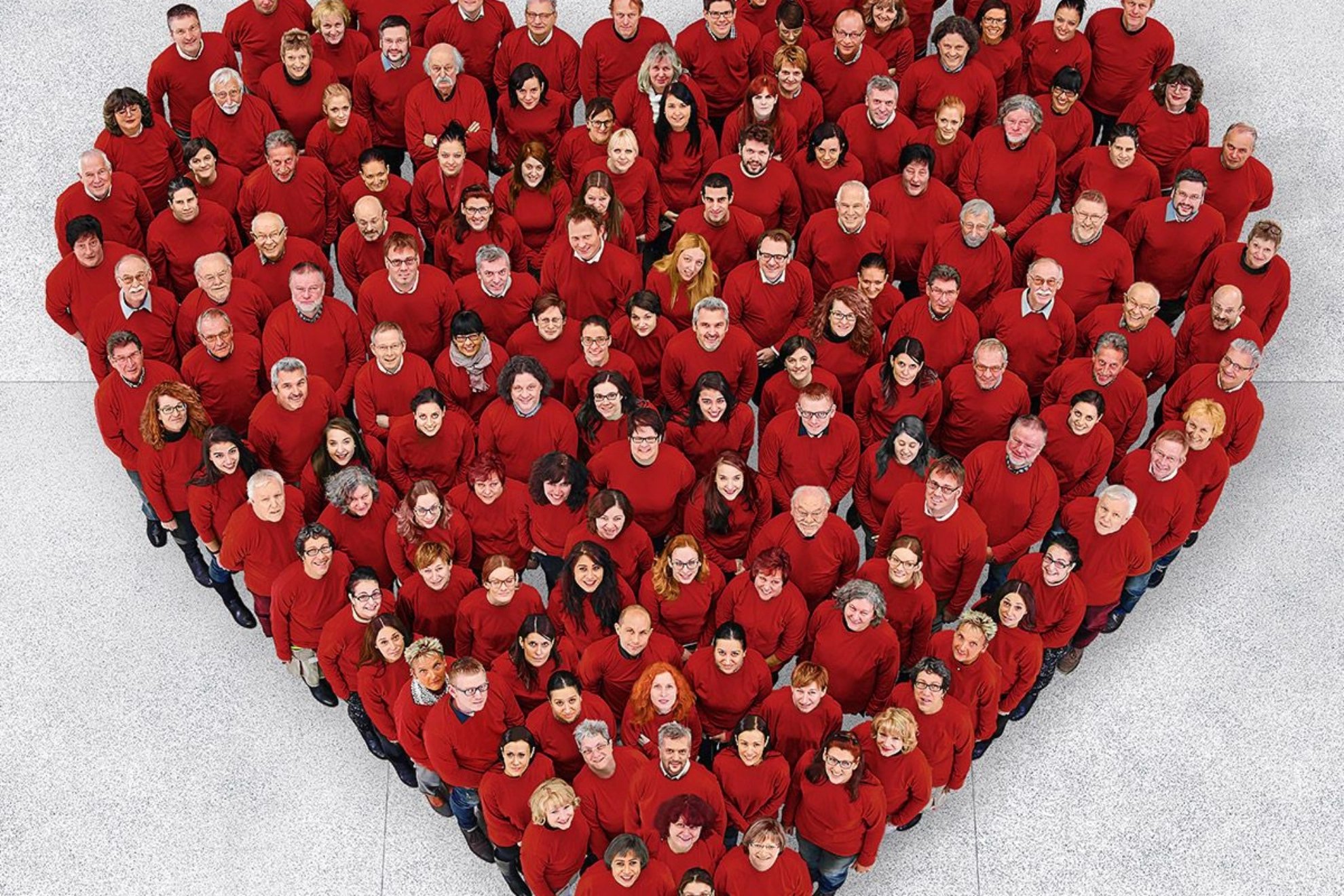
Designing good workplaces together: The Airbus Hamburg works council.
They took action. They launched a joint learning project with the employer to shape the transition from traditional office environments to a needs-based, hybrid work environment. They created a project to develop, test, and support methods, processes, and tools for a new work environment and hybrid work, which is now helping them shape the future of the site.
Replacing Prejudice with Facts
It was not an easy journey. “Since the topic of desk sharing was highly polarizing within the works council and among the workforce, we decided to enlist scientific support from Fraunhofer IAO,” says works council member Frank Arndt. “And then we got started.”
Over the course of twelve months, around 280 colleagues from a wide variety of Airbus departments participated in the project. “Using time-series surveys and methodological evaluations, we tested mobile work under real-world conditions,” says works council member and project participant Stefan Poppendieck. The goal was to replace preconceptions with facts and to develop a position that doesn’t defend the past but actively shapes the working world of tomorrow.
Social Partnership on Equal Footing
This was achieved.
“We transformed the works council from a ‘skeptic’ into a ‘co-creator’ by focusing on optimal working conditions, self-organization, and health,” says Malte Delventhal. The result is a solid foundation for future company agreements that ensure both flexibility and the site’s attractiveness. Frank Arndt emphasizes: “The project has fundamentally transformed the culture of co-determination at the site: away from ideological campaigns and toward a fact-based social partnership on equal footing.”