Automatic translation
This article has been translated automatically using computer technology. While we strive for accuracy, some wording or details may differ from those in the original article.
This translation was not manually reviewed. For important facts, quotations or legally sensitive information, please consult the German original. Individual selections, images, embedded media or technical terms may have been translated differently or incompletely.

Glossary Information about motion deliberation

What does “ABK” mean? Who can move to close a debate? Who serves on the Presidium? How are initiative motions filed? Answers to these and other questions can be found in our glossary on motion deliberation.
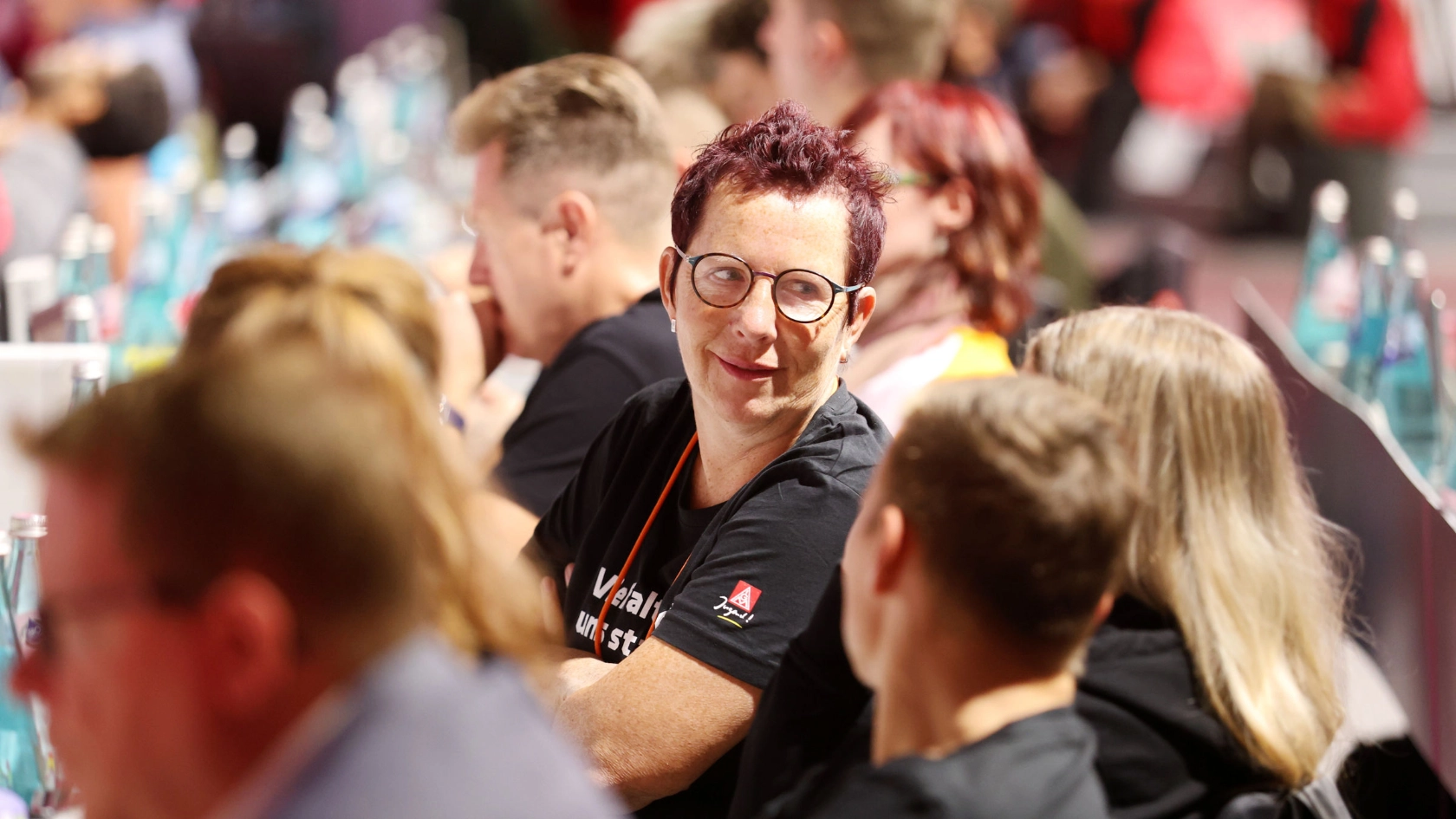
Abstimmung auf dem Gewerkschaftstag 2019


Glossary for the Review of Motions


A


Voting Procedures

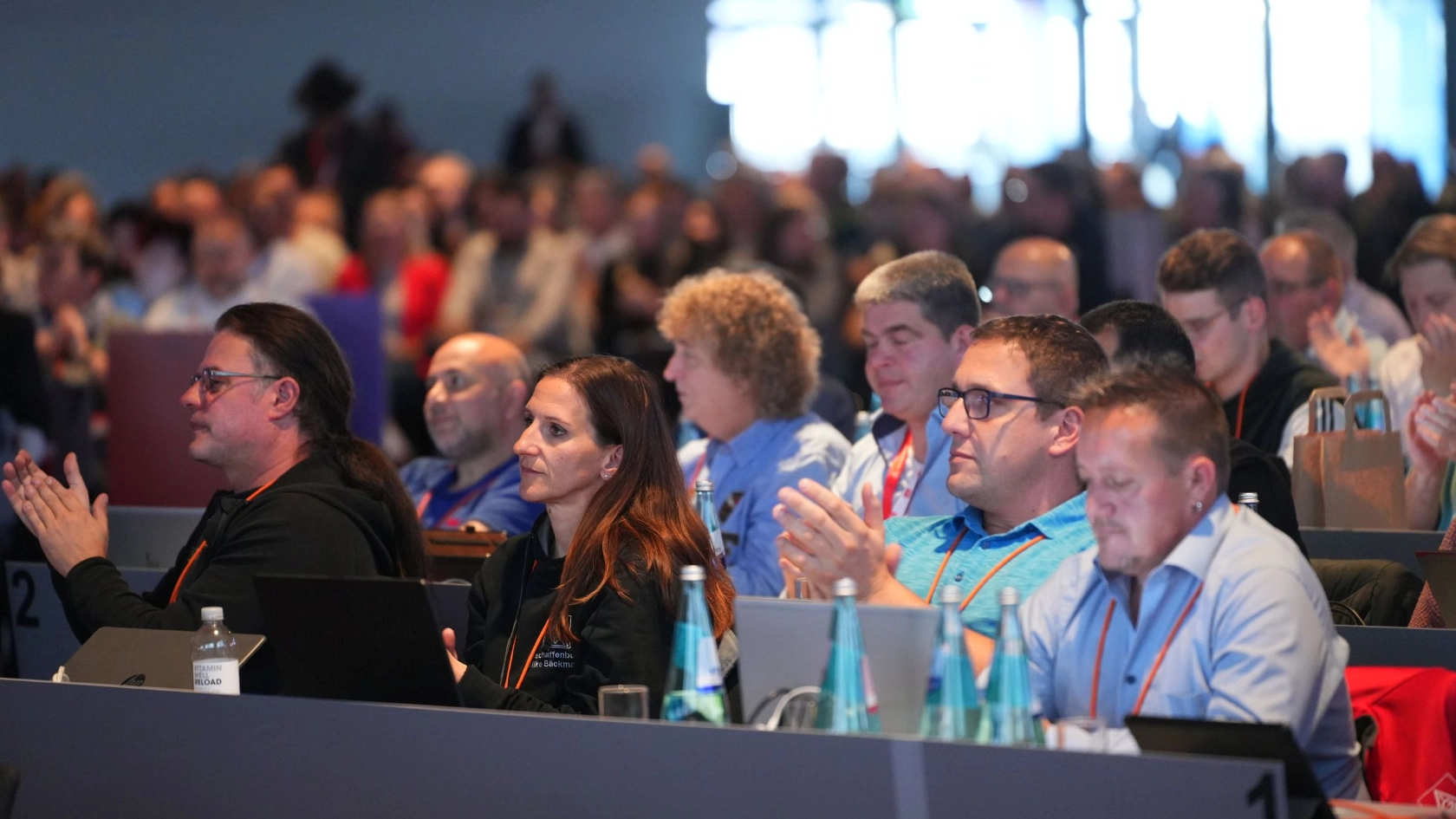
Motions are voted on at the union convention in the order proposed by the Motion Review or Bylaws Review Committee. All delegates are therefore required to cast their votes multiple times throughout the union convention. This is almost always done using voting cards. If this does not produce a clear result, the vote can be repeated using the OpenSlides web application. Elections for individual positions are planned from the outset to be conducted via OpenSlides, as the IG Metall bylaws stipulate that they be held as secret ballots. (OpenSlides is the electronic web application used to manage and display motions.)

Motion Review Committee (ABK)

The Motion Deliberation Committee consists of one representative from each district. Even before the union convention, it has already worked out the order of deliberation and the recommended resolutions for the substantive motions.

Motions to Close Debate

If a debate becomes so lengthy that it jeopardizes the rest of the schedule, a motion to close the debate may be made. For motions to close the debate that are put to a vote, one person entitled to speak may speak in favor and one person entitled to speak may speak against. Only those not participating in the debate may make this motion.


B


Recommendations for Resolutions

The recommendations on motions concerning the bylaws are drafted by the Bylaws Advisory Committee (SBK). For motions concerning the bylaws, the only recommended resolutions are “approval” and “rejection.” In the case of motions concerning the bylaws, the vote is not on the SBK’s recommendation but directly on the motion itself. The recommendations for resolutions on substantive motions are drafted by the Motion Advisory Committee (ABK). For substantive motions, a vote is first taken on the ABK’s recommendation. If the ABK’s recommendation is rejected by a majority of the delegates, a vote is taken on the original version of the motion.


E


Amendments

Amendment motions may be submitted regarding the main motions and must bear the signature of at least one-tenth of the delegates eligible to vote. The deadline for submitting amendment motions is October 22, 2023, at 7:00 p.m.


G


Rules of Procedure

The Rules of Procedure govern the proceedings at IG Metall meetings. This includes, for
, for example, who is even allowed to attend the union convention or how elections are conducted.

Motion of Principle

The policy resolution outlines the general social, workplace, collective bargaining, and organizational policy frameworks and challenges within which we operate as IG Metall. It identifies political challenges, describes necessary actions and goals, and thus serves as a guideline for IG Metall’s work until the next union convention.


I


Initiative motions

Initiative motions submitted during the union convention and intended for discussion must be signed by at least one-tenth of the delegates eligible to vote. They may only be admitted for consideration if they are included on the agenda. In addition, a specific, current event justifying the motion must have occurred between the deadline for submitting motions (May 1, 2023) and the Union Congress. The deadline for submitting initiative motions is set at the Union Congress. This is usually late Monday afternoon. Initiative motions concerning the IG Metall bylaws are not permitted.


K


Constitution

The opening session marks the formal commencement of the union convention. Have all delegates been duly convened? Does the union convention have a quorum? If so, the proceedings continue with the adoption of the agenda and the rules of procedure. The Presidium is elected and the committees are confirmed. After that, the substantive business can begin.


L


Key Motions

The Executive Board’s key motions address the main topics of debate in the delegate assemblies. The issues raised in these key motions are of central political importance and practical relevance for all levels of IG Metall. The key motions focus on the strategic implementation of specific issues. They define concrete goals and formulate tasks that are to be addressed as a priority in the workplaces, in workplace and collective bargaining policy, and in social policy. Following the union convention, the sum of all key motions forms the basis for a concrete and binding work program for the entire organization.


M


Mandate Review Committee (MPK)

As its name suggests, the Commission verifies the validity of the mandates: Have all delegates been members for at least 3 years at the time of their election? Or, in the case of delegates under 27 years of age: Have they been members for at least 1 year? The MPK conducts this verification to ensure everything complies with the bylaws well before the Congress. Its duties are described in § 20 of thebylaws.
In addition, the Commission acts as the Election Commission at the union convention and is responsible for the necessary vote counts during ballots and elections.


P


Presidium/Chair of the Assembly

The Presidium of the Union Congress guides the delegates through the proceedings and provides assistance with important decisions. The members of the Presidium are nominated by the districts. The First and Second Chairs of IG Metall are also members of the Presidium.


R


Speaking Time

All delegates may request the floor to contribute to debates. Speaking time is limited to a maximum of five minutes per speaker. It may be shortened upon request if the majority of delegates so decide.


S


Bylaws

This is the “Constitution” of IG Metall, its legal framework, which contains all essential fundamental decisions. Among other things, it describes the structure of IG Metall, its tasks, and its goals. Guidelines and regulations, such as the rules of procedure, elaborate on thebylawsand explain their practical implementation. Their content is limited to the implementation of the guiding principles set forth in the bylaws and must not contradict the bylaws.

Bylaws Review Committee (SBK)

The Statutes Advisory Commission consists of one representative (elected delegate) from each district. Prior to the Union Congress, it has developed recommendations for the motions regarding the Statutes. Before each vote, a member of the Statutes Advisory Commission will announce the recommended resolution.


W


Election Regulations

The Election Regulations govern the announcement and procedures for elections within IG Metall.

Request to Speak

The Presidium coordinates the list of speakers. It first opens the floor for discussion on a specific issue. Anyone who then wishes to speak must notify the Presidium. This is done electronically via OpenSlides. Speaking time is limited to 5 minutes.


2023 Union Convention – Latest Posts

Subscribe to the newsletter