Automatic translation
This article has been translated automatically using computer technology. While we strive for accuracy, some wording or details may differ from those in the original article.
This translation was not manually reviewed. For important facts, quotations or legally sensitive information, please consult the German original. Individual selections, images, embedded media or technical terms may have been translated differently or incompletely.

Dual Study Programs During the COVID-19 Pandemic What dual-track students should know now

The next semester is about to begin for dual-track students. COVID-19 and measures to prevent its spread continue to shape daily life at work and at the university. We’re providing tips and answers to the most pressing questions.

There are two types of dual study programs:

  • Dual study program integrated with vocational training: This combines a degree program with vocational training. You’ll earn two degrees: a bachelor’s degree from a university and a vocational degree recognized by the IHK (Chamber of Industry and Commerce).
  • Practice-integrated dual study program: In this program, your studies are combined with practical phases at a company. The theoretical training from the university is thus supplemented by practical experience and exercises.

Will I receive BAföG if my first semester hasn’t started yet due to COVID-19?

Students should not be disadvantaged regarding BAföG due to the COVID-19 crisis. This applies in particular to first-semester students. They will continue to receive their BAföG until further notice—even if universities and colleges are closed and/or the start of the semester is delayed.

The decisive factor for BAföG payments is the scheduled date on which the program would have normally begun. Starting from this date, first-semester students will receive their benefits as originally planned.

Please note: If the educational institutionoffers online courses during the closure period, BAföG recipients are required to make use of these offerings to the best of their ability. Discontinuing or failing to participate in an online course will result in the suspension of BAföG funding.
Does the current semester still count as an academic semester and thus toward the standard period of study for BAföG or a scholarship?

It depends on whether the program can continue in the form of online learning opportunities or whether courses and exams are actually canceled. If the program continues as an online program, it can be assumed that the semester will be recognized as an academic semester, provided that exams take place and academic performance can be demonstrated at the end of the semester.

If the university remains closed due to the pandemic and no alternative learning options are available, the closure period will be treated as a period without classes or lectures. BAföG payments will continue until further notice. If online courses are offered, participation is mandatory.

What are the rules for working from home?

The following also applies to dual-track students: There is no legal right to work from home. Nor is there a legal obligation to work from home. The decisive factor is whether there are provisions regarding this in the (employment) contract, a company agreement, or a collective bargaining agreement.

If there are no legally valid agreements, working from home cannot be unilaterally mandated or required. If working from home is agreed upon and mandated, the employer is responsible for setting up the home office and, in principle, also bears the associated costs.

The employer cannot simply require employees to maintain their ability to work using their own computer equipment. An agreement with the employee is necessary for this. Furthermore, both the introduction of working from home and the implementation of the “bring your own device” policy require an agreement with the works council.

Is there short-time work for dual-track students?

As a general rule, dual-track students, apprentices, and training staff must be excluded from short-time work. The company is obligated to exhaust all means to continue ensuring training and dual-track studies. In this case, compensation must also continue to be paid in full. The primary concern here is ensuring the quality of training and studies.

Only in extreme, exceptional situations may dual-track students and apprentices be included in short-time work. Only then, at the earliest, does the entitlement to continued payment of the training allowance under Section 19(2) of the Vocational Training Act (BBiG) cease. In IG Metall’s view, dual-track students are entitled to short-time work benefits if all options for continuing their training have been exhausted.

Even if operations at the company have been largely shut down, this does not necessarily mean that dual study programs or vocational training must be suspended. Short-time work at the company therefore by no means automatically entitles the student to an interruption of their vocational training.

What happens if short-time work overlaps with the practical training phases at the company?

As a rule, dual students retain their entitlement to remuneration for at least six weeks, even if they are not working at the company. The contracts of dual students typically include a provision stating that they have a contractual right to continued payment of remuneration if the practical training phases do not take place for reasons within the company’s sphere of risk.

Could COVID-19 jeopardize my permanent hire?

An extension of the duration of studies or training generally has no effect on subsequent hiring by the company. However, whether a legal right to be hired exists depends on the applicable regulations, in particular the contracts between dual students and companies.

The crisis caused by the coronavirus must not jeopardize the hiring of trainees and dual-track students. We must ensure that trainees or dual-track students are not denied permanent employment because final exams are postponed, the training period is extended, or the company’s situation allegedly does not permit it.

Gaining professional experience immediately following training is a key factor in preventing prolonged unemployment at the start of one’s career. In this context, particular attention must be paid to compliance with our collective bargaining agreements and, in the case of youth and trainee representatives, to the special protections provided under Section 78a of the Works Constitution Act (BetrVG).

The university or company is closed. What does that mean for my contract?

If a plant closure results in training content not being delivered properly and therefore jeopardizes the success of the training, the following applies: In dual degree programs that integrate vocational training, the trainee should apply for an extension of the training period to make up for the missed training content.

If the plant closure prevents practical training phases required by higher education law from being carried out as scheduled, the matter must be clarified with the university. The extent to which this is relevant to the degree program and how it can be compensated for is determined by the regulations of higher education law. The same applies in the event that the university itself cannot guarantee academic instruction during a specific period.

Who pays for additional costs associated with studying from home?

Existing laws remain in effect even during times of crisis. For dual-track students whose training is integrated into their studies, this means that the employer must cover the costs of specialized literature, as well as tools and materials required for on-the-job training.

Therefore, instructional materials required exclusively for university-level instruction do not have to be provided by the training company but must continue to be financed from the student’s own resources.

However, many companies have company agreements regarding “free educational materials.” It is therefore worth contacting the Youth and Apprentice Representative (JAV) or the works council to explore company-specific solutions. Often, the coverage of costs for study materials is stipulated in employment contracts. Accordingly, it is also worth reviewing your personal contract here.


Landkarte mitmarkern für Geschäftsstellen
IG Metall on Site
Advice, Service, Assistance

Any questions? Contact your local IG Metall office for more information.

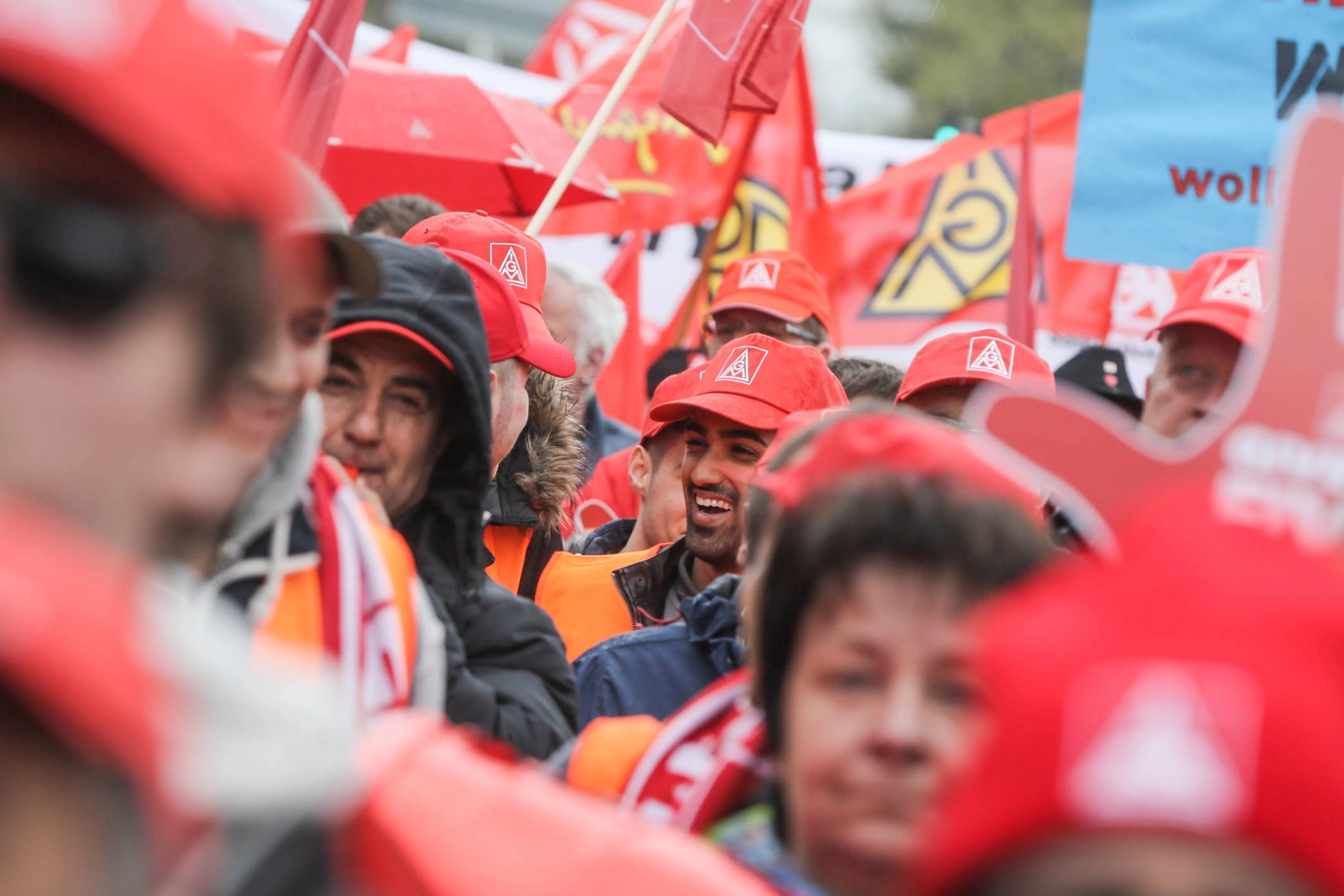
Ein lachender Mann mit IG Metall-Kappe in einer Menschenmenge.
IG Metall App
News straight to your smartphone

News on current topics, guides, pay scale tables, and more—download the IG Metall app for Android or iOS!

More Guides for Trainees
Ein junger Mann steht bei einer Menschenmenge.

Your Rights in Labor Disputes The right to strike for apprentices

As an apprentice, are you allowed to participate in warning strikes and strikes? The answer is a definite yes! Here, we’ll explain what rights you have when collective bargaining enters its critical phase.

MINT-Berufe, etwa Industriemechanikerin oder Industriemechaniker, sind bei den Betrieben sehr gefragt.

When Your Apprenticeship Isn’t Going Well Having problems with your apprenticeship? We have solutions

Are you having problems with your apprenticeship? Are you having trouble getting along with your instructor? Do you find learning difficult? Is your money barely enough to make ends meet? And what if I get sick? We answer frequently asked questions.

Auszubildender in einer Schreinerei

Apprenticeship Wages Questions and Answers About Apprenticeship Wages

How much money are apprentices entitled to? Apprenticeship pay can vary depending on the industry, region, and whether a collective bargaining agreement applies. One thing is certain: you’re better off with a collective bargaining agreement. Our FAQ on pay.

Auszubildender in einer Schreinerei

When money isn’t enough How to finance your vocational training or college education

Apprentices and dual-track students can receive various forms of financial assistance. We provide tips on the vocational training allowance (BAB), BAföG, housing allowance, and child support—and we explain what you should keep in mind when working a part-time job.

Eine junge blonde Frau mit einem Werkzeug in der Hand steht lächelnd in einer KFZ-Werkstatt.

Child Benefit and Child Supplement Child Benefit After Age 18: What to Keep in Mind

In Germany, parents receive child benefit until their child turns 18. Entitlement to child benefit may continue beyond that age if certain requirements are met. Low-income families may also be eligible for the child supplement.

Auszubildender und Meister im Gespräch in einer Schreinerwerkstatt

Searching for an apprenticeship: Here’s how it works Find available apprenticeship positions now

August 1 or September 1 is the official start date for apprenticeships. Haven’t found a position yet? We’ll show you what options are still available for finding an apprenticeship.

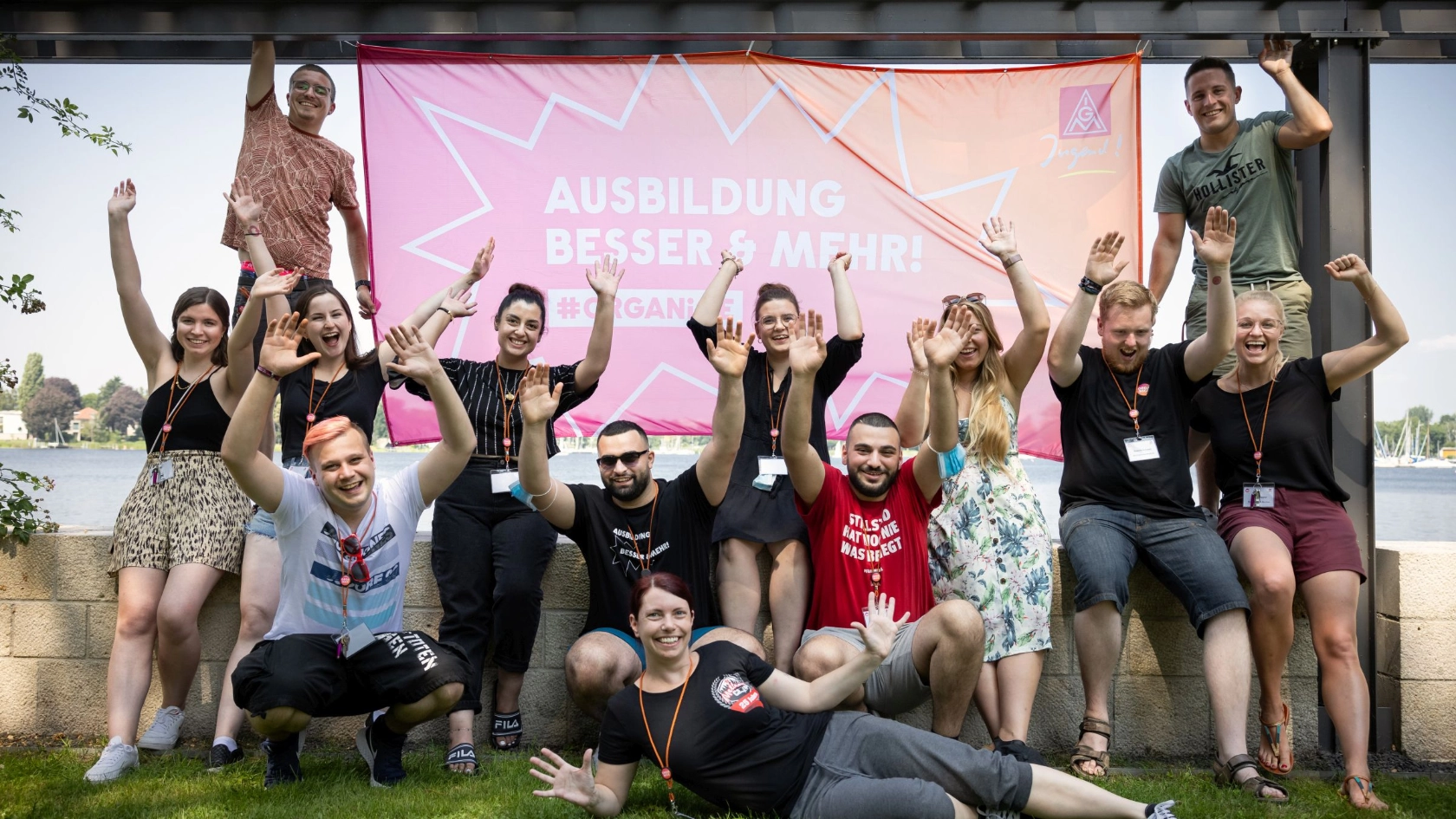
Ein starkes Team: Die IG Metall Jugend kämpft mit ihrer Kampagne "Ausbildung: Besser & Mehr" für eine gute Ausbildungsqualität für alle.

Beginner Magazine Information on getting started with vocational training and dual study programs

Starting an apprenticeship or a dual degree program means you’ll be facing a lot of new things. To make sure you’re well prepared, we’ve put together a magazine full of tips and information just for you.

Eine Frau an einer Kletterwand.

Well-protected during your apprenticeship How legal protection works for apprentices

Is your boss causing trouble with your pay, firing you during your probationary period, or refusing to provide a job reference? It’s good to be a member of IG Metall. Because then you’re entitled to legal protection.

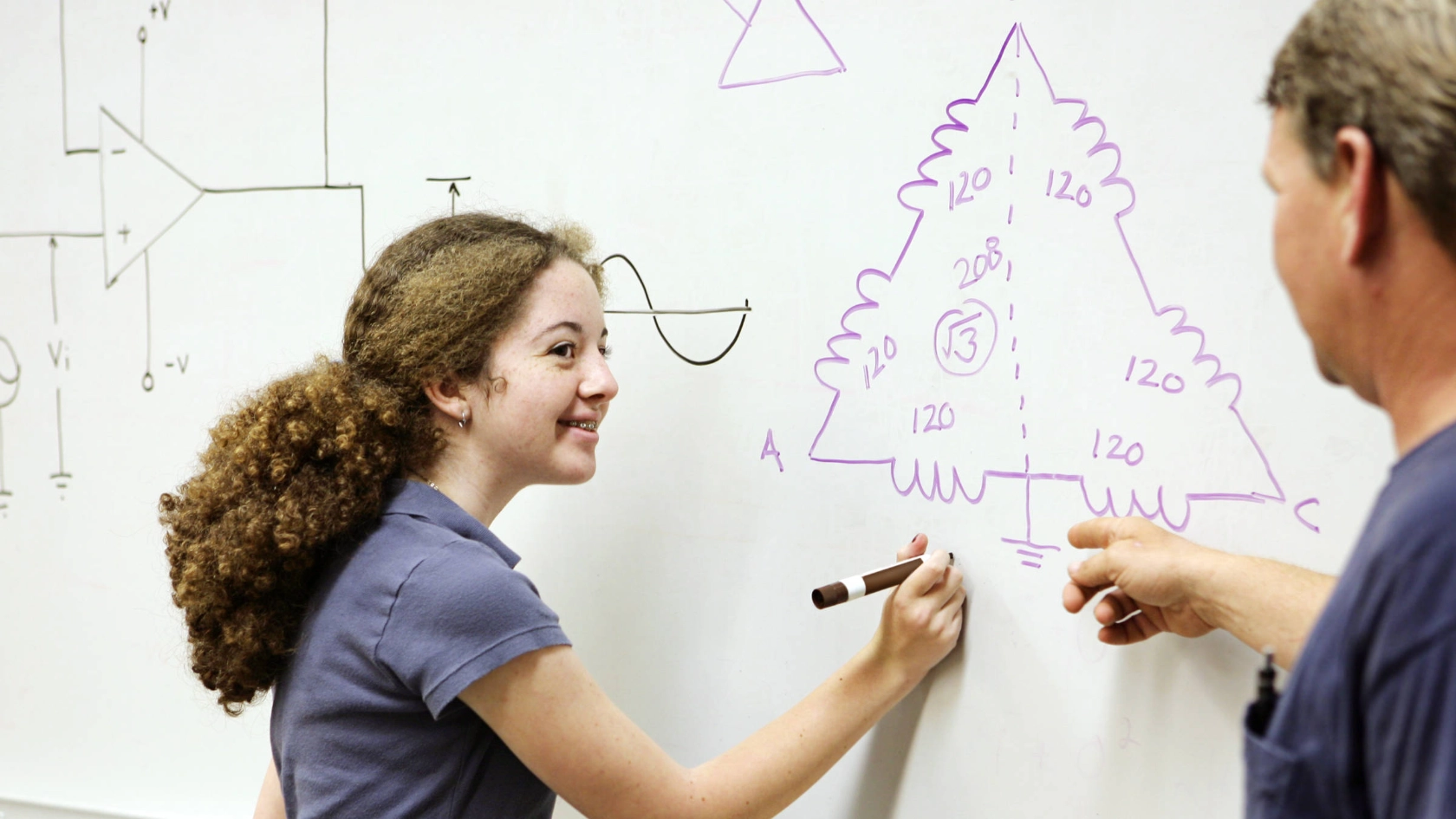
Ein Mädchen malt einen Schaltkreis an eine Tafel.

Rights and Responsibilities What to Keep in Mind at Vocational School

If you’re in a company-sponsored apprenticeship, you must attend vocational school regularly—and your employer must grant you paid time off for this. Find out here what other rights and responsibilities you have at vocational school.

Eine junge Frau blickt durch ein gerolltes Blatt Papier.

Questions and Answers About Starting Your Apprenticeship A Clear View of Your Apprenticeship

New responsibilities, new challenges: Anyone starting vocational training is on the threshold of a new, exciting phase of life—and at the same time facing a mountain of questions. We answer the most important ones.

Ein junger Mann in einer Werkstatt blickt in ein Notebook.

How to Get a Higher Pension in Retirement Making Smart Use of Pension-Related Benefits

Pension-qualifying benefits can supplement the statutory pension—thanks to provisions in collective bargaining agreements. We explain who is eligible and how these benefits can be used.

Beratungssituation an einem Schreibtisch

Insurance for Apprentices Overview: Which types of insurance are necessary?

In this table, we’ve provided a concise summary of the importance of various types of insurance for apprentices. Some policies, such as personal liability insurance, are essential, while others are only recommended under certain circumstances.

New on igmetall.de
Landkarte mitmarkern für Geschäftsstellen
Interaktive-Landkarte.png IG Metall on Site
Advice, Service, Help

Any questions? Contact your local IG Metall office for more information.

Subscribe to the newsletter