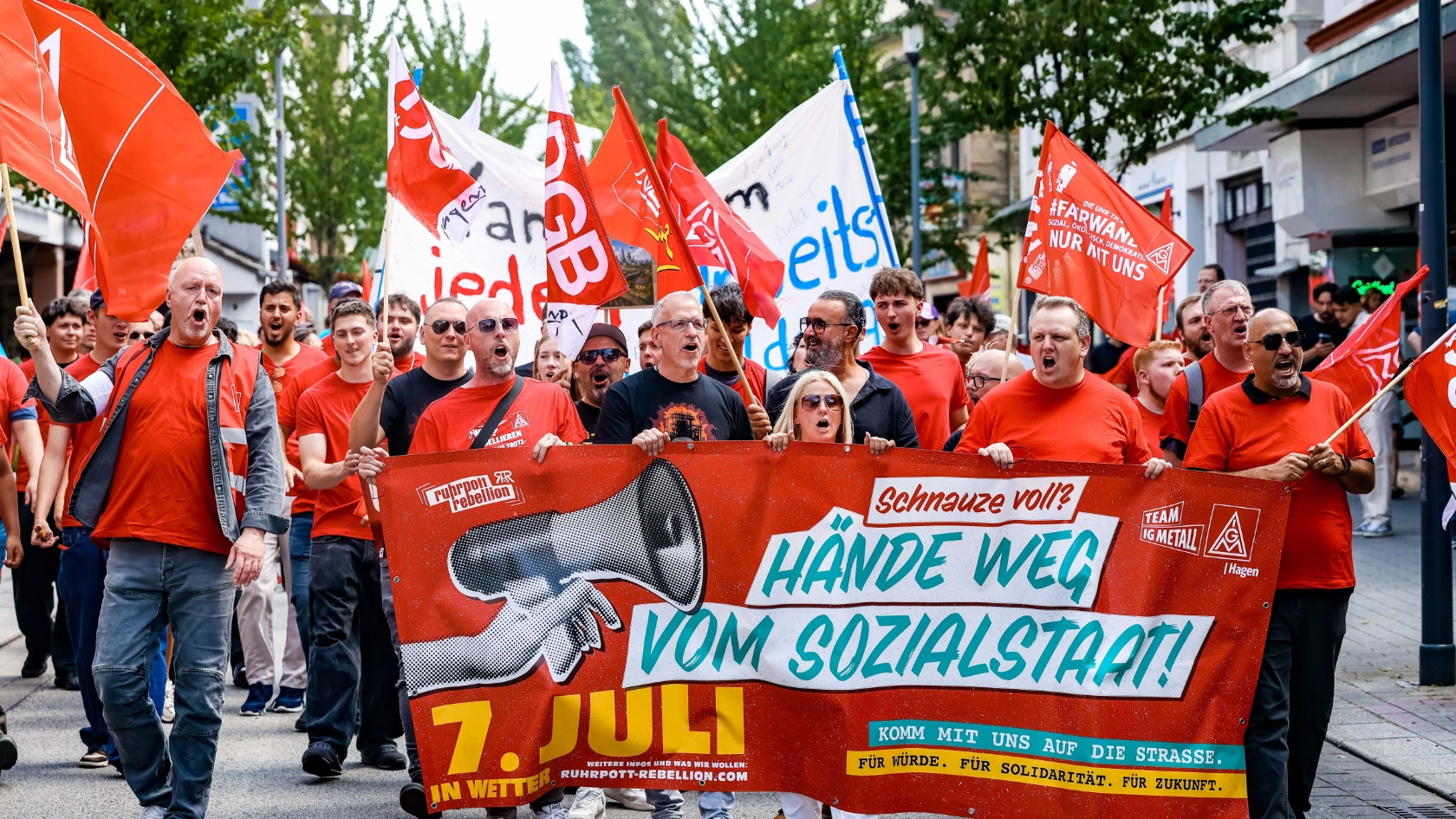
The situation in the apprenticeship market continues to worsen. While thousands of young people are looking for an apprenticeship, industry is further scaling back in-house training. This is shown by the “IG Metall Apprenticeship Report 2025.” The number of apprenticeship contracts has plummeted, particularly in the core industrial sectors—metal and electrical, automotive, and mechanical engineering. IG Metall warns of dramatic consequences for the economy and society.
“Young people are motivated. But industry is once again lowering its already low standard of vocational training, thereby mindlessly sawing off the branch it’s sitting on,” criticizes Hans-Jürgen Urban, executive board member of IG Metall.
Core Industrial Occupations: Down 9.1 Percent in One Year
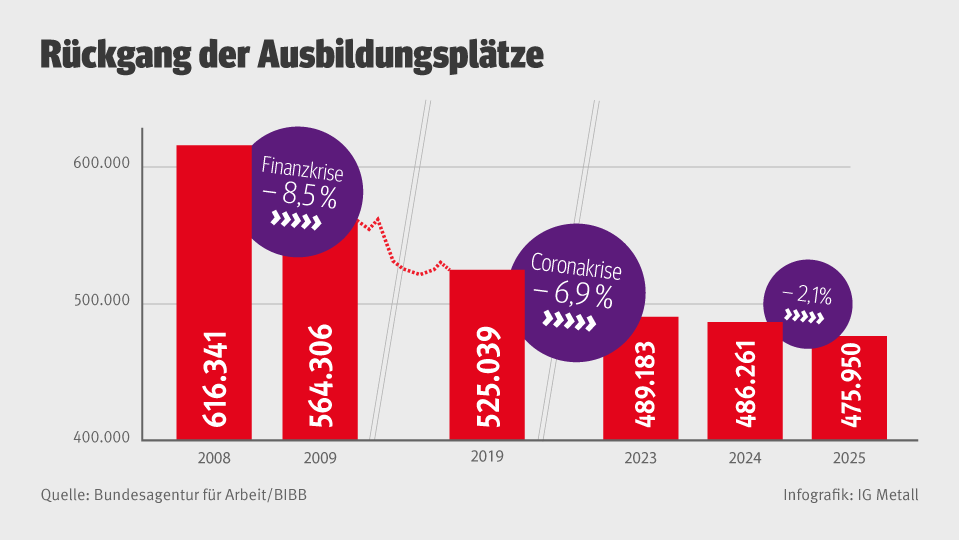
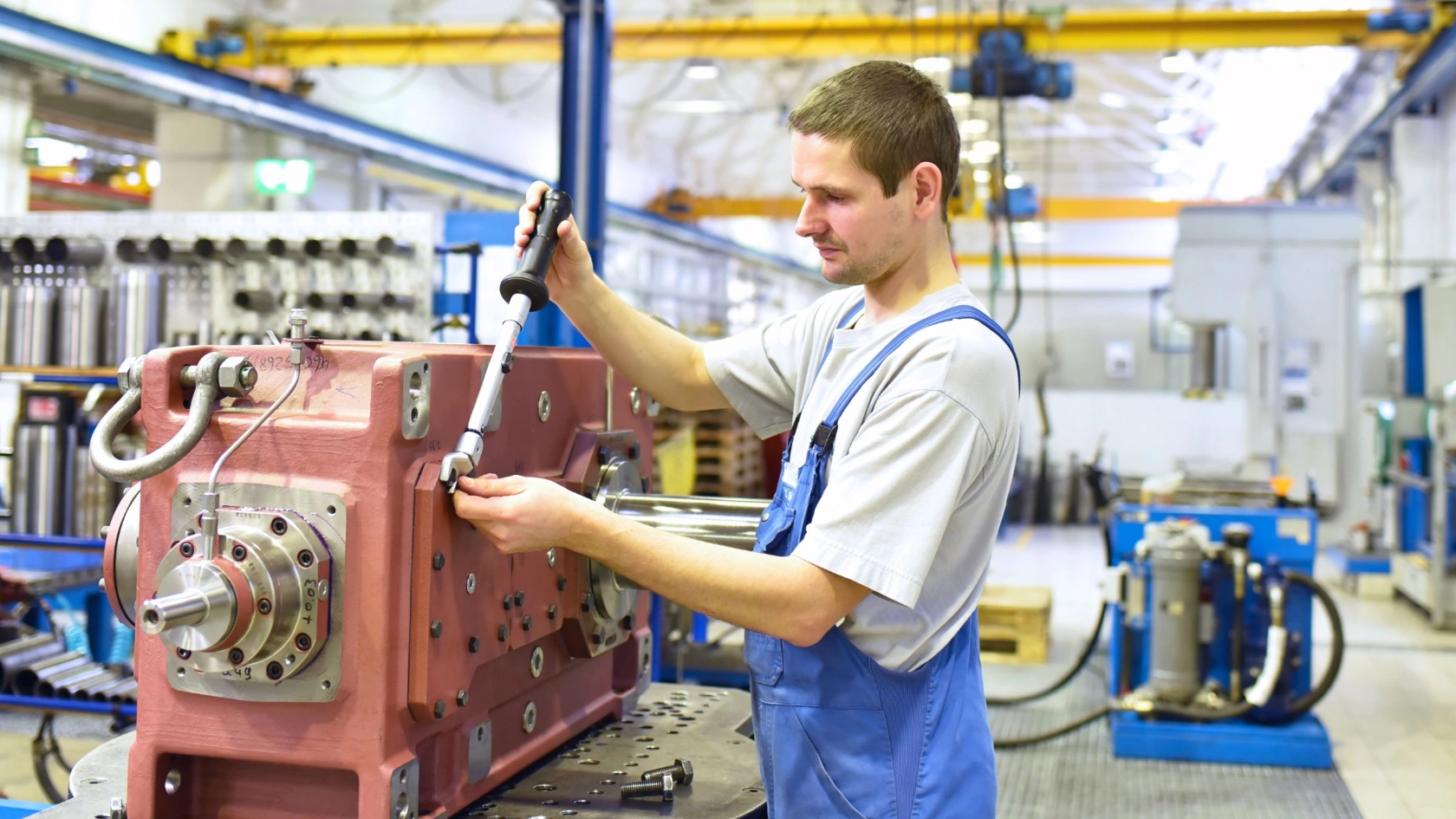
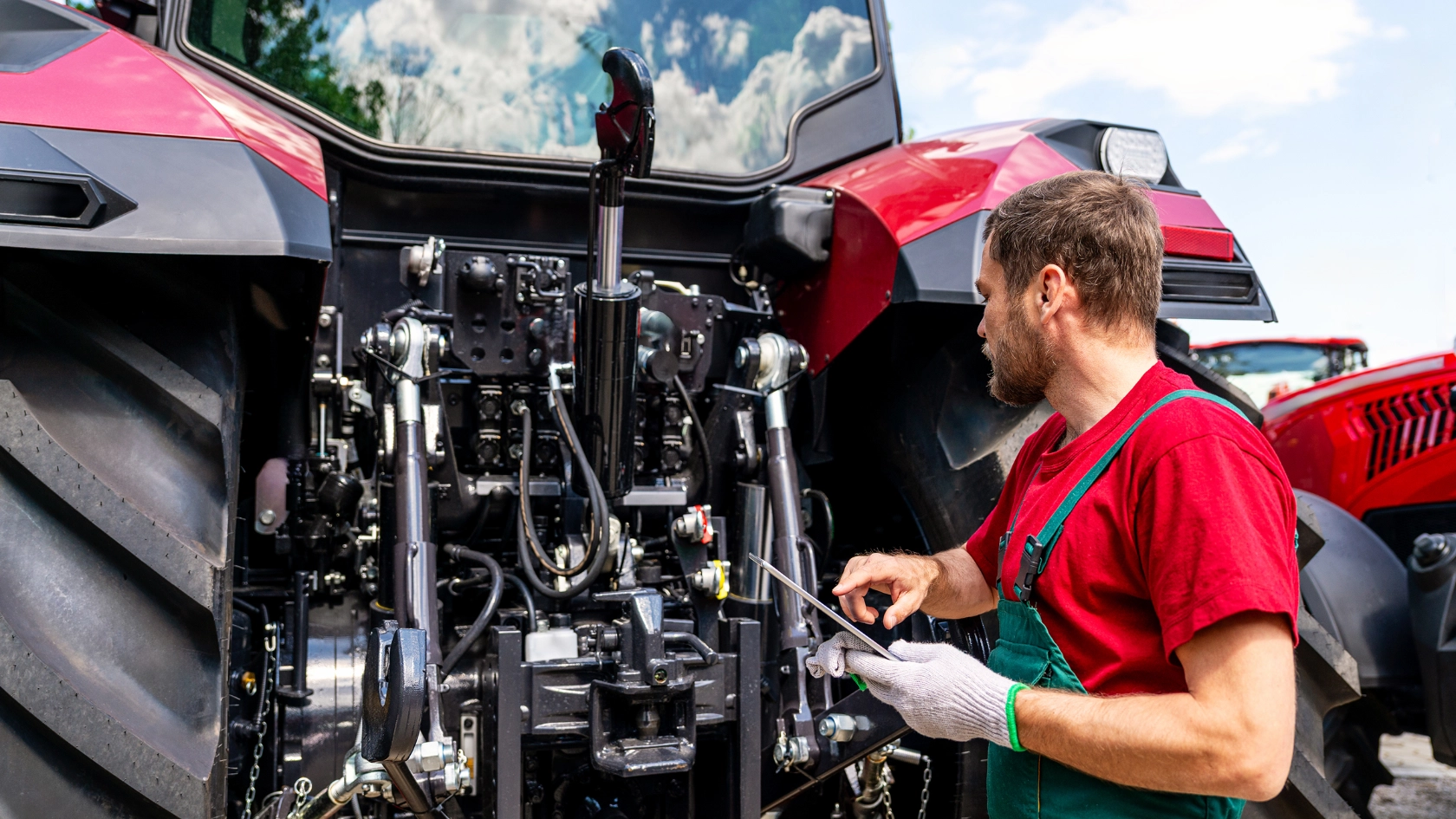
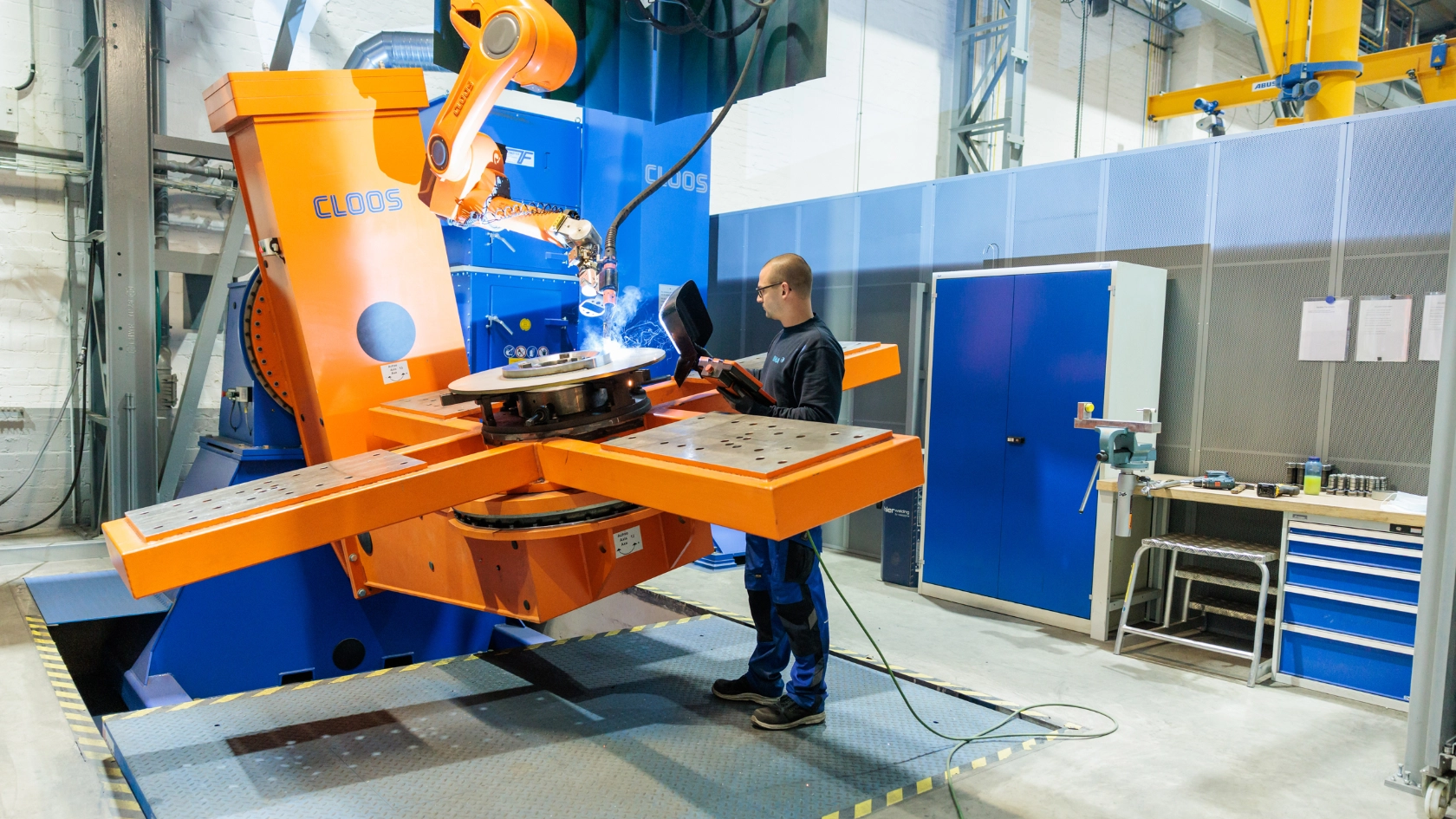
In the traditional metal and electrical trades, companies signed only 25,800 apprenticeship contracts in 2025—9.1 percent fewer than the previous year. Compared to 2019, this represents a decline of nearly one-fifth. Particularly affected are mechanical engineering as well as the metal and electrical industries, including vehicle manufacturers and suppliers. In IT occupations as well, companies signed 14.3 percent fewer contracts with young people than in 2024. Skilled trades recorded a 3 percent decline.
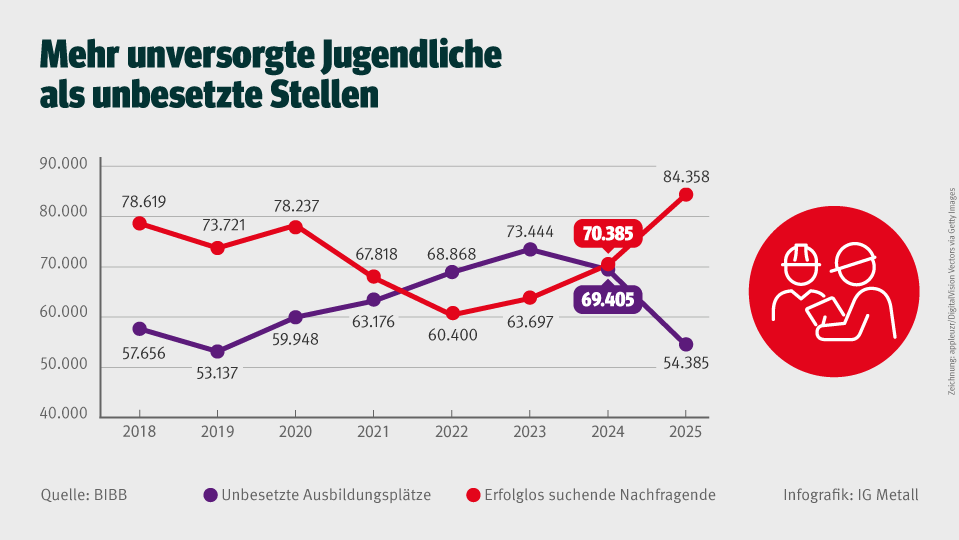
Nationwide and across all sectors, demand among young people for dual vocational training rose slightly by 0.7 percent in 2025 compared to the previous year. However, the number of available apprenticeship positions declined by 4.6 percent. In 2025, 84,400 young people were still searching for a position: 40,000 applicants were left without an apprenticeship contract. Another 44,000 young people continued to search for their preferred apprenticeship position, while some had to take on part-time jobs or accept an alternative apprenticeship position as a second choice.
Insights from Berlin-Brandenburg-Saxony
Jakob Heidenreich, district youth secretary for IG Metall Berlin-Brandenburg-Saxony, clearly senses in his daily work that an apprenticeship is no longer a given. He reports on a nationwide trend: “More and more companies are relying on working students. At the same time, apprenticeship positions are disappearing—especially in industry.”
A case in point is a Siemens Energy site in Berlin: Following a spin-off and pandemic-related downturns, the company initially hired only eight apprentices—despite full order books and an aging workforce. With support from IG Metall and the site’s apprenticeship representatives, this eventually grew to around 80 positions—many of them dual-track students, but a clear expansion of training for the next generation.
IG Metall Prevents Cuts to Apprenticeships
The union’s role is even more evident at an automotive plant that was slated for complete closure. “The first sign was the complete elimination of the apprenticeship program—that immediately set off alarm bells for us,” says Heidenreich.
In negotiations over a vision for the future, IG Metall succeeded in ensuring that the 20 annual apprenticeship positions would be retained. For the works council, one thing is clear: the numbers should actually increase in the future.
The other extreme: Companies completely eliminate apprenticeships
Another example from Berlin illustrates the opposite trend: A company completely discontinued its apprenticeship program and transferred many of the apprentices’ tasks to working students. The Youth and Apprentice Representative Committee (JAV) protested alongside IG Metall—with the support of former apprentices who had been hired by the company.
Meanwhile, the situation for apprenticeships in the capital is already dire. “In Berlin, only 11 percent of companies offer apprenticeships—the lowest rate in the country. Every lost apprenticeship position hurts,” emphasizes Heidenreich.
IG Metall Calls for an Apprenticeship Levy—and Sees Berlin at a Critical Crossroads
To halt this negative trend, IG Metall is calling for legally mandated levy-based funding: Companies that do not provide apprenticeships should help cover the costs of those that do. In addition, the fund would allow more money to be allocated toward improving the overall quality of apprenticeships. In Bremen, a law with corresponding provisions already went into effect in 2025.
Now this model could soon become a reality in Berlin as well. The previous coalition had already initiated a legislative process. The current “Alliance for Apprenticeships” is intended to create 2,000 additional apprenticeship positions. Heidenreich: “We’re still about 1,300 contracts short of reaching the goal.” If the target is not met, the law on the apprenticeship levy is to be introduced. The bill has already passed its first reading in the state parliament; on March 20, it will become clear whether the law will be enacted. “We are confident it will.”
Why Action Must Be Taken Now
Urban warns: “Germany is at a turning point. Either we secure industrial value creation through strong vocational training—or we lose skills, competitiveness, and social stability.”
The conclusion is clear:
- Demand among young people is rising (+0.7 percent)
- The number of apprenticeship openings is falling (-4.6 percent)
- 84,400 young people are still searching—40,000 of whom have no training opportunities at all
- About 2.9 million people between the ages of 20 and 34 do not have a vocational degree
IG Metall therefore calls for:
- A nationwide statutory apprenticeship levy
- Better career guidance and youth employment agencies in all regions
- Individual support for young people who need assistance
- Companies must view vocational training as an opportunity, not as a cost factor
Companies, too, should have a vested interest in creating apprenticeship positions and ensuring their quality. “To manage the transformation of industry, you need people. And no one is more qualified than those you’ve trained yourself,” summarizes Youth Secretary Heidenreich. The direction is clear: Investments in training are investments in the future—for companies, for employees, and for a strong industrial base in Germany.