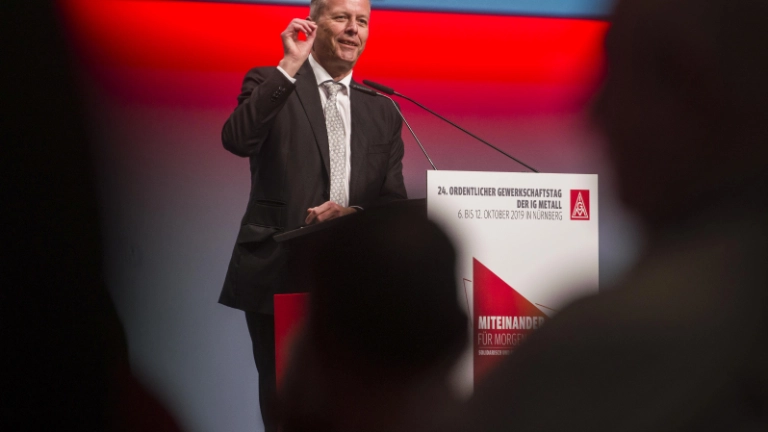
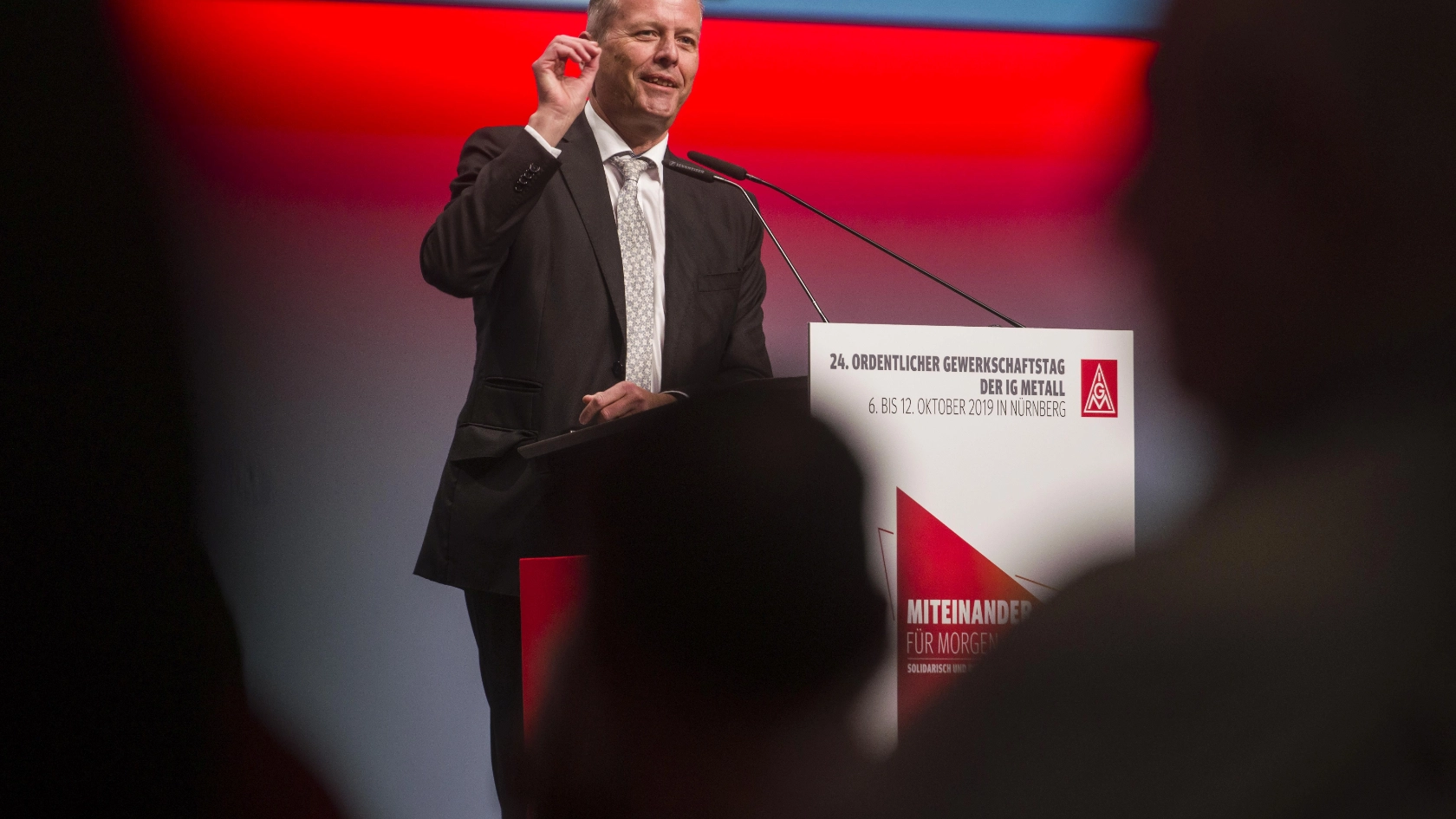
Nuremberg – “Together for Tomorrow – In Solidarity and Justice” is the motto of the 24th Regular Trade Union Congress, which IG Metall will open on Sunday, October 6, 2019, in Nuremberg. There, 483 delegates will elect the members of the Executive Board for the next four years and adopt IG Metall’s future work program. Through Saturday, October 12, 2019, they will discuss, deliberate on, and vote on four resolutions, five key motions, and nearly 800 motions.
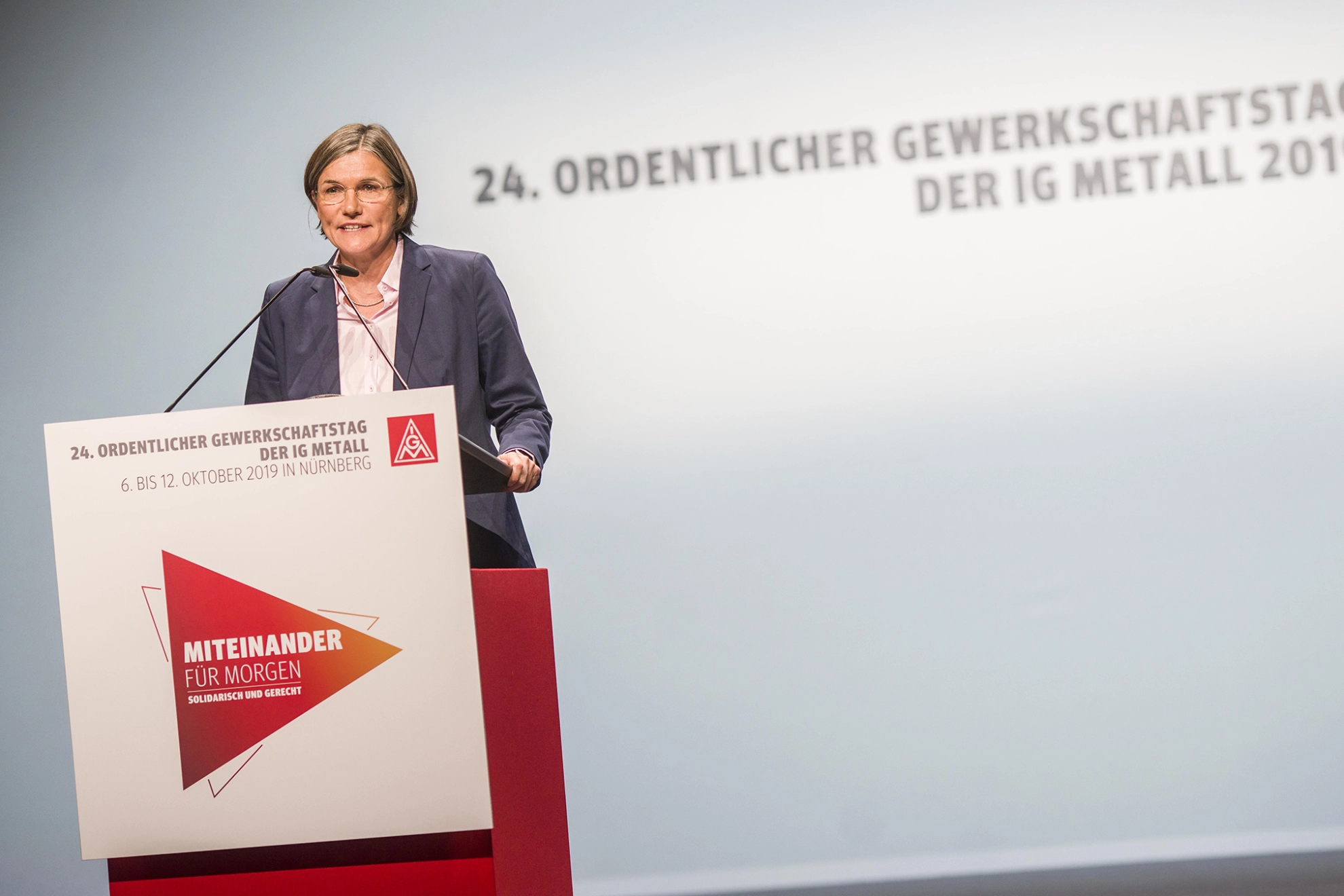
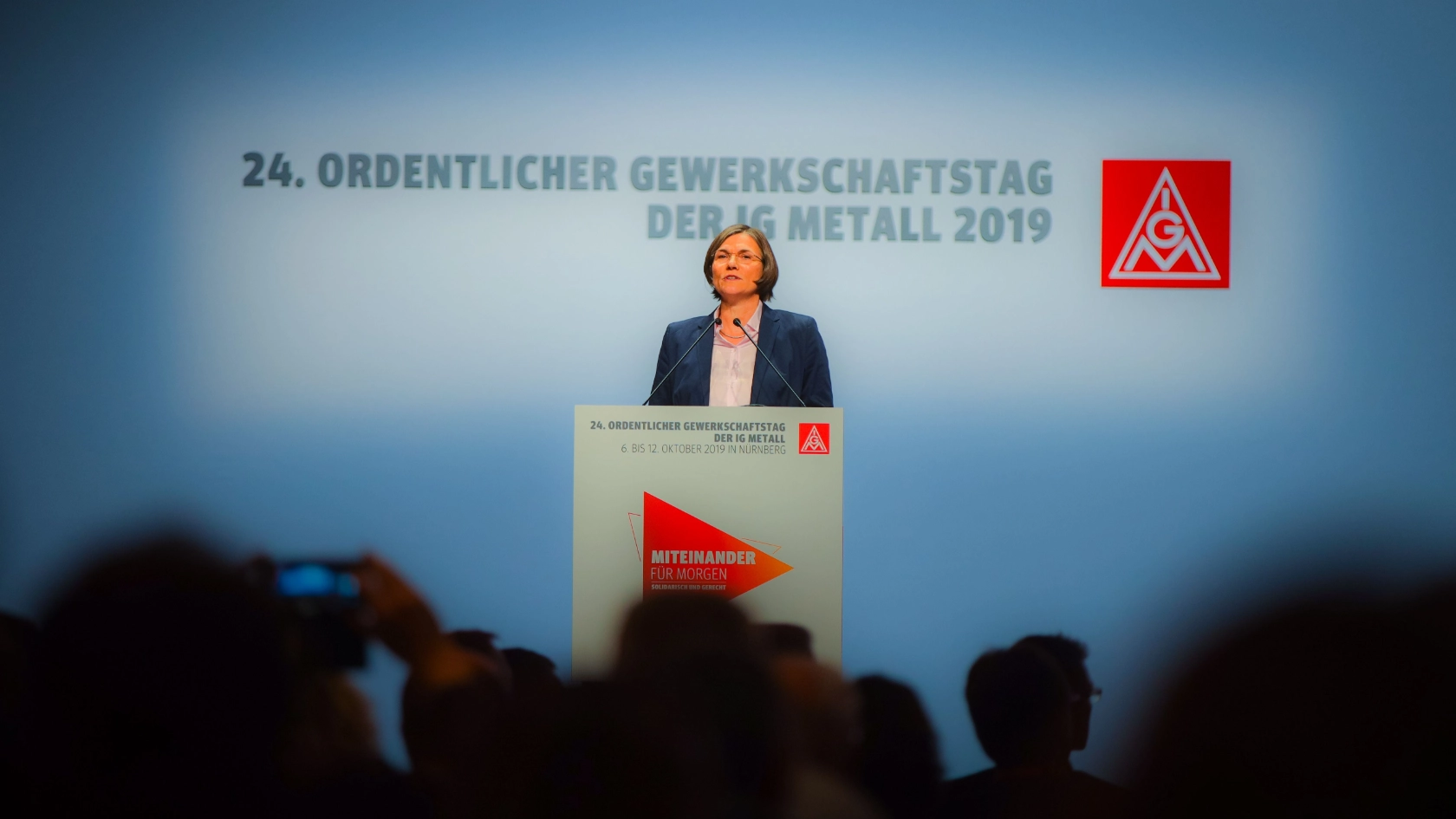
The profound transformation of the economy and society runs like a common thread through the motions on the table. “We will be talking a lot over the coming week about the major changes in the world of work and in society,” said Christiane Benner, Second Chair of IG Metall. This period of profound upheaval poses a fundamental challenge not only for workers, companies, and policymakers. “Together, we want to work toward a future worth living for everyone!” Benner urged the delegates at the union convention. “Let’s tell our story of a fair transformation: social, ecological, and just. These are our values. And we live by them!”
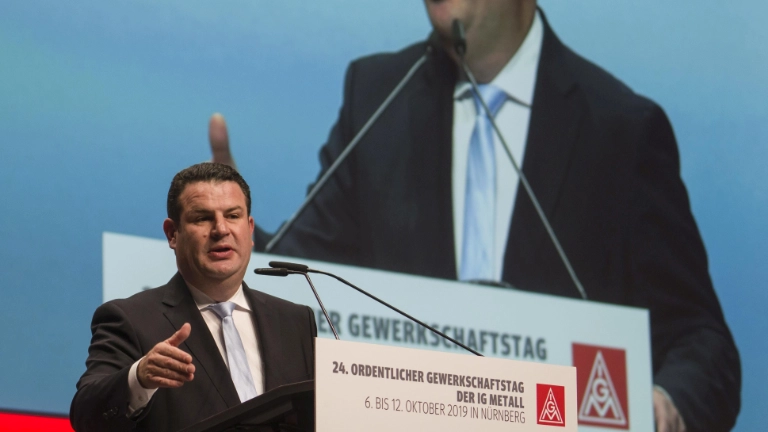
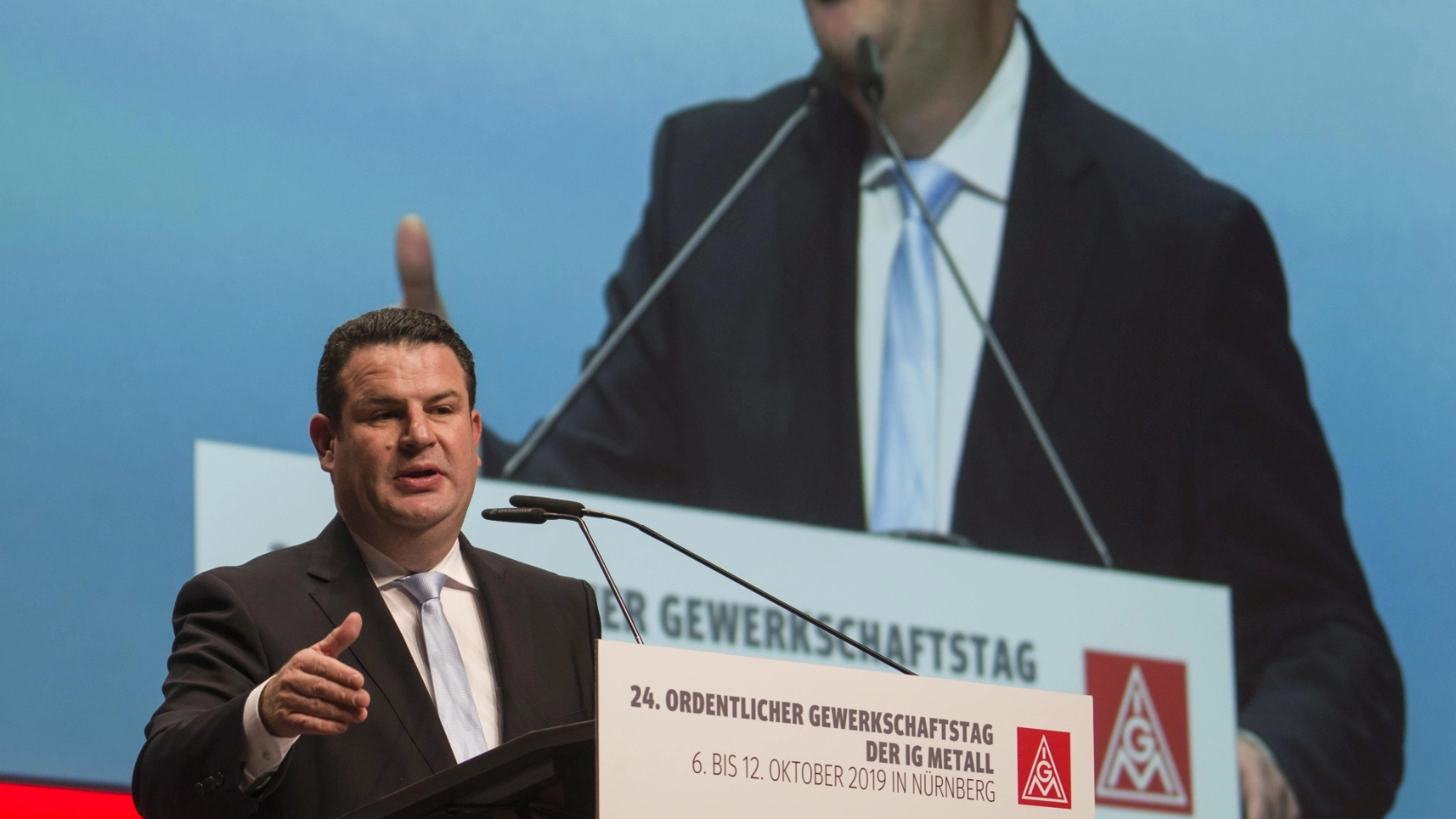
Hubertus Heil, Federal Minister of Labor and Social Affairs, emphasized the importance of unions at the opening ceremony: “Germany is doing well economically. The labor market is booming; we have full employment in many industries and regions. But the fact is also that many people in our country are worried about their jobs and their futures. We must ensure that today’s workers can also do the work of tomorrow. The issue of skills development thus becomes a matter of vital importance for our social market economy. That is why I say: We need a new, realistic sense of confidence. And for that, we need strong unions and strong works councils.”
Dr. Ulrich Maly, Mayor of Nuremberg, sees the focus on transformation as “the right topic at the right time.” People have many questions: How is digitalization changing our world of work? Will everything become more relaxed and pleasant, as some claim, or will big data give rise to new, more subtle forms of dependency and exploitation? “As a historic hub for the metalworking industry and an industrial center that has already weathered many disruptions, Nuremberg is the right place to address these major questions about the future. Because one thing holds true in both the old and the new world of work: Only together are we strong!”
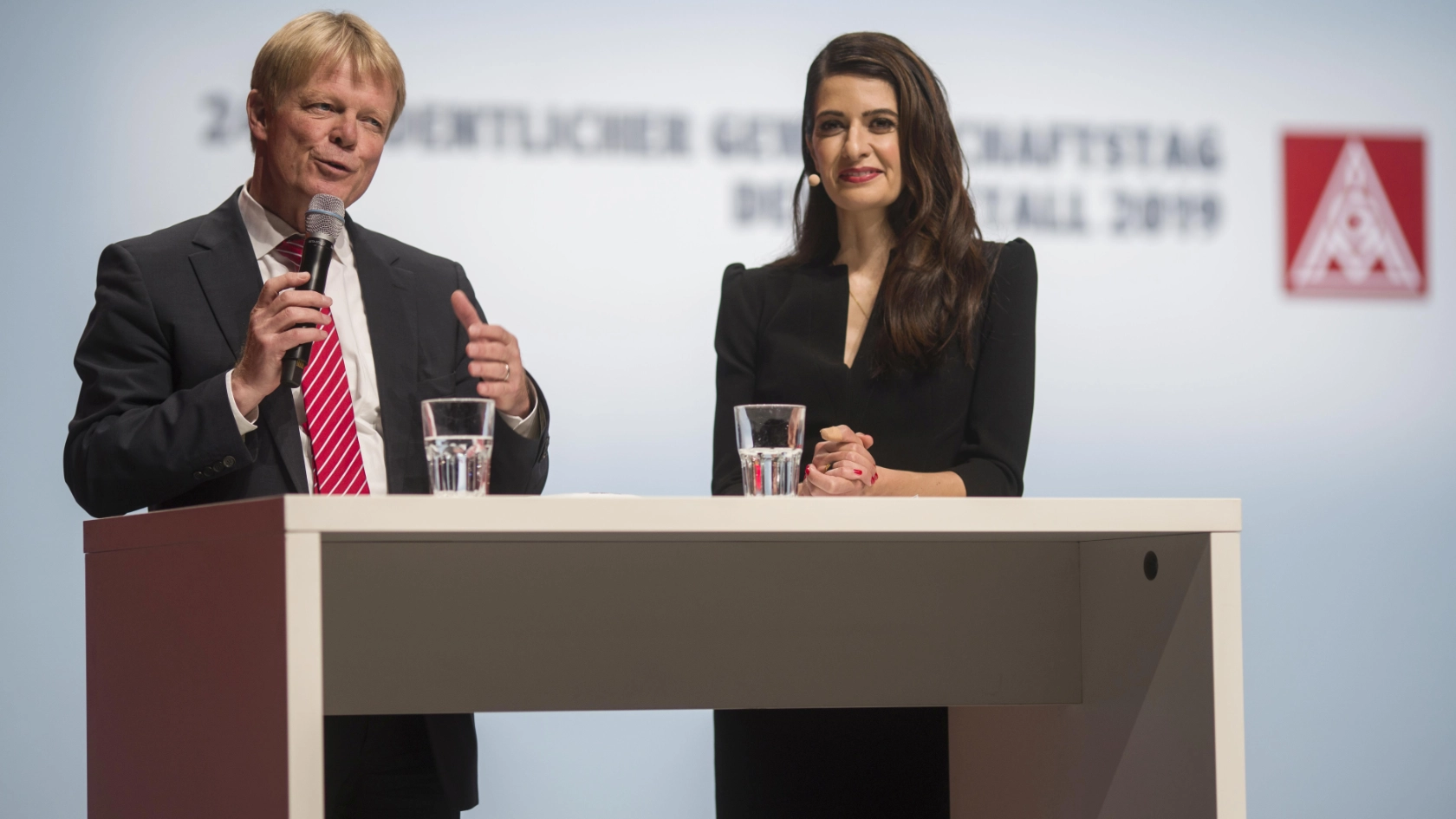
Reiner Hoffmann, DGB Chairman, emphasized that simply “closing our eyes and plowing ahead” cannot be the answer to the profound upheavals we are currently experiencing: “In the end, it’s the workers who pay the price. We, the unions, will not allow that to happen. Employers must finally understand that they cannot simply sit out this change, but must actively shape it together with workers and the unions. A modern world of work needs modern co-determination.”
The “Manifesto,” which delegates received in the run-up to the union congress, is intended to serve as a compass for shaping this transformation. As early as the beginning of the year, with the publication of a “discussion paper,” all 155 local chapters and over 2.27 million members of IG Metall were informed about the key issues of the union convention and were given the opportunity to comment on the union’s future direction. Their feedback is reflected in the resolutions and key motions of the Executive Board. The range of topics extends from addressing key societal, social, and economic developments to critical challenges for IG Metall in the areas of collective bargaining, workplace policy, and organizational policy.
On Christiane Benner’s opening address
Go to the Union Convention portal
To the livestream