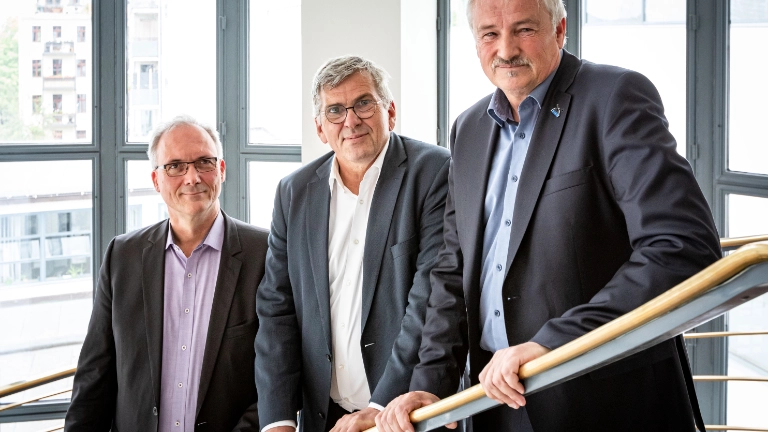
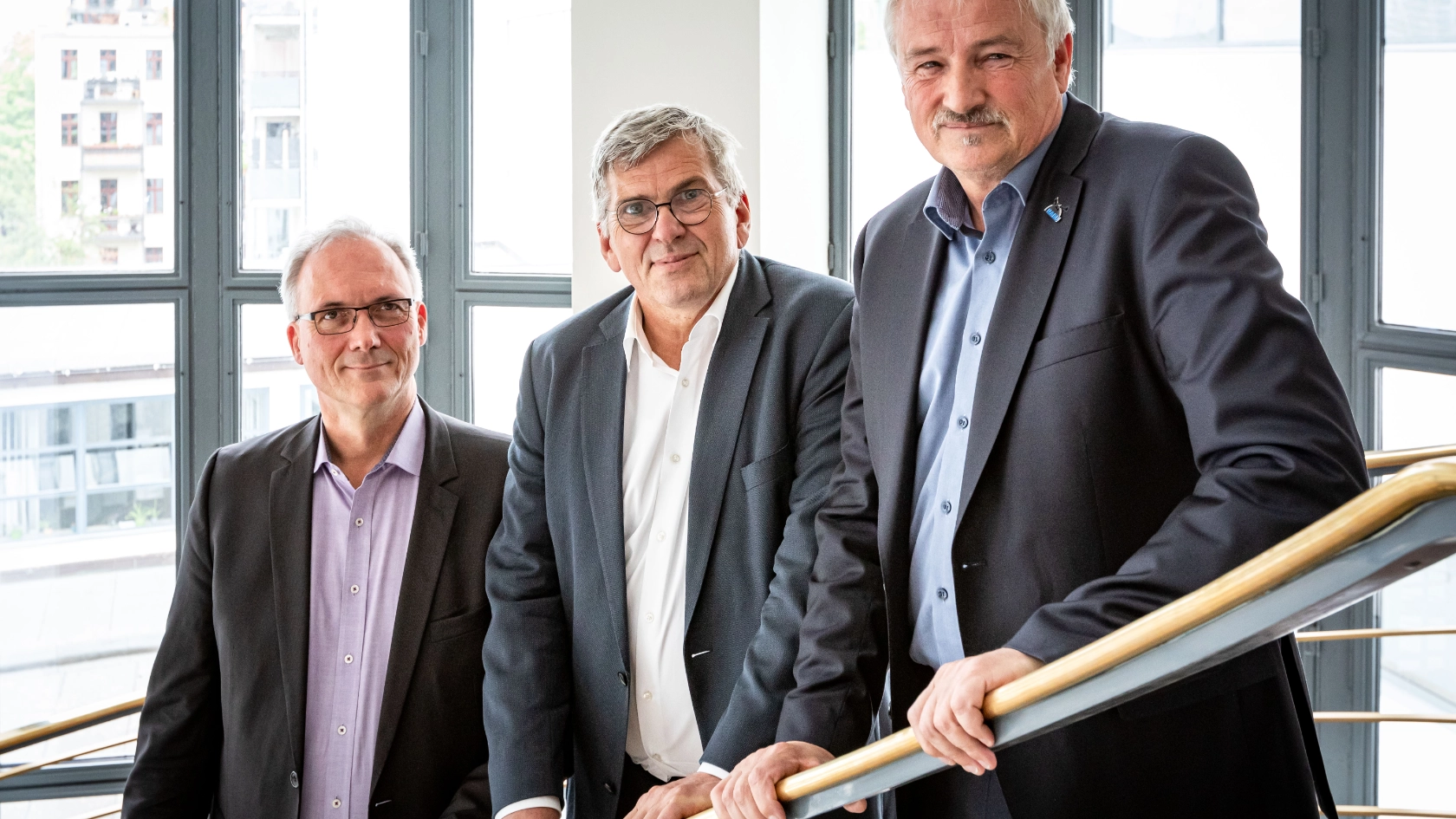
Berlin – Through a joint initiative titled “Shaping the Climate and Mobility Transition,” IG Metall, the German Association for the Environment and Nature Conservation (BUND), and the Nature and Biodiversity Conservation Union (NABU) are pushing for an ecological, social, and democratic transformation. “Anyone who wants to successfully shape the transformation of the economy and society must do more than just get people on board—they must be active agents in their own cause. Through our organizations, our many regional and local groups, and our many millions of members, we are raising our voices for an ecological, social, and democratic transformation,” states the joint position paper presented Wednesday in Berlin by Jörg Hofmann, First Chairman of IG Metall; Ernst-Christoph Stolper, Vice Chairman of BUND; and Olaf Tschimpke, President of NABU.
Jörg Hofmann, President of IG Metall: “Climate protection can only succeed if the energy and transportation transitions are tackled seriously. To achieve this, we don’t need new ‘targets,’ but rather concrete measures—above all from the federal government. And we expect companies to fulfill their responsibilities and consistently seize the opportunities presented by energy-efficient and climate-friendly products and services. But we also say loud and clear: Climate protection and employment go hand in hand. This requires favorable conditions for both. And we expect policymakers not only to provide the necessary investments but also to implement effective programs to secure jobs and enhance workforce skills.”
Ernst-Christoph Stolper, Vice Chair of BUND: “The clock is ticking and will run out by the end of the year. We urgently need an ambitious climate protection law and a program of measures capable of meeting the 1.5°C limit of the Paris Climate Agreement. With our joint paper from IG Metall, BUND, and NABU, we want to make it clear that society is far ahead of the federal government’s policies. No one needs any more excuses. The old policy of dithering and hesitation has severely damaged both the environment and the economy. We want the opportunities that renewable energy and carbon-free mobility offer—for the climate, human health, and jobs—to finally be seized with determination.”
Olaf Tschimpke, President of NABU: “If we want to achieve our climate protection goals, there’s no getting around radical political solutions. Our society and our economic system will change. The only question is whether we choose a path now that gives us time to adapt—including with regard to employment and social issues—or whether we wait until a catastrophe strikes and we have to react within a very short time. This also applies to transportation: CO2 emissions must be reduced by 40 percent by 2030. There is no alternative to the transportation transition. It must happen quickly, be economically viable, and be socially just. For Germany, this means we must significantly strengthen environmentally friendly modes of transportation such as bicycles, trains, buses, and walking, while simultaneously expanding e-mobility. It is important to us that no one is left behind in the transportation transition. Solutions must be attractive to citizens, which is why we are engaging in intensive discussions with labor unions and automakers.”
The three organizations strongly advocate for meeting climate protection targets. The goal is to leave an intact environment for future generations, and affordable and accessible mobility options are necessary to achieve this. At the same time, the three organizations agree that shaping this transformation requires not only alliances at the highest levels but must also be addressed and broadly supported at all levels of society. “Even if we do not agree on all current climate policy issues, we are united by a common vision: We will leave our children a world worth living in. We will create a just society with secure and sustainable jobs. We will enable everyone to lead a self-determined life,” the position paper states.
To the position paper “Shaping the Climate and Mobility Transition”