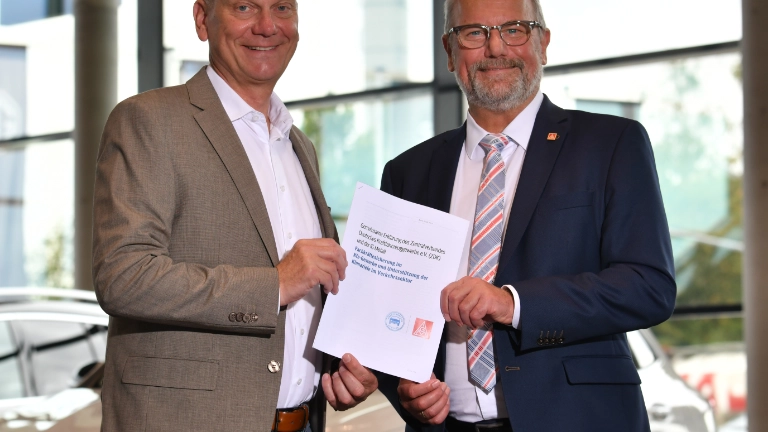
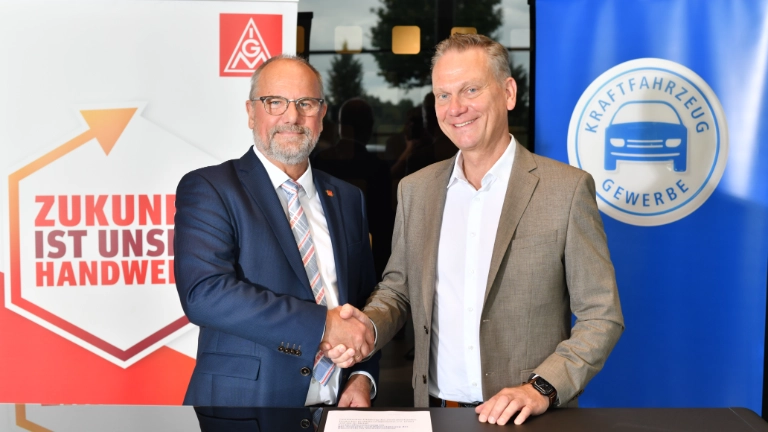
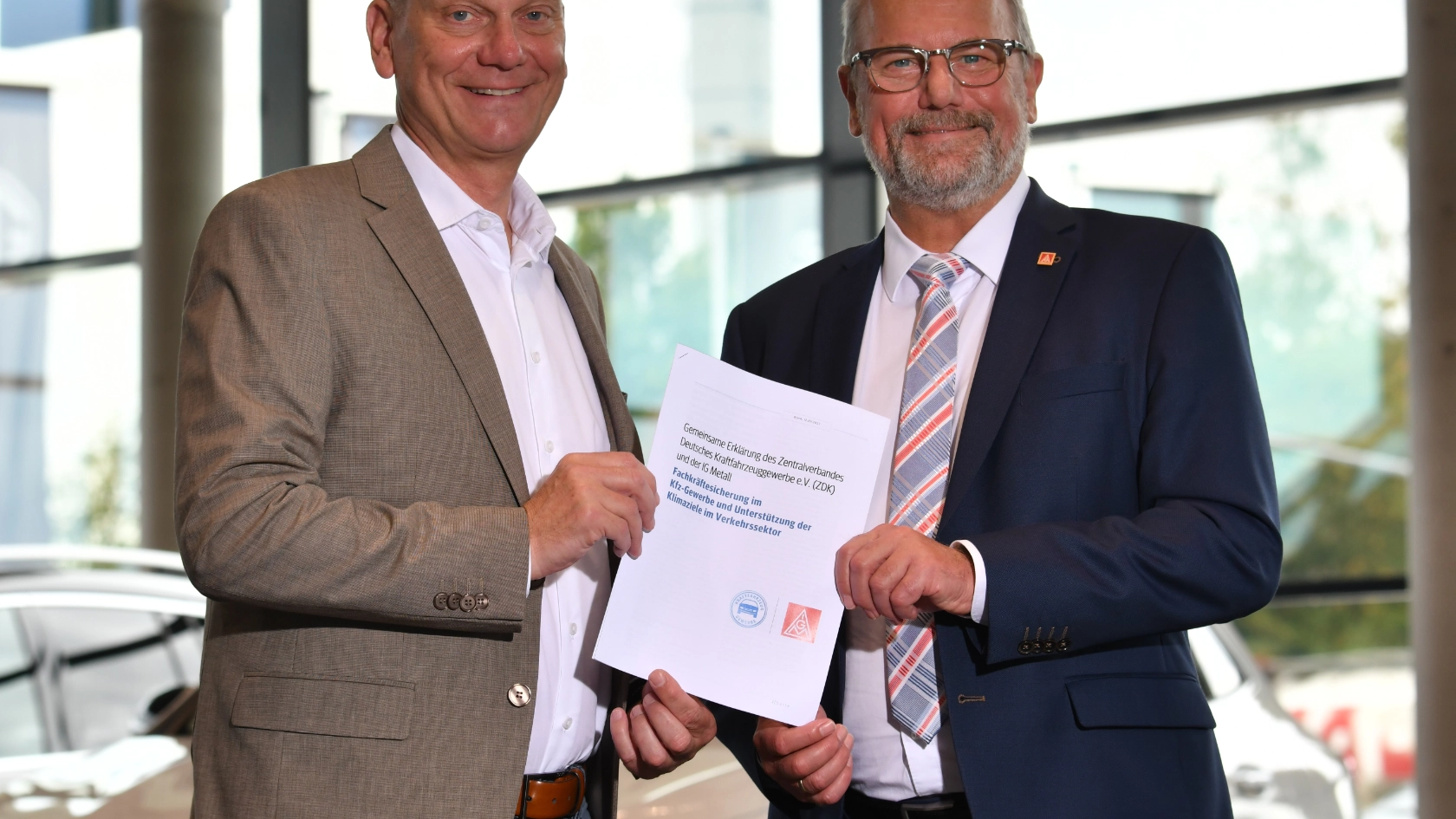
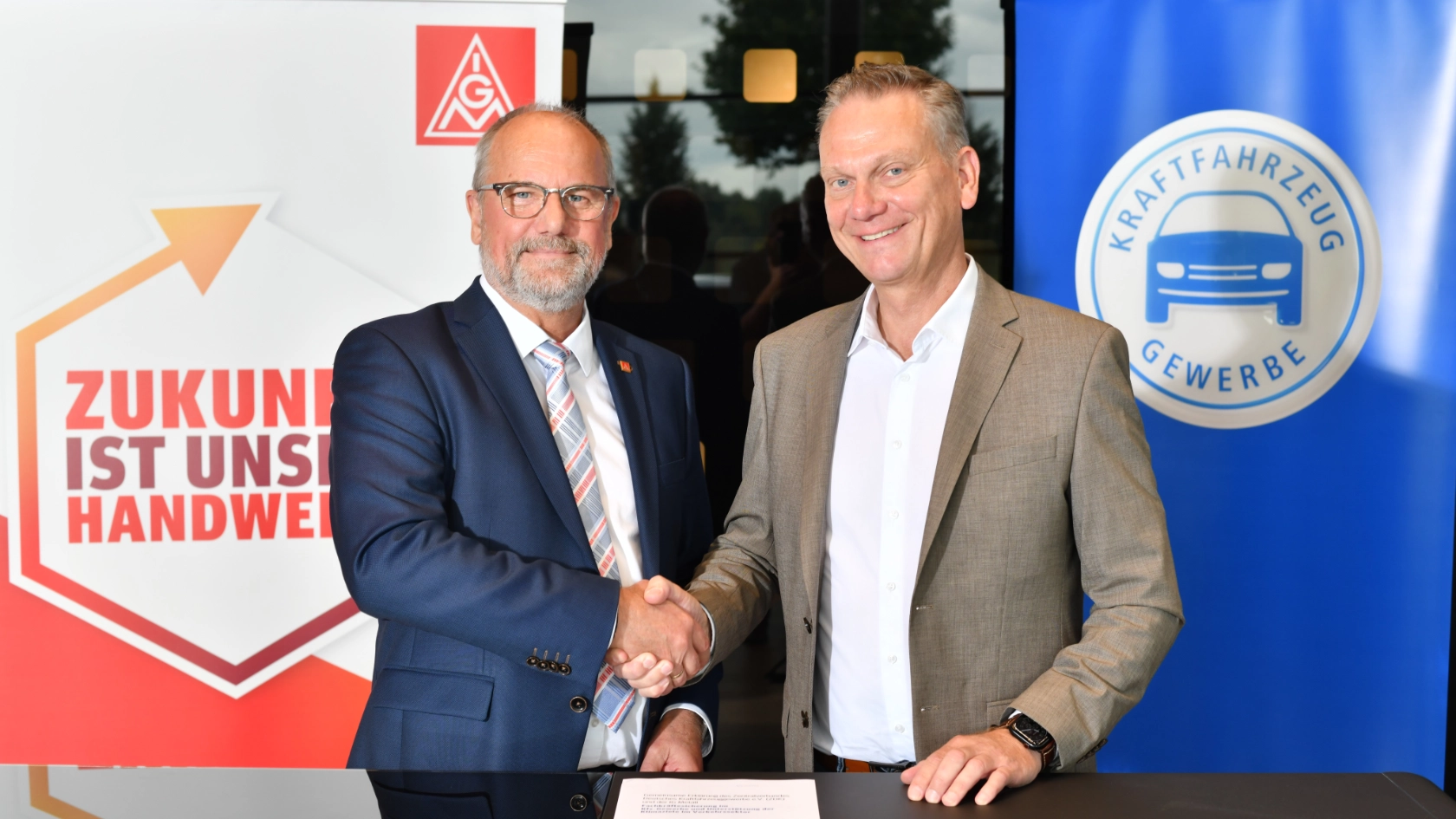
Digitalization, the climate and mobility transitions, and structural changes in the mobility sector are transforming and expanding business and work at car dealerships and auto repair shops. In light of these profound changes, the IG Metall union and the German Motor Vehicle Trade Association (ZDK) agreed on a joint strategy to secure a skilled workforce on Friday.
The social partners have pledged their support and are calling on policymakers to take action. “Securing a skilled workforce in the automotive trade can be achieved nationwide through good, collectively bargained working conditions,” the statement reads. The statement was signed by IG Metall Executive Board member Ralf Kutzner and Arne Joswig, President of the Central Association of the German Automotive Trade, at an auto repair shop in Elmshorn (Schleswig-Holstein). The German automotive trade currently comprises 37,000 businesses with 435,000 employees.
Better vocational training and qualifications for new tasks
“The mobility transition cannot succeed without a sufficient number of qualified specialists in car dealerships,” the social partners write in light of the new challenges facing the “car dealership of the future.” These include new sales models, infrastructure for electric vehicles, and new mobility services.
The union and employers want to attract, train, and retain skilled workers. To this end, IG Metall and the German Automotive Trade Association are calling for greater political recognition of vocational education over academic education. This requires expanding the “Aufstiegs-BAföG” (vocational advancement grant) and providing government support for master craftsman training. Vocational training schools are operating at the limits of their personnel and technical capacity. Funding for renovation and modernization is needed here.
Apprentices in urban areas need sufficient housing, just like college students, and in rural areas, they need better local public transportation. “We demand that these mobility gaps be closed as quickly as possible,” the statement reads. Tailored training, support, and reintegration programs should ensure greater flexibility and opportunities within the industry.
Ralf Kutzner, executive board member of IG Metall, said: “Employees in the automotive trade are key drivers of the mobility transition. They and the industry need good training and working conditions with more collective bargaining agreements.”
Arne Joswig, president of the German Motor Vehicle Trade Association, said: “For the transformation linked to climate targets in the transportation sector, the continued operation of automotive service shops is essential. That is why the skilled labor shortage must be addressed.”
Joint Statement by IG Metall and the Central Association of the German Automotive Trade