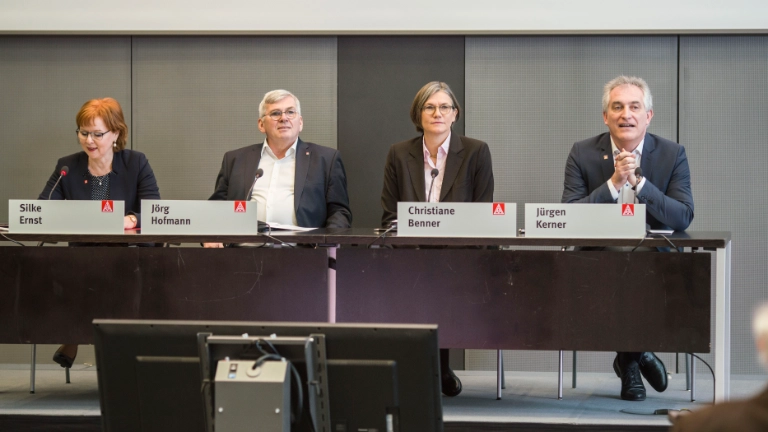
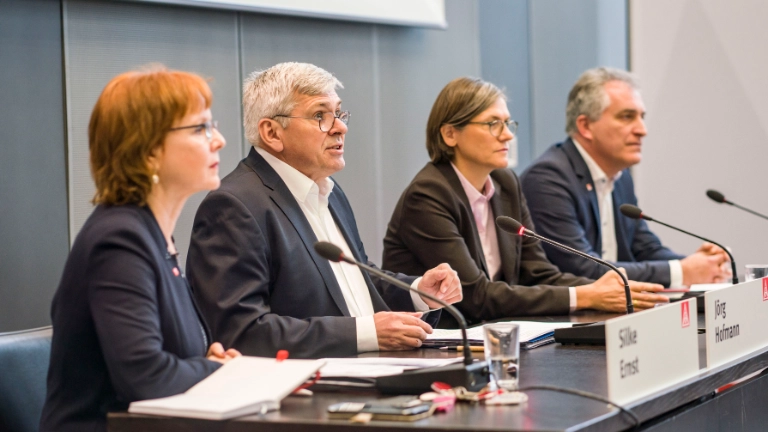
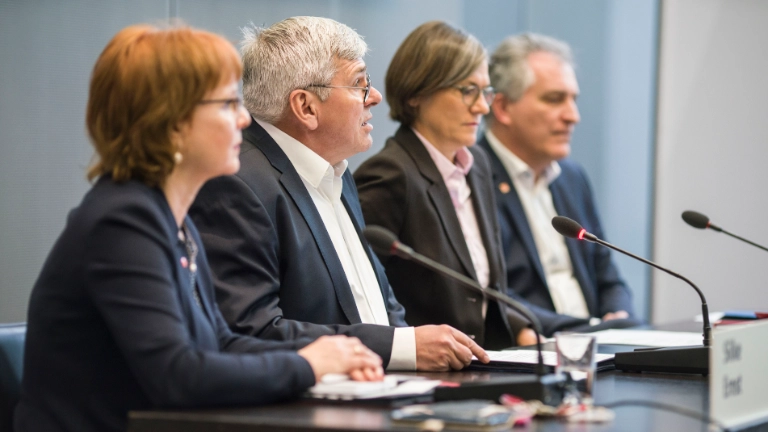
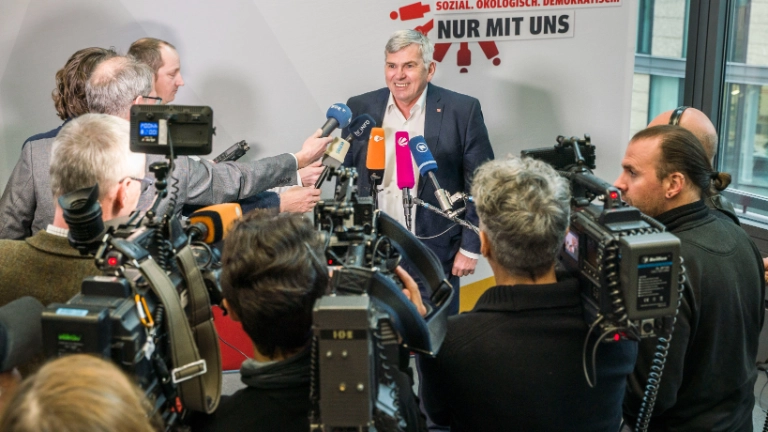
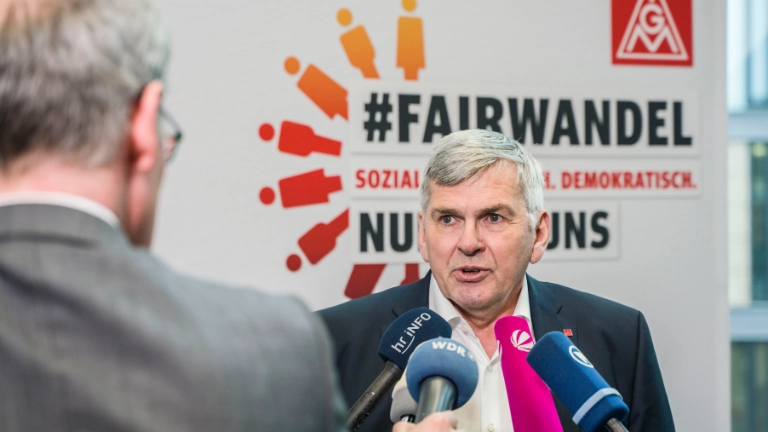
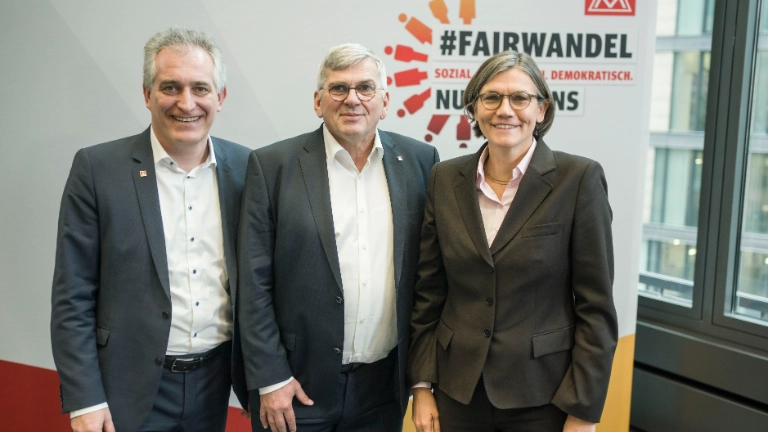
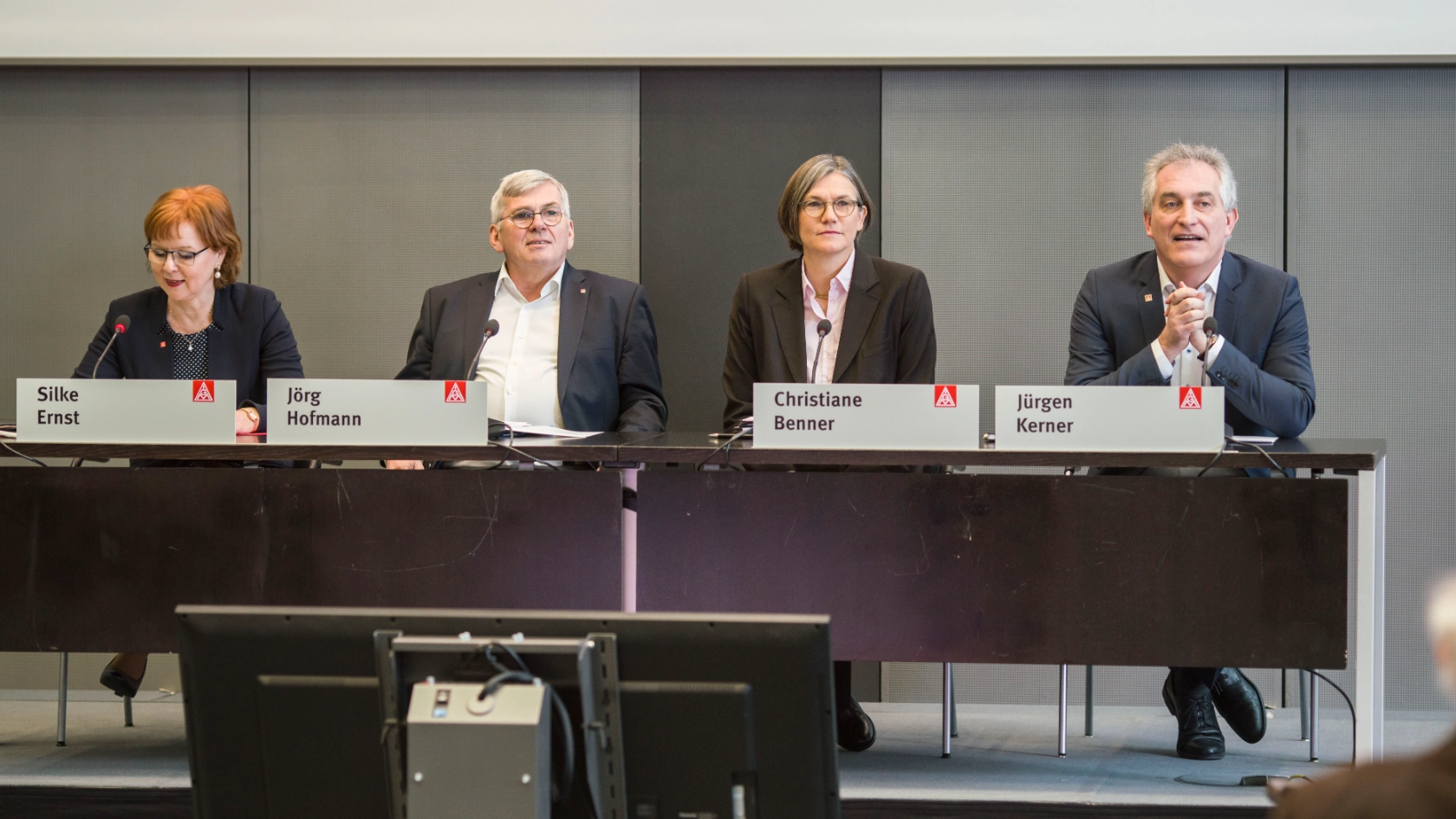
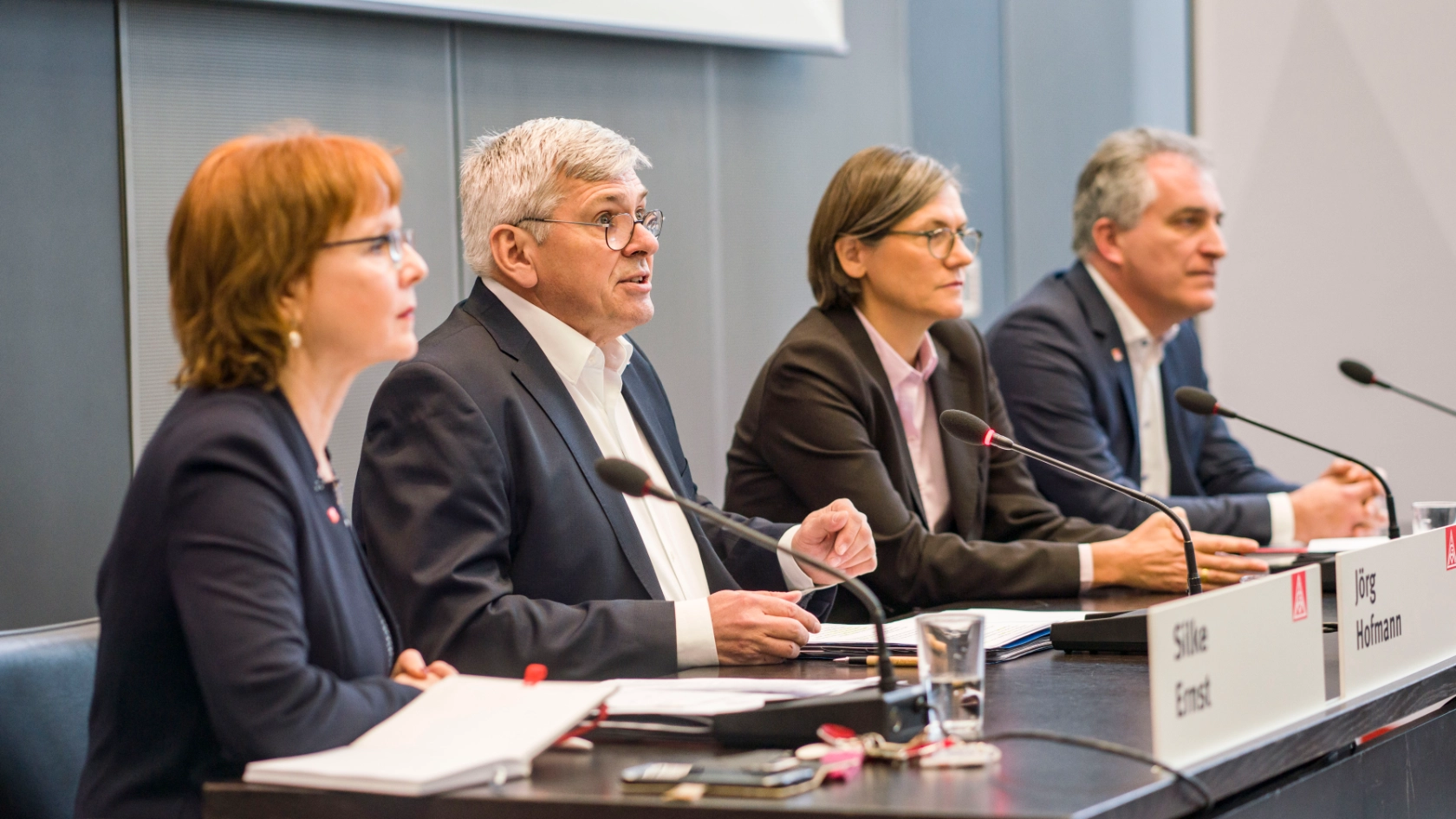
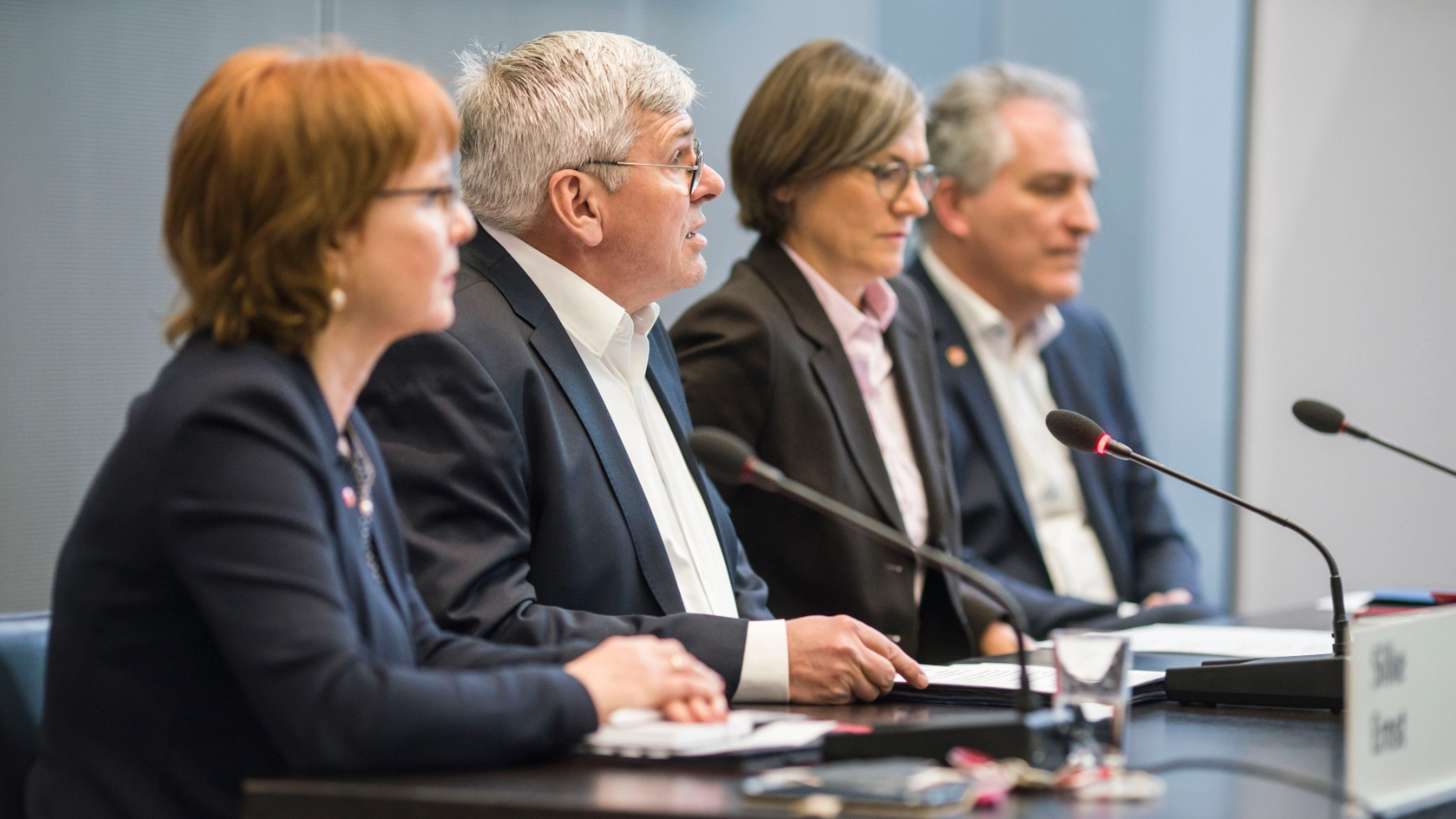
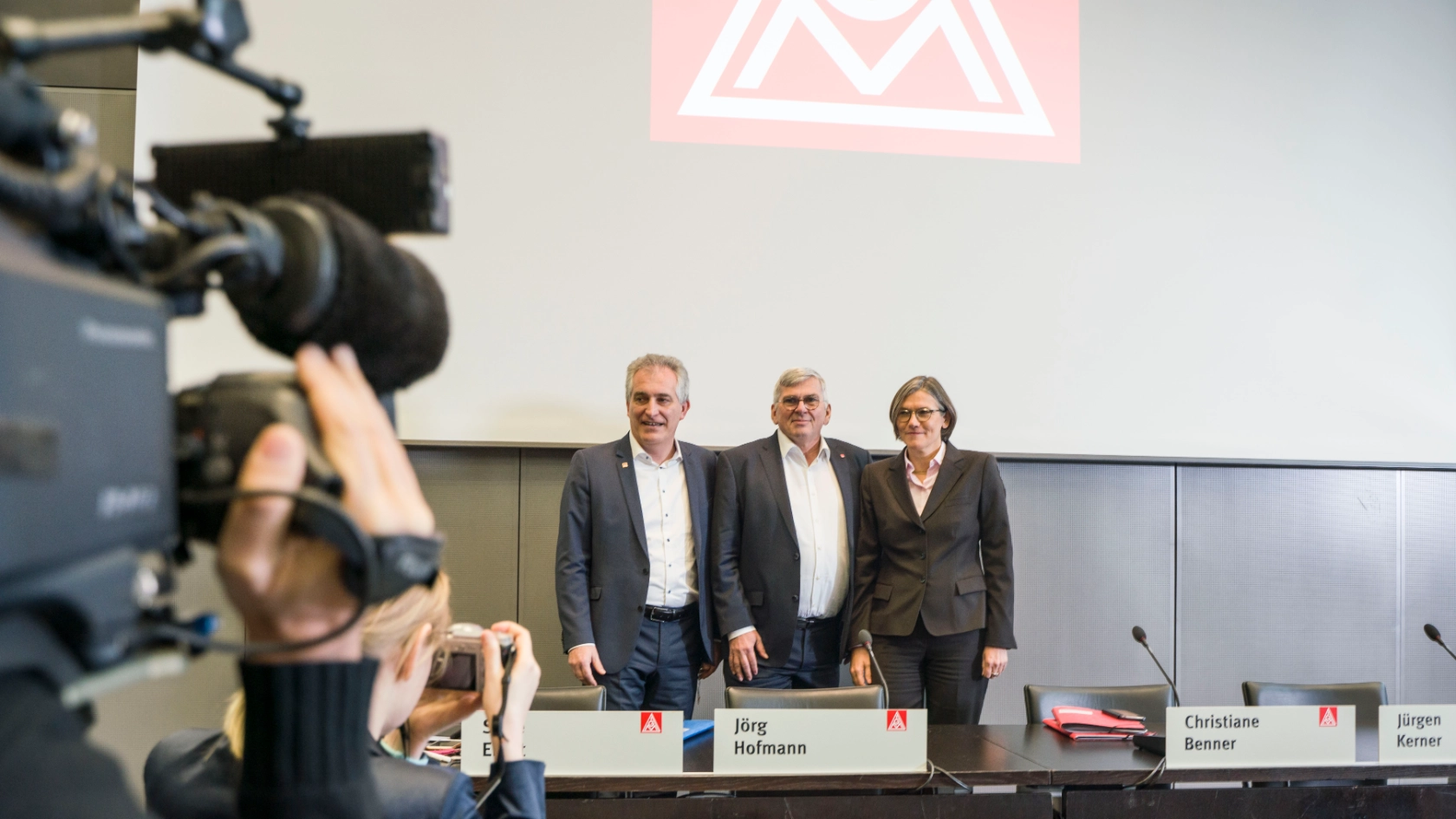
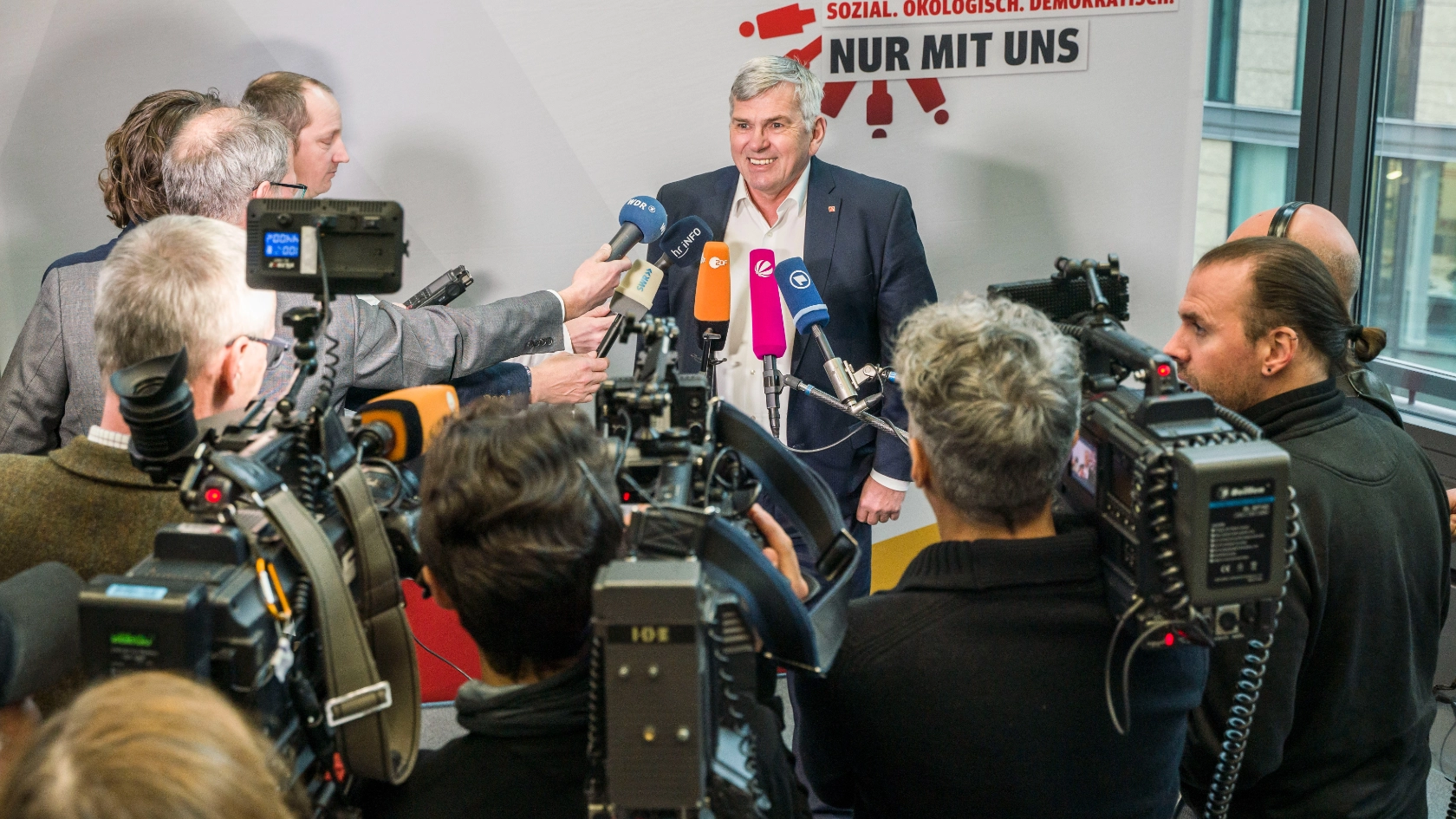
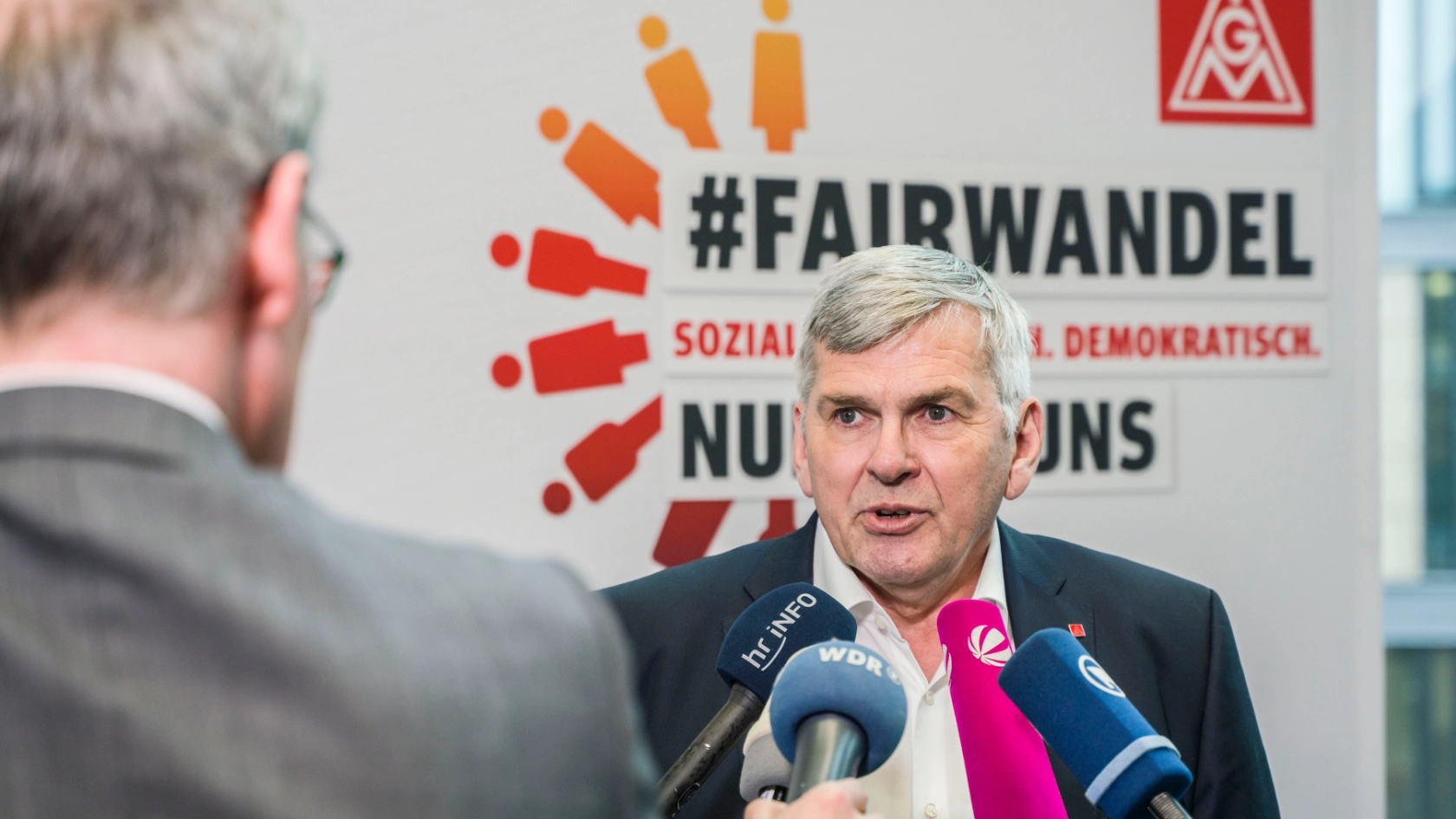
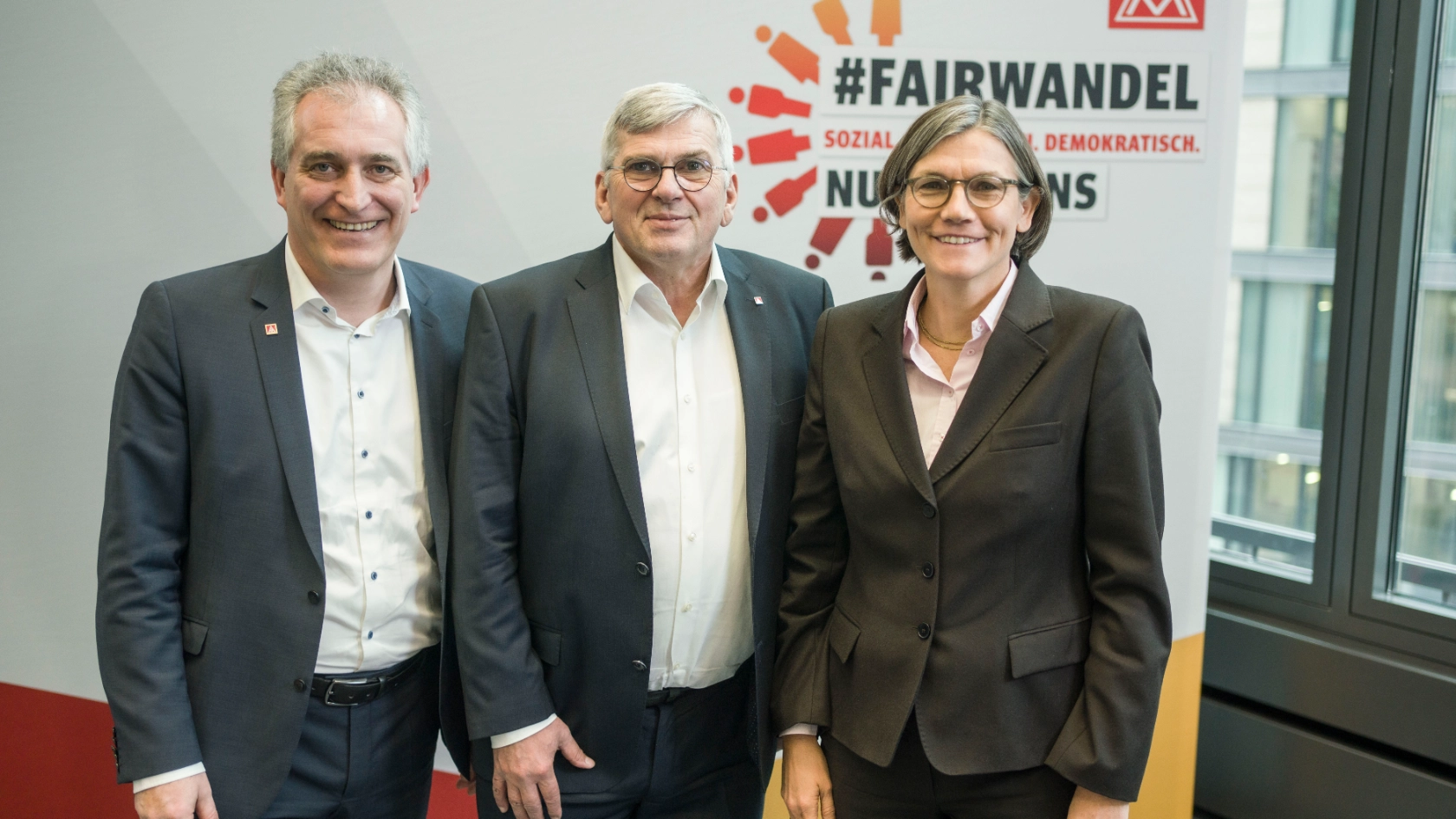
Frankfurt am Main – The metal and electrical industry is in the midst of digital and ecological transformation—and is ill-prepared for it. “Half of the companies have no strategy, or an insufficient one, to manage the transformation,” said Jörg Hofmann, President of IG Metall, at the union’s annual press conference on Friday in Frankfurt.
“The pressure on companies is immense; swift responses to the transformation are now required. Decisions must be made on whether and how the future can be shaped together with the workforce,” said Hofmann. IG Metall is therefore proposing that employer associations agree to a “moratorium for fair change.”
This moratorium includes:
- The employers agree not to take any unilateral measures to reduce the workforce, relocate products with future potential, or close facilities.
- IG Metall declares its willingness to immediately enter into negotiations on a “future package” in all regions. The goal is to reach an agreement before the end of the collective bargaining moratorium.
- The contents of this “future package” would include :
- A willingness to conclude future collective bargaining agreements at the company level. The goal is to establish concrete investment and product prospects for locations and employees, agreements on measures for workforce development, and corresponding measures for training and continuing education, as well as the exclusion of layoffs for operational reasons.
- The agreement on collective bargaining instruments to secure employment, such as supplementary rules on short-time work and entitlements to vocational training. In this regard, IG Metall is also urging policymakers to quickly clarify the legal framework.
IG Metall also aims to secure wage increases in this round of collective bargaining that will strengthen employees’ purchasing power and be incorporated into the wage scales. For the upcoming negotiations, IG Metall is not making a specific demand for a wage increase.
In addition, IG Metall is discussing a demand for a sustainability bonus for its members to ensure that the costs of climate protection are not passed on solely to employees.
Employers are being asked to state by February 3, 2020—the date of the union’s next executive board meeting—whether they are willing to support this approach. If they are not, IG Metall will submit its demands for the collective bargaining round through the usual channels.
“IG Metall is approaching the transformation with confidence. It has clear goals: strengthening purchasing power, as well as security and fair participation for all workers—in large corporations and at small suppliers, for permanent staff, and for temporary and contract workers,” said Hofmann.
IG Metall is well-prepared for the collective bargaining round. The #FairWandel rally last June in Berlin, with more than 50,000 participants, made it clear that IG Metall is capable of mobilizing its members.
Membership trends in 2019 were stable, although the positive growth seen in 2018 could not be matched. At the end of 2019, membership stood at 2,262,571, 8,000 fewer than the previous year. Looking at the past decade, membership has risen from 2.24 million to 2.26 million.
“This stable trend should not be taken for granted, given that employment in the auto industry is now declining, temporary workers are being laid off in droves, short-time work has been expanded, and workforce reduction programs have been implemented,” said Hofmann.
An increase compared to 2018 was recorded among women, white-collar workers, young professionals, and members without a German passport (figures are provided in the presentation). “IG Metall is a very diverse organization that is able to appeal to a wide variety of employee groups,” emphasized Christiane Benner, Second Chair of IG Metall.
Benner criticized the streamlining of office work, which is now gaining momentum. “This is the wrong path! I call on employers to fulfill their corporate responsibility and to work with employees to develop career prospects and provide them with further training. Future collective bargaining agreements with IG Metall offer a meaningful framework for this.”
“Financially, IG Metall stands on a solid footing,” noted Jürgen Kerner, Chief Treasurer of IG Metall. Last year, membership dues revenue totaled 598 million euros—13 million more than in 2018. 90 million euros were allocated to reserves and provisions for benefits stipulated in the bylaws, for the occupational pension plan for IG Metall employees, and for political campaigns. The largest portion of membership dues revenue—218 million euros—went to the 155 local offices to support their grassroots work. “We want to be strong on the ground in the workplaces and become even stronger,” emphasized Jürgen Kerner, Chief Treasurer of IG Metall. “IG Metall is managed soundly and is in good financial shape. It has the staying power to see collective bargaining disputes through to the end.”
To Jörg Hofmann’s statement ( PDF, 6 pages)
To the statement by Christiane Benner ( PDF, 4 pages)
Jürgen Kerner’s statement ( PDF, 4 pages)
Presentation slides (PDF, 24 pages)
Jürgen Kerner’s fact sheet (PDF, 5 pages)
On the moratorium ( PDF, 2 pages)
Press release (PDF, 4 pages)