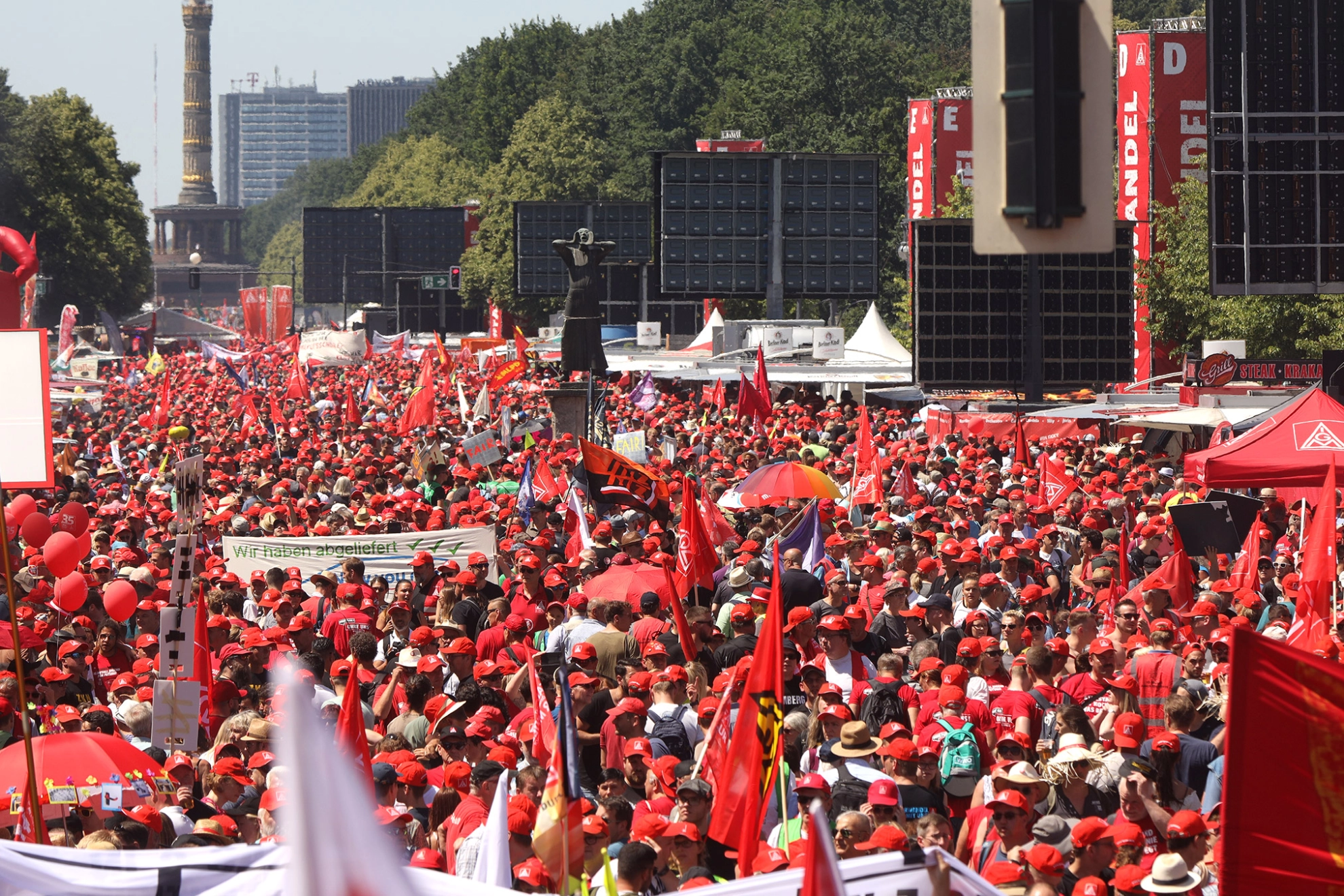
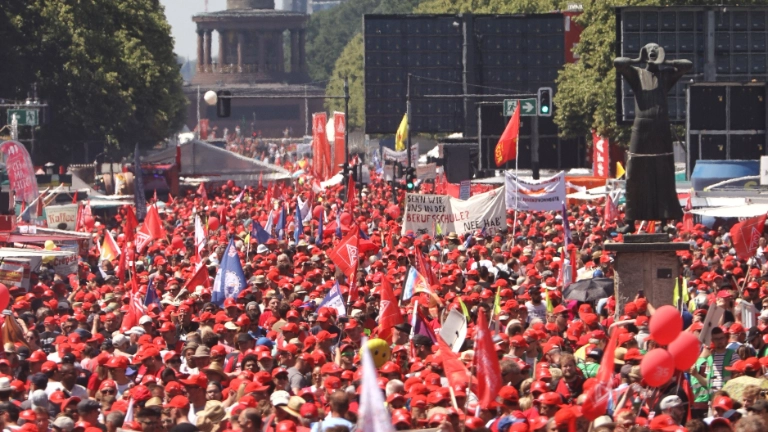
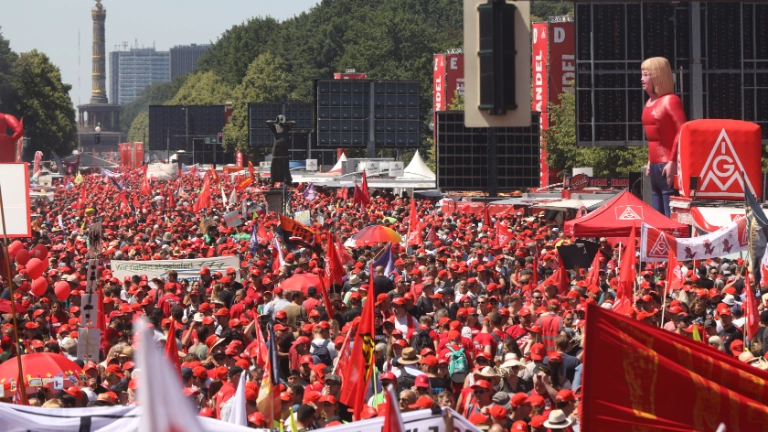
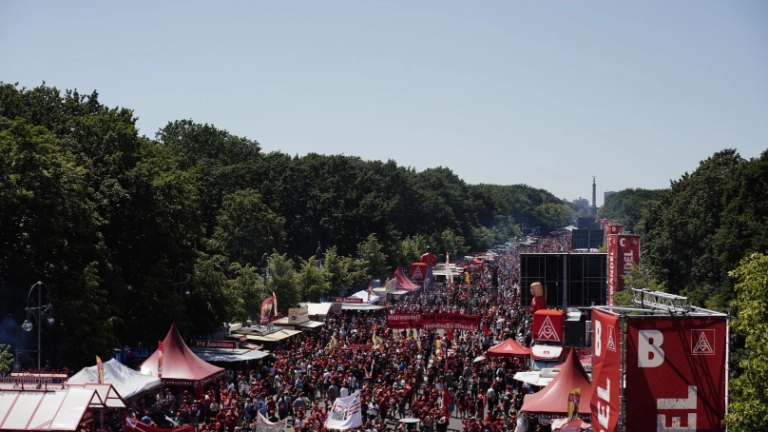
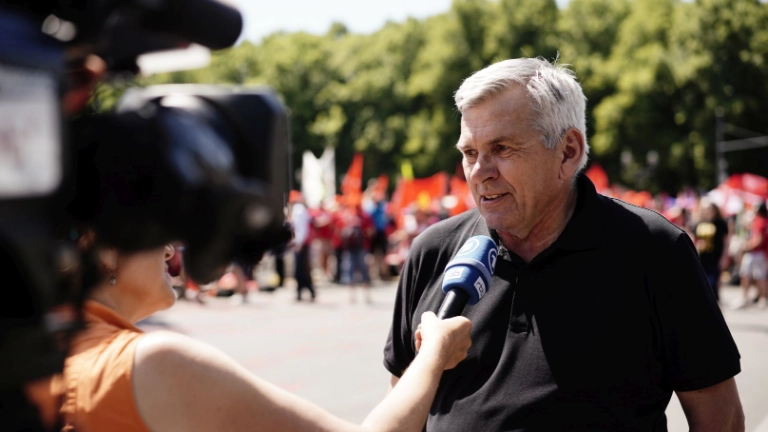
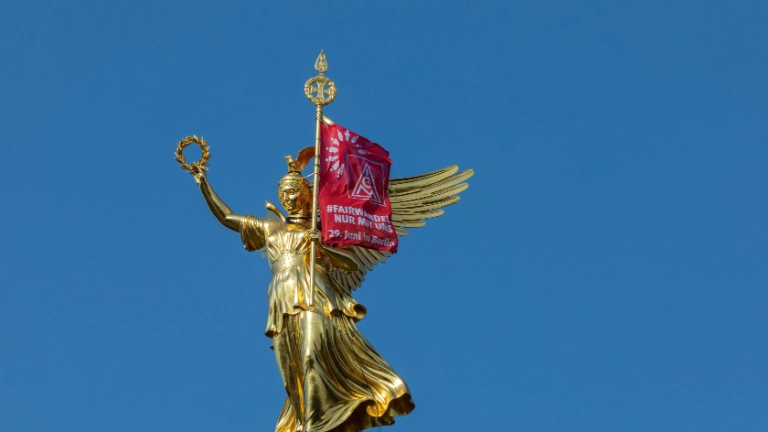
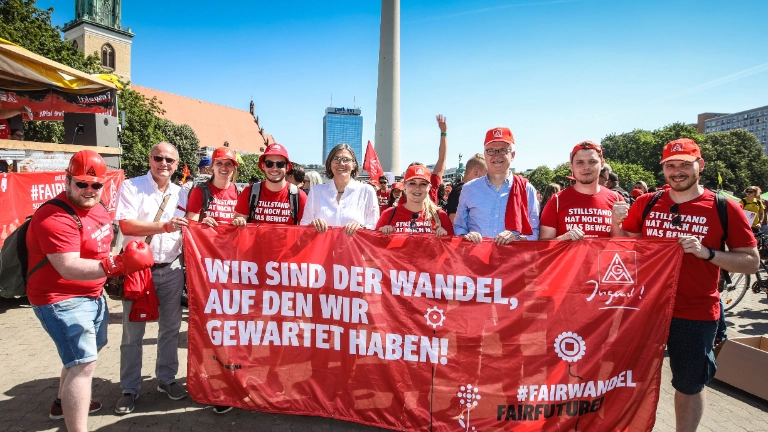
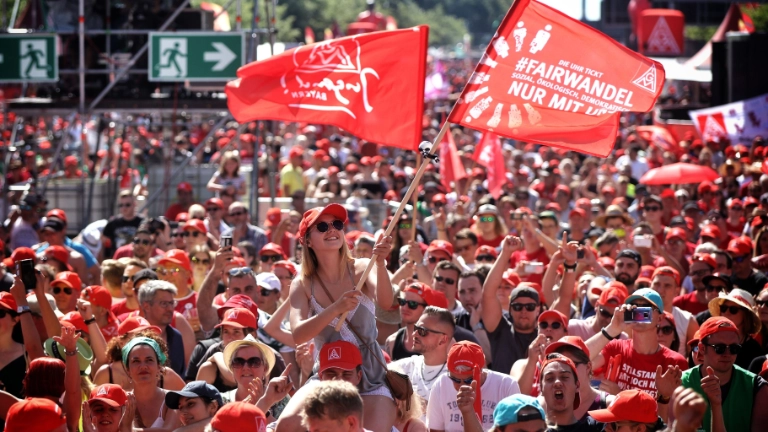
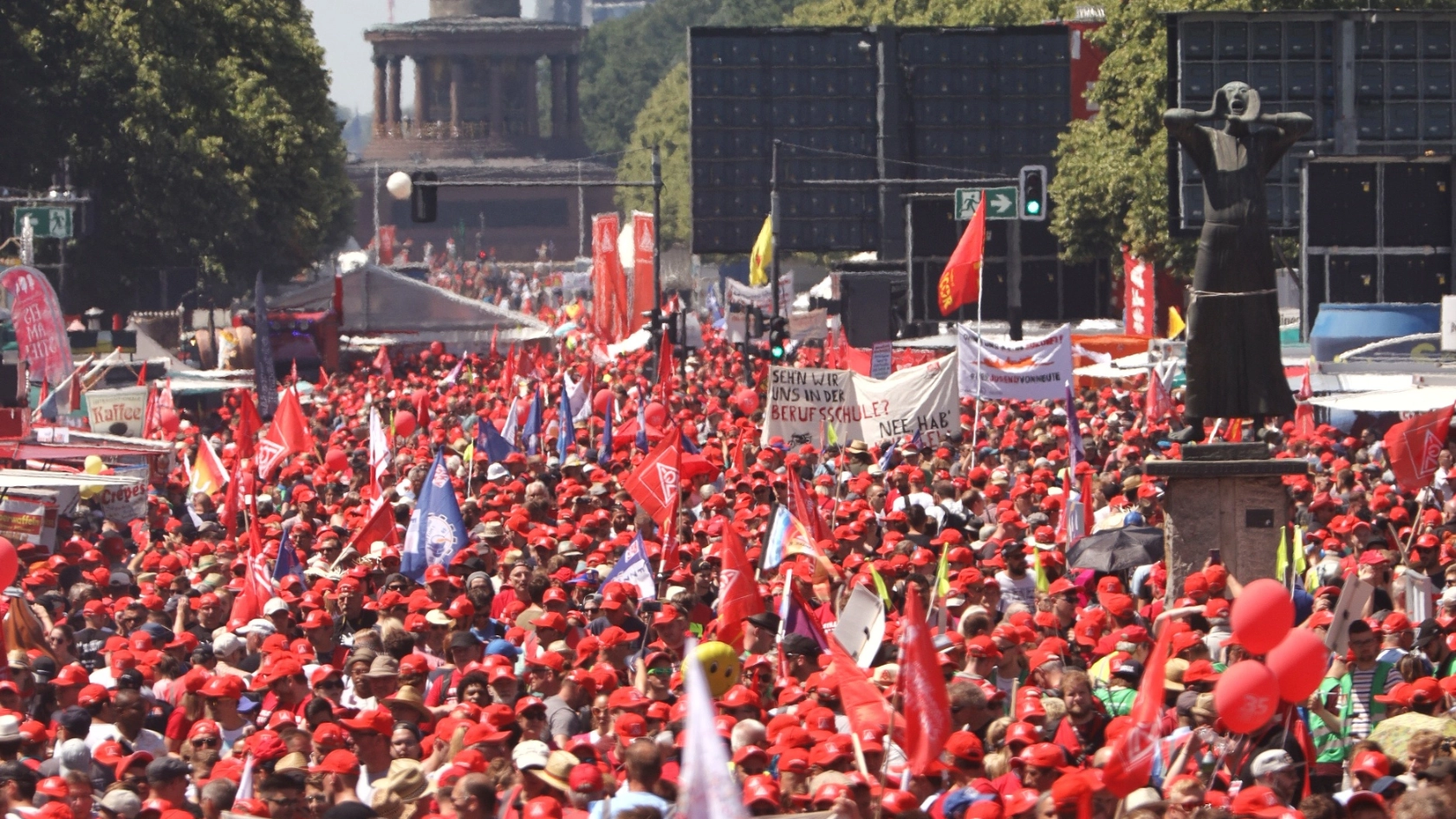
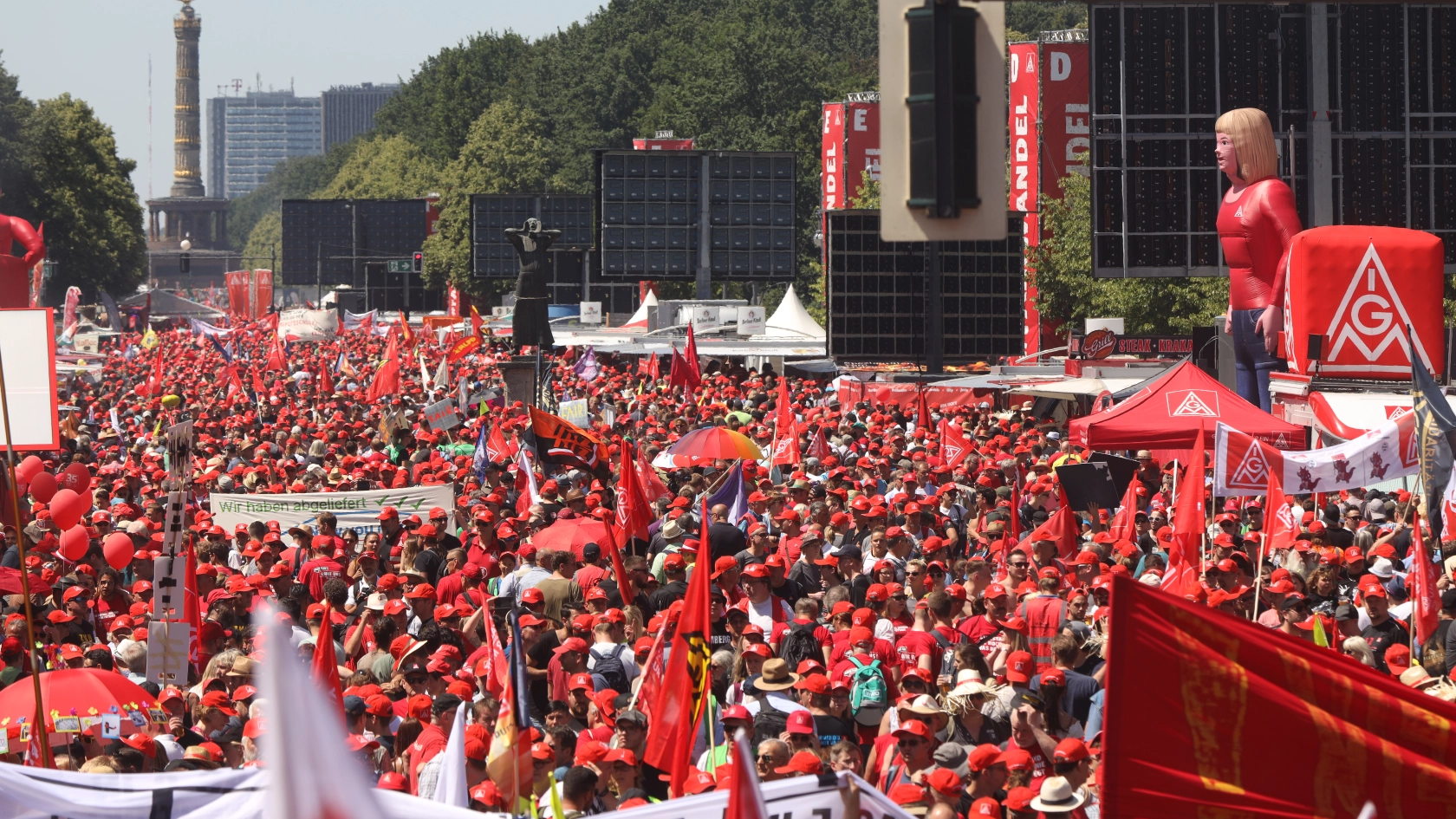
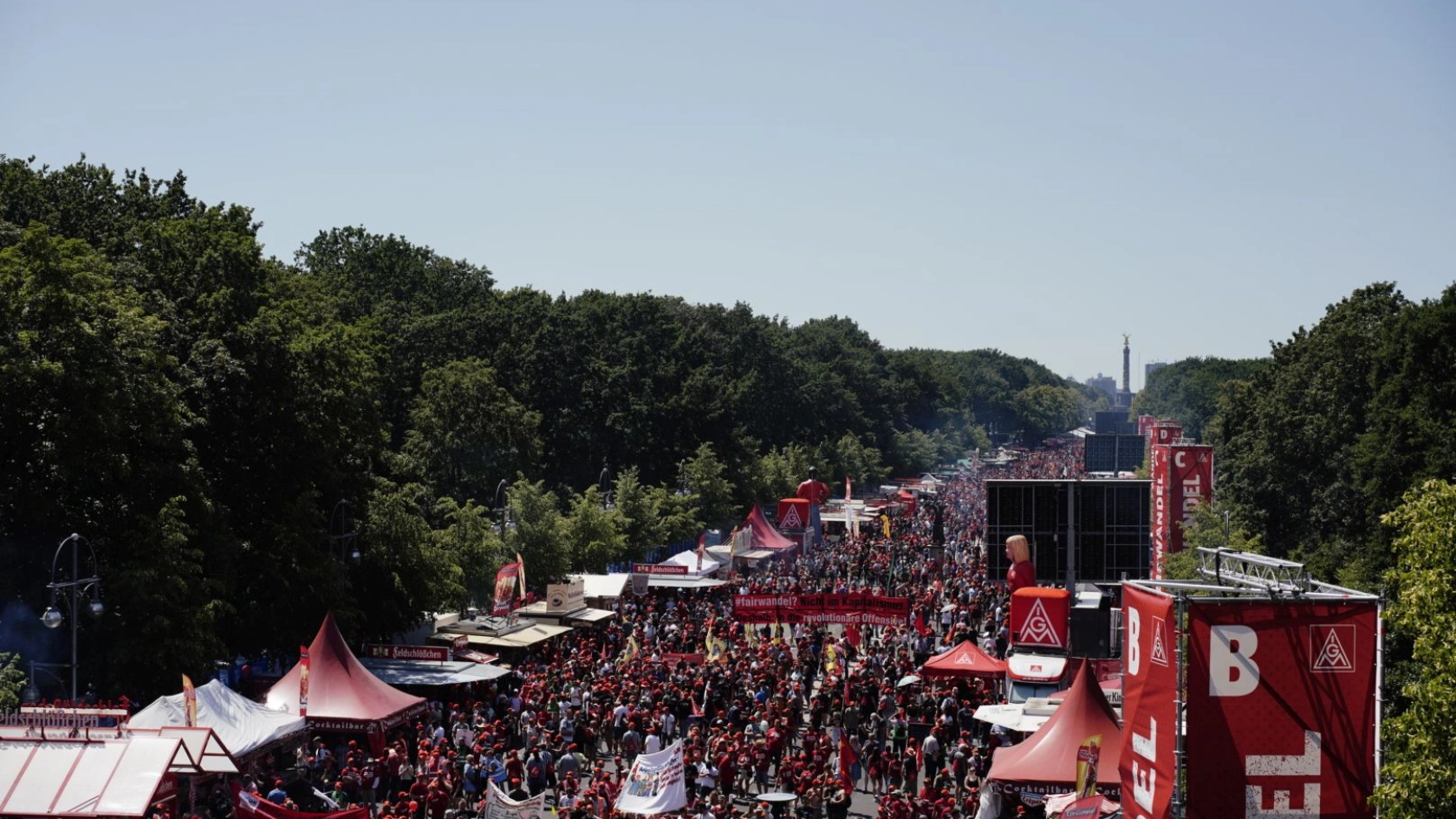
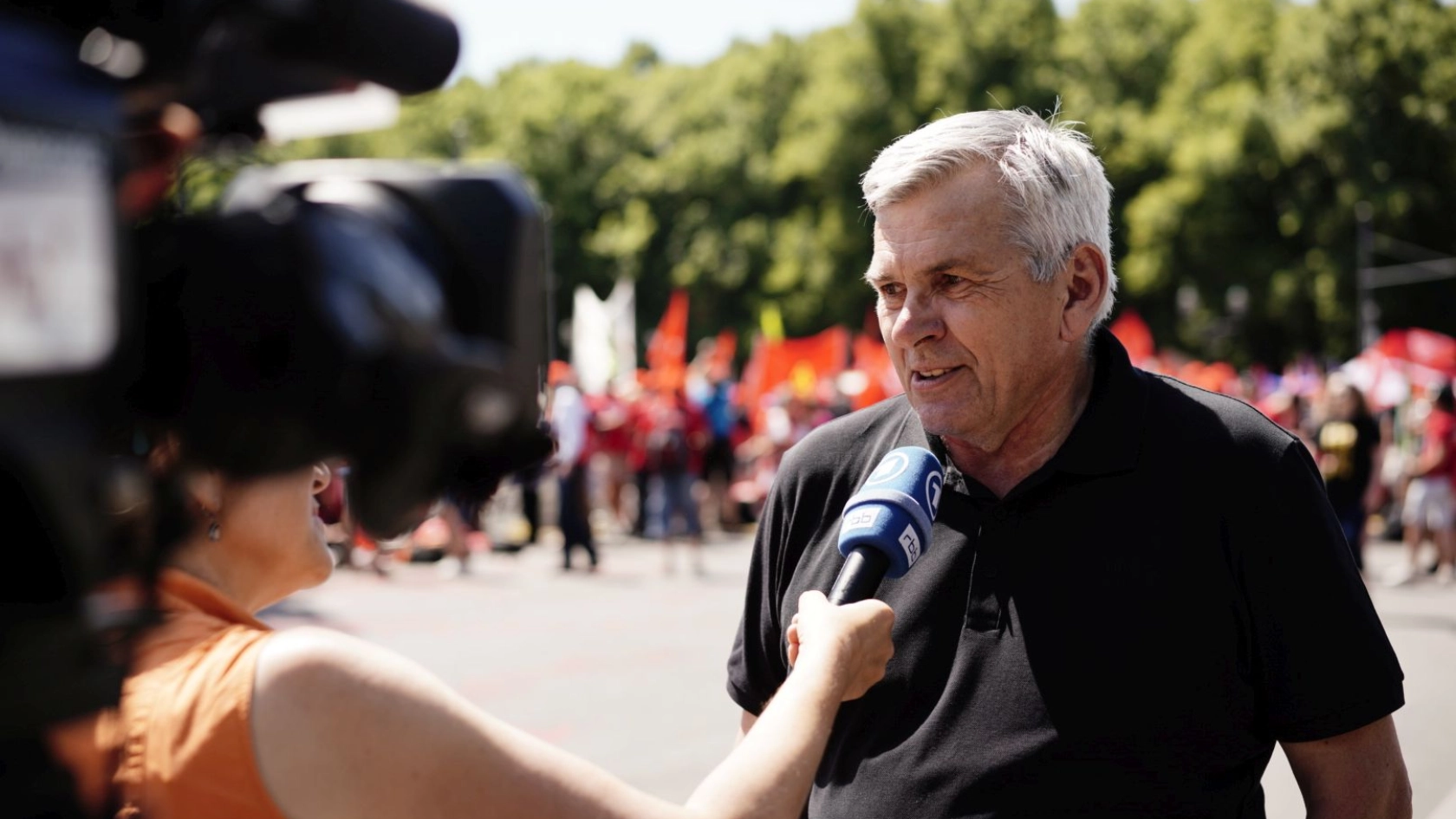
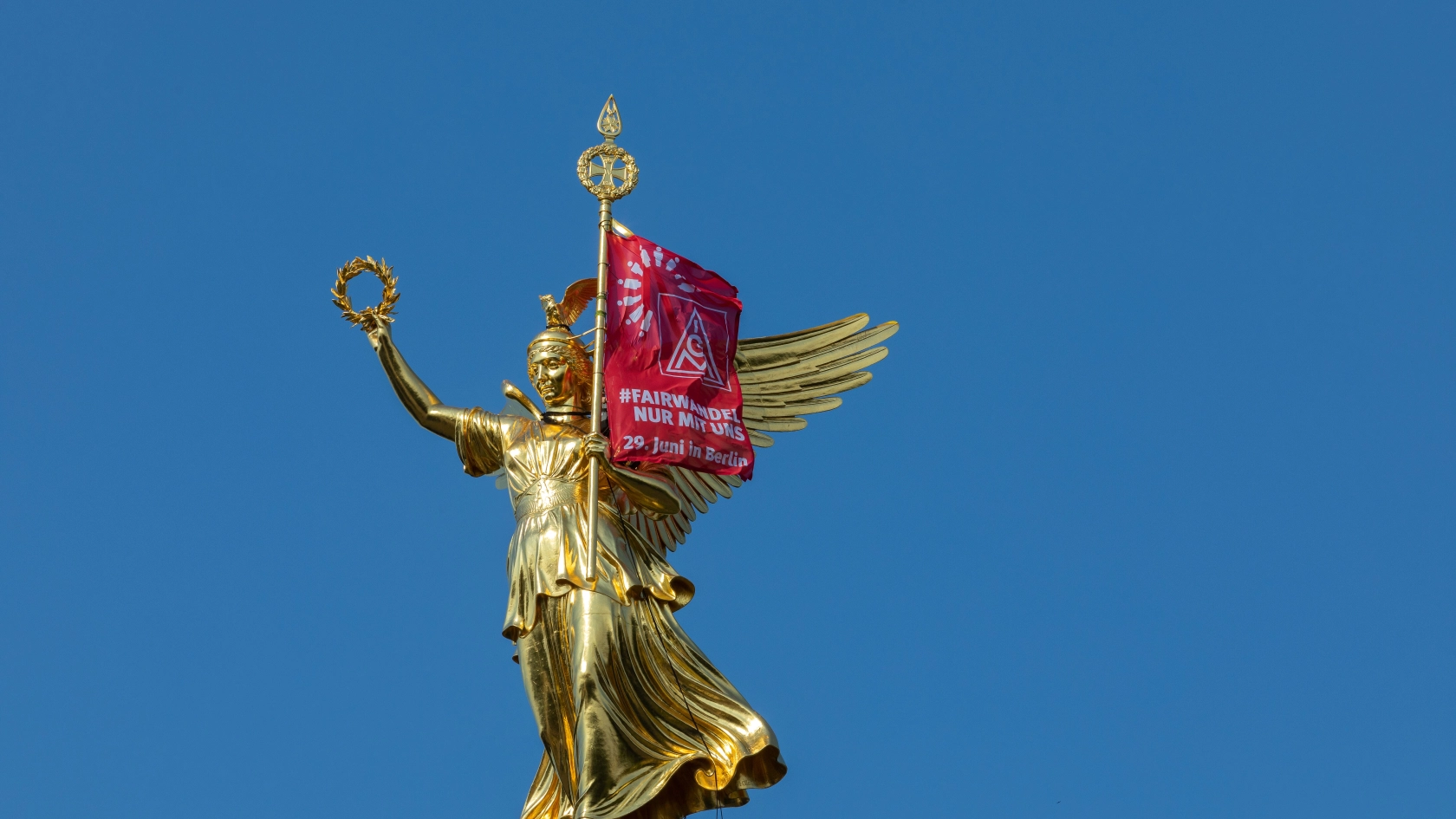
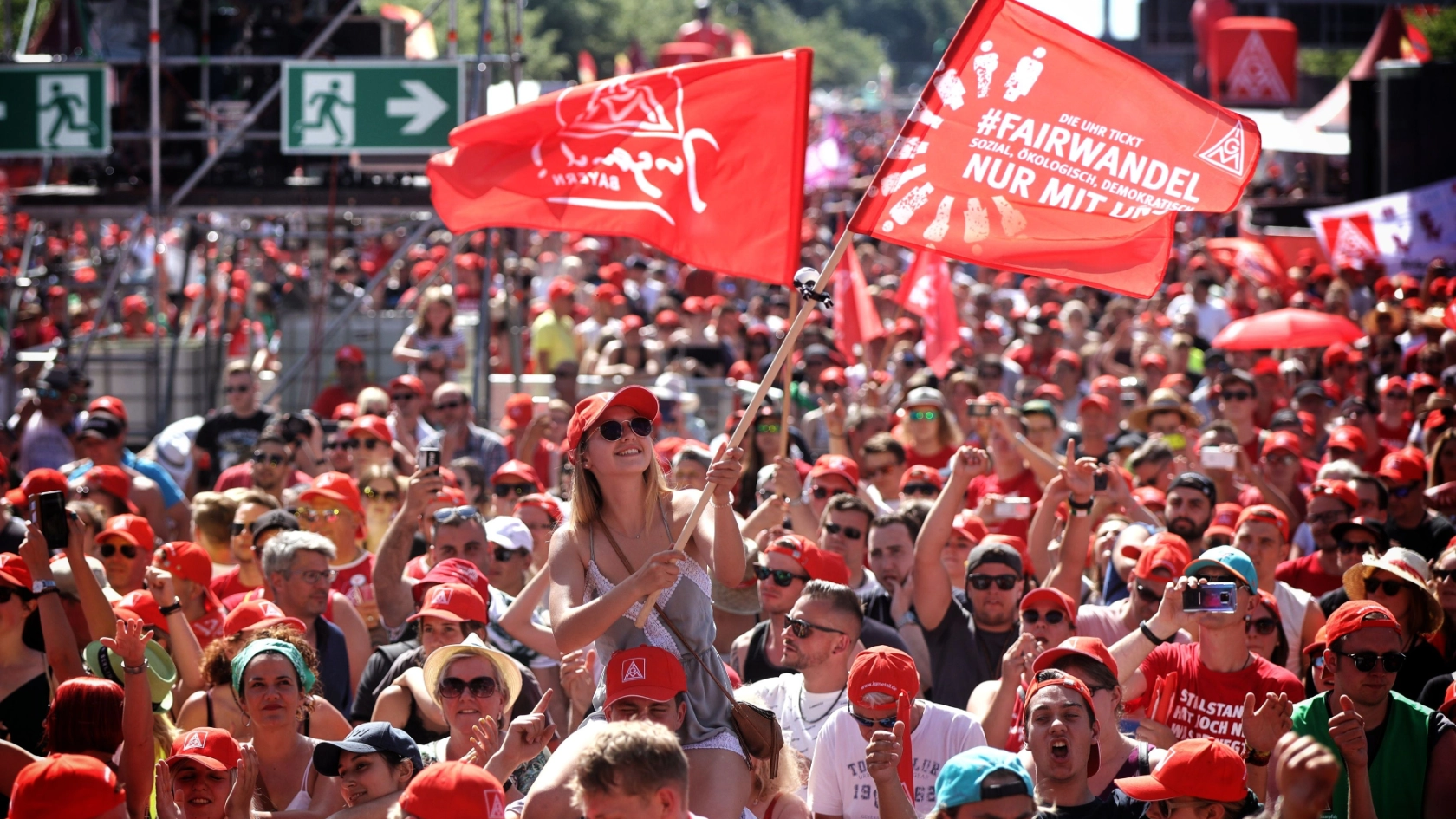
Berlin – More than 50,000 people from all over Germany took part in the IG Metall #FairWandel rally in Berlin today. “Participants expect policymakers and employers to ensure that the digital and ecological transition provides workers with opportunities for good jobs. The transformation must be shaped in a socially responsible, environmentally sound, and democratic manner. This rally has sent a powerful message in that regard,” said Jörg Hofmann, President of IG Metall, on Saturday in Berlin.
In addition to Jörg Hofmann, speakers at the #FairWandel rally included Jasmin Gebhardt, a representative of Junge IG Metall, and other representatives of civil society such as Verena Bentele, President of the social welfare association VdK Deutschland; Olaf Tschimpke, President of the Nature and Biodiversity Conservation Union (NABU); and Ulrich Lilie, President of Diakonie. This underscores how openly and comprehensively IG Metall is conducting the societal dialogue on social transformation.
The cultural program at the rally featured singers Clueso and Joris, as well as the bands Silly, Culcha Candela, and the Berlin Boom Orchestra.
The rally’s central demand is for employers and policymakers to ensure that the ecological and digital transition does not create a massive number of losers. On the contrary: the transformation should turn technical progress into social progress. This requires building bridges for workers. “We are calling for a transformation-related short-time work allowance. This will prevent layoffs and allow workers to gain the qualifications needed to work on new products,” said Hofmann.
IG Metall also expects the mobility and energy transitions to be successfully implemented—in the interest of workers and climate protection. “We no longer want debates about goals; we want concrete measures at last. For example, a comprehensive and reliable infrastructure of fast-charging stations is urgently needed. In addition, massive investments in public transit and rail are necessary. The transportation and energy transitions cannot be achieved with a ‘balanced budget’ policy,” Hofmann clarified. Hofmann called on companies to invest in new products and business models and to secure their locations.
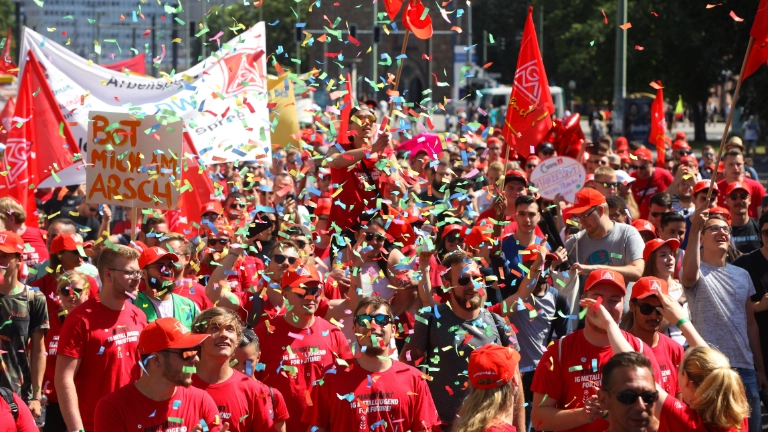
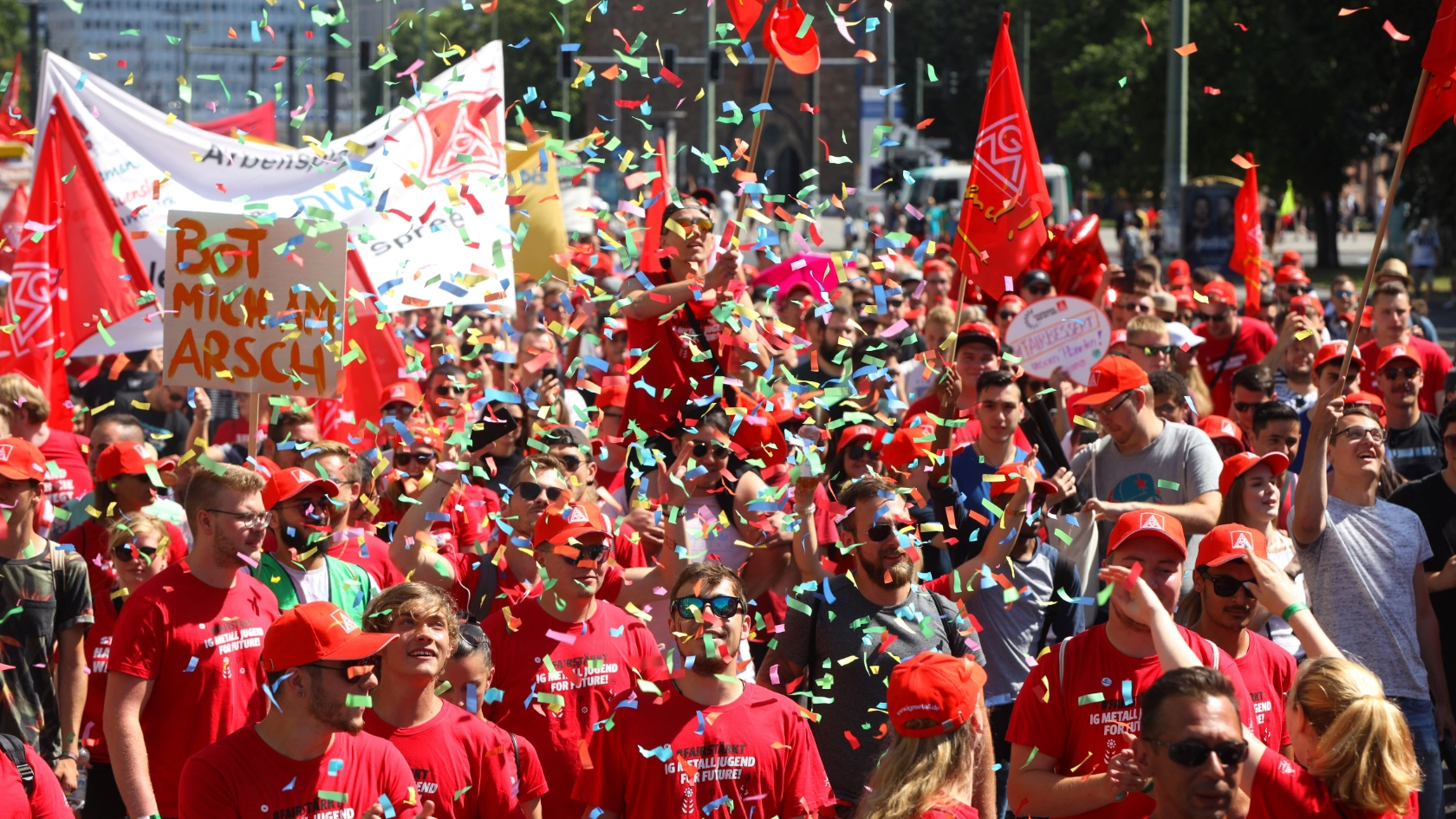
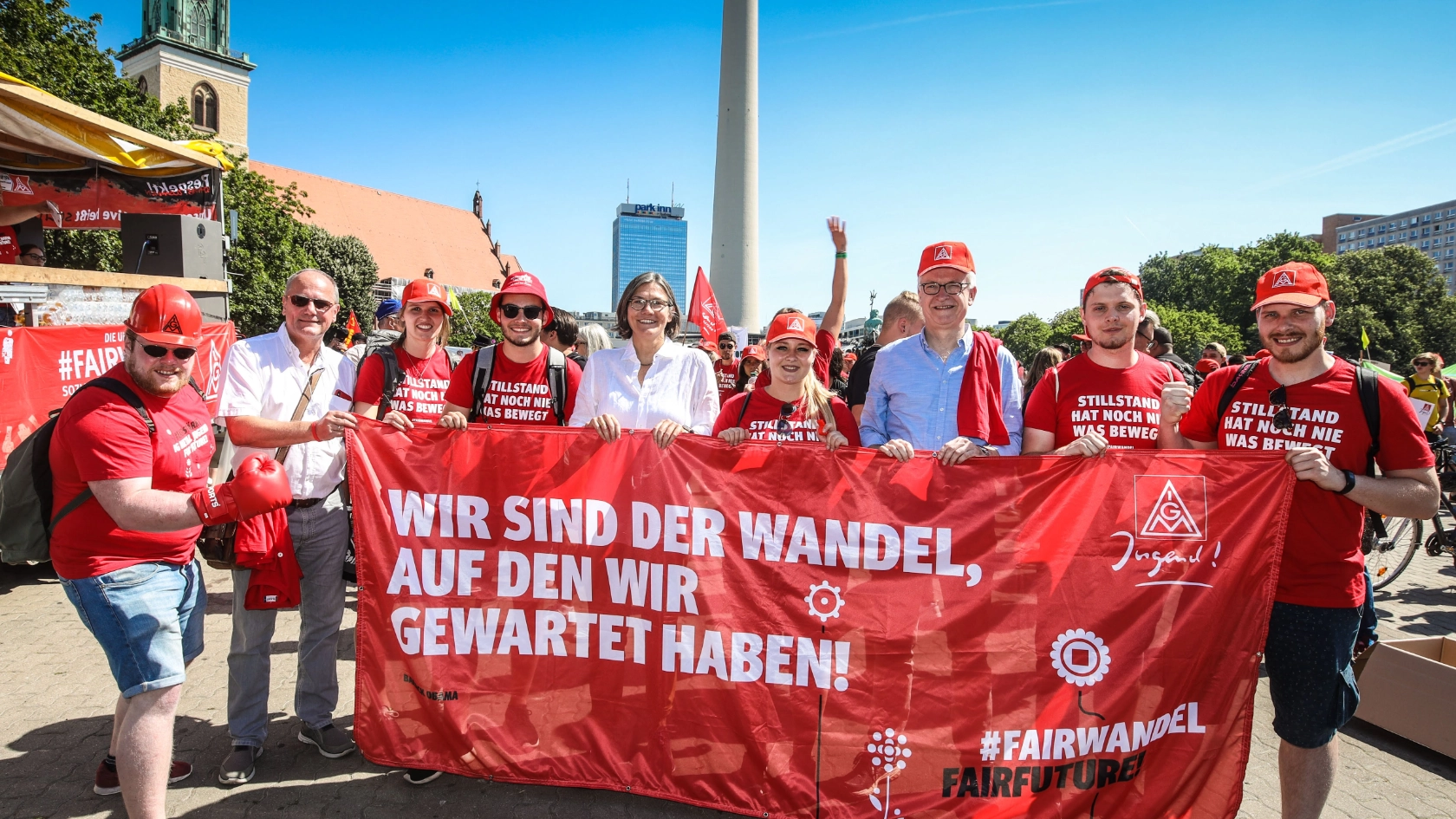
The fact that the transformation is also a concern for young people was demonstrated by Junge IG Metall, which organized its own march from the Red City Hall to the Brandenburg Gate, along with actions focusing on ecology, training, working hours, the shift to the right, globalization, and equality. “The world must not only become more climate-friendly, but also more just. It’s also about improving social conditions,” said Jasmin Gebhardt.
IG Metall is supported by NABU: “Now the federal government must set the course for a comprehensive mobility transition and organize an orderly and socially responsible structural transformation for the industry in the regions in such a way that the transformation enjoys broad support in society. Climate protection must not be pitted against people’s mobility needs or the issue of job security in the automotive industry,” said NABU President Olaf Tschimpke.
The transformation will also serve as a litmus test for the welfare state. “Pensions will reveal whether policymakers are making the welfare state fit for the future. The thought of their financial situation in old age is a major concern for almost all Germans,” said Verena Bentele, President of the VdK.
Ulrich Lilie, President of Diakonie, called for social cohesion not to be allowed to break down. “We should shape social democracy in our neighborhoods for everyone and with as many people as possible, and make it a tangible reality. Our ideas of a good life must have a place in our neighborhoods. This requires good political framework conditions, but also the commitment of all citizens.”
Participants in the #FairWandel rally traveled from all over Germany on 10 trains and 800 buses.
To Jörg Hofmann’s speech
Visit the FairWandel website