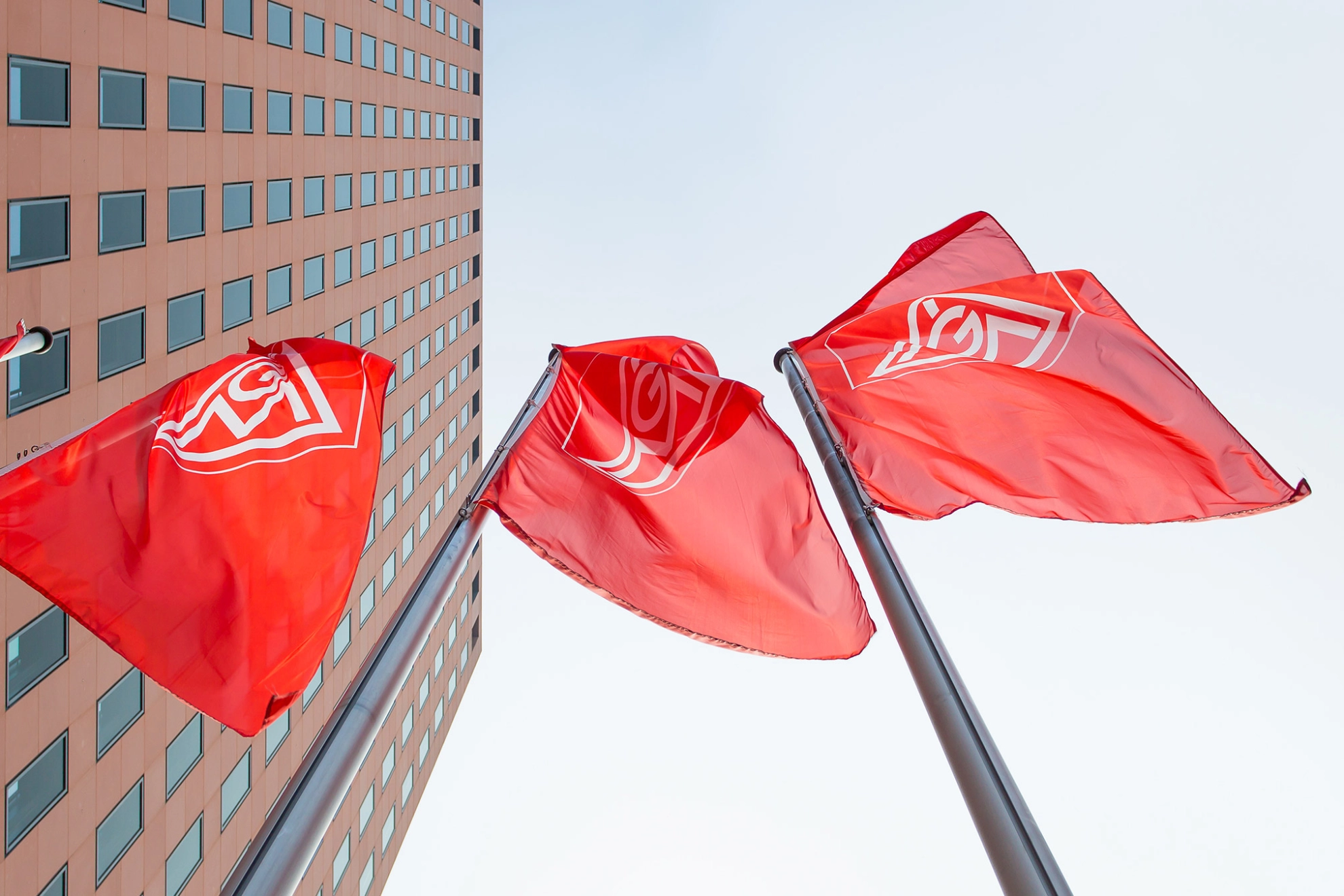
Frankfurt am Main – The European trade unions IG Metall from Germany, PRO-GE from Austria, and UNIA from Switzerland are calling for a European response to the current economic and political challenges. Switzerland and the EU should cooperate more closely in this regard.
There needs to be a stronger industrial policy focus on European production, with clear criteria for creating and securing jobs. From the unions’ perspective, local content regulations that require companies to produce locally and comply with social and environmental standards are the right way to build on Europe’s industrial strengths. Key technologies such as the semiconductor industry and the circular economy must be a priority in order to strengthen the targeted expansion of European resources. These are central building blocks for securing value creation in Europe and creating new jobs. Joint, decisive action in the areas of energy, infrastructure, and raw material security is necessary to strengthen Europe as a production hub. According to employee representatives, this is not only a matter of economic strength but also a fundamental prerequisite for an independent, resilient Europe, and it restores confidence and security to workers.
The leaders of the three European trade unions expressed their determination to further promote cross-border cooperation:
Christiane Benner, President of IG Metall, emphasized: “A united Europe must not be limited to appearances on the international stage; it must also be a part of workers’ everyday lives. Clear agreements and commitments to a common industrial policy that strengthens and relies on local production are long overdue!”
Reinhold Binder, Federal Chair of the PRO-GE union, said: “For us, a common industrial policy means securing production sites, creating jobs, and guaranteeing fair wages—across borders.”
Yves Defferrard, a member of the UNIA Executive Board, emphasized: “For Switzerland, an industrial policy coordinated with other countries is more necessary than ever, especially in light of the 39% tariffs imposed by the U.S. and the associated potential risks to jobs and working conditions. Together, our three organizations are a force capable of navigating these difficult times and ensuring both industrial and energy independence.”
Strong industrial structures require a strong workforce. A shortage of skilled workers hinders economic growth and reduces innovation. Skilled workers are the key to improving competitiveness. Investments in education and training, in childcare facilities, and in successful integration into the labor market are prerequisites for effective workforce development.
Without a strong welfare state, however, Europe’s position is significantly weakened—an unacceptable risk. The three trade unions in the DACH region therefore take a clear stand against the intensified attacks on workers’ rights and welfare state achievements, even when disguised as supposed efforts to reduce bureaucracy. The debates on waiting periods, maximum working hours, and social security clearly demonstrate this, as the unions jointly emphasize: “Whether in Germany, Austria, or Switzerland—in economically challenging times, politicians and business leaders target the most vulnerable, turning against workers and the welfare state, instead of finding real solutions. The same applies everywhere: it’s not that we work too little or contribute too little—it’s that you’re taking too much from us!”