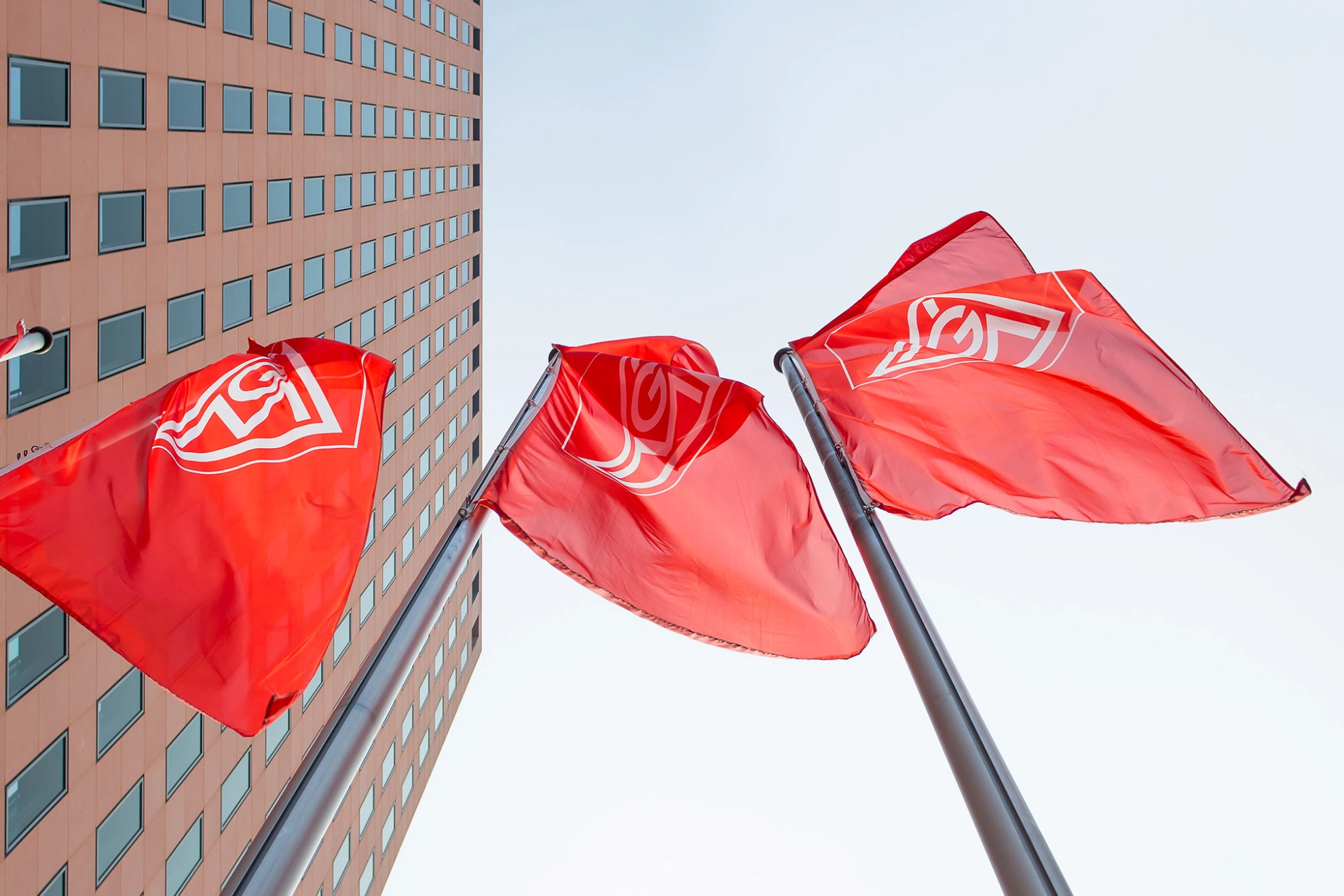
Frankfurt am Main – In the dispute over planned job cuts at rail vehicle manufacturer Alstom, a solution is still not in sight. After more than a year of negotiations, accompanied by massive protests by the workforce, the most recent round of talks has once again failed. While employee representatives have long since presented constructive and sustainable alternatives to the planned mass layoffs, management continues to stick to its plans: layoffs and, in addition, extensive wage cuts for employees. The works council and IG Metall firmly reject this. They are calling on Alstom management to end its stalling tactics, finally develop viable solutions for the German plants, and agree to a collective bargaining agreement that opens up prospects for the future. Otherwise, there will be dire consequences—especially in light of the upcoming transportation transition, warns the employee representative body.
Jürgen Kerner, IG Metall board member responsible for the rail industry:
“Without a strong rail industry and its talented professionals, the transportation transition will not succeed. To achieve this goal, we need attractive engineering and manufacturing jobs. That’s not possible with wage cuts and a lack of future prospects. This misguided course of action is not an option for IG Metall. We expect Alstom to make a clear commitment to Germany as a hub for the rail industry and to its own workforce.”
Jochen Homburg, IG Metall chief negotiator:
“After more than a year of intensive negotiations, it is abundantly clear that decisions must be made on Alstom’s side that cannot be made by the current negotiating team. We therefore need the involvement of management that is authorized to make decisions. The future is built on courage.”
René Straube, Chairman of the Alstom General Works Council:
“It is simply impossible for us to make concessions without clear statements about the future, as envisioned by Alstom. That will not work under any circumstances. If it says ‘future’ on the label, there must be a future inside. We want to make the company better in a sustainable way.”
Stefan Lüer, Vice Chair of the Alstom General Works Council:
“The German plants should be granted a fair level of capacity utilization. Only plants operating at full capacity can truly work productively. It is absurd that orders won here are often manufactured entirely abroad. We demand genuine local content for the German sites when public contracts are awarded. Because only that is fair and in line with competitive principles.”
Background:
In December 2021, ten months after Alstom’s acquisition of Bombardier Transportation, Alstom’s German management announced a large-scale job-cutting program, citing alleged structural and long-term underutilization at the affected sites. The General Works Council and IG Metall were then able to demonstrate, with the help of external experts, that the targeted savings could also be achieved through productivity gains. Under the motto “better instead of cheaper,” they presented a plan that would make the sites competitive, rather than mindlessly cutting them to the bone. Furthermore, the employee side showed itself willing to make concessions: In the event that the productivity targets were not met, the resulting shortfall was to be offset by contributions from employees that could be objectively measured and jointly monitored. This was rejected by management.